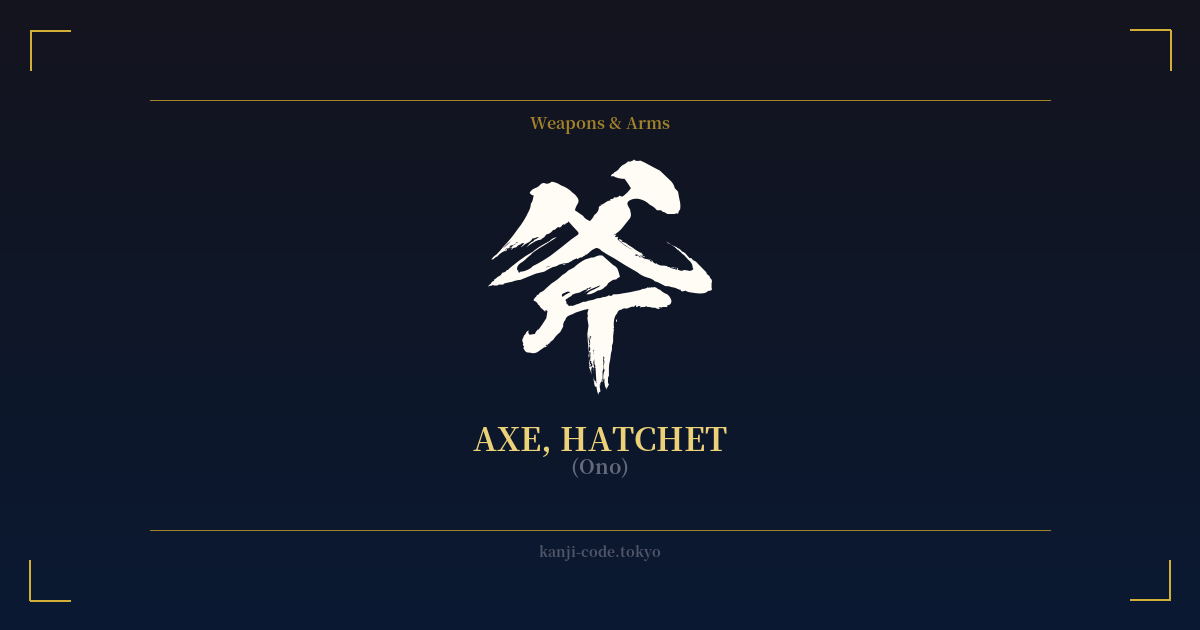
✍️ 斧 (Ono) — Cultural Context
The kanji 斧 (ono) represents the axe, one of humanity's oldest and most essential tools. Its meaning is deeply rooted in a duality that has defined human progress: the power to create and the power to destroy. In one hand, the axe is a tool of civilization, used to fell trees, clear land for farming, and shape wood for shelter. In the other, it is a formidable weapon, capable of cleaving through armor and bone.
This character’s origin story is visually intuitive. It is a phono-semantic compound, combining the radical 斤 (kin), which is a pictograph of an axe head, with the character 父 (fu, chichi), meaning 'father.' While 父 is used primarily for its phonetic value, it also lends a subtle nuance of foundational, paternal strength—the force required to build and protect a family or community.
Historically in Japan, the axe was indispensable. It was the primary tool of lumberjacks and carpenters who built the nation's iconic wooden temples and castles. Beyond its role in craftsmanship, it also served as a weapon, particularly for warrior monks (sōhei) and lower-ranking samurai. The masakari, a large, heavy battle axe, was a fearsome weapon that contrasted with the elegant and precise katana, embodying raw, untamed power over refined skill.
Perhaps the most famous cultural association with the axe comes from folklore, specifically the legend of Kintarō (金太郎), the "Golden Boy." This child of superhuman strength was raised in the mountains and is almost always depicted with a large axe, which he used to help local woodcutters and befriend the animals of the forest. Kintarō represents pure, natural strength and a connection to the wild, and his axe is the symbol of that untamed power.
Symbolically, 斧 can represent a wide range of concepts. It stands for determination, the strength to cut through obstacles, and the decisive power to sever ties with the past. It embodies a rustic, foundational strength—the kind that is less about polished technique and more about raw, effective force. It is the power that lays the groundwork upon which more complex things can be built.
🖌️ Font Styles for 斧
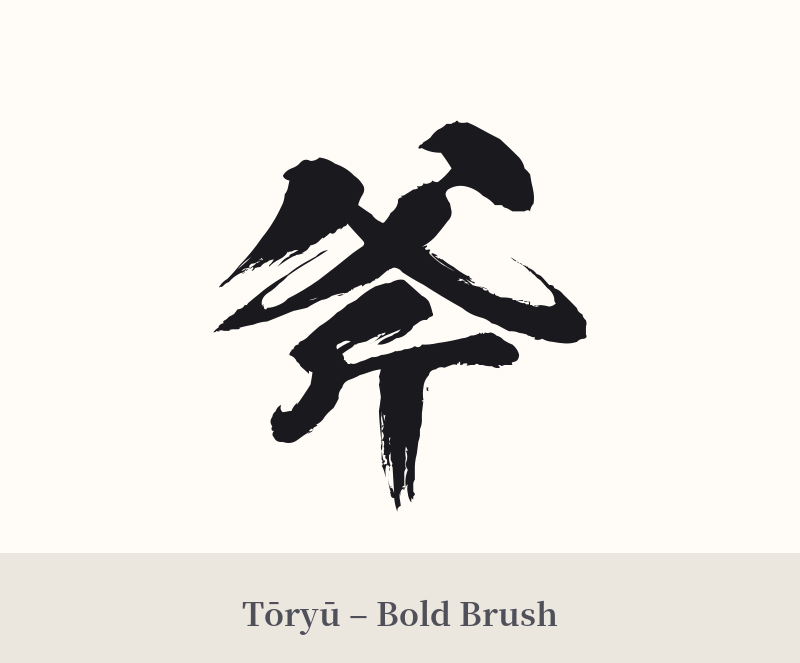
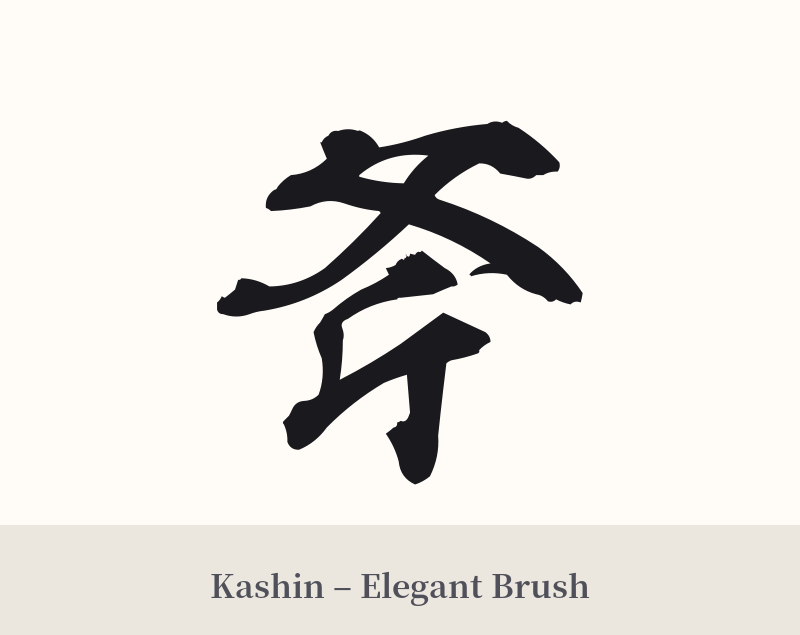
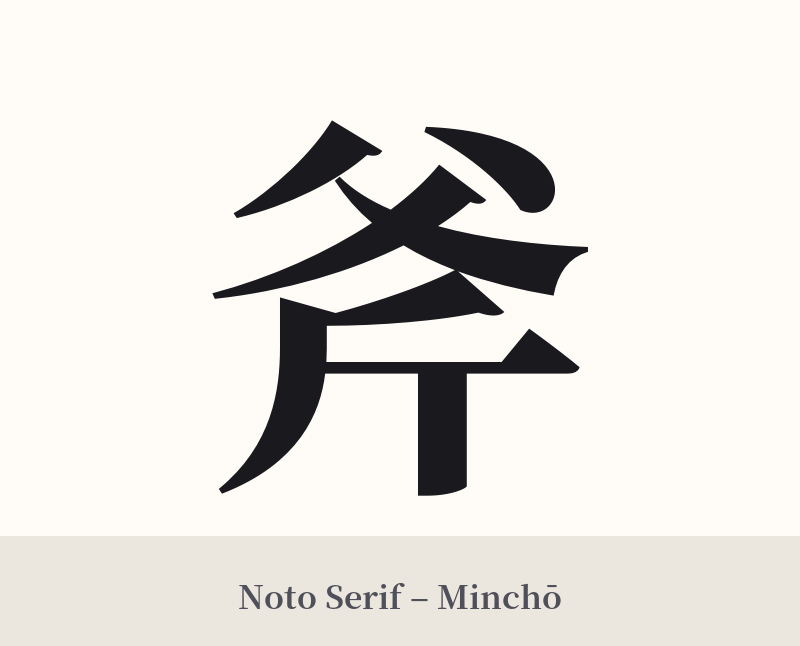
The same kanji can look dramatically different depending on the calligraphy style. Choose a font that matches the mood you want for your tattoo or design.
🎨 Tattoo Suitability
📐 Tattoo Design Guide
The 斧 kanji offers a bold and powerful aesthetic for a tattoo. Its balanced, symmetrical structure makes it visually appealing on its own.
– Placement: This character works well on muscular areas that emphasize its meaning of strength, such as the forearm, bicep, calf, or shoulder blade. A placement on the back can symbolize carrying a foundational strength.
– Font Style: A thick, bold calligraphy style like Kaisho (block script) or a slightly more fluid Gyosho (semi-cursive) will enhance its powerful feel. Avoid overly thin or delicate fonts that would contradict the character's inherent meaning.
– Visual Tips: Consider pairing 斧 with other imagery to add context. A shattered chain could represent breaking free. A tree stump or wood shavings can highlight the theme of creation and building. Placing it within a mountain or forest scene can evoke the legend of Kintarō and natural power.
Comments