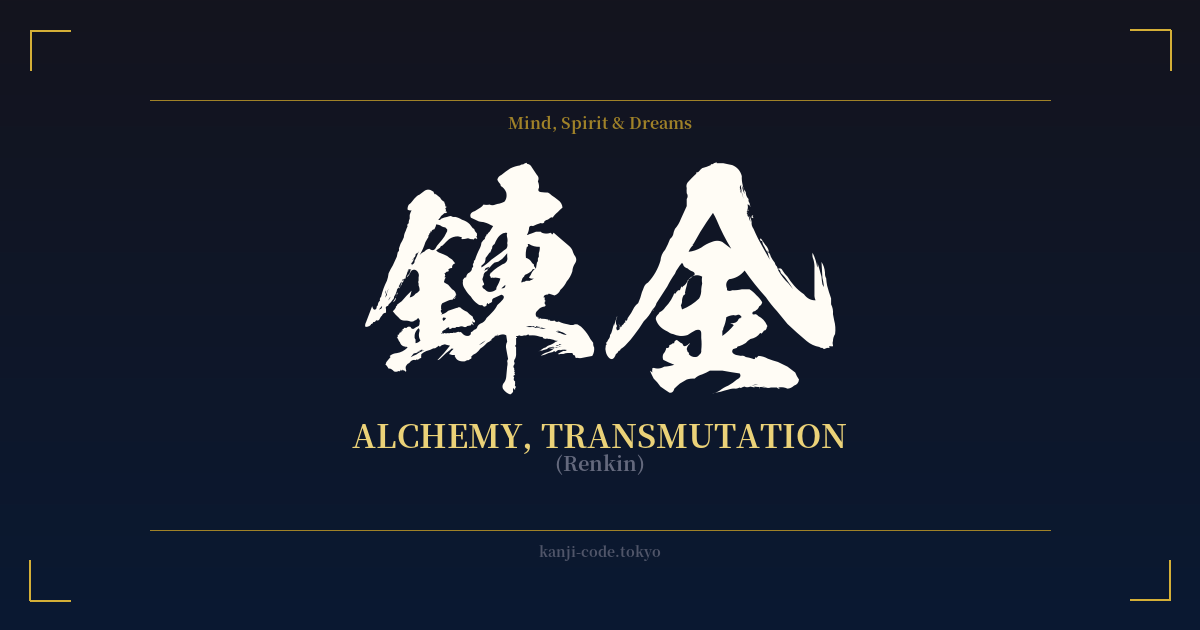
✍️ 錬金 (Renkin) — Cultural Context
錬金 (Renkin) is the Japanese word for alchemy, a concept that has captivated human imagination for centuries. Literally translated, the characters mean 'refining metal' or 'tempering gold,' pointing to the practice's most famous, albeit mythical, goal: the transmutation of base metals into noble ones.
Historically, while Japan did not have an alchemical tradition as prominent as that in Europe or the Middle East, it had related practices. The influence of Chinese Taoism brought with it concepts of creating elixirs for immortality (an idea called 仙道, Sendō), and the nation's long history of swordsmithing and metallurgy involved sophisticated techniques of refining and tempering metals. These parallel pursuits share the core idea of transformation through a combination of material knowledge, skill, and a touch of the mystical.
However, in the modern era, the word 錬金 has been completely redefined and popularized by Japanese pop culture. It is impossible to discuss this term without acknowledging the monumental impact of manga, anime, and video games. The most famous example is undoubtedly Fullmetal Alchemist (鋼の錬金術師, Hagane no Renkinjutsushi), a series that introduced a global audience to a complex, rule-based system of alchemy. Through such stories, 錬金 is no longer just a historical curiosity but a vibrant concept associated with science, magic, and philosophy.
This modern interpretation has imbued 錬金 with profound metaphorical weight. It represents the process of transformation itself—not just of metals, but of the self. It symbolizes taking something raw, imperfect, or broken and, through effort, knowledge, and sacrifice, turning it into something valuable and whole. This could be personal growth, the creative process, or spiritual enlightenment.
Furthermore, pop culture has tied the concept of 錬金 to philosophical principles like the Law of Equivalent Exchange (等価交換, Tōka Kōkan). This idea—that 'to obtain, something of equal value must be lost'—adds a layer of consequence and reality to the fantastical act of transmutation. It suggests that true transformation is not a cheap trick but a balanced transaction that demands a price.
Ultimately, 錬金 stands as a powerful symbol. It bridges the gap between ancient metallurgical arts and modern fantasy, representing the timeless human desire to understand, deconstruct, and recreate the world around us. It is a word that speaks of potential, the power of creation, and the fundamental laws that govern change.
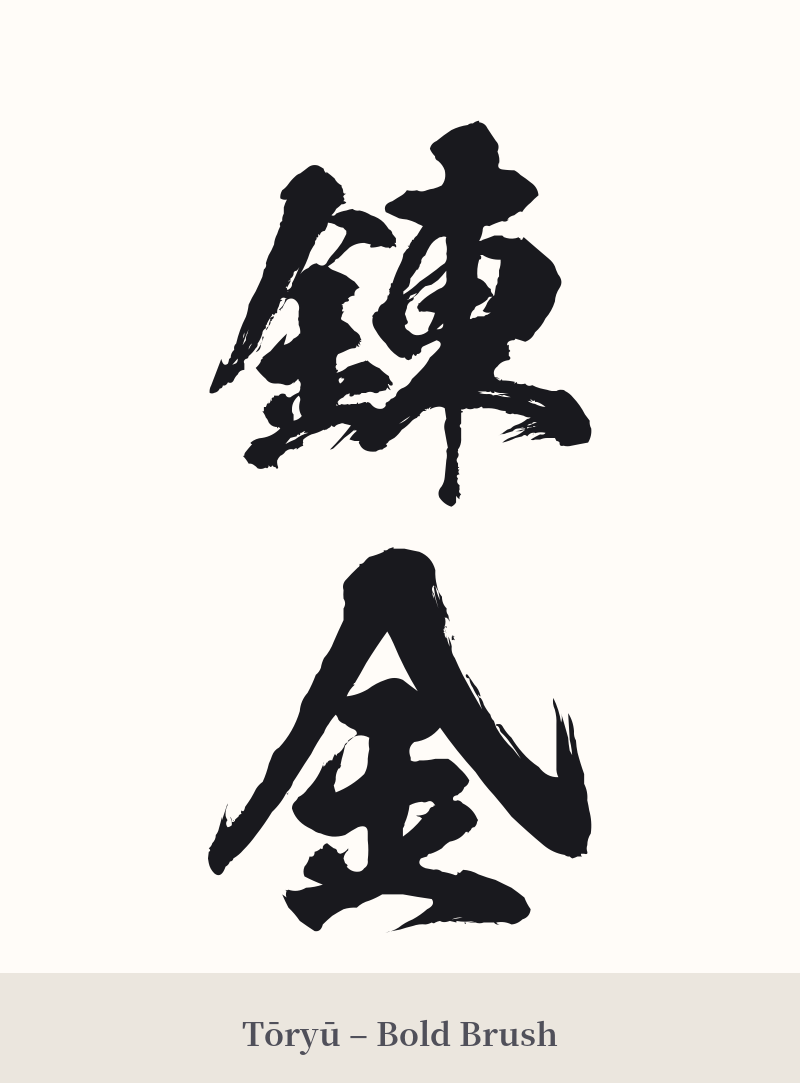
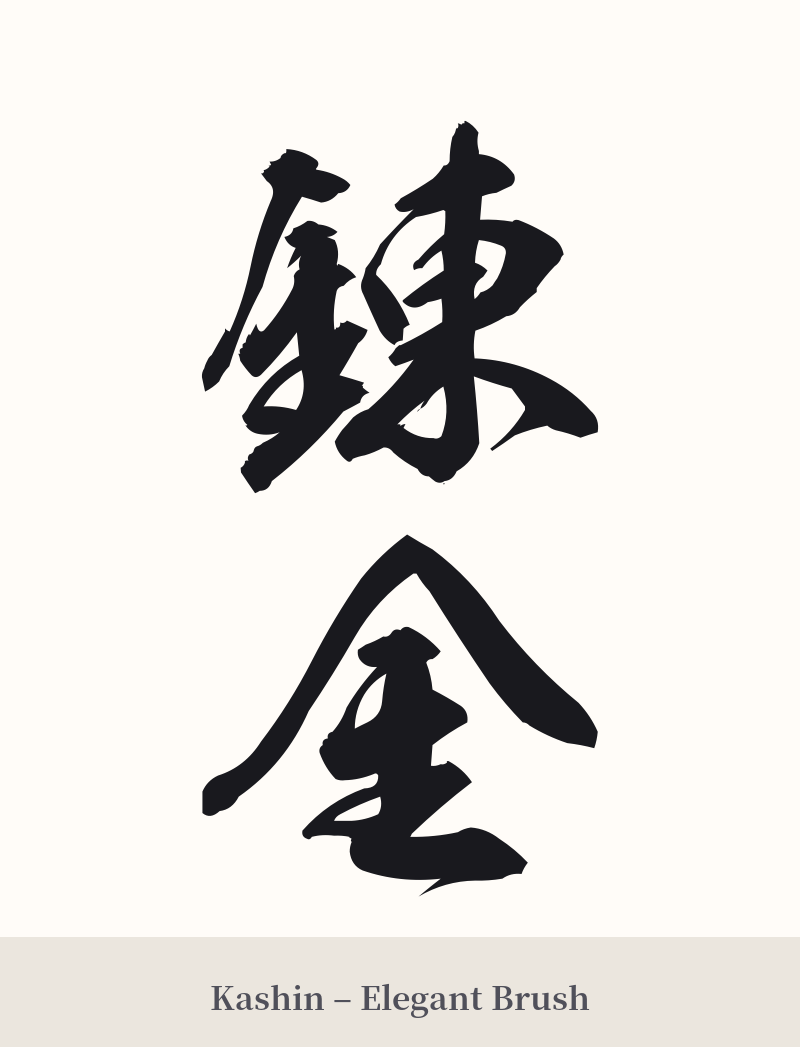
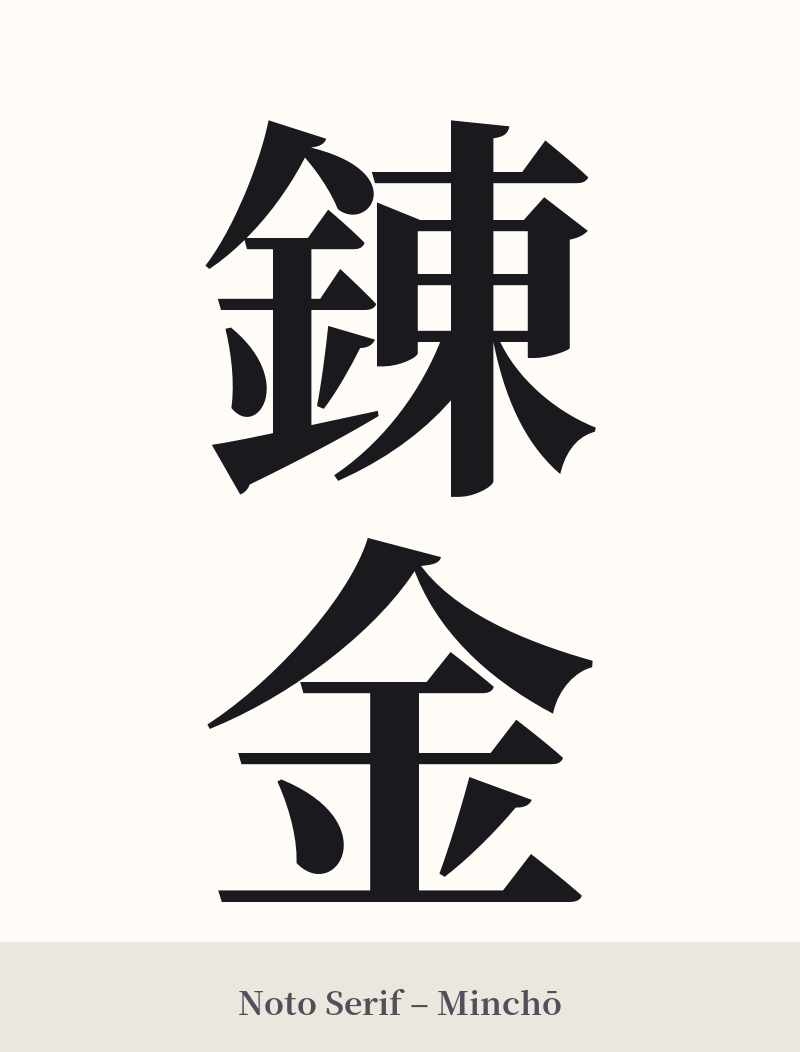
🖌️ Font Styles for 錬金
The same kanji can look dramatically different depending on the calligraphy style. Choose a font that matches the mood you want for your tattoo or design.
🎨 Tattoo Suitability
📐 Tattoo Design Guide
For a 錬金 (Renkin) tattoo, the design can be as symbolic as the meaning itself.
– Placement: Vertical alignment is classic for two-character kanji and works exceptionally well on the forearm, calf, or along the spine. This orientation emphasizes the flow of transformation from one state to another. A horizontal placement could work on the chest or upper back.
– Font Style: The choice of script can drastically change the tattoo's feel. A bold, angular Kaisho (block script) can emphasize the 'scientific' and precise nature of alchemy. In contrast, a more fluid Gyosho (semi-cursive) or Sosho (cursive) script can highlight its mystical, magical, and artistic aspects.
– Visual Elements: Consider integrating other symbolic imagery to create a larger, more thematic piece. A transmutation circle, as seen in many fictional works, could form a background or frame for the kanji. Other ideas include the Ouroboros (a snake eating its own tail, symbolizing cycles), elemental symbols (earth, air, fire, water), or textures that evoke stone and metal.
Comments