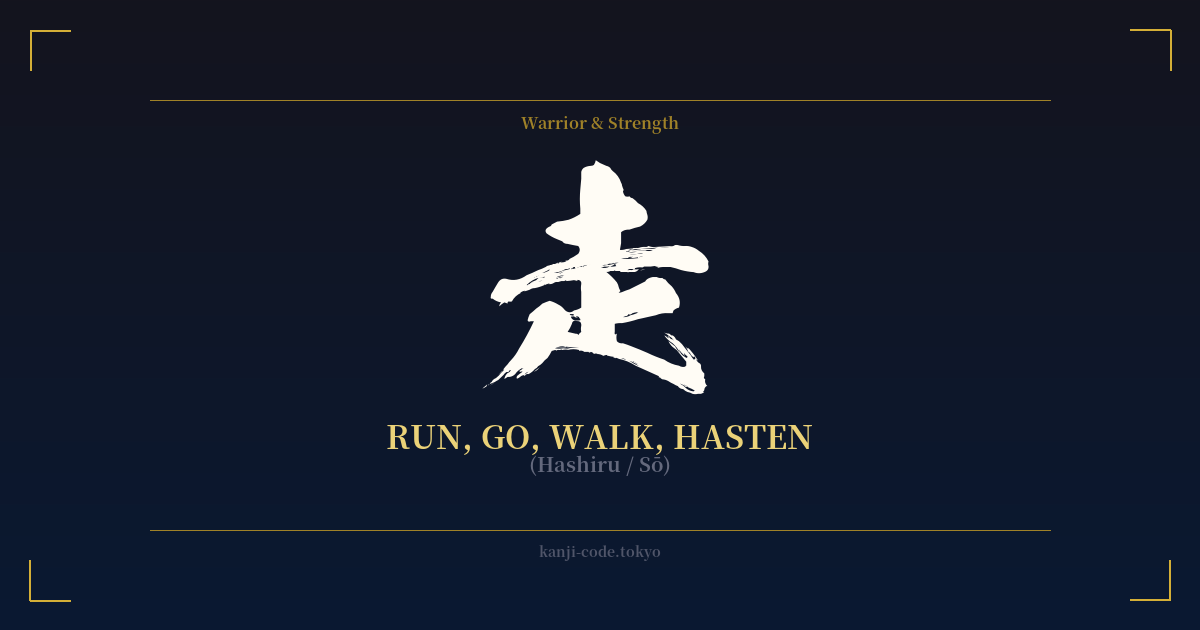
✍️ 走 (Hashiru / Sō) — Cultural Context
The kanji 走 (hashiru) is one of the most direct and dynamic characters in the Japanese language, encapsulating the pure essence of movement and speed. Its origin is a pictograph, a simplified drawing of its meaning. The earliest forms depict a figure with arms swinging (originally represented by 大, meaning 'big' but stylized to look like a person) above a component representing a foot or leg (止). Together, they create a vivid image of a person in full stride, legs pumping and body leaning forward into motion.
In Japan, running is more than just a sport; it's a cultural phenomenon deeply tied to values of endurance, perseverance, and collective effort. The most famous example is the 'ekiden' (駅伝), a long-distance relay marathon where teams from universities and corporations compete. These events are national spectacles, symbolizing the journey, the passing of the baton from one generation to the next, and the immense spirit required to push through pain for the sake of the team. The kanji 走 is at the very heart of this cultural touchstone.
Beyond the literal act of running, 走 is used metaphorically to denote urgency and forward progression. You might hear of a politician 'running' for office (立候補して走る, rikkōho shite hashiru) or a thought 'running' through one's mind. It can also describe the flow of things, like a pen 'running' across paper (ペンを走らせる, pen o haseraseru) for a quick note, or a vehicle 'running' on a road (走行, sōkō). This versatility shows how the core concept of swift, forward movement extends into many facets of life.
Historically, the ability to run was critical for messengers, scouts, and warriors. The 'hikyaku' (飛脚), or express couriers of the Edo period, were legendary for their speed and stamina, running for days to deliver important messages across the country. In this context, 走 embodies not just speed, but also reliability and duty. It represents the drive to get from point A to point B with purpose and haste, a concept that remains powerful whether on an ancient highway or in the context of achieving a modern personal goal.
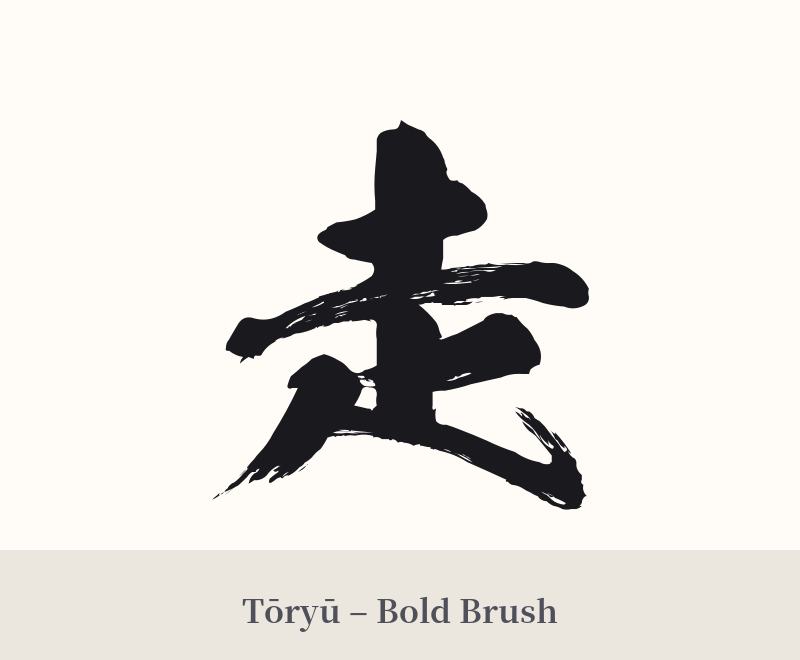
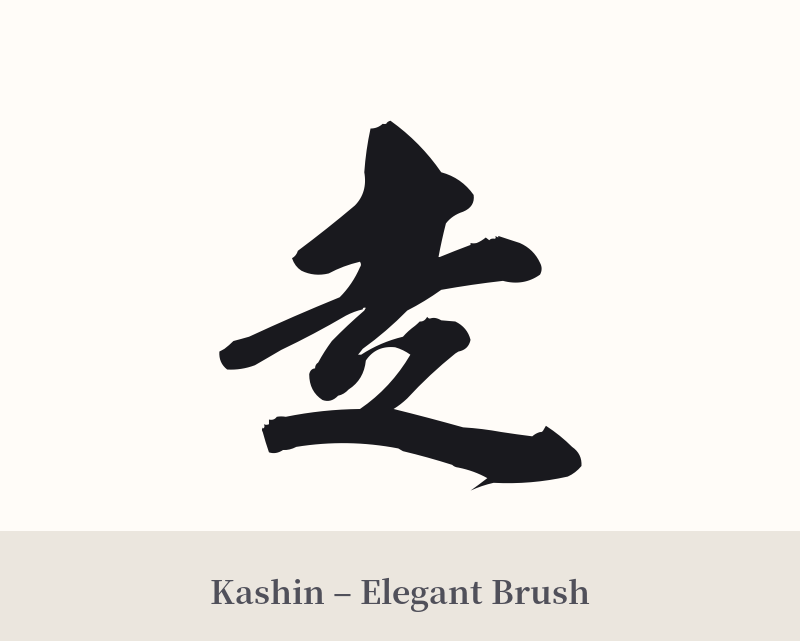
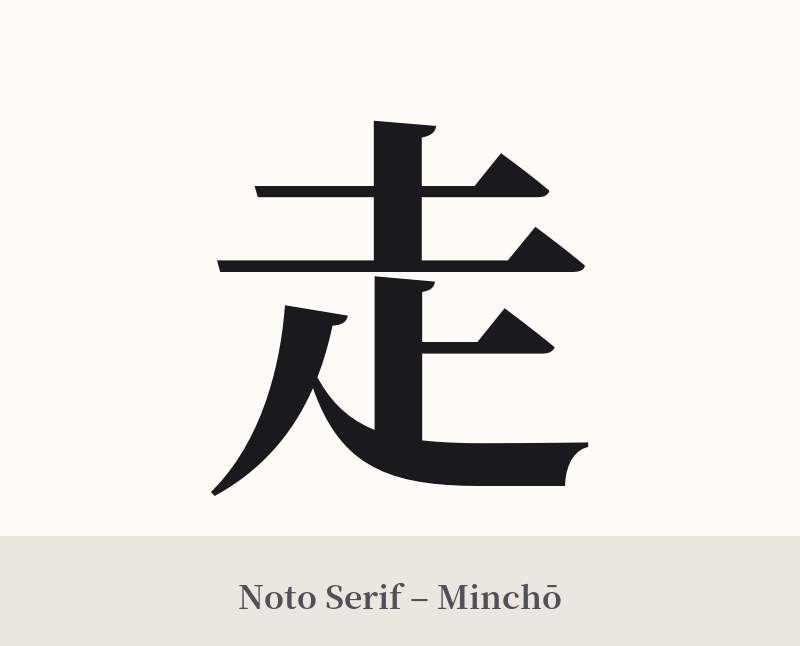
🖌️ Font Styles for 走
The same kanji can look dramatically different depending on the calligraphy style. Choose a font that matches the mood you want for your tattoo or design.
🎨 Tattoo Suitability
📐 Tattoo Design Guide
The kanji 走 offers excellent flexibility for tattoo design due to its dynamic shape and simple structure.
– Placement: This character works exceptionally well on parts of the body associated with movement. The calf, thigh, or forearm are classic choices, as the vertical orientation of the kanji complements the length of the muscle. The back of the shoulder or along the ribs are also strong options.
– Font Style: To emphasize its meaning, consider a cursive or semi-cursive calligraphy style like 'gyōsho' (行書) or 'sōsho' (草書). These styles use fluid, connected strokes that visually enhance the feeling of speed and energy. For a bolder, more grounded look, a crisp 'kaisho' (楷書) block script can represent powerful, determined motion.
– Visual Tips: The character stands strong on its own, but can be paired with other elements to create a larger piece. Abstract brush strokes that mimic wind or motion lines can be placed behind or flowing from the kanji. Incorporating it with a path, a starting line, or even natural elements like wind or water can add a layer of narrative to the design.
Comments