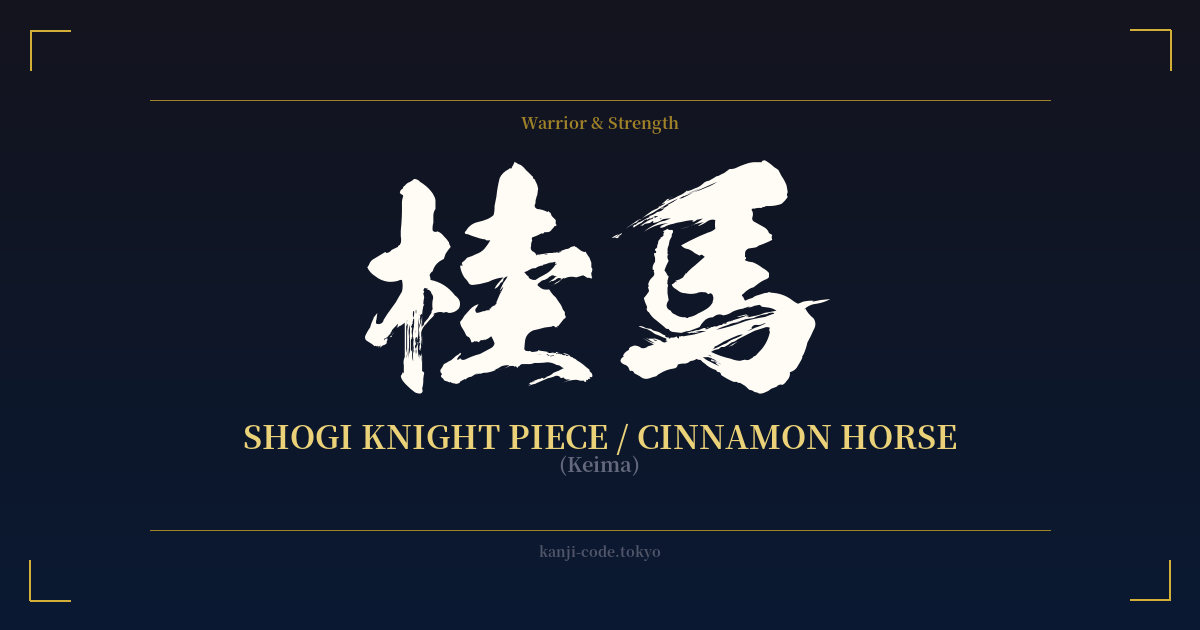
✍️ 桂馬 (Keima) — Cultural Context
桂馬 (Keima) is a word that leaps from the game board of Japanese chess, known as shogi, into the realm of strategic symbolism. Its primary and most recognized meaning is the 'knight' piece in shogi. To understand the depth of Keima, one must first appreciate its unique role in this ancient game of wits.
Shogi, often called the General's Game, is a strategic board game native to Japan. Like its Western counterpart, it features a variety of pieces with distinct movements. The Keima, however, is particularly special. It moves in a unique 'L' shape: two squares forward and one square to the side, in either forward direction. Crucially, it is the only piece in the game that can jump over others, friend or foe, to reach its target.
This ability to bypass obstacles makes the Keima a symbol of non-linear thinking, unexpected attacks, and creative problem-solving. It represents the power of finding a different path when the direct route is blocked. A player who masters the Keima is often seen as a cunning strategist, capable of launching surprising flanking maneuvers and breaking through seemingly impenetrable defenses.
But why is it written with the characters 桂 (cinnamon tree) and 馬 (horse)? This poetic name dates back to the Heian period (794-1185), when shogi pieces were often named using characters for jewels, incense, and precious woods. The 桂 (katsura or cinnamon tree) was a valuable and fragrant wood, so its use here elevates the 'horse' piece to something more refined and special—a 'precious horse' rather than a common steed.
This naming convention gives the word a certain elegance that 'knight' alone lacks. It’s not just a cavalry unit; it's a prized, agile attacker. However, this historical nuance is often lost in modern interpretation, leading to the literal, and somewhat comical, translation 'cinnamon horse.'
There is even a shogi proverb, 「桂馬の高上がり」(Keima no taka-agari), which translates to 'a knight's high leap.' It describes a situation where the Keima advances too far forward, leaving it isolated and vulnerable with no path of retreat. This serves as a cautionary tale: bold, unconventional moves can be brilliant, but without foresight, they can also lead to one's own downfall. Thus, the Keima embodies both the reward and the risk of unconventional strategy.
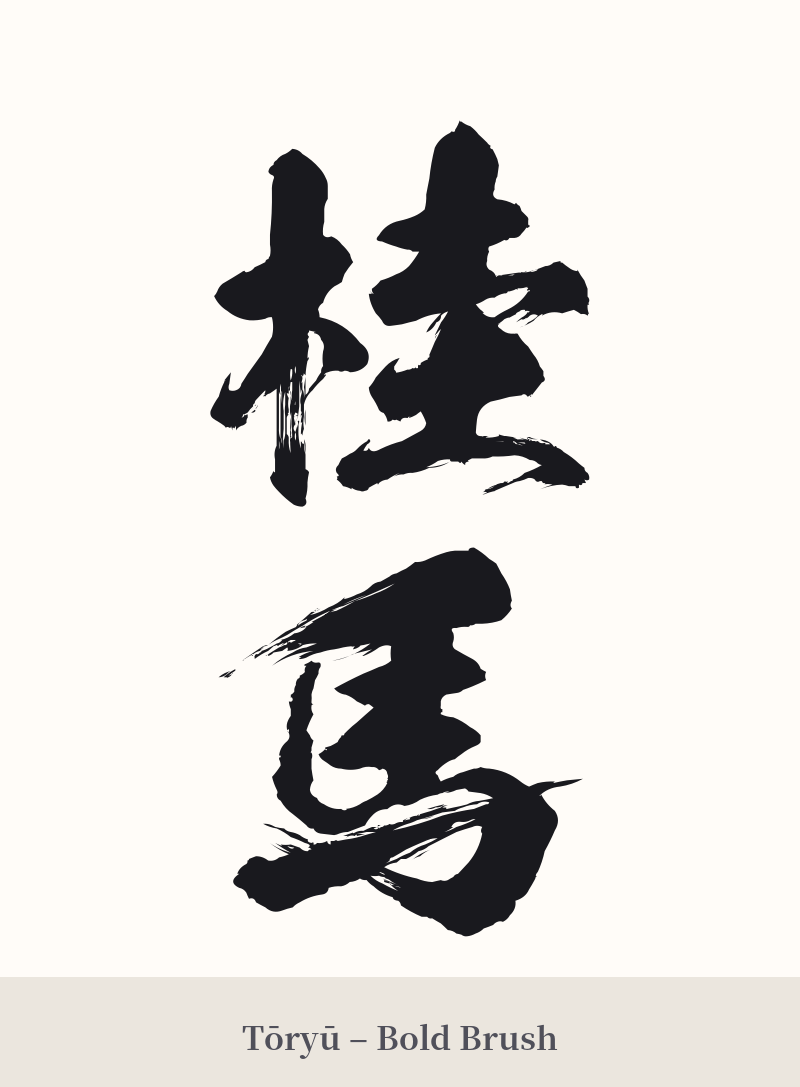
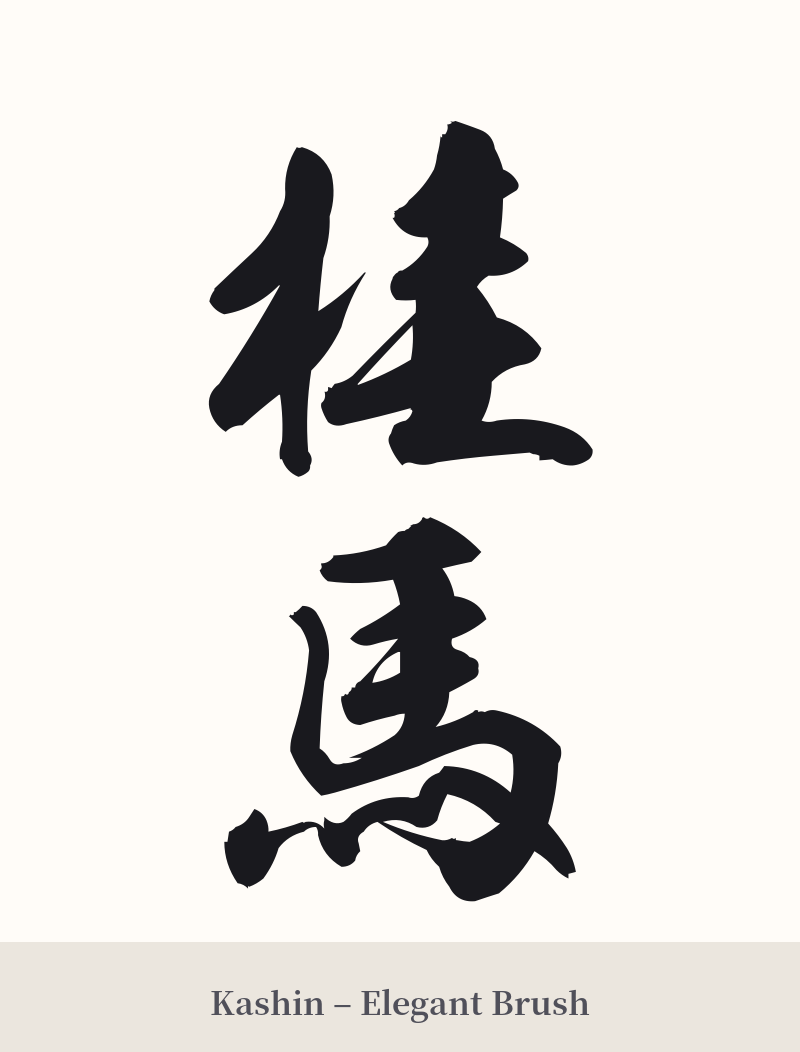
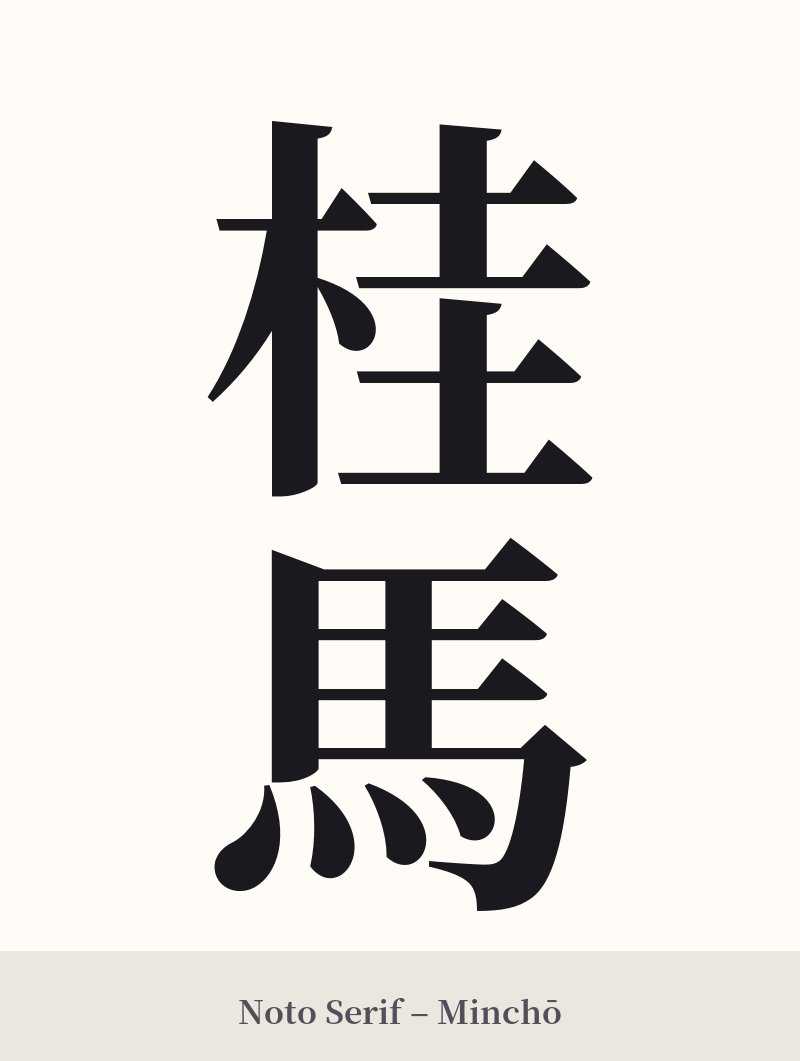
🖌️ Font Styles for 桂馬
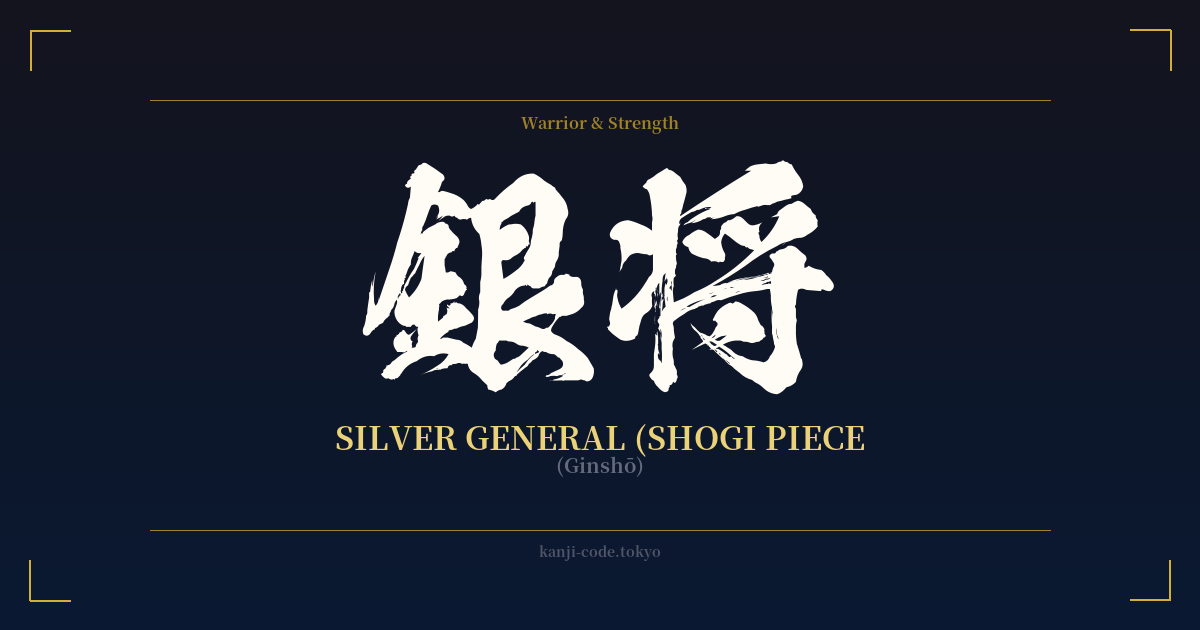
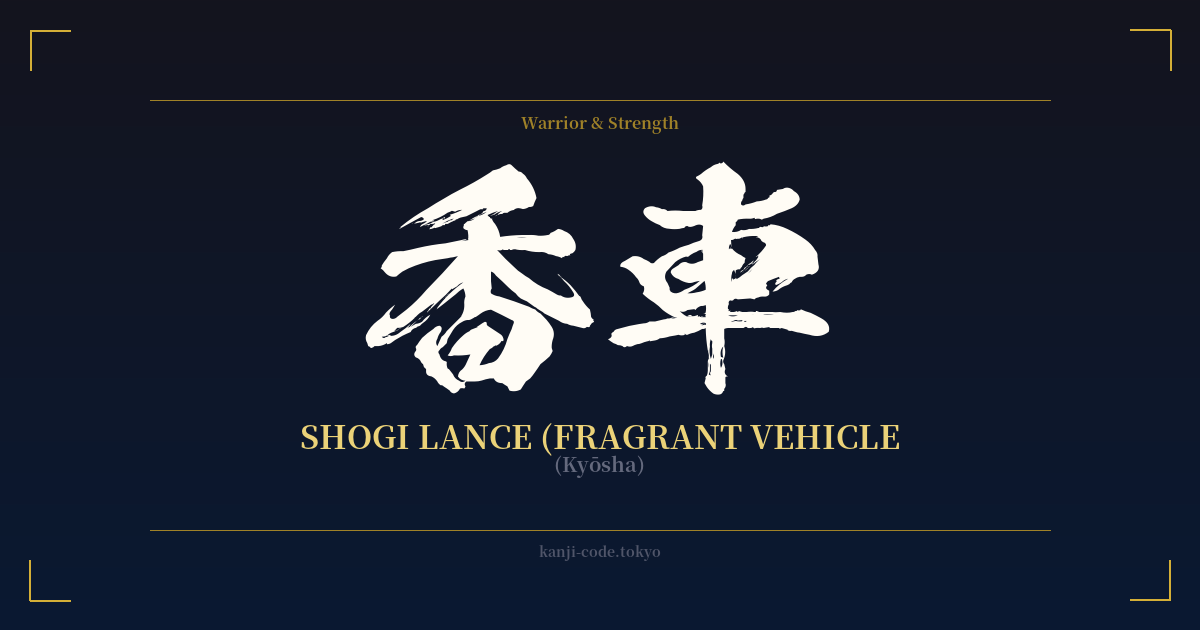
The same kanji can look dramatically different depending on the calligraphy style. Choose a font that matches the mood you want for your tattoo or design.
🎨 Tattoo Suitability
📐 Tattoo Design Guide
For a 桂馬 tattoo, placement that complements its vertical structure is ideal, such as the forearm, calf, or along the spine. The design's success often hinges on providing context to avoid the 'cinnamon horse' misunderstanding.
– Font Style: A semi-cursive script like Gyosho can capture the fluid, jumping movement of the piece. For a more formal, board-game feel, a crisp Kaisho (block) script is a strong choice. Avoid overly complex fonts that could make the ten-stroke characters difficult to read.
– Visual Elements: Consider incorporating the kanji into the shape of a pentagonal shogi piece. This immediately provides the necessary context. Another idea is to have a subtle, stylized horse jumping over a barrier in the background, or even a faint shogi board pattern, to visually explain the piece's function.
– Composition: A simple, vertical arrangement is classic. If combining with other imagery, ensure the kanji remains the focal point. Pairing it with other shogi terms would create a cohesive theme for a larger piece dedicated to strategy and Japanese games.
Comments