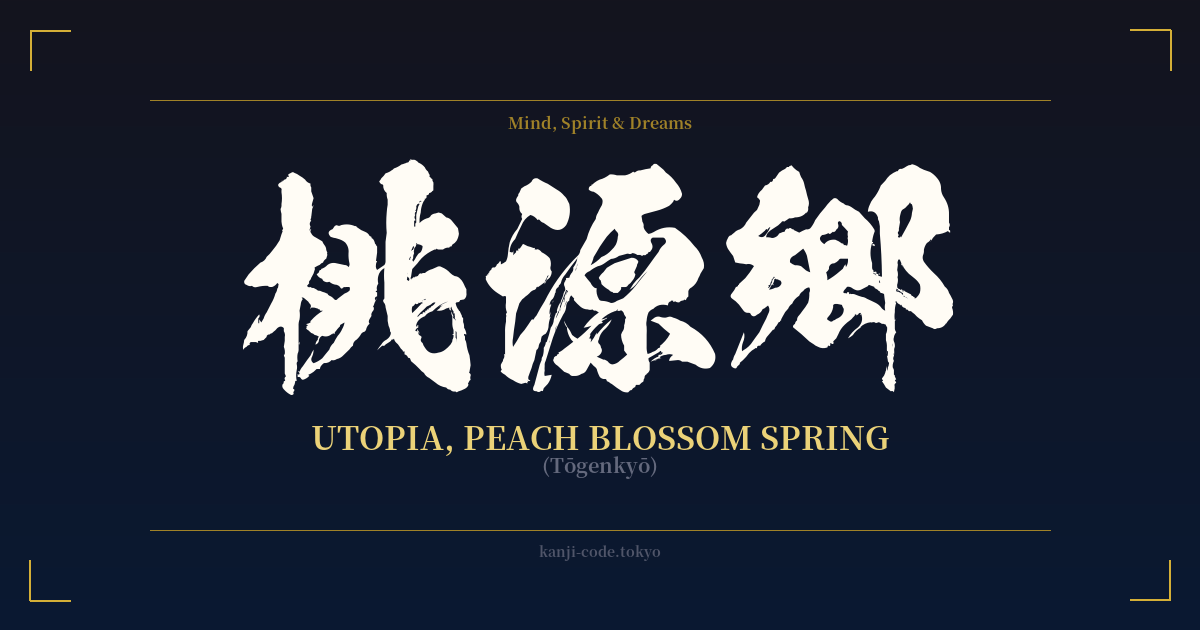
✍️ 桃源郷 (Tōgenkyō) — Cultural Context
桃源郷 (Tōgenkyō) is the Japanese word for a hidden utopia, an earthly paradise untouched by the outside world. Its origin is not Japanese, but rather from a celebrated work of Chinese literature, "The Peach Blossom Spring" (桃花源記, Tōkagen-ki), written by the poet Tao Yuanming around 421 AD.
The tale tells of a fisherman who, after rowing his boat along a river, stumbles upon a grove of blossoming peach trees. Intrigued, he follows the stream to its source and discovers a small opening in a hill. He squeezes through and finds himself in a breathtaking village, a place of perfect peace and prosperity. The inhabitants are descendants of refugees who fled a war-torn dynasty centuries ago and have lived in complete isolation ever since, unaware of the passage of time or the turmoil of the outside world.
They welcome the fisherman with great hospitality. After several days, he takes his leave, promising to keep their existence a secret. However, he marks his route on the way out, intending to return. When he tries to find the village again, neither he nor the officials he tells can ever locate the mysterious peach blossom grove. The paradise is lost forever.
This story was embraced by Japanese scholars and artists, and Tōgenkyō entered the language as the definitive term for a Shangri-La or utopia. It’s more than just a perfect place; it carries a specific nuance of being hidden, natural, and perhaps unattainable. It evokes a deep sense of nostalgia for a simpler, more harmonious way of life.
In modern Japan, Tōgenkyō is a powerful and recurring motif in anime, manga, and literature. It's used to describe any idyllic, secluded location, from a hidden hot spring in the mountains to a fantastical dream world. The word carries a beautiful, slightly melancholic weight—the idea of a paradise that, once left, can never be found again, existing only in memory and longing.
🖌️ Font Styles for 桃源郷
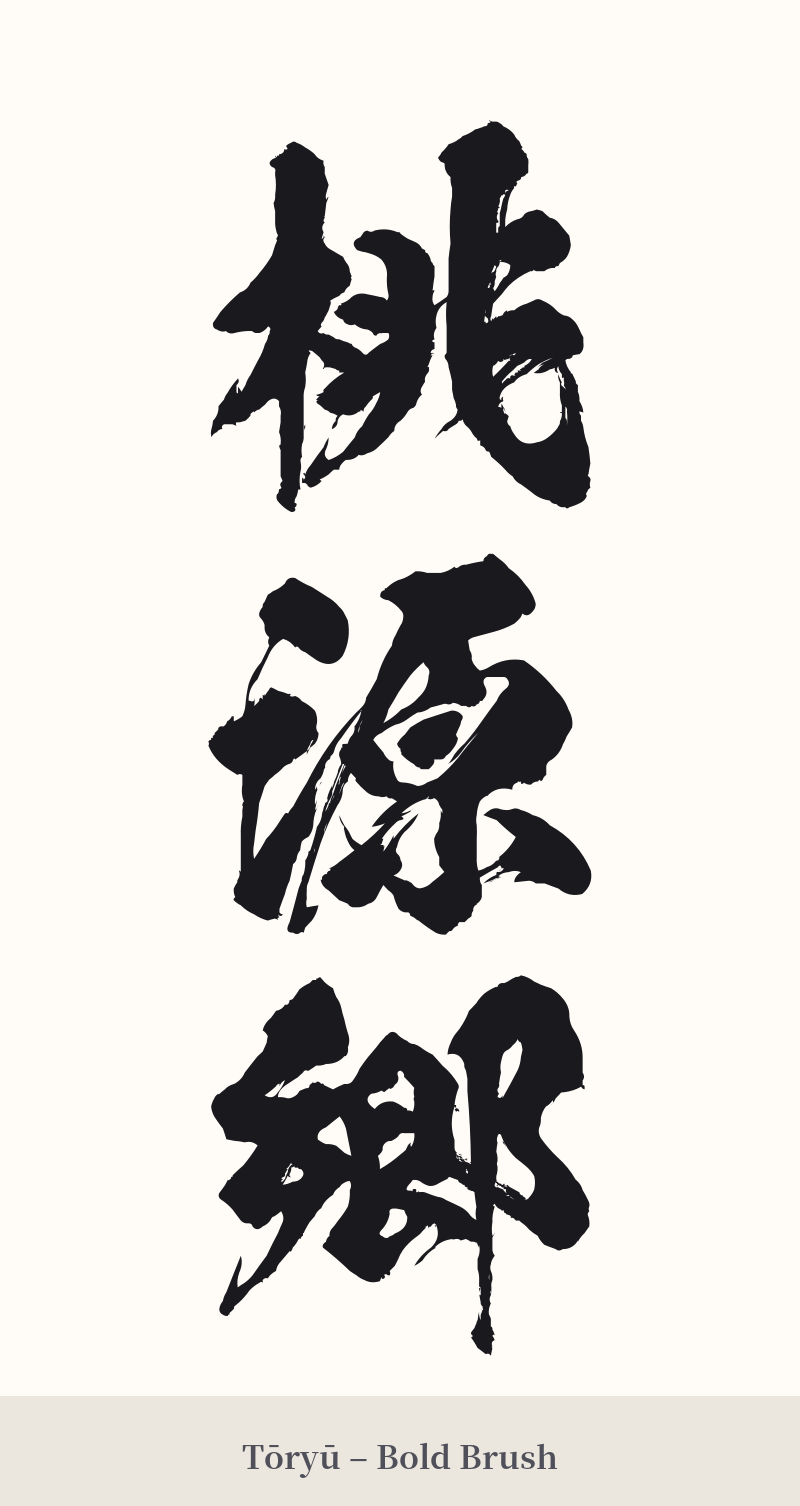
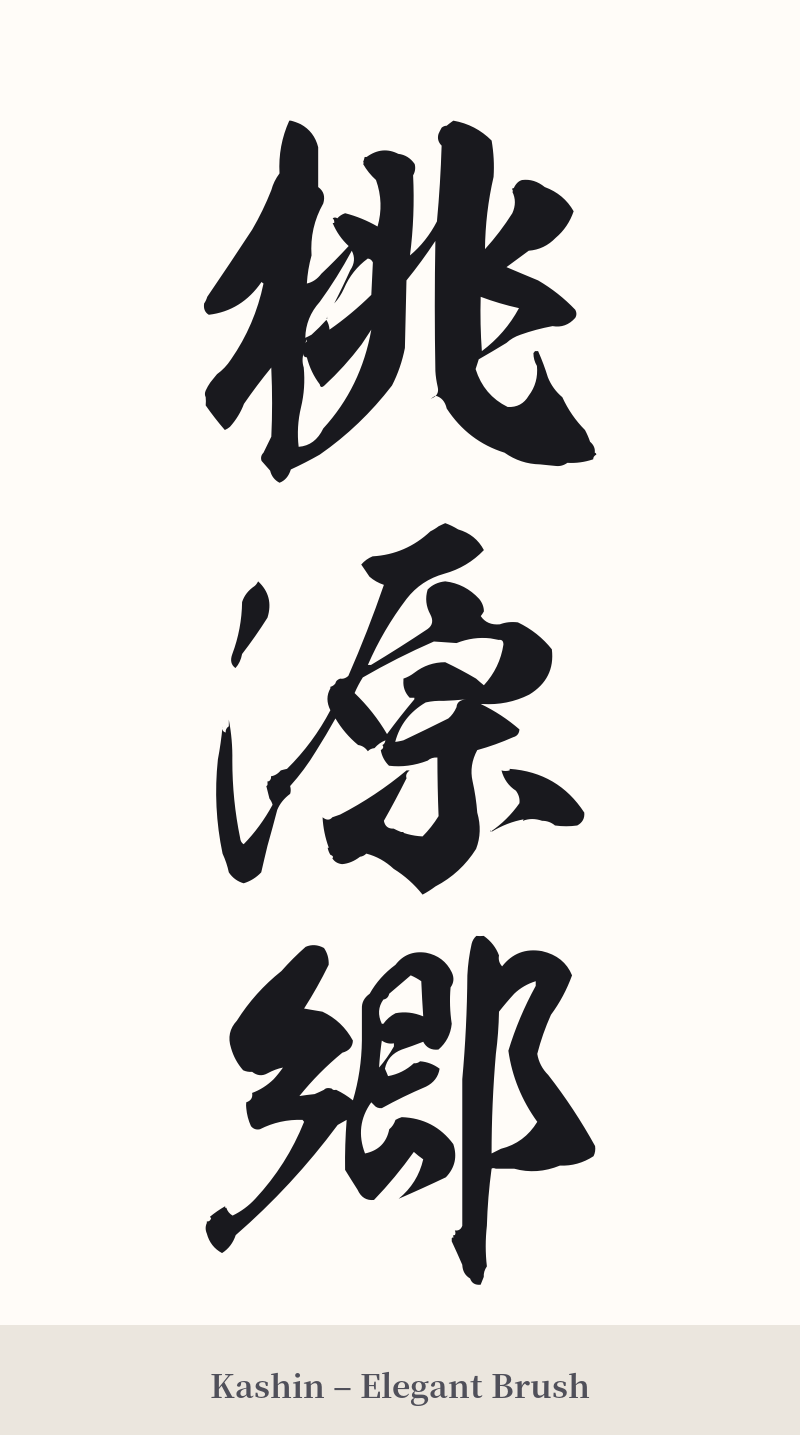
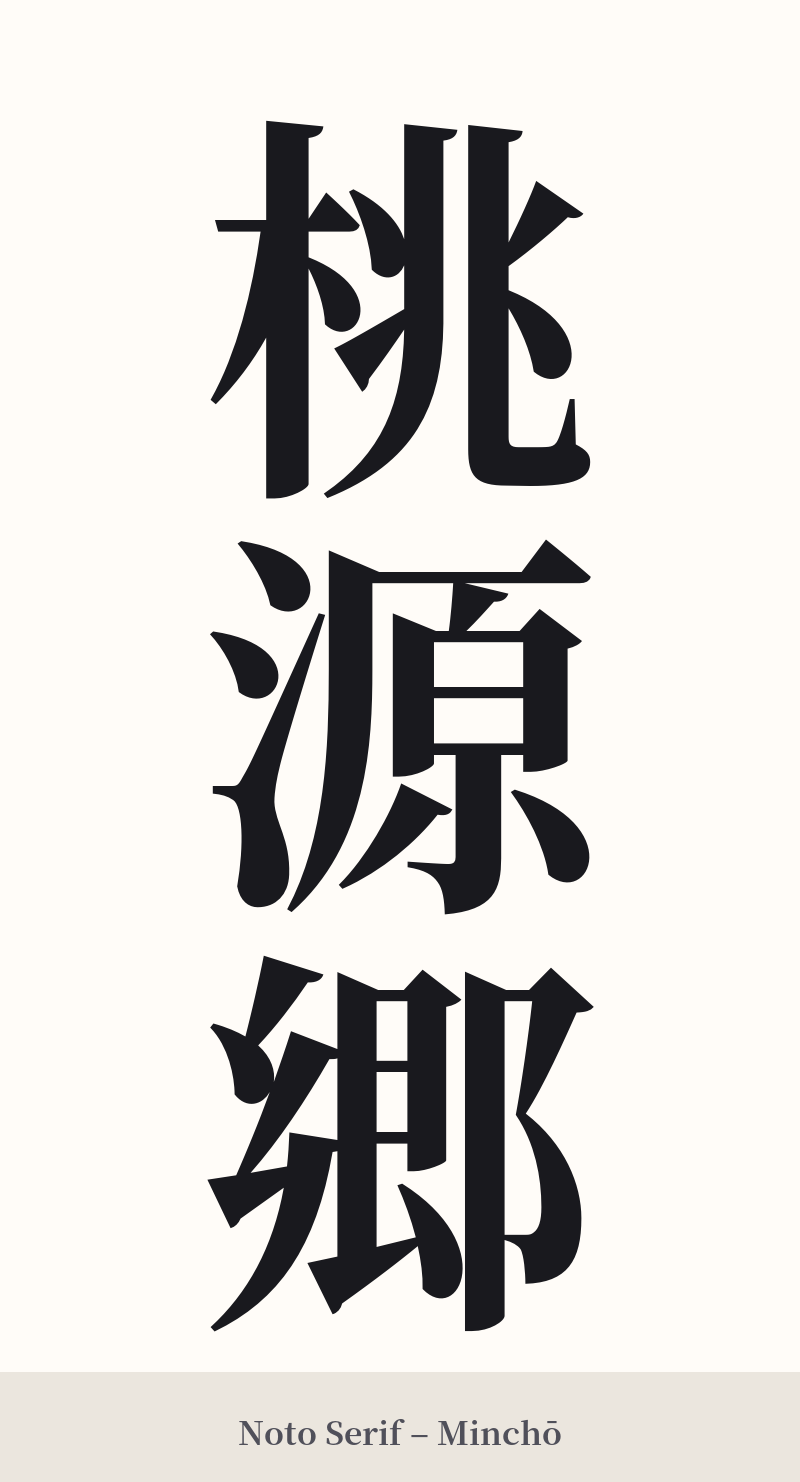
The same kanji can look dramatically different depending on the calligraphy style. Choose a font that matches the mood you want for your tattoo or design.
🎨 Tattoo Suitability
📐 Tattoo Design Guide
For a 桃源郷 (Tōgenkyō) tattoo, the visual narrative is as important as the characters themselves.
– Placement: A vertical alignment is traditional and highly recommended. It looks powerful along the spine, forearm, or calf, echoing the flow of a traditional scroll painting. A horizontal placement can also work across the chest or upper back.
– Font Style: The style can dramatically alter the mood. A flowing, semi-cursive script (gyōsho) enhances the poetic and dreamlike quality of the word. For a more solid and timeless feel, a classic block script (kaisho) provides clarity and strength. Mincho style offers an elegant, print-like aesthetic.
– Accompanying Imagery: This is a perfect kanji to build a larger piece around. Consider incorporating elements from the original story: drifting peach blossom petals, a serene river, a small wooden boat, or the mouth of a cave hidden behind foliage. This adds layers to the story and creates a truly unique design.
Comments