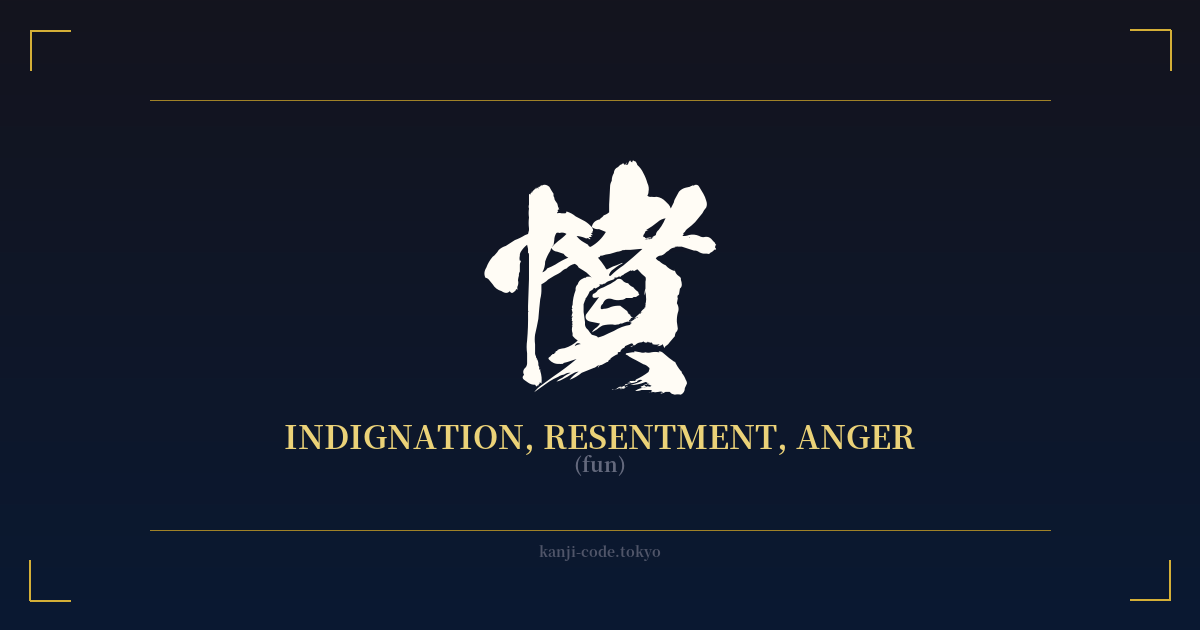
✍️ 憤 (fun) — Cultural Context
The kanji 憤 (fun) delves deeper than simple anger. It captures a specific, potent emotion: indignation. This is not the explosive, momentary flash of 怒 (ikari), but a smoldering fire of resentment born from a sense of injustice or unfairness. It is the anger that wells up in your chest when you witness a wrong that violates your principles.
Etymologically, 憤 is a fascinating combination of radicals. On the left, it features the heart radical (忄, a variant of 心), which grounds the character firmly in the realm of emotion and feeling. On the right is 賁 (fun), a phonetic component that originally depicted something bursting forth with energy or decoration. Together, they create a vivid image: an emotion welling up in the heart and bursting out with great force.
In Japanese culture, this feeling, known as ikidōri (憤り), is often seen as a more considered and righteous form of anger. It’s the emotion that might fuel a samurai’s quest for vengeance after his lord is wronged, or a citizen’s protest against corruption. It implies that a moral or social boundary has been crossed, and the resulting anger is a justified response to that transgression.
You'll find 憤 used in strong, formal language. The word 憤慨 (fungai) means 'indignation' or 'resentment' and is often used in news reports about scandals or public outrage. Another term, 憤然 (funzen), is an adverb meaning 'indignantly,' describing someone acting with righteous fury. These are not everyday, casual words; they carry significant weight and are reserved for serious situations.
Unlike 恨 (urami), which is a personal, often hidden grudge that can fester into hatred, 憤 is more external and principled. It is the anger of the whistleblower, the protestor, the person who stands up and says, 'This is not right.' It is a powerful concept that speaks to the connection between emotion and one's moral compass, making it a character of profound psychological and social depth.
🖌️ Font Styles for 憤
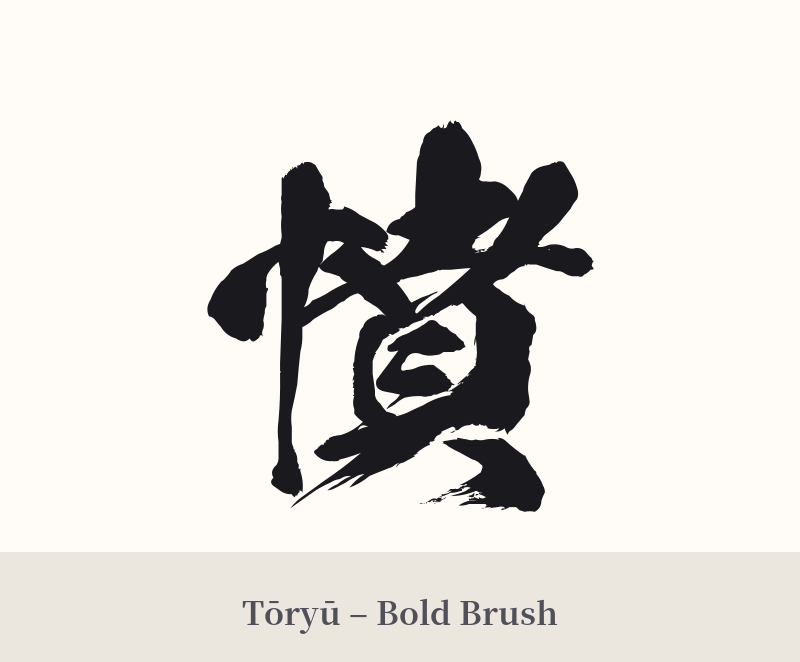
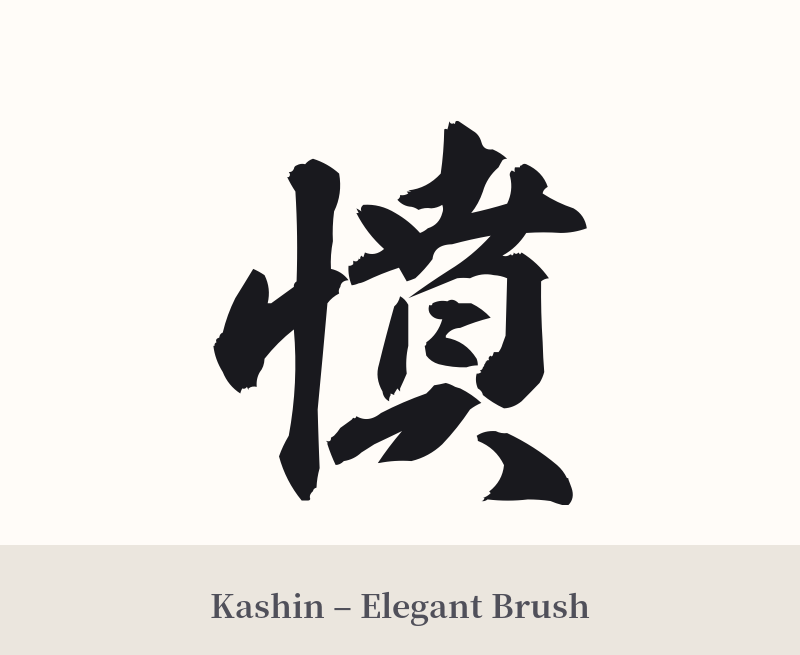
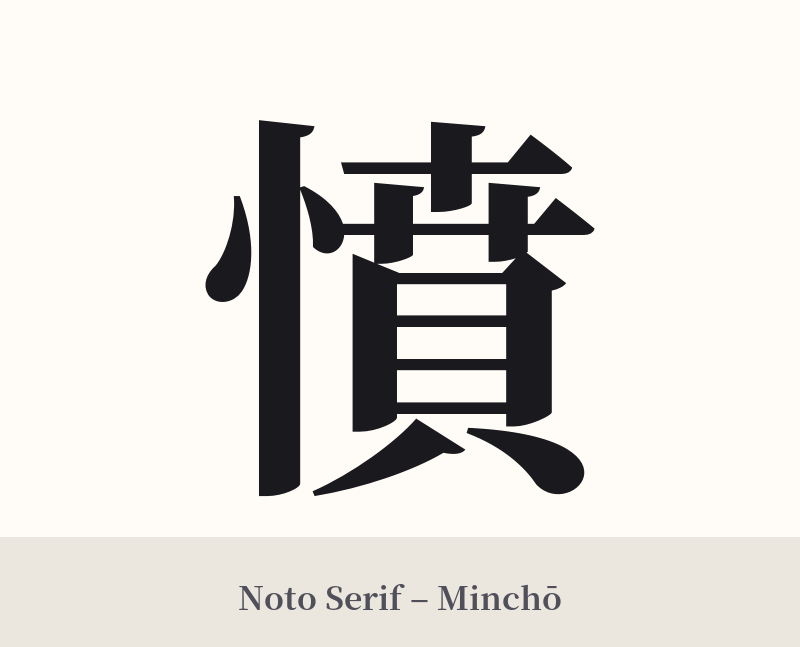
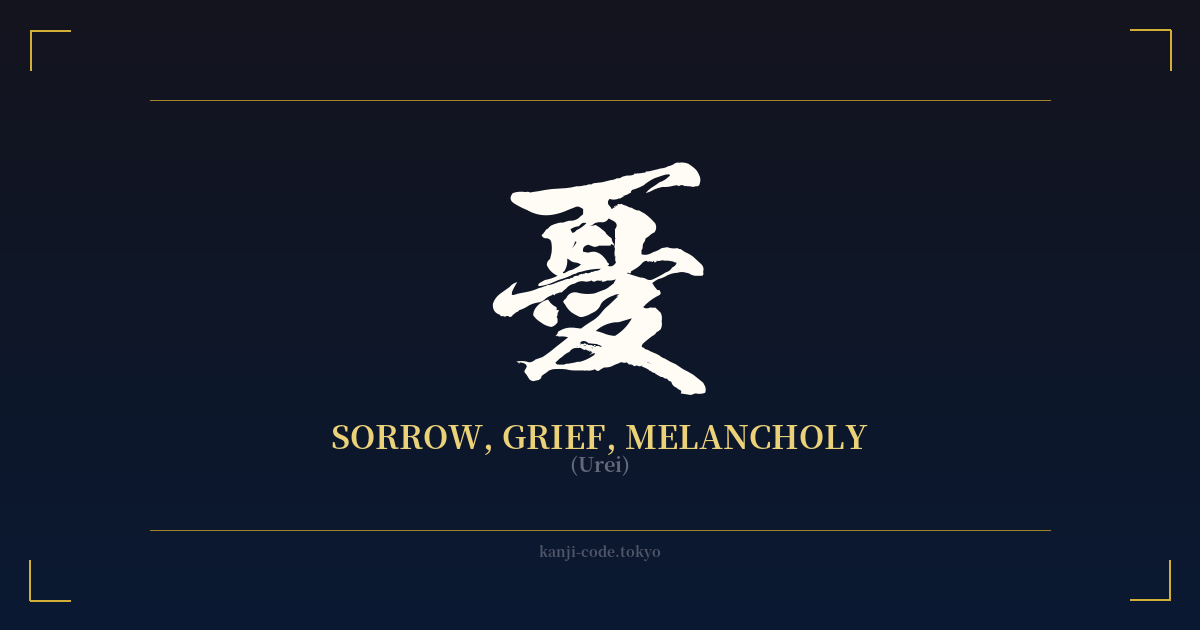
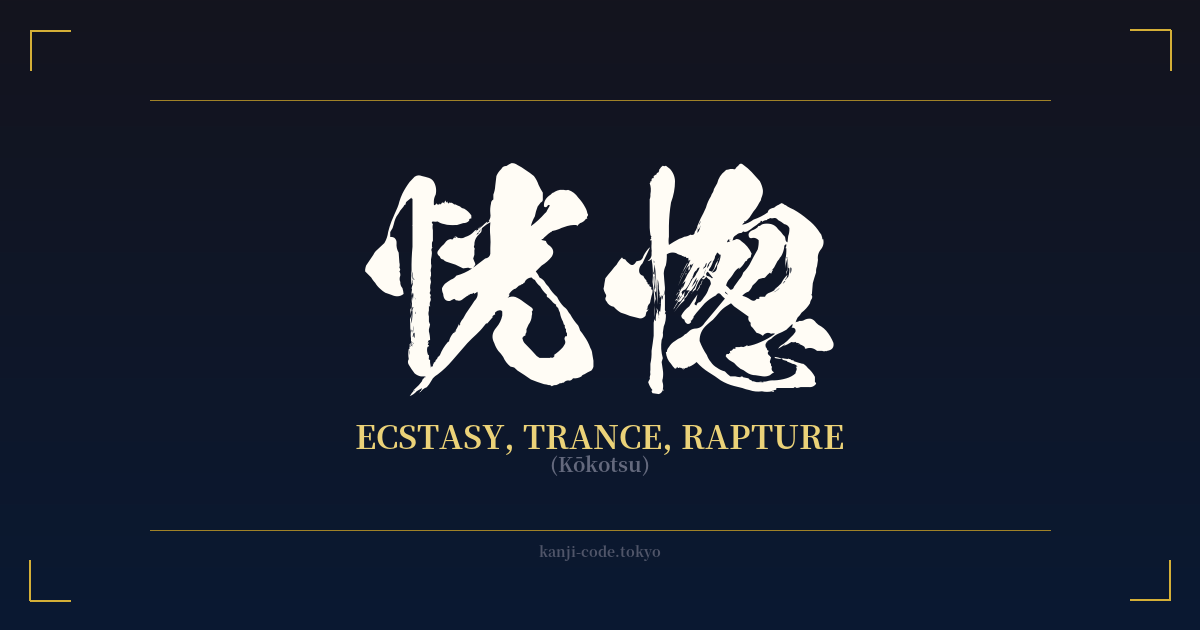
The same kanji can look dramatically different depending on the calligraphy style. Choose a font that matches the mood you want for your tattoo or design.
🎨 Tattoo Suitability
📐 Tattoo Design Guide
For a kanji as complex and emotionally charged as 憤, the design choices are crucial.
– Placement: This 15-stroke character needs space to be legible. Consider larger, flatter areas like the forearm, calf, back, or shoulder blade. Avoid smaller spots like the wrist or ankle where the details could blur over time.
– Font Style: A strong, expressive font is recommended. A bold Kaisho (block script) style will emphasize its stability and righteous conviction. Alternatively, a dynamic Gyosho (semi-cursive) or Sosho (cursive) script can capture the feeling of emotion bursting forth, though legibility might be a concern with highly stylized Sosho.
– Visual Tips: The heart radical (忄) on the left is the key to its meaning. Ensure your tattoo artist keeps it clear and distinct. You could pair this kanji with imagery that reinforces its meaning, such as a cracked or broken chain, subtle flames, or a stormy background, to visually narrate the story of indignation and breaking free from injustice.
Comments