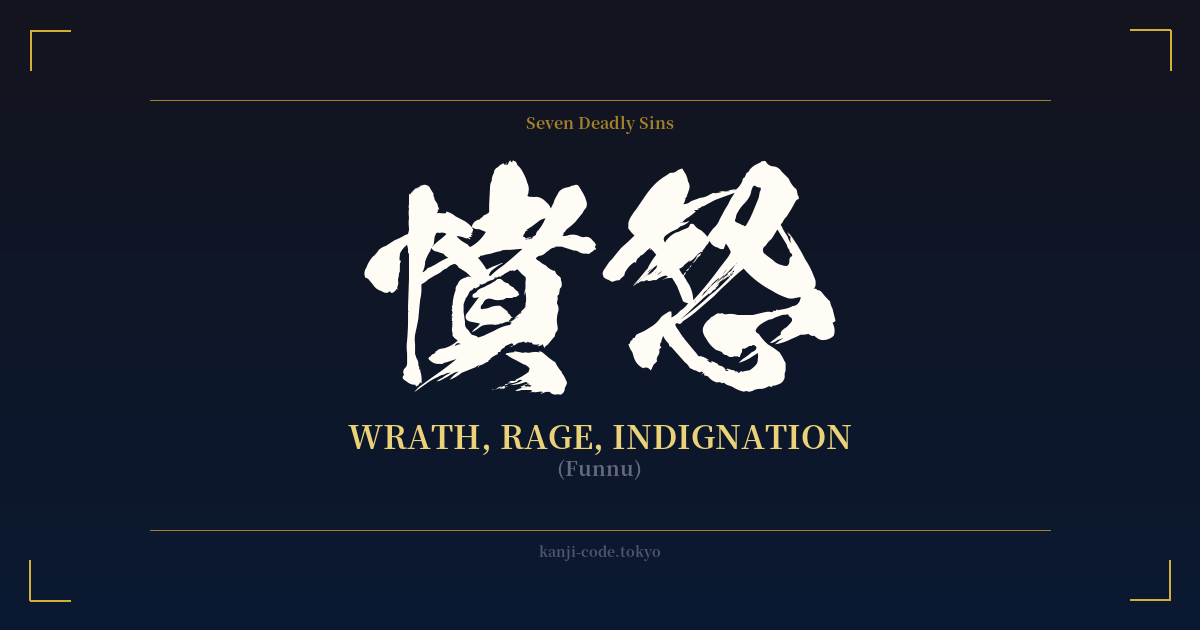
✍️ 憤怒 (Funnu) — Cultural Context
憤怒 (Funnu) is a Japanese word that goes far beyond simple annoyance. It represents a profound, explosive, and often righteous anger. While commonly translated as 'Wrath' or 'Rage,' Funnu carries a weight that suggests an overwhelming force, a fury that consumes and transforms.
In the West, 'Wrath' is famously known as one of the Seven Deadly Sins within Christianity. Japan adopted this concept as 七つの大罪 (Nanatsu no Taizai), and Funnu is the direct equivalent used for this sin. It embodies uncontrolled anger, hatred, and a desire for vengeance that is considered spiritually corrupting.
However, the concept of wrathful energy has a fascinatingly different and more nuanced role in Japanese Buddhism. Here, wrath is not always a sin but can be a powerful tool for compassion. The fearsome guardian deities known as Myōō (明王), or Wisdom Kings, are depicted with faces contorted in Funnu. The most famous of these is Fudō Myōō (不動明王), the Immovable Wisdom King.
Fudō Myōō's wrathful appearance is not a sign of malice. Instead, his rage is directed at ignorance, illusion, and the obstacles that prevent beings from achieving enlightenment. His fury is a manifestation of his unwavering determination to save all sentient beings, even if it requires a 'tough love' approach. His flames of wrath burn away impurities and his sword cuts through delusion. This makes the Buddhist interpretation of Funnu a compassionate, protective force, a stark contrast to the purely sinful Western view.
In modern Japanese pop culture, Funnu is a familiar trope. It's the state a manga or anime protagonist enters to unlock newfound power and defeat an insurmountable foe. Think of a character's eyes glowing as they are overcome with rage after a friend is harmed. This is Funnu—a breaking point that unleashes dormant potential. This usage has solidified the word's image as a source of immense, almost supernatural power born from extreme emotional turmoil.
Therefore, Funnu is a duality. It is the destructive, sinful rage of the Seven Deadly Sins, but it is also the compassionate, purifying fire of a guardian deity. It represents anger in its most primal and powerful form, capable of both destroying the self and protecting others.
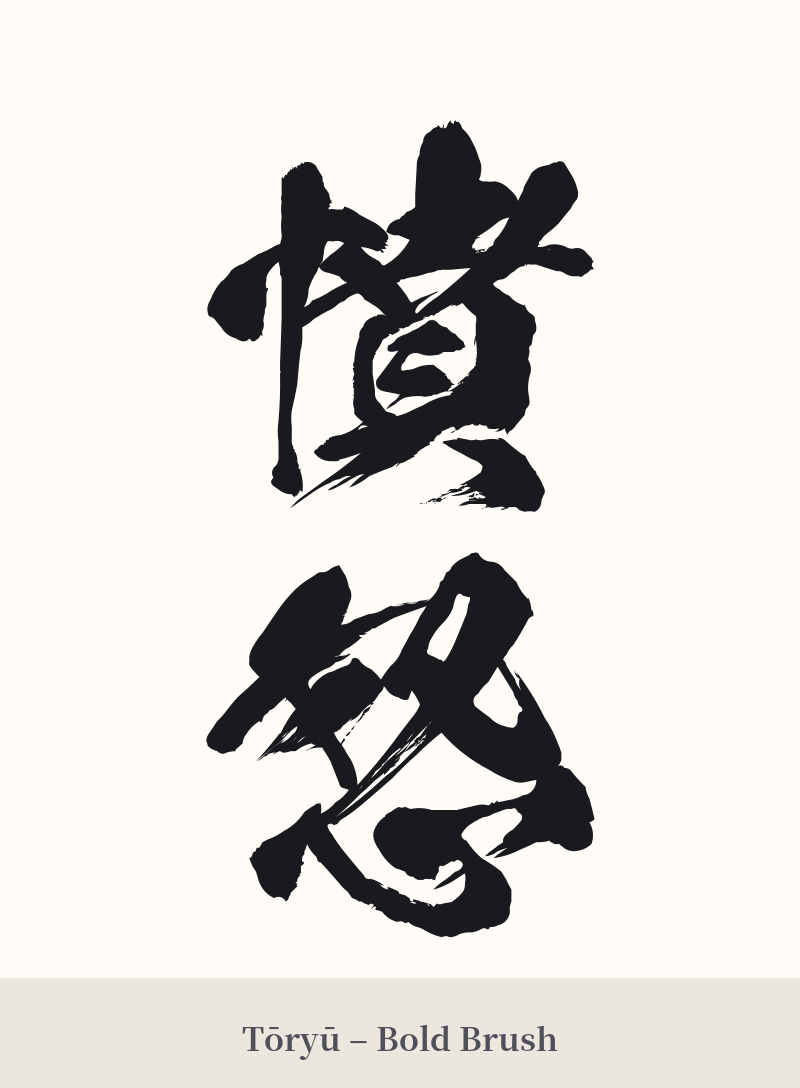
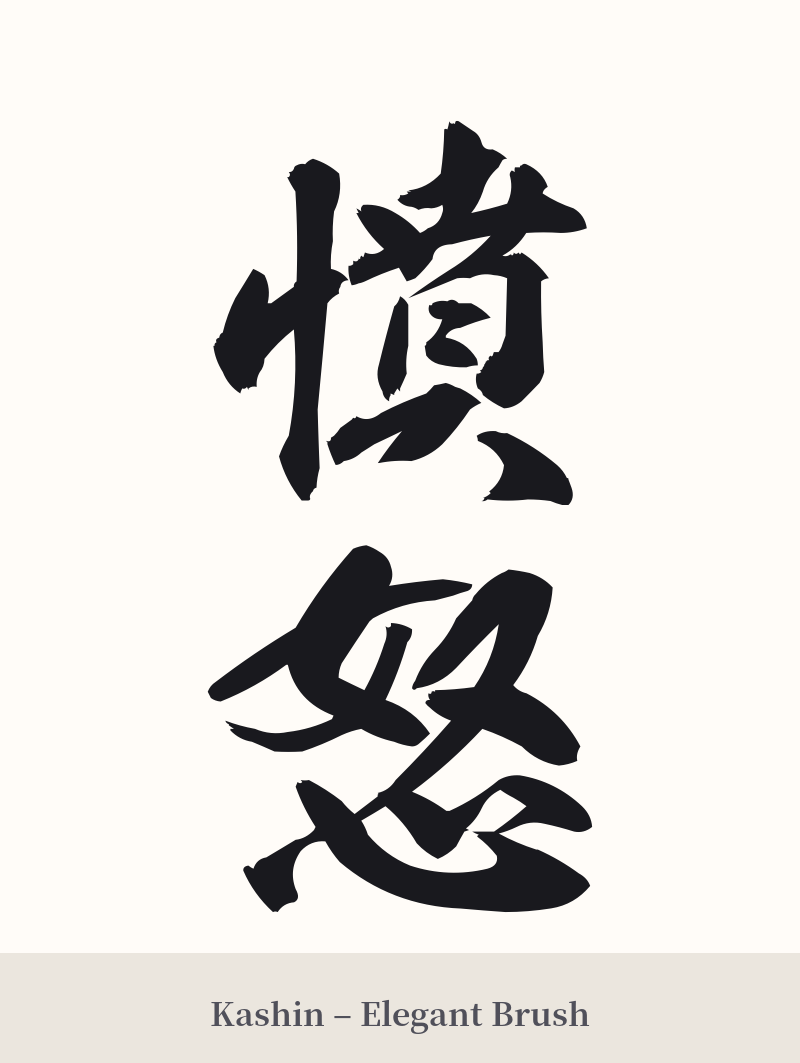
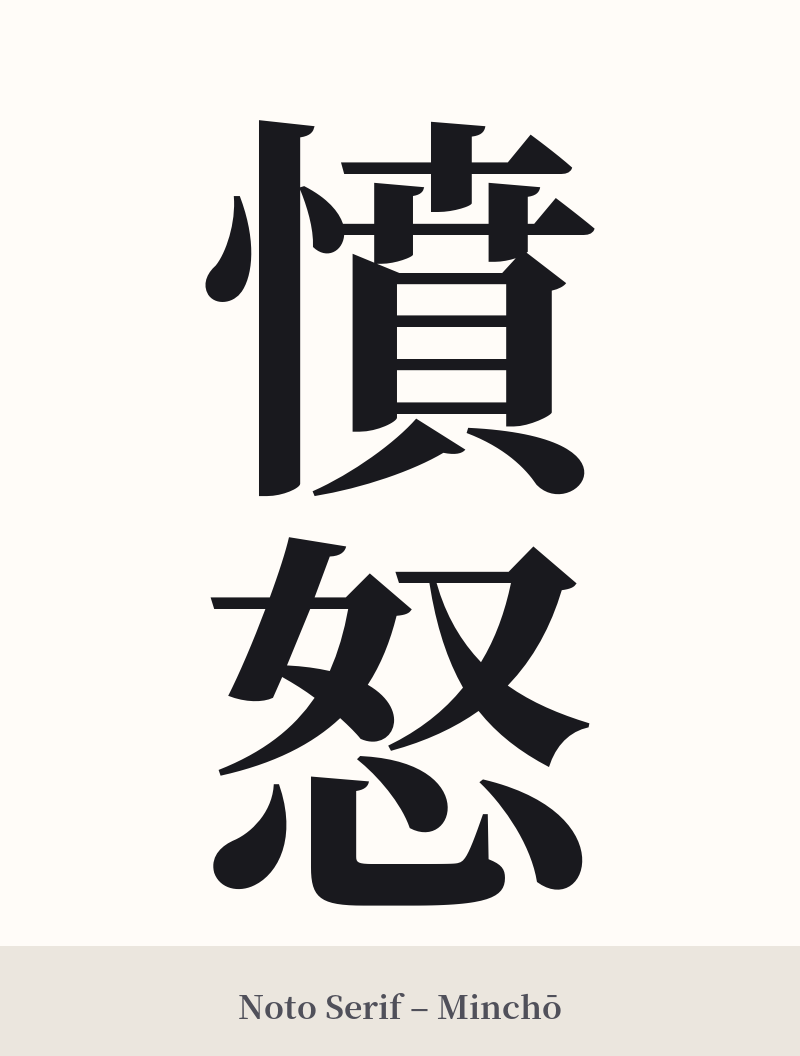
🖌️ Font Styles for 憤怒
The same kanji can look dramatically different depending on the calligraphy style. Choose a font that matches the mood you want for your tattoo or design.
🎨 Tattoo Suitability
📐 Tattoo Design Guide
A 憤怒 (Funnu) tattoo is a bold statement that demands careful consideration of its design and placement.
– Placement: Due to the complexity of the characters (24 strokes total), this design works best on larger, flatter areas of the body. The back, chest, or a vertical design down the forearm or calf will provide enough space to render the details clearly.
– Font Style: The choice of font can dramatically alter the feeling of the tattoo. An aggressive, semi-cursive style like Gyosho can capture the explosive energy of rage. For a more chaotic and raw look, a highly stylized Sosho (cursive) script is an excellent choice. Conversely, a thick, blocky Kaisho script can represent a more contained, simmering indignation.
– Visual Elements: Enhance the theme of Funnu by incorporating related Japanese motifs. Flames are a natural fit, echoing the purifying fire of Fudō Myōō. Jagged, dark storm clouds or crashing waves can also convey a sense of uncontrollable natural fury. For a more direct reference, the tattoo could be integrated into a larger piece featuring an Oni mask or the face of a wrathful deity.
Comments