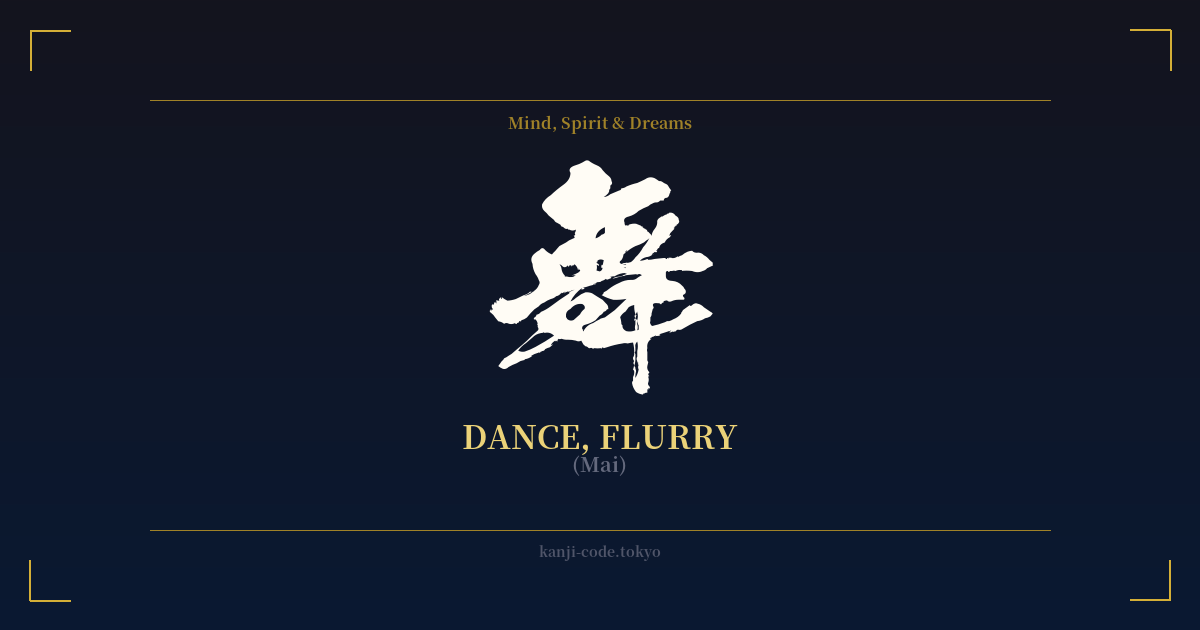
✍️ 舞 (Mai) — Cultural Context
The kanji 舞 (mai) is a character that beautifully encapsulates a core aspect of Japanese aesthetics: disciplined, expressive movement. It goes far beyond the simple English word 'dance,' carrying connotations of ritual, performance, and even the elegant patterns of nature.
Historically, the character's origins are believed to depict a person holding ritual objects, suggesting a performance for the gods. This sacred connection is still very much alive. In Japan, a crucial distinction is made between 舞 (mai) and 踊り (odori). While both mean 'dance,' they are not interchangeable. 'Mai' refers to a more refined, often slower and more circular style of movement. It is grounded in tradition and often has a strong narrative or spiritual component. Think of the deliberate, gliding steps in Noh theater or the sacred Kagura dances performed at Shinto shrines to appease and entertain the kami (gods).
This form of dance, 'mai,' is a cornerstone of classical Japanese arts. In Noh (能) and Kabuki (歌舞伎), a 'mai' is a specific dance sequence performed to instrumental music, conveying the inner emotional state of a character. The term 'buyō' (舞踊), which is the general word for Japanese dance, is itself a combination of 'mai' and 'odori,' acknowledging the two fundamental styles.
The character's meaning also extends poetically to the natural world. It can mean 'to flutter' or 'flurry,' evoking the image of cherry blossom petals dancing in the wind (a 'sakura-fubuki' or 'cherry blossom blizzard') or snowflakes swirling in the air. This dual meaning connects human artistry with the effortless grace of nature, suggesting that the most beautiful performances mimic the organic flow of the world around us.
As a standalone character, 舞 is imbued with elegance, artistry, and a sense of profound, controlled expression. It represents not just physical movement, but the spirit and intention behind it, making it a symbol of both the performing artist and the poetic beauty found in a fleeting moment.
🖌️ Font Styles for 舞
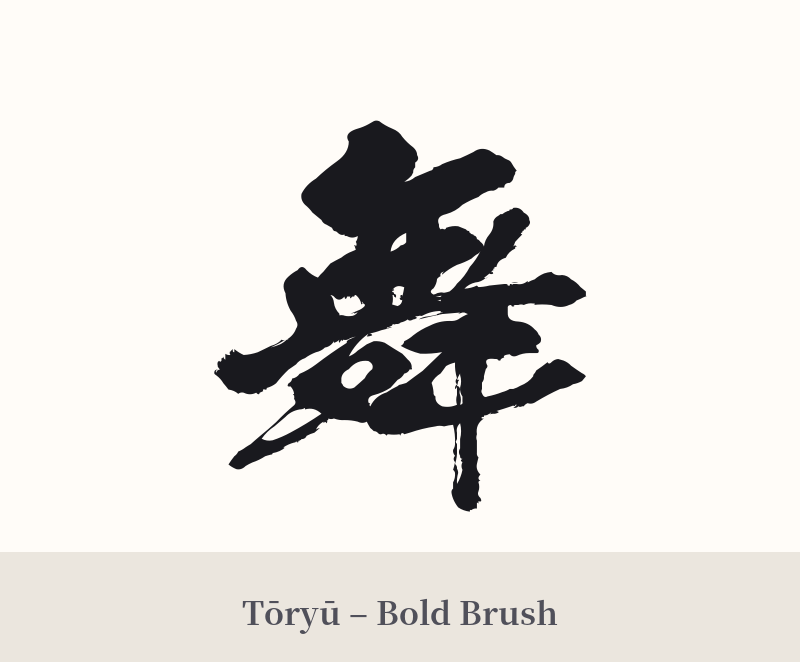
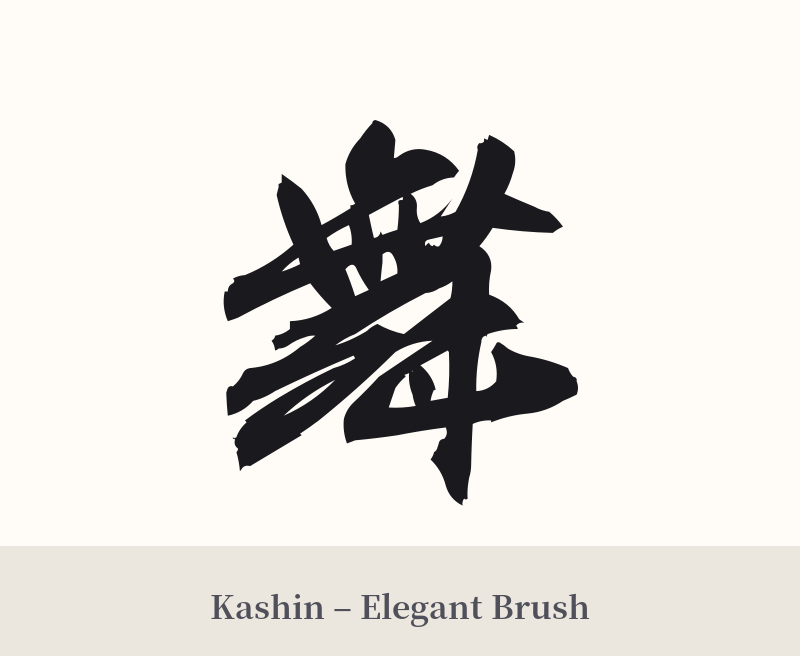
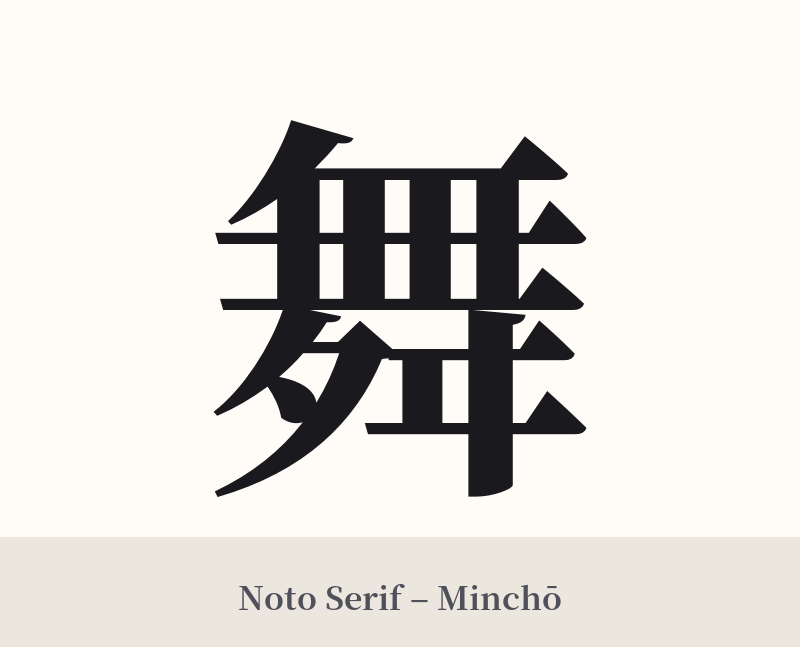
The same kanji can look dramatically different depending on the calligraphy style. Choose a font that matches the mood you want for your tattoo or design.
🎨 Tattoo Suitability
📐 Tattoo Design Guide
The kanji 舞 offers wonderful design flexibility due to its inherent sense of motion.
– Placement: This character works beautifully in vertical orientations. Consider placing it along the spine, the forearm, or the calf to complement the body's natural lines and create a sense of flowing movement.
– Font Style: To emphasize the 'dance' aspect, a semi-cursive (gyōsho) or fully cursive (sōsho) script is highly recommended. These styles introduce visible brush strokes and connecting lines that make the character itself appear to be in motion. For a more solid, formal look, a bold block script (kaisho) can also be powerful and striking.
– Visual Embellishments: While 舞 is strong enough to stand alone, it can be paired with subtle elements. Consider adding a few fluttering cherry blossom petals, a splash of watercolor in the background that mimics a flowing sleeve, or integrating it with the design of a Japanese fan (sensu). These additions can visually reinforce the concepts of 'flurry' and 'performance'.
Comments