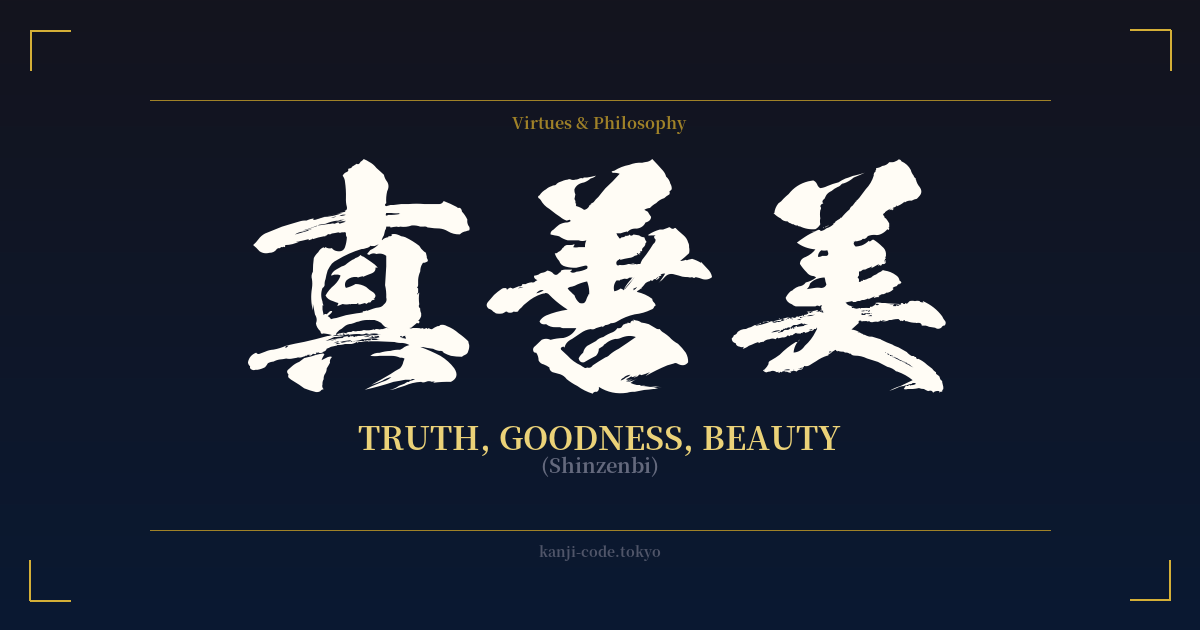
✍️ 真善美 (Shinzenbi) — Cultural Context
真善美 (Shinzenbi) is a Japanese term that encapsulates the classical philosophical ideals of Truth, Goodness, and Beauty. This triad represents a harmonious vision of the ultimate values in life, art, and human character. While these concepts are universal, their combination into this specific phrase has a fascinating history in Japan.
The term itself is a relatively modern import, introduced to Japan during the Meiji Restoration in the late 19th century. As Japan rapidly modernized and absorbed Western culture, it also imported Western philosophy. The concepts of Truth, Goodness, and Beauty, central to the works of ancient Greek philosophers like Plato, were translated and adopted into the Japanese intellectual landscape.
Despite its Western origins, Shinzenbi resonated deeply with existing Japanese aesthetic and ethical principles. It was quickly integrated and found a home in discussions about art, morality, and education. Many schools in Japan adopted "Truth, Goodness, and Beauty" as their motto, aspiring to cultivate these values in their students. It became a guiding principle for a well-rounded education, aiming to develop not just knowledgeable minds (Truth), but also virtuous hearts (Goodness) and an appreciation for aesthetics (Beauty).
In the world of art and aesthetics, Shinzenbi represents the highest goal. A true masterpiece, according to this ideal, is not just visually pleasing (Beauty), but also intellectually honest (Truth) and morally uplifting (Goodness). It suggests that the most profound art forms are those that align all three values, creating a work that speaks to the entirety of the human experience.
Today, Shinzenbi remains a respected ideal. It is often seen as a counterpoint to more fleeting or superficial trends, representing a timeless pursuit of what is real, what is right, and what is beautiful. It speaks to a holistic way of living, where one strives for integrity in thought, kindness in action, and an appreciation for the harmony and elegance that surrounds us. It is a quiet but powerful reminder of the interconnectedness of knowledge, ethics, and aesthetics.
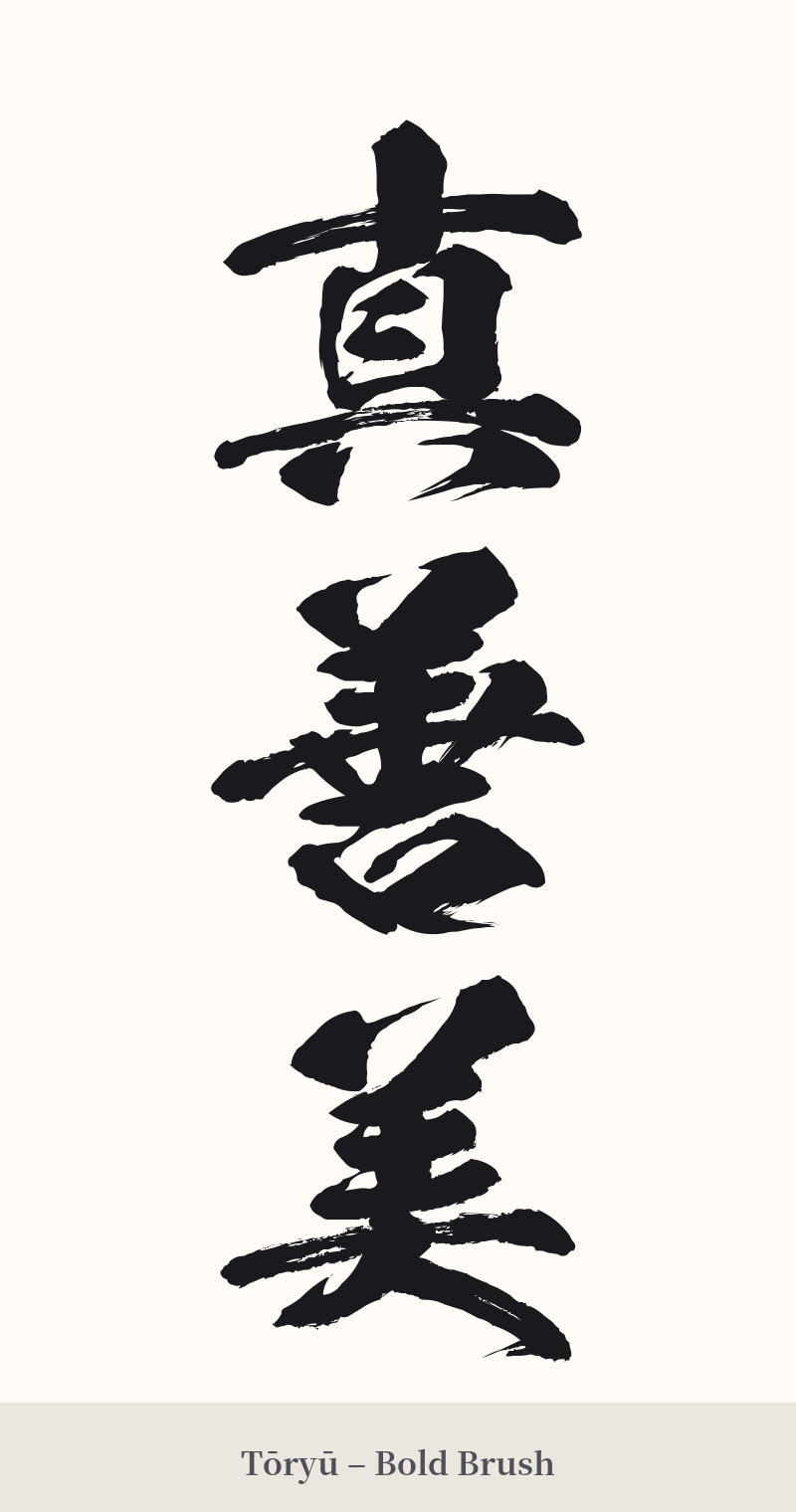
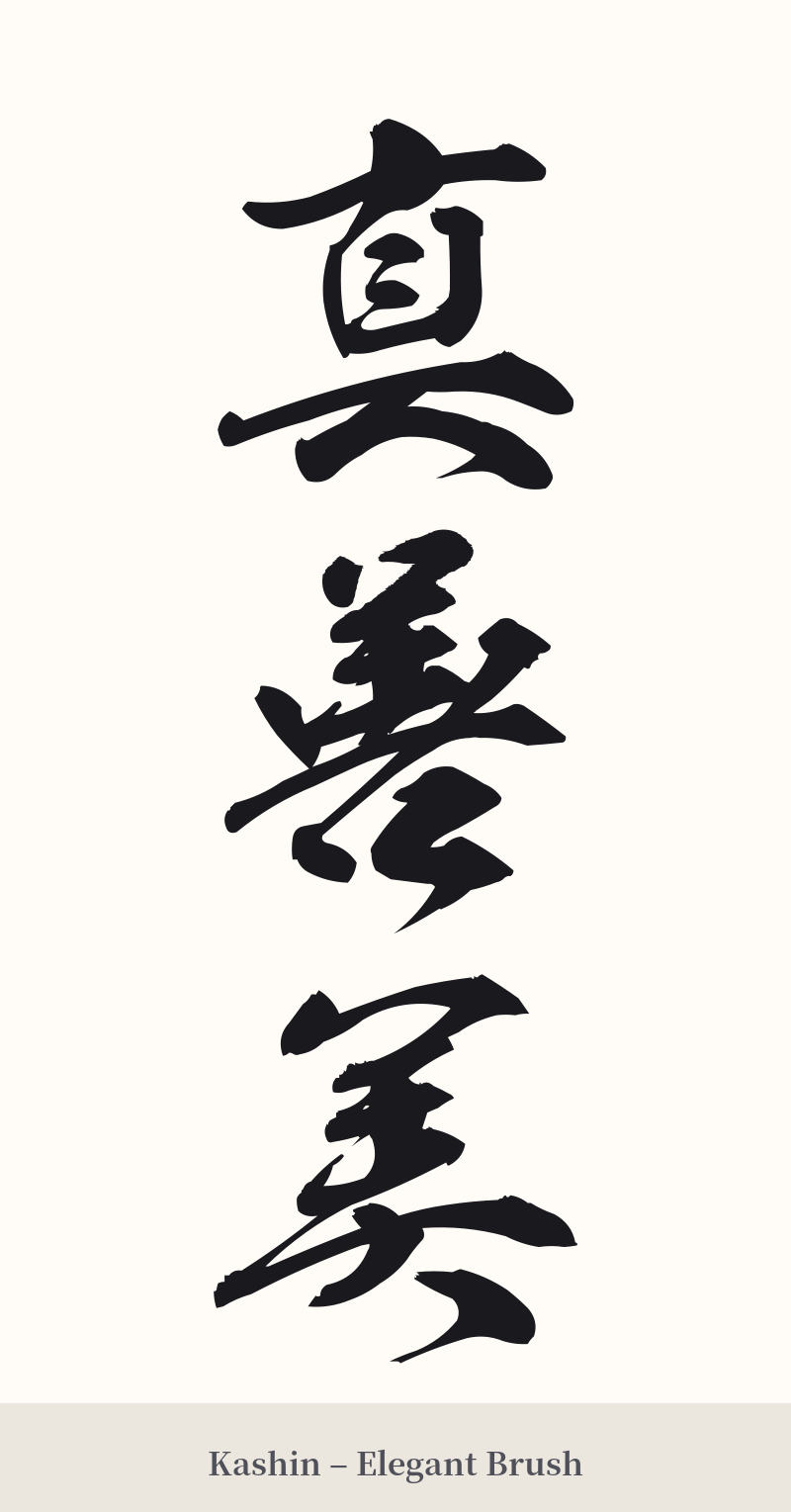
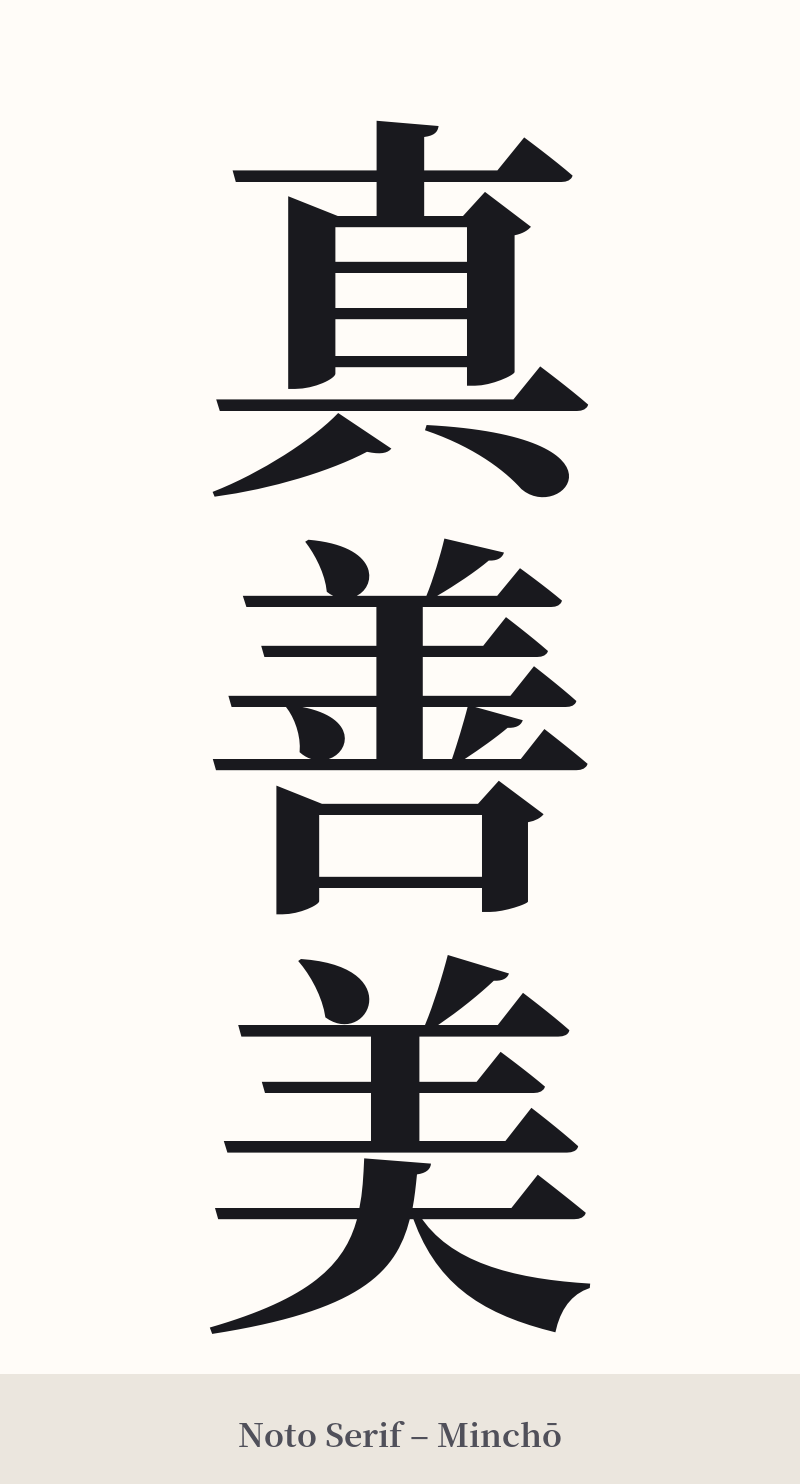
🖌️ Font Styles for 真善美
The same kanji can look dramatically different depending on the calligraphy style. Choose a font that matches the mood you want for your tattoo or design.
🎨 Tattoo Suitability
📐 Tattoo Design Guide
The classic and most impactful way to design 真善美 is in a vertical column. This orientation is traditional for Japanese writing and complements the natural flow of the characters.
– Placement: A vertical design works beautifully along the spine, forearm, or calf. For a horizontal layout, the chest or upper back provides a good canvas.
– Font Style: Traditional calligraphy is highly recommended. A dynamic, semi-cursive Gyosho style can convey elegance and flow, while a formal Kaisho block script emphasizes stability and dignity. Avoid overly stylized or unreadable fonts that obscure the characters' forms.
– Visual Tips: Let the characters speak for themselves. The strength of this design is in its simplicity and profound meaning. There's no need for extra embellishments, but if you choose to add them, consider subtle elements like a single enso circle to represent the universe, or a delicate watercolor wash in the background.
Comments