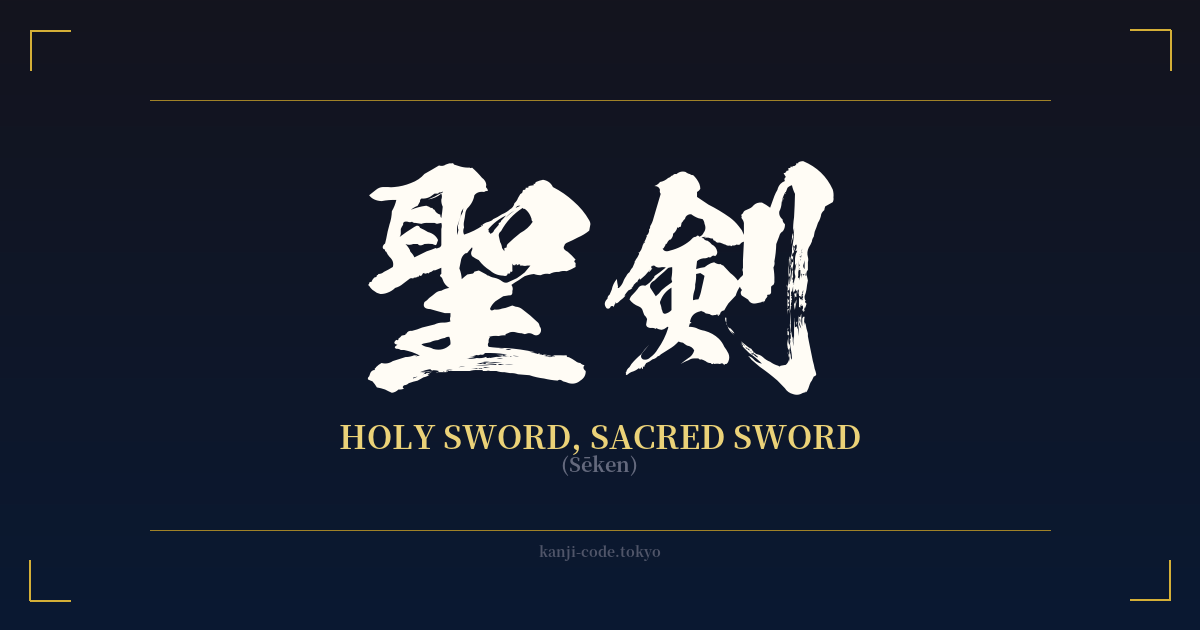
✍️ 聖剣 (Sēken) — Cultural Context
聖剣 (Sēken) translates to "Holy Sword" or "Sacred Sword." It is a compound word that instantly evokes images of legendary heroes, divine power, and epic battles against darkness. While the concept of a sacred blade is universal, Sēken holds a special place in the Japanese cultural imagination, bridging ancient mythology with modern fantasy.
The first character, 聖 (sei), means "holy," "sacred," or "saint." The second, 剣 (ken), refers to a sword, specifically a double-edged straight sword of ancient design. Together, they form a term that is less about the physical weapon and more about its symbolic weight—a blade chosen by the gods, forged for a hero, or imbued with the power to decide destinies.
Historically, Japan's most famous sacred sword is the Kusanagi-no-Tsurugi (草薙の剣), the "Grass-Cutting Sword." This legendary blade is one of the three Imperial Regalia of Japan, artifacts that legitimize the emperor's divine right to rule. According to myth, the storm god Susanoo-no-Mikoto found it in the tail of the eight-headed serpent, Yamata no Orochi, after defeating the beast. This story establishes a deep-rooted precedent in Japanese culture: the idea that a divine weapon is a reward for heroism and a tool to bring order from chaos.
This mythological foundation provided fertile ground for the concept of Sēken to flourish in modern storytelling. In the post-war era, as manga, anime, and video games became dominant cultural forces, the "holy sword" trope exploded in popularity. It became a cornerstone of the fantasy genre, particularly in Japanese Role-Playing Games (JRPGs).
Iconic series like Final Fantasy and Dragon Quest feature legendary swords that are central to the plot. Perhaps the most globally recognized example is the Master Sword from The Legend of Zelda series. While called "Masutā Sōdo" in Japanese, it perfectly embodies the Sēken archetype: a sacred blade that can only be wielded by the chosen hero, serving as the ultimate weapon against a great evil. In these narratives, the Sēken is rarely just a tool. It is often a character in itself, with a will, a history, and a destiny intertwined with its wielder.
Therefore, Sēken represents more than just a weapon. It symbolizes righteousness, purity, and the courage to confront overwhelming odds. It is the mark of a true hero, a physical manifestation of their inner strength and their commitment to justice. Choosing this word is to embrace the spirit of the destined hero on a mythic quest.
🖌️ Font Styles for 聖剣
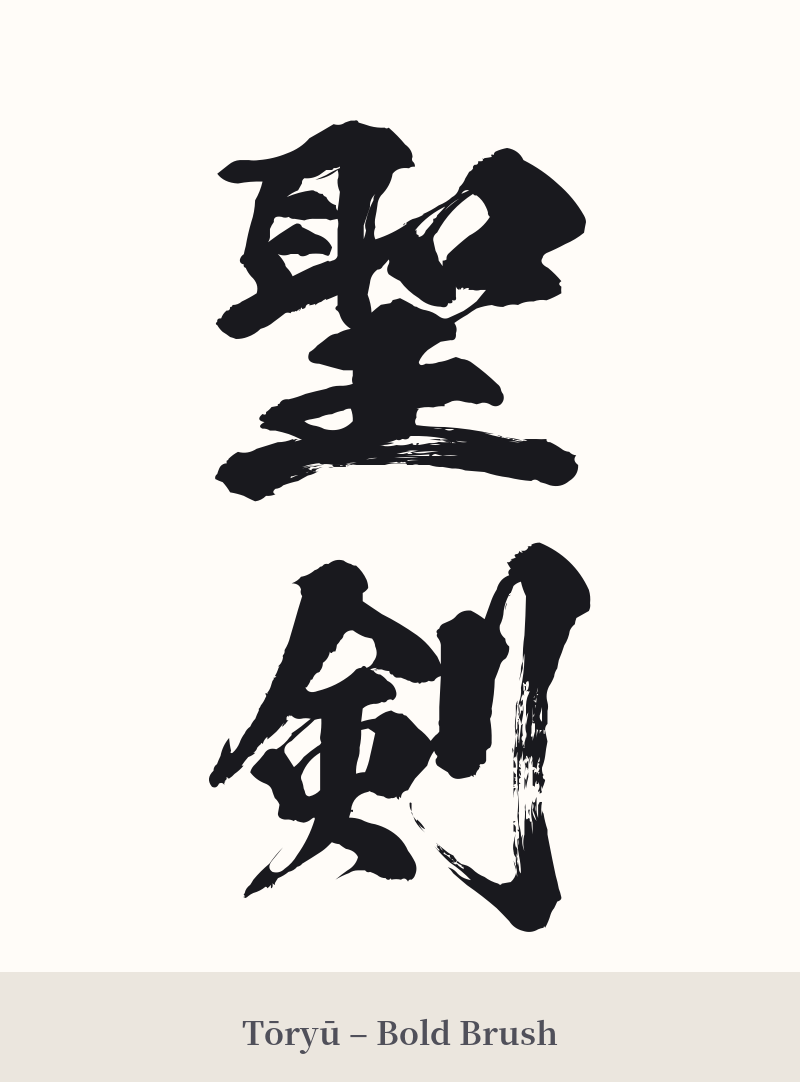
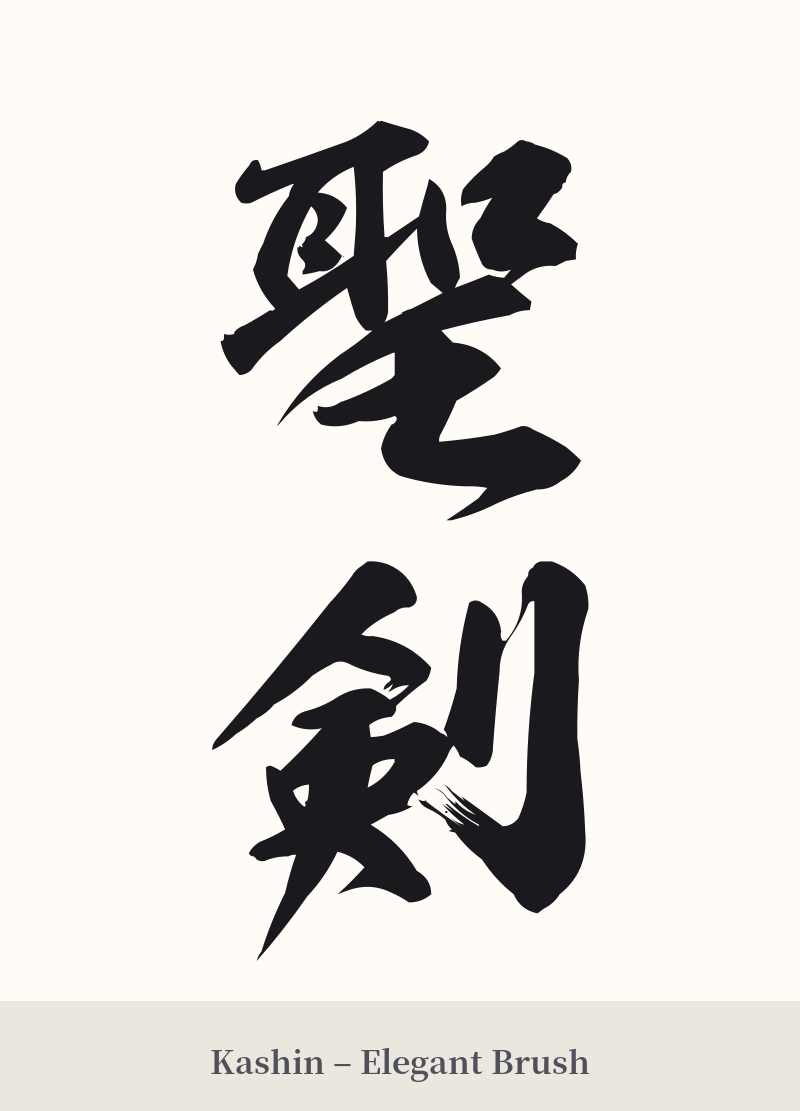
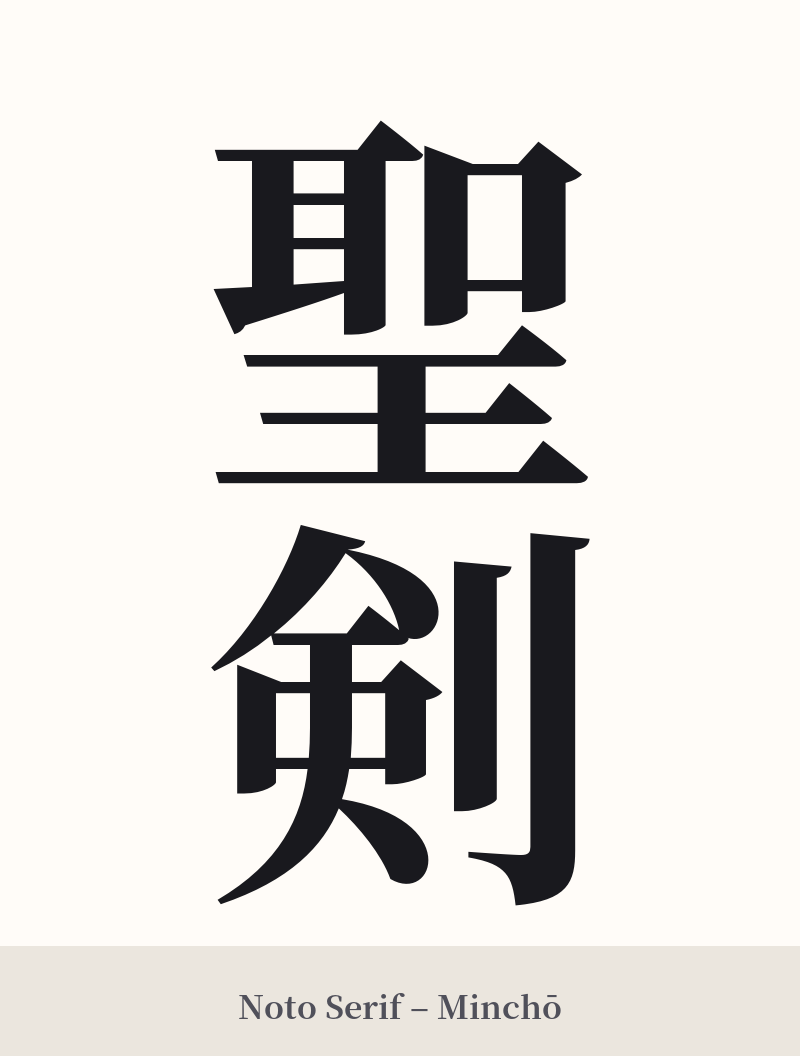
The same kanji can look dramatically different depending on the calligraphy style. Choose a font that matches the mood you want for your tattoo or design.
🎨 Tattoo Suitability
📐 Tattoo Design Guide
A 聖剣 tattoo is a powerful statement, well-suited for placements that allow for a strong vertical or horizontal display.
– Placement: A vertical orientation along the forearm, calf, or even the spine creates a dramatic, sword-like effect. Horizontally, it works well across the chest or upper back, conveying a sense of stability and power.
– Font Style: For a feeling of ancient power and authority, a bold, angular script like Kaisho (block script) is an excellent choice. To evoke a sense of magic and myth, a more fluid, semi-cursive style like Gyosho can add movement and energy to the design.
– Visual Tips: Consider integrating the kanji with imagery. A faint aura of light (in blue, gold, or white ink) can emphasize its holiness. Placing it on a backdrop of a cracked stone pedestal or entwined with a dragon can further build upon its fantasy narrative. Some even stylize the second character, 剣, to look more like a literal sword blade.
Comments