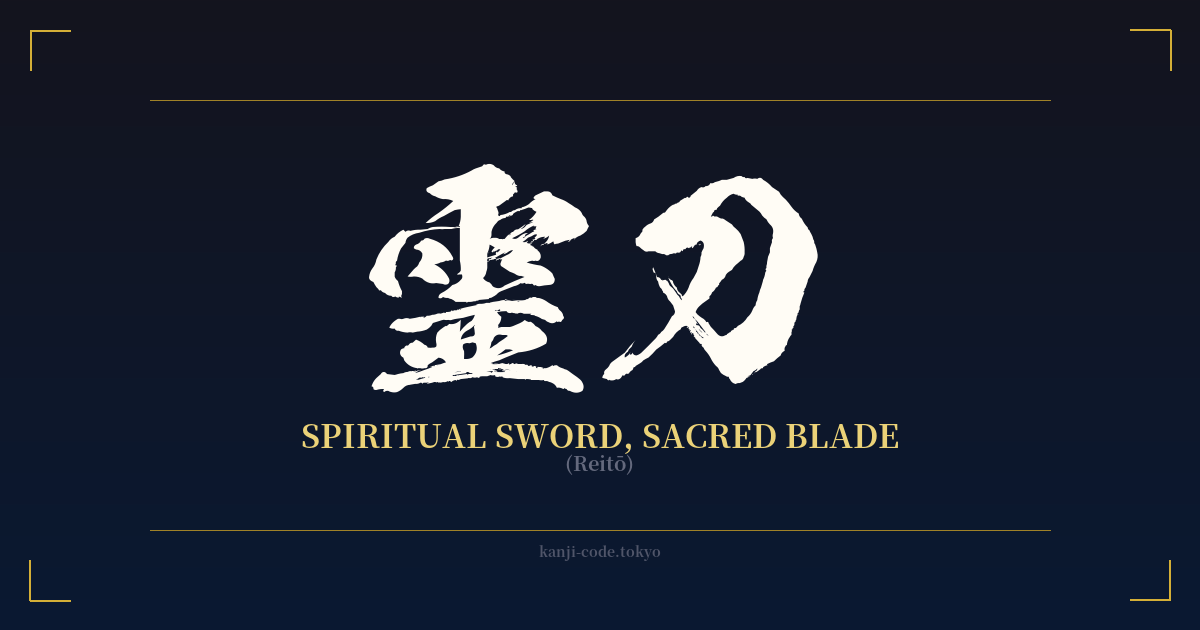
✍️ 霊刀 (Reitō) — Cultural Context
霊刀 (Reitō) translates to “Spiritual Sword” or “Sacred Blade.” This is not a term you'll hear in everyday Japanese conversation; instead, it belongs to the world of myth, folklore, and modern fiction. It describes a blade that is imbued with spiritual energy, inhabited by a spirit, or possesses supernatural abilities beyond those of a normal weapon.
The concept of sacred weapons is deeply ingrained in Japanese culture. The most famous example is the Kusanagi-no-Tsurugi (Grass-Cutting Sword), one of the Three Imperial Regalia of Japan. While not explicitly called a Reitō, it embodies the idea perfectly: a sword of divine origin with immense power. This tradition stems from Shinto beliefs, where objects, especially those of great age or craftsmanship, can acquire a spirit or become a vessel for a kami (a god or spirit). Such an object is known as a yorishiro. A Reitō is essentially a sword that has become a yorishiro, housing a spirit that grants it unique powers.
These swords are often depicted as having a will of their own, choosing their wielder or acting to protect them. They might be used to fight malevolent spirits, purify evil, or perform miracles. The spirit within the blade could be a benevolent ancestor, a nature spirit, or a divine entity.
In modern times, the idea of the Reitō has been popularized globally through anime, manga, and video games. Think of the Zanpakutō from the series Bleach, which are swords that are manifestations of a warrior's soul, each with a unique name, personality, and power. Similarly, legendary blades in series like Final Fantasy or The Legend of Zelda often fit the description of a Reitō, possessing magical properties or a sacred duty.
This term is often contrasted with related concepts. A 妖刀 (Yōtō) is a cursed or demonic blade, often thirsting for blood, while a 魔剣 (Maken) is a straight-up evil or demonic sword. The character 霊 in Reitō specifies that the power is spiritual, divine, or neutral-to-good in nature, setting it apart from its more sinister counterparts. It represents a fusion of martial prowess and spiritual purity, a weapon that is as much a symbol of virtue as it is an instrument of combat.
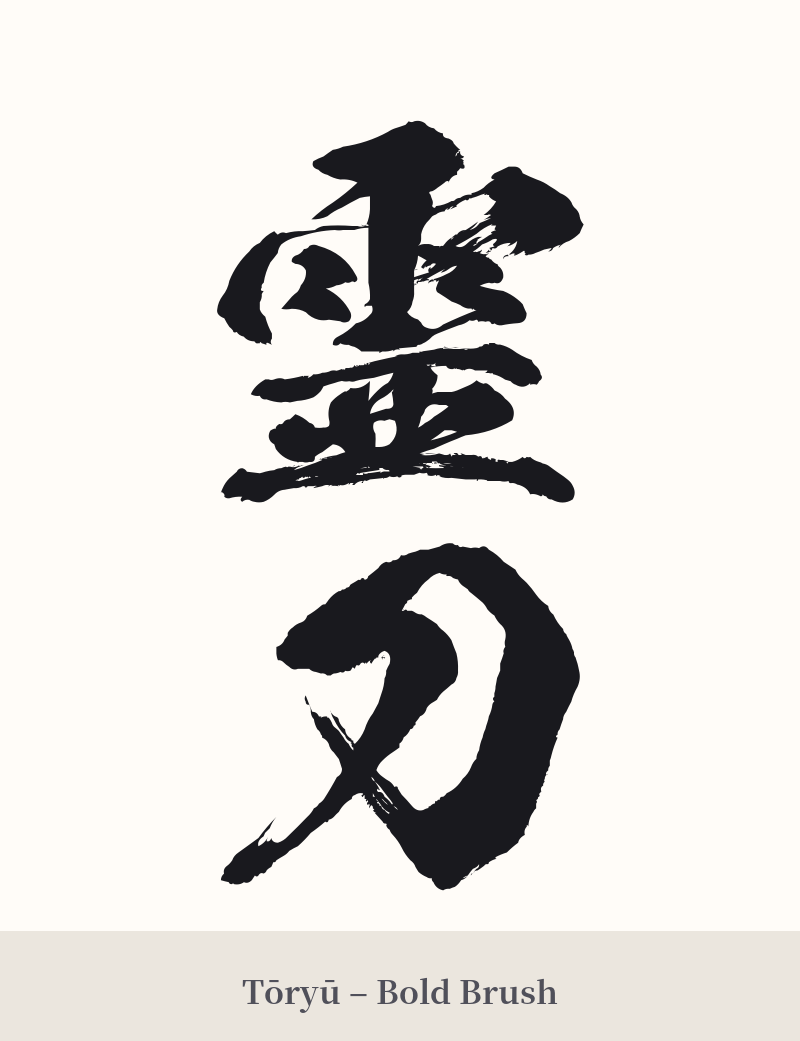
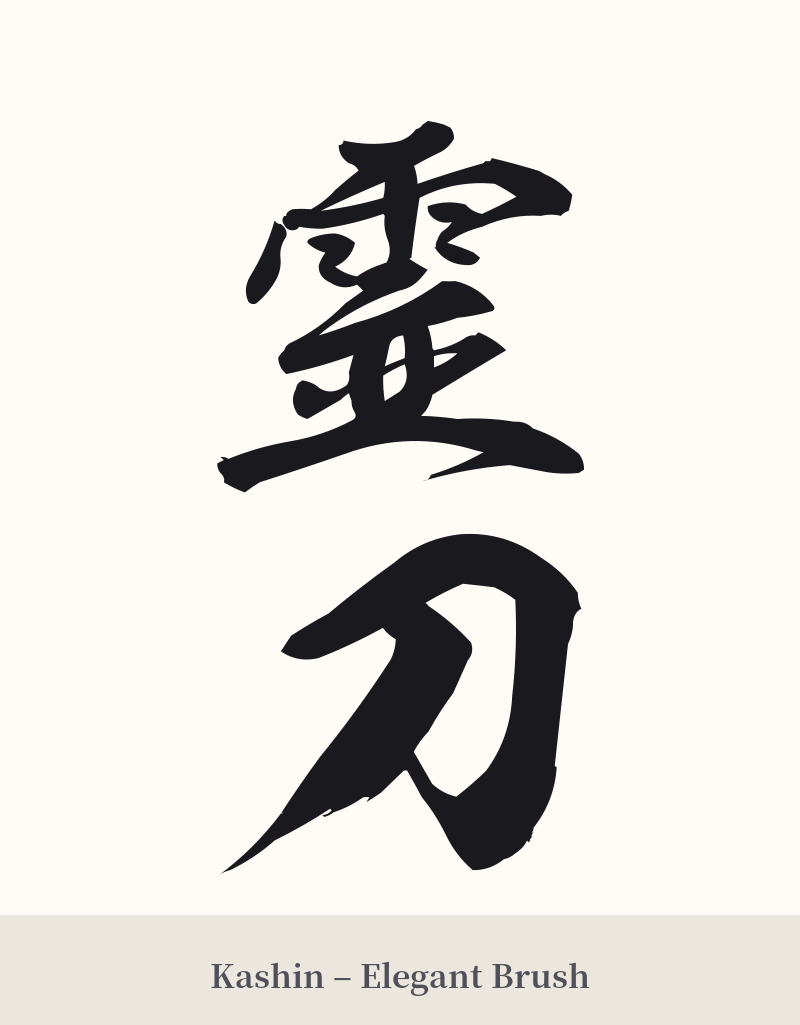
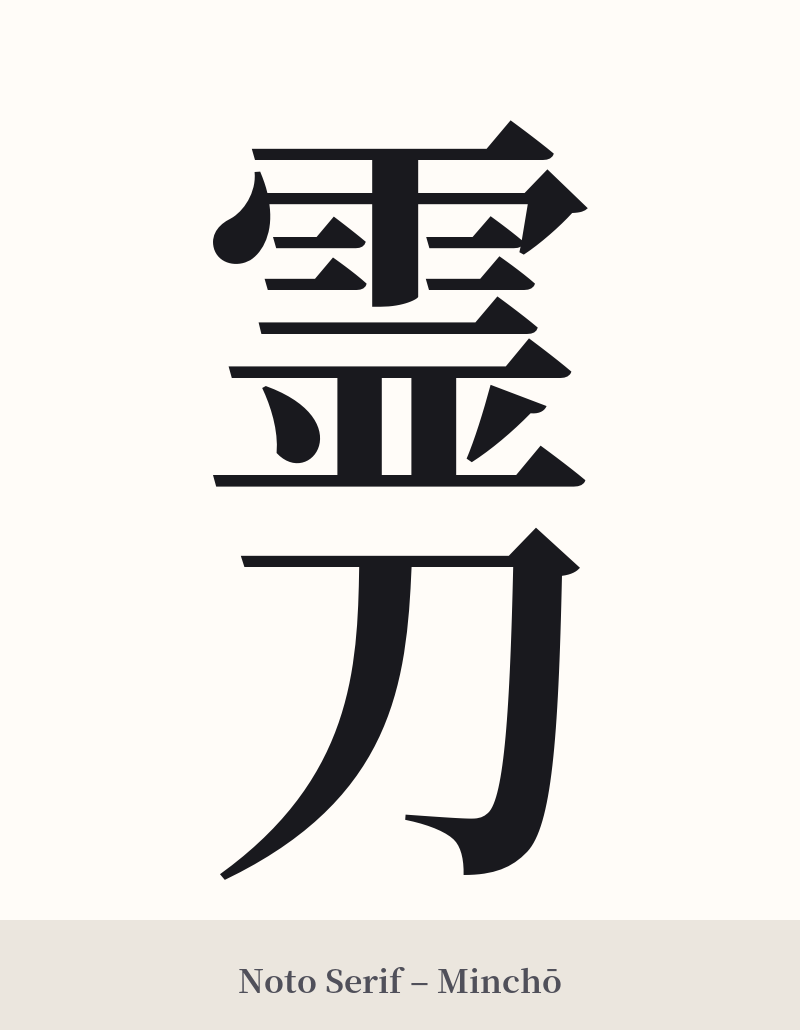
🖌️ Font Styles for 霊刀
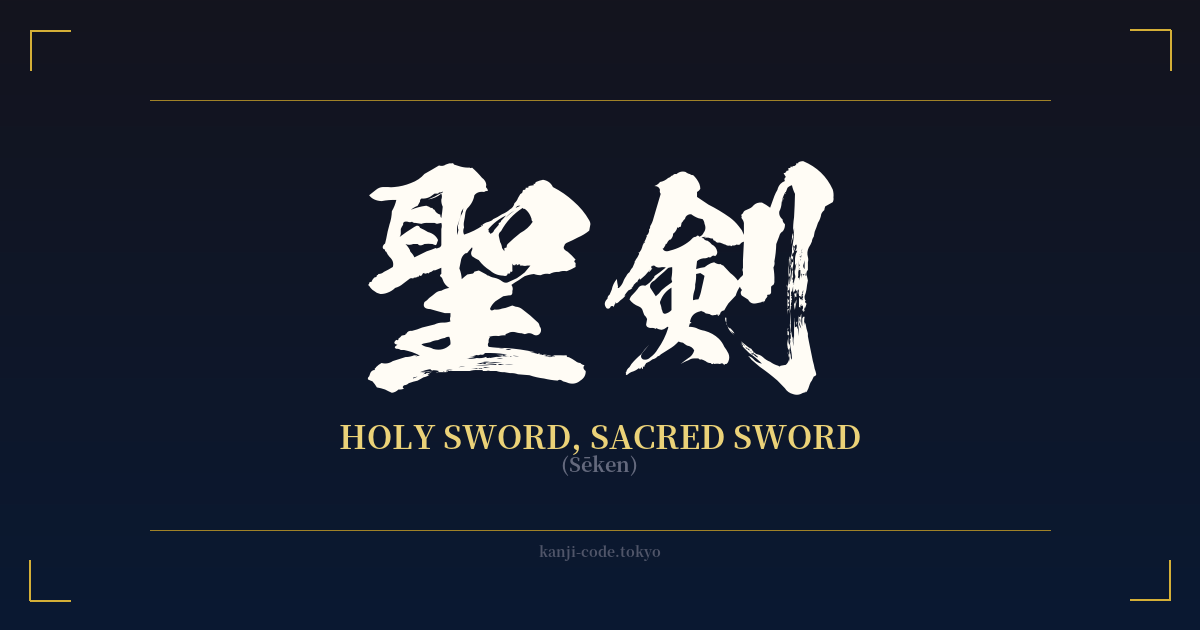
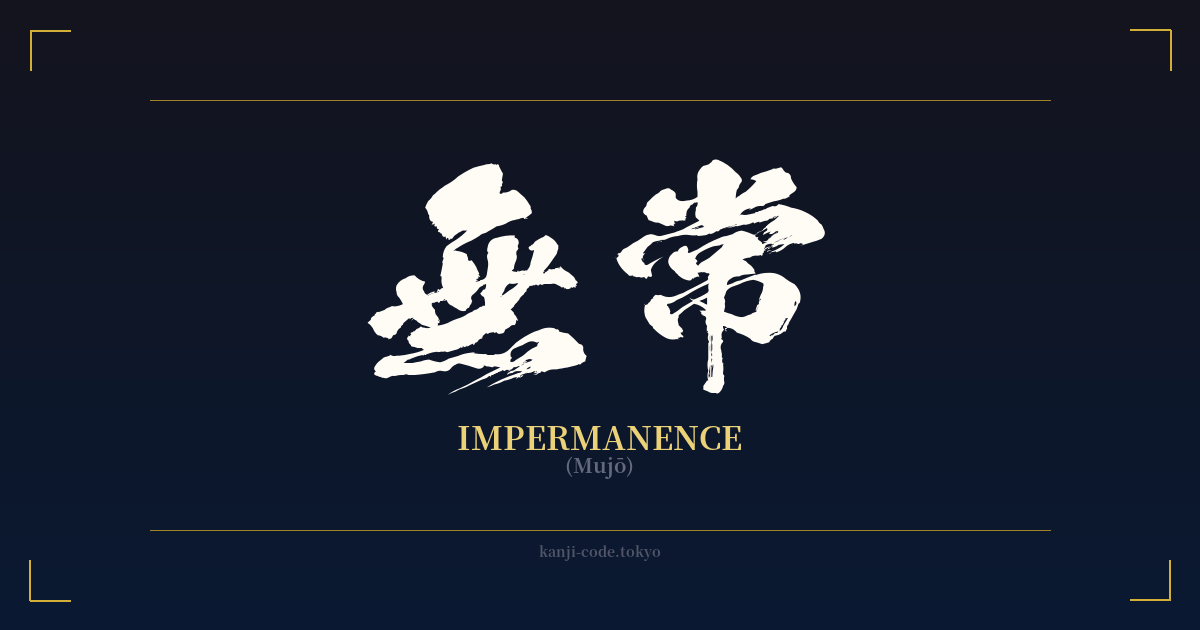
The same kanji can look dramatically different depending on the calligraphy style. Choose a font that matches the mood you want for your tattoo or design.
🎨 Tattoo Suitability
📐 Tattoo Design Guide
A 霊刀 tattoo is a powerful statement. For placement, vertical orientations work wonderfully to mimic the shape of a sword itself. Consider these placements:
– Forearm: A classic spot, allowing for a vertical design that flows with the arm's length. – Calf: Similar to the forearm, it provides a great canvas for a vertical tattoo. – Spine: A vertical placement along the spine is visually striking and reinforces the central, powerful nature of the sword. – Chest or Upper Back: A horizontal placement can also be effective, symbolizing a blade held at the ready.
For font styles, a semi-cursive (Gyosho) or cursive (Sosho) brushstroke style can enhance the mystical, flowing energy of the 'spirit' element. Conversely, a crisp, angular block script (Kaisho) will emphasize the sharpness and precision of the 'sword' character. You could even combine the two, with 霊 in a flowing script and 刀 in a sharp one.
Consider incorporating imagery like wisps of spiritual energy, a lotus flower for purity, or a protective charm (omamori) woven into the design to further amplify its meaning.
Comments