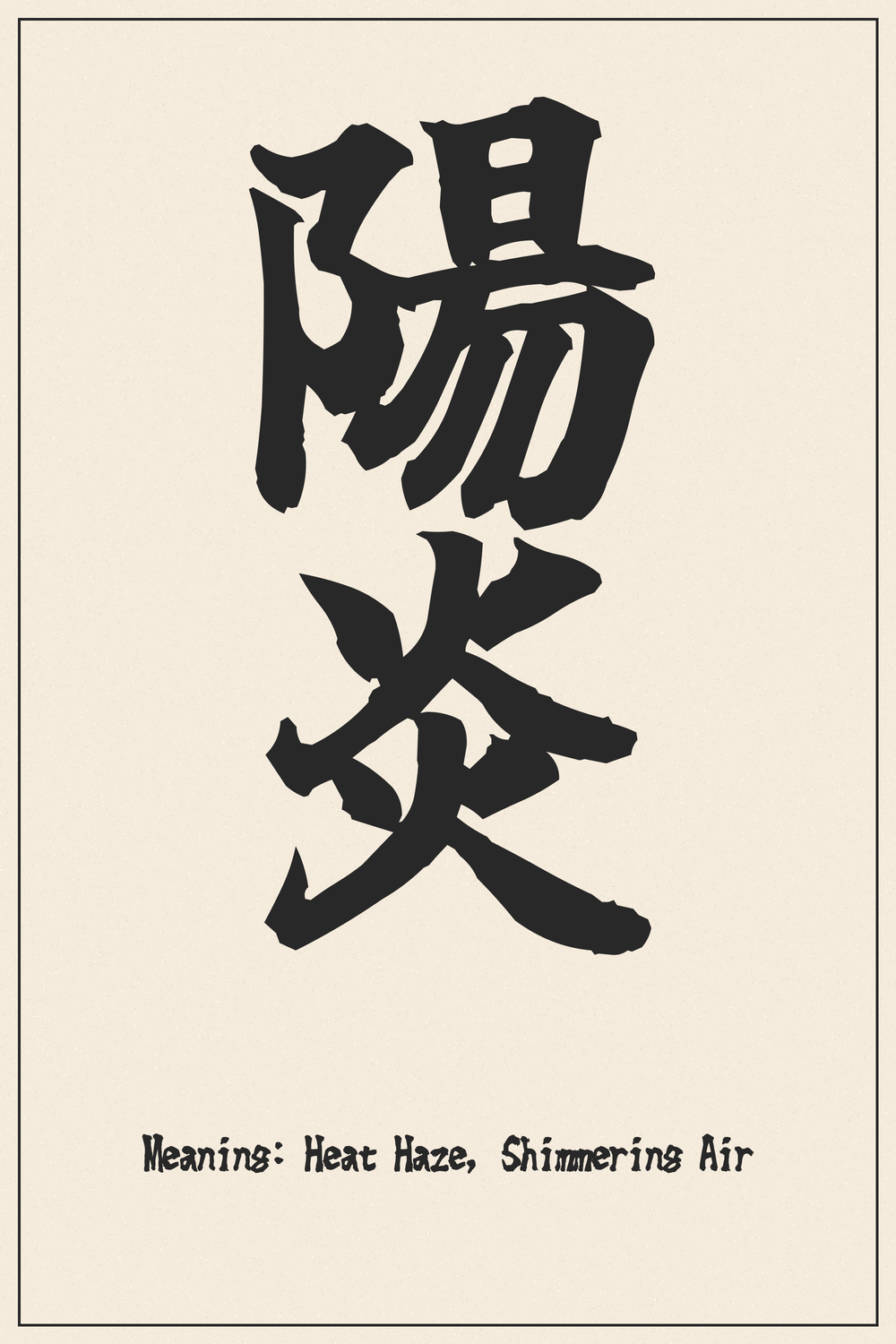
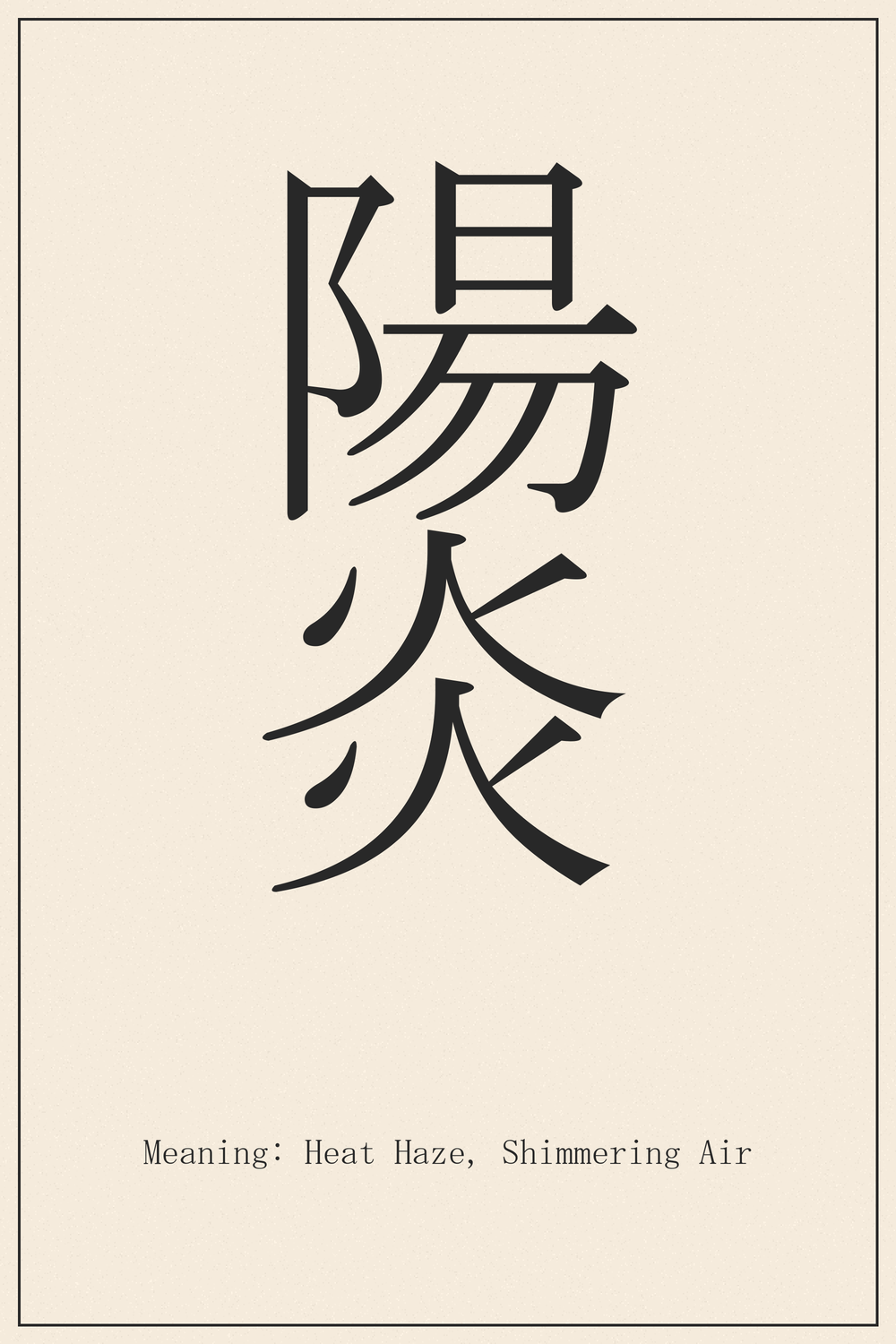
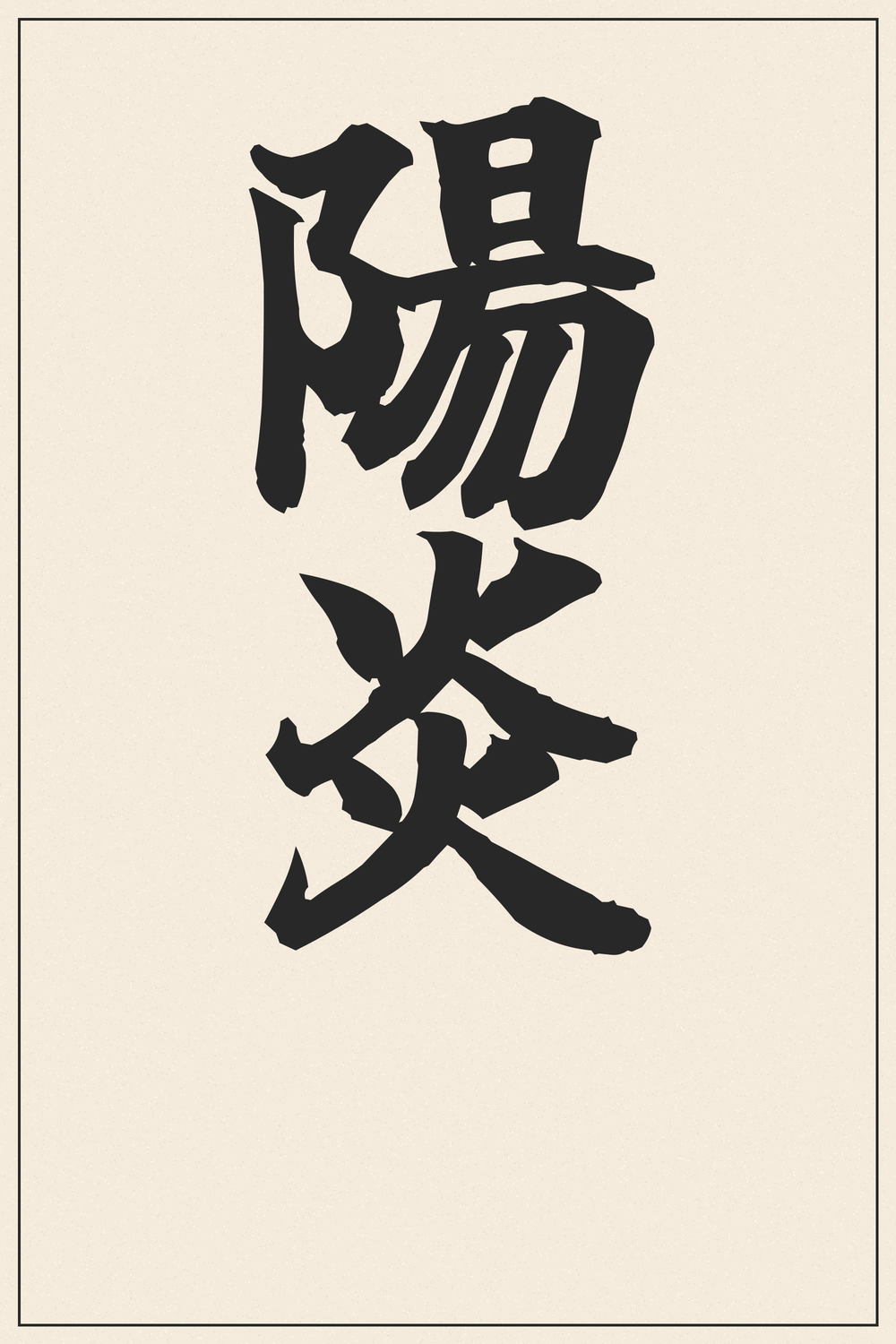
The Kanji 陽炎 (Kagerou) captures the ethereal beauty of a heat haze, a fleeting natural phenomenon. It embodies a sense of illusion and transient warmth, making it a profound symbol for those who appreciate ephemeral beauty and the subtle dance of reality.
The atmosphere of a Kanji character changes dramatically depending on the font style. A character that looks elegant in a brush style might look bold and modern in a different font.
Recommendation:
Since a tattoo is permanent, we strongly recommend comparing various font styles beyond what is shown here. Use our designs as a trusted reference for the correct structure, but feel free to explore different artistic variations to find the perfect match for your vision.
The Deep Meaning Behind 陽炎
The term 陽炎 (Kagerou) refers to the atmospheric optical phenomenon where light rays are bent, causing distant objects to appear to shimmer or be displaced. This beautiful visual effect, often seen on hot surfaces, evokes a sense of transient beauty and the deceptive nature of appearances.
Culturally, 陽炎 holds a significant place in Japanese arts and literature. It frequently appears in classical poetry, especially haiku, as a kigo (seasonal word) for summer, symbolizing the peak of the season, warmth, and the fleeting nature of life or beauty. It suggests an ethereal, dreamlike quality, blurring the lines between reality and illusion.
Kanji Breakdown
The compound 陽炎 is formed by two characters, each contributing to its profound meaning.
Meaning: Sun, light, positive principle. Its radical 日 (sun) combined with 昜 (light spreading) signifies brightness and warmth, the source of the heat haze.
Meaning: Flame, blaze. This character is a pictograph of two 火 (fire) radicals, illustrating intense heat or fire. In 陽炎, it conveys the intense heat causing the atmospheric shimmering.
Conclusion
The Kanji 陽炎 beautifully encapsulates the visual poetry of a heat haze, representing not only a natural phenomenon but also deeper themes of ephemerality, illusion, and the beauty found in fleeting moments. It’s a choice for those who appreciate the subtle yet profound aspects of nature and existence.
Choosing 陽炎 for a tattoo would symbolize an appreciation for transient beauty, the power of light and heat, and a reflective awareness of the world’s illusory qualities. Its elegance and evocative meaning make it a truly inspiring and distinctive piece of body art.
Comments