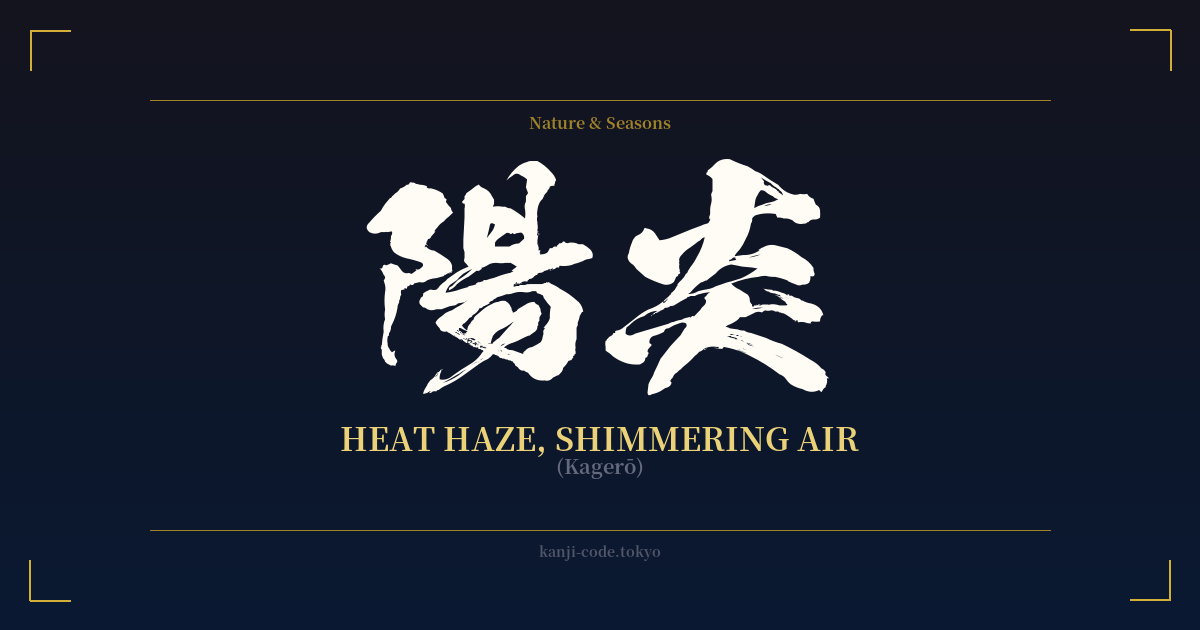
✍️ 陽炎 (Kagerō) — Cultural Context
陽炎 (Kagerō) is the Japanese word for the shimmering, distorted air you see rising from hot surfaces on a sunny day—what we call heat haze. But in Japan, this simple natural phenomenon is imbued with a much deeper, poetic significance that speaks to core cultural aesthetics.
Visually, the word is a masterpiece of literal and figurative meaning. It combines 陽 (yō), meaning “sunshine” or “daytime,” with 炎 (en), meaning “flame” or “blaze.” Together, they paint a picture of flames born from the sun, perfectly capturing the visual effect of heat rising from the asphalt or a sandy beach. It's a direct, evocative, and beautiful piece of linguistic art.
Culturally, Kagerō is deeply connected to the seasons, specifically late spring and the height of summer. It’s a classic kigo, or “season word,” used in haiku and other forms of poetry to instantly set a scene and evoke the lazy, languid feeling of a hot afternoon. The shimmering air distorts reality, making the world seem uncertain and dreamlike, a mirage dancing just beyond reach.
This sense of illusion and ephemerality ties Kagerō to the Buddhist concept of mujō (無常), or impermanence. The heat haze is there one moment and gone the next, a beautiful but fleeting spectacle. This aligns with the celebrated Japanese aesthetic of mono no aware (物の哀れ), the gentle sadness and appreciation for the transient nature of life and beauty. Kagerō is a perfect symbol of a moment that is beautiful precisely because it cannot last.
Perhaps its most famous cultural reference is in the classical masterpiece, The Tale of Genji. The 52nd chapter is titled “Kagerō,” which is often translated as “The Mayfly.” However, the title is a deliberate pun, playing on both the short-lived insect and the shimmering heat haze. The chapter explores themes of illusion, misperception, and the fragile, uncertain nature of human relationships, using the image of Kagerō as its central metaphor. This literary association gives the word a profound intellectual and emotional weight, elevating it from a simple weather term to a symbol of life's beautiful and painful uncertainties.
🖌️ Font Styles for 陽炎
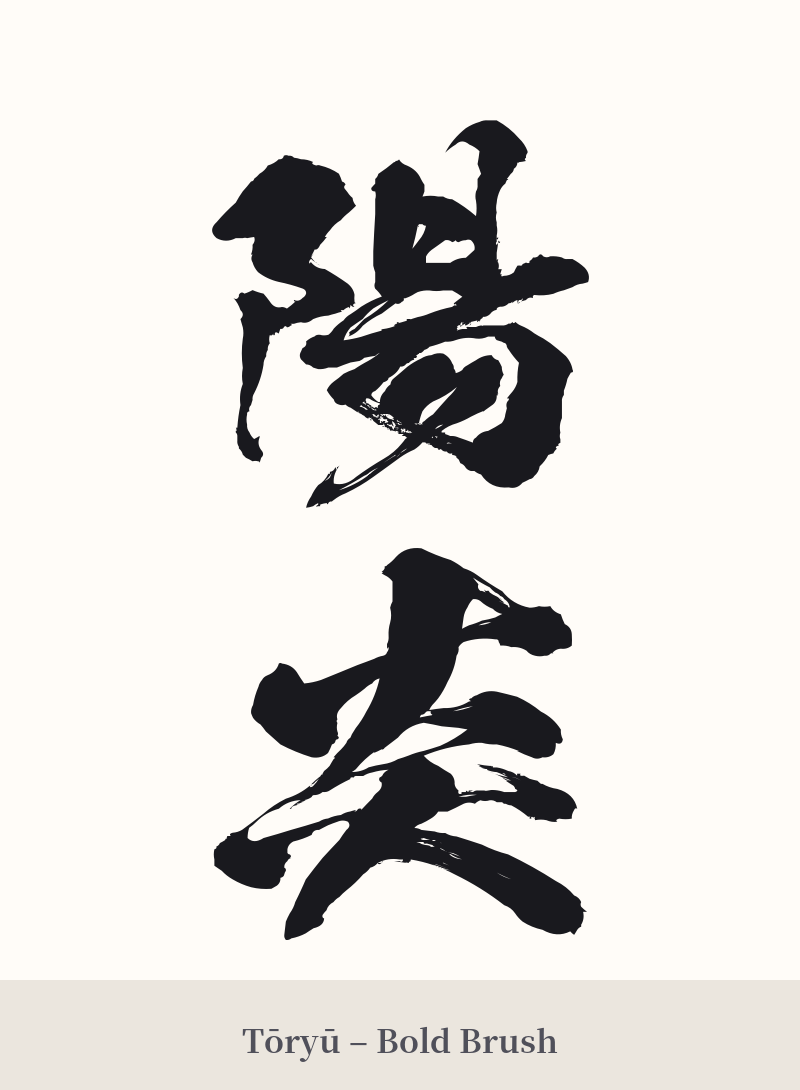
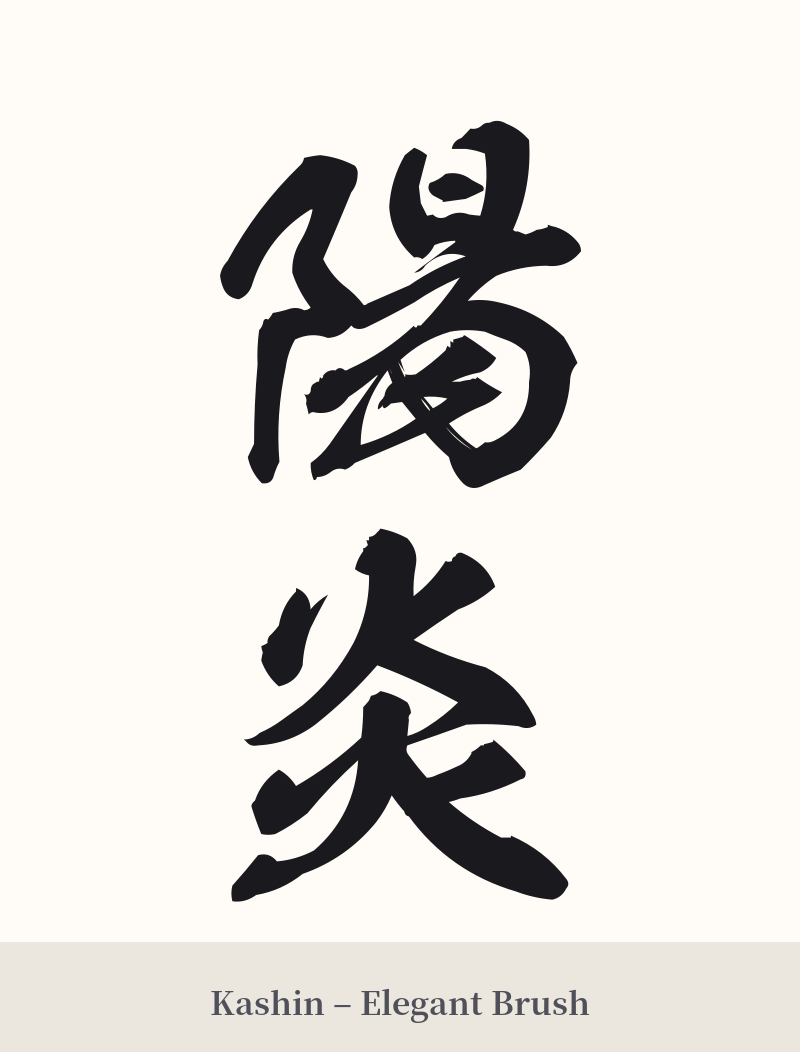
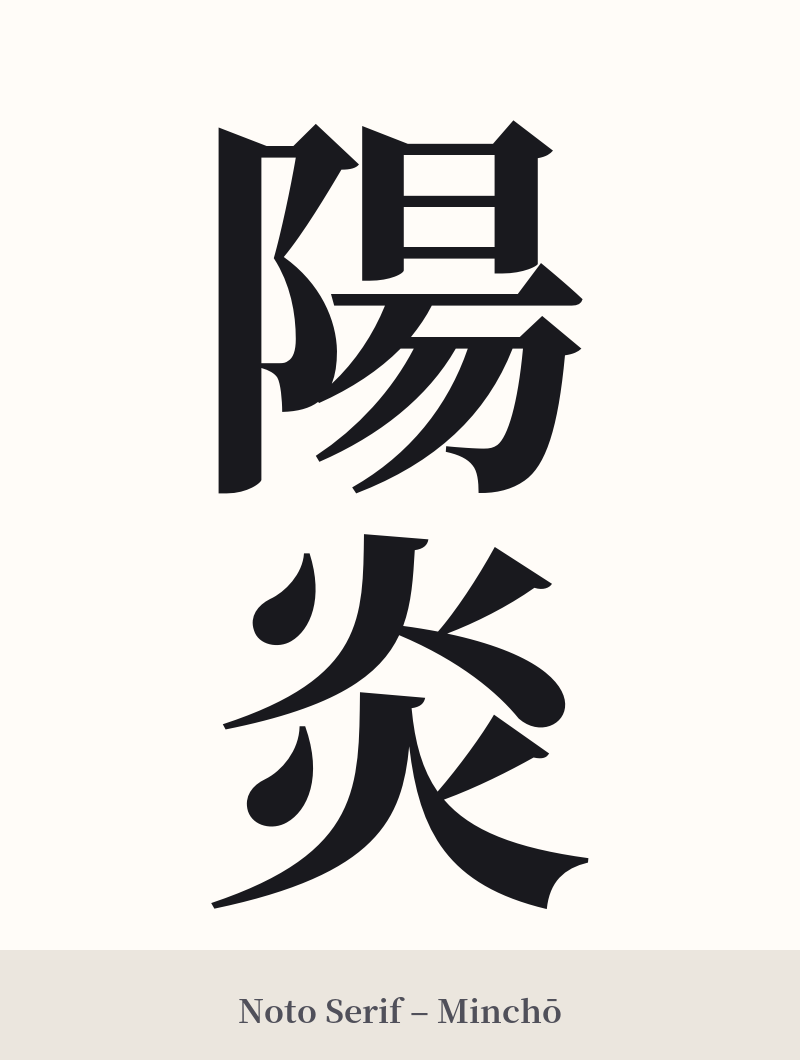
The same kanji can look dramatically different depending on the calligraphy style. Choose a font that matches the mood you want for your tattoo or design.
🎨 Tattoo Suitability
📐 Tattoo Design Guide
When designing a 陽炎 (Kagerō) tattoo, the goal is to capture its sense of shimmering movement and ephemeral beauty.
– Placement: A vertical orientation on the forearm, calf, or along the spine works beautifully, allowing the characters to flow downwards. For a horizontal design, the space above the elbow or across the collarbone can be effective.
– Font Style: A semi-cursive script like gyōsho is an excellent choice, as its fluid, connected strokes can mimic the wavering quality of heat haze. For a more classic and literary feel, a refined minchō (serif) style will honor its roots in poetry and literature. Avoid heavy, blocky, or aggressive fonts that would contradict the word's delicate meaning.
– Visual Tips: Consider integrating the kanji with subtle background elements. A watercolor style with soft, blended edges can create a hazy, dreamlike effect. You could also incorporate minimalist lines suggesting distorted air waves or a faint sun motif. The key is to enhance, not overpower, the elegance of the characters themselves.
Comments