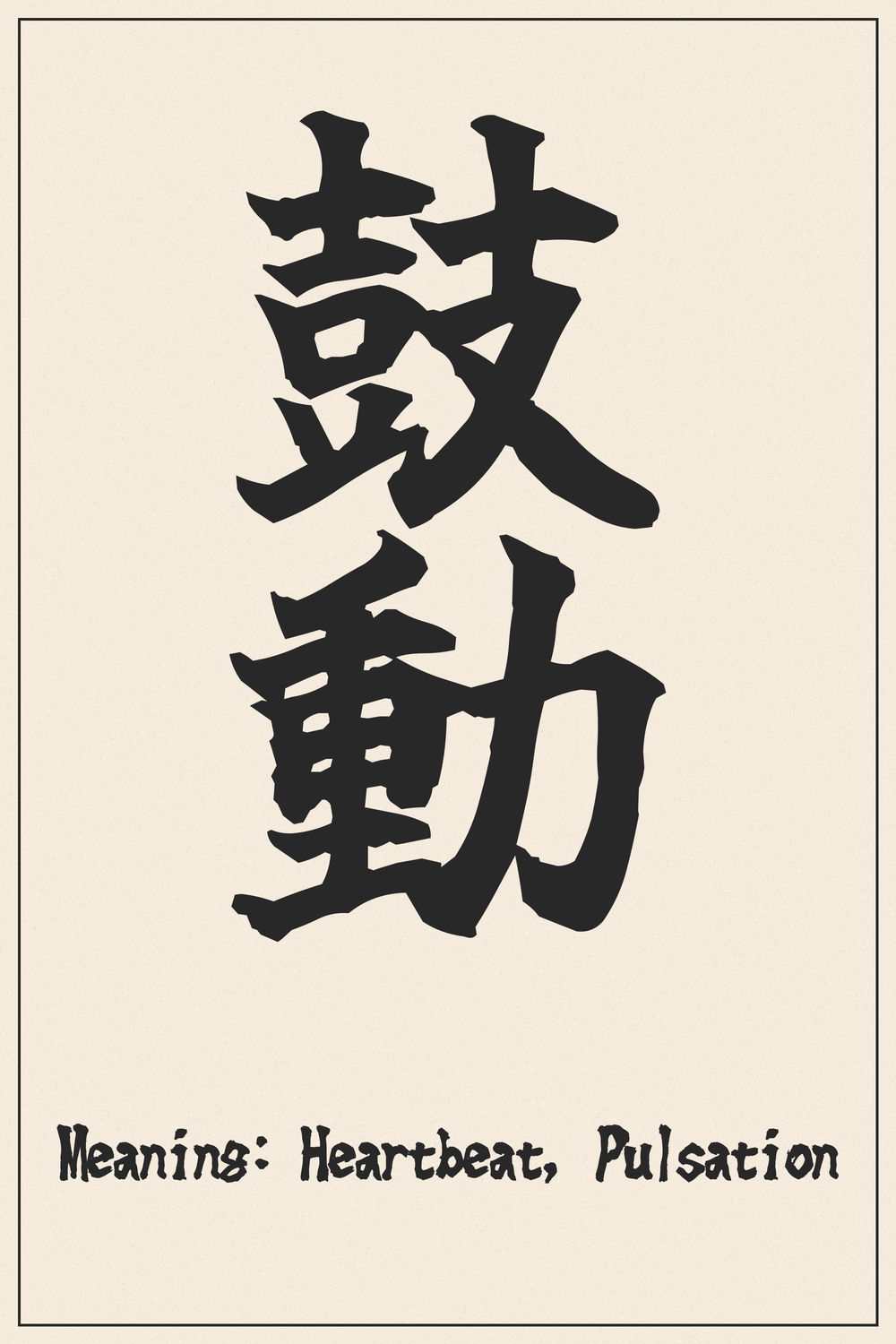
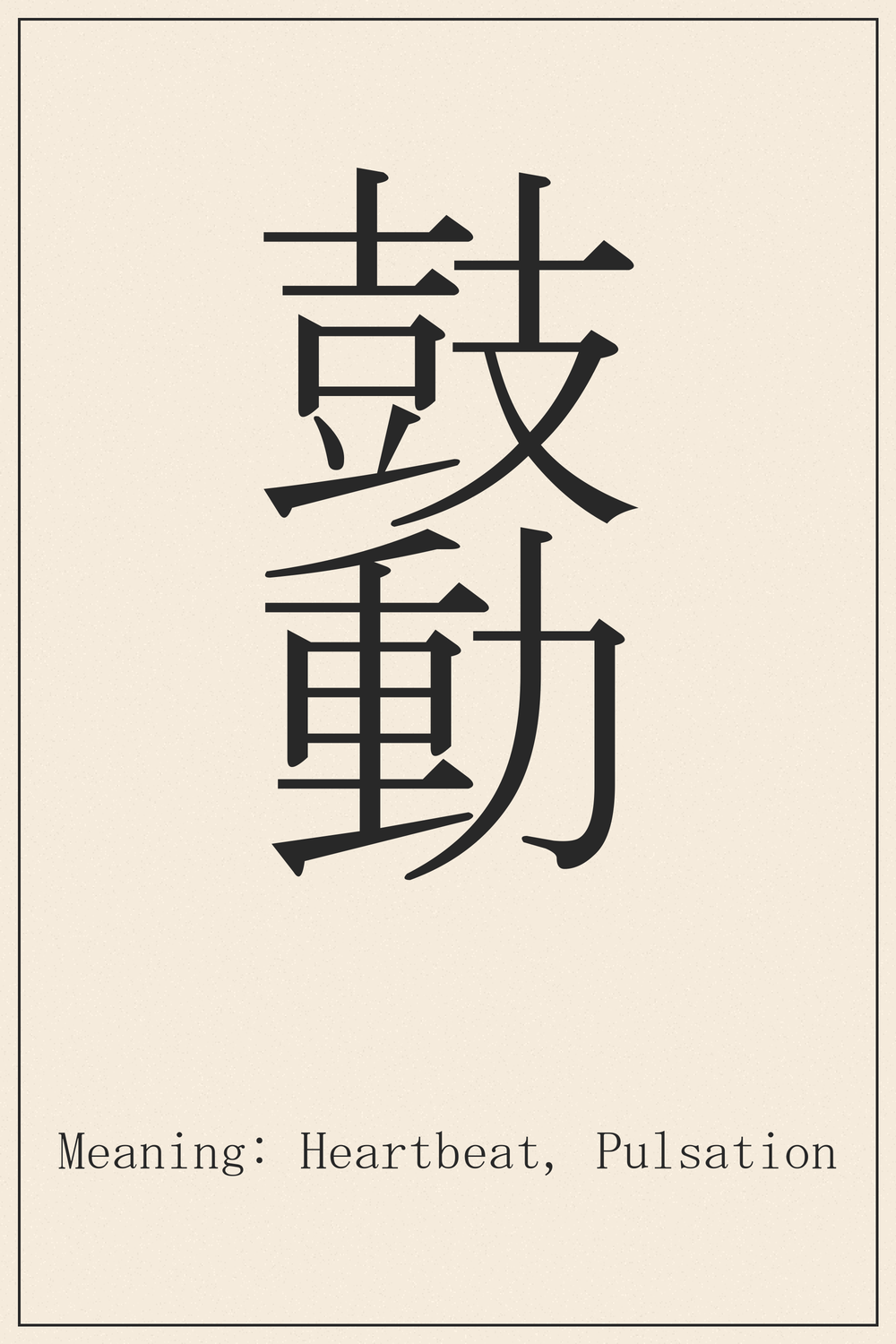
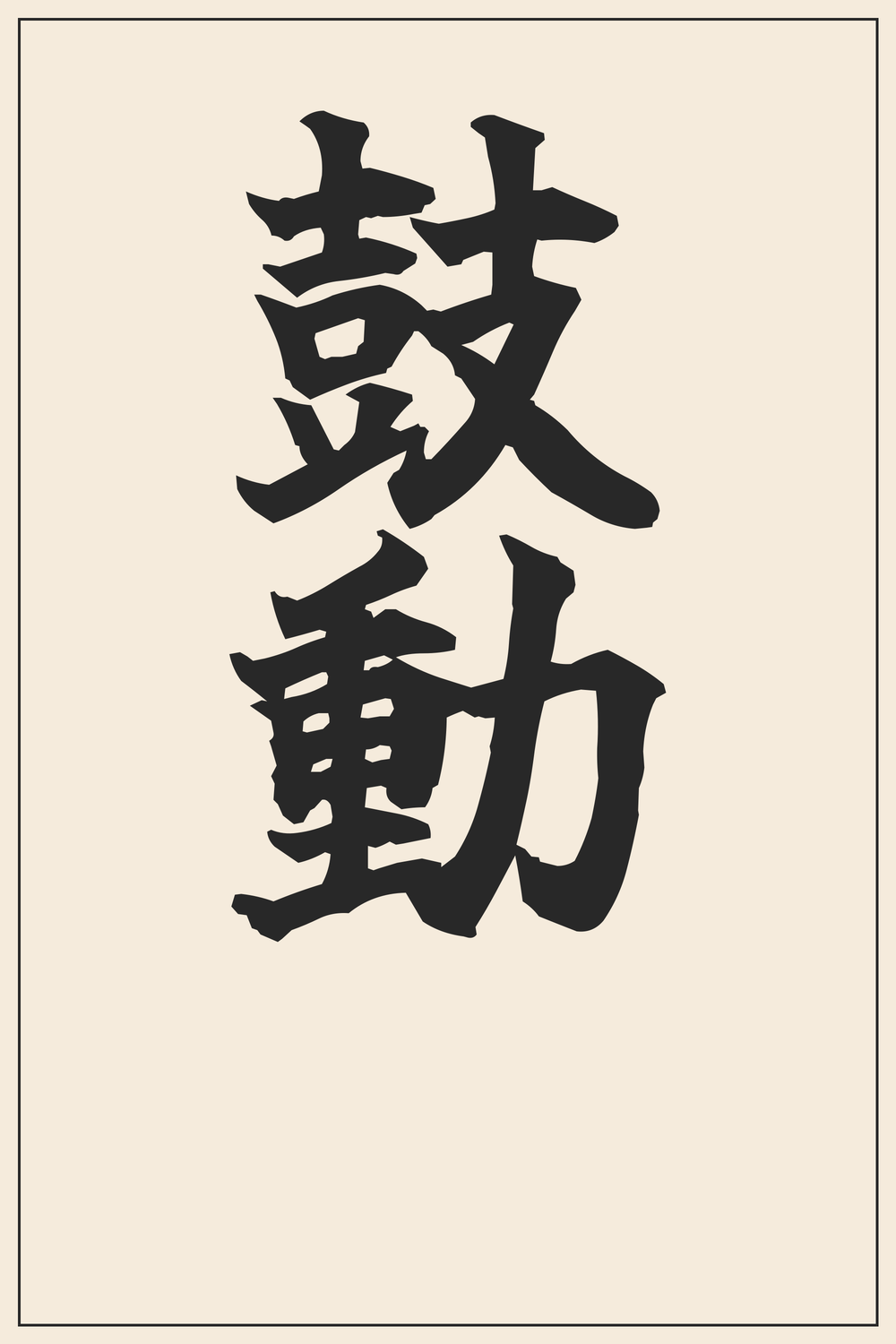
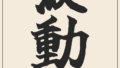
The Kanji 鼓動 (Kodou) captures the profound essence of life itself, representing the rhythmic beat that sustains all existence. It symbolizes vitality, passion, and the continuous pulse of the human spirit.
The atmosphere of a Kanji character changes dramatically depending on the font style. A character that looks elegant in a brush style might look bold and modern in a different font.
Recommendation:
Since a tattoo is permanent, we strongly recommend comparing various font styles beyond what is shown here. Use our designs as a trusted reference for the correct structure, but feel free to explore different artistic variations to find the perfect match for your vision.
The Deep Meaning Behind 鼓動
鼓動 is a compound word formed from two distinct Kanji: 鼓 (ko), meaning ‘drum’ or ‘beat’, and 動 (dou), meaning ‘movement’ or ‘to move’. Together, they eloquently describe the ‘beating movement’ of the heart. The character 鼓 itself depicts a drum and a hand holding a stick, emphasizing the act of striking to produce a sound or rhythm.
In Japanese culture, the heartbeat is not just a biological function but a symbol of life force, passion, and inner strength. It represents the very essence of existence and the unyielding will to live. It can also signify a deep emotional stir or excitement, akin to one’s heart ‘throbbing’ with emotion.
Kanji Breakdown
Let’s delve into the individual characters that form 鼓動, revealing their distinct contributions to its rich meaning.
Meaning: Drum, Beat, Rouse
This character is a pictograph of a drum and a hand holding a drumstick, emphasizing the action of striking a drum. It conveys the idea of a rhythmic beat or a strong, percussive sound, directly linking to the ‘beat’ in heartbeat.
Meaning: Move, Motion, Change
Composed of 重 (heavy) and 力 (power/strength), this character signifies the act of movement, often implying a powerful or significant change. In the context of 鼓動, it describes the physical ‘motion’ or ‘pulsation’ of the heart.
Conclusion
The Kanji 鼓動 is a powerful representation of life’s fundamental rhythm, embodying vitality, passion, and the continuous flow of existence. It speaks to the core of being, reflecting strength, perseverance, and the emotional resonance within us.
Choosing 鼓動 for a tattoo is to embrace a symbol of profound life force and inner drive. Its traditional aesthetic and deep meaning make it an excellent choice for those who wish to honor their journey, their resilience, and the vibrant beat that defines their spirit.
Comments