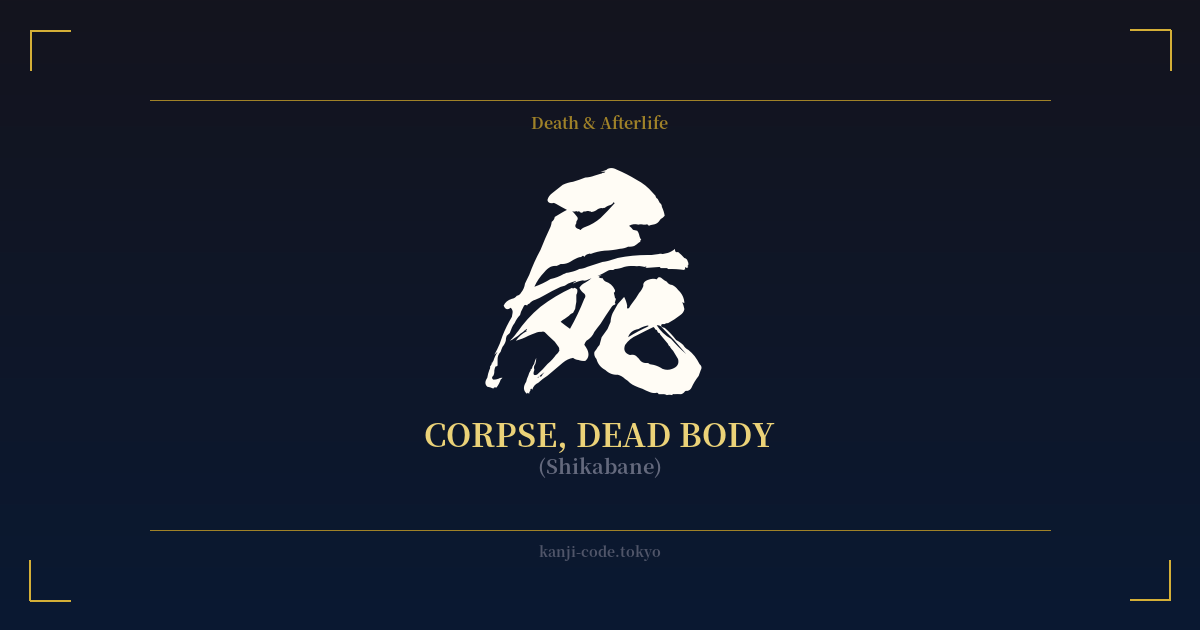
✍️ 屍 (Shikabane) — Cultural Context
The kanji 屍 (shikabane) is one of the most direct and visceral characters in the Japanese language. Its meaning is unambiguous: a corpse, a dead body, remains. The character itself is a stark visual representation of its meaning, combining the radical 尸, which depicts a body, with 死, the character for death. There is no poetry here, only the grim finality of physical existence.
In everyday Japanese, 'shikabane' is not a word used lightly. You won't hear it in casual conversation. Its usage is reserved for contexts that demand its weight: historical accounts of battlefields, forensic reports, and the dark, imaginative worlds of horror and fantasy literature. To speak of 'shikabane' is to speak of the physical aftermath of death, often in a large-scale or particularly grim scenario.
A common and powerful idiom, 「屍を越えて行く」 (shikabane o koete yuku), translates to "to step over corpses." It means to achieve a goal by sacrificing others, or to press on despite immense loss and tragedy. This phrase captures the ruthless and unsentimental nature of the word, associating it with ambition that disregards human life.
It's crucial to understand how 屍 (shikabane) differs from other Japanese words related to death. The character 死 (shi) refers to the abstract concept of death itself. The word 遺体 (itai) is the neutral, formal term for a deceased person's body, used by police and news media out of respect. Another term, 亡骸 (nakigara), carries a more emotional, sorrowful nuance, referring to the remains of a loved one. 'Shikabane', in contrast, is raw and impersonal. It reduces the body to an object, a testament to the violence or tragedy that created it.
Much of the Western interest in this kanji stems from its prominent use in pop culture, particularly in manga, anime, and video games. In series like Attack on Titan, Berserk, or historical samurai epics, battlefields are literally strewn with 'shikabane'. Here, the kanji serves as a powerful symbol of the horrors of war, the fragility of life, and the brutal reality that lies beneath heroic narratives. It evokes a 'memento mori' (remember you must die) theme, but in its most direct and unromanticized form.
🖌️ Font Styles for 屍
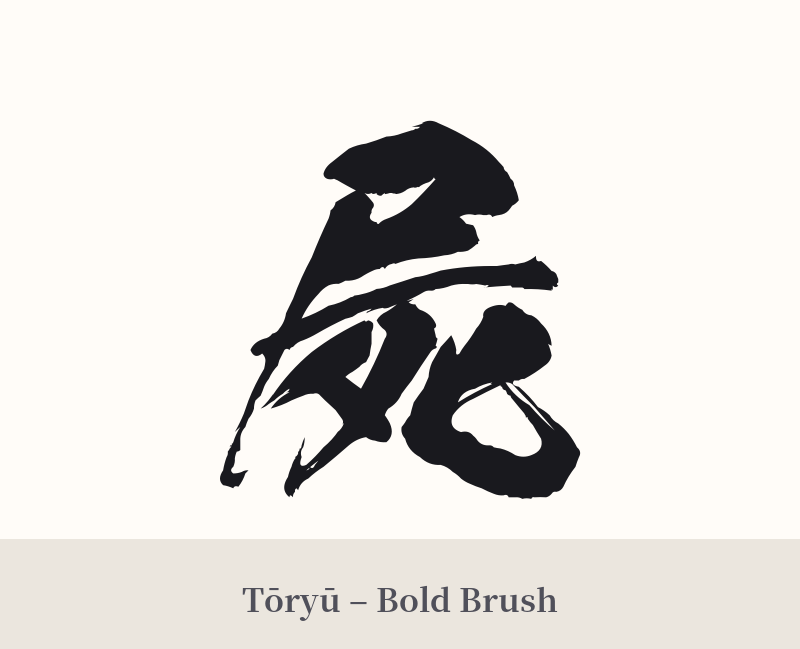
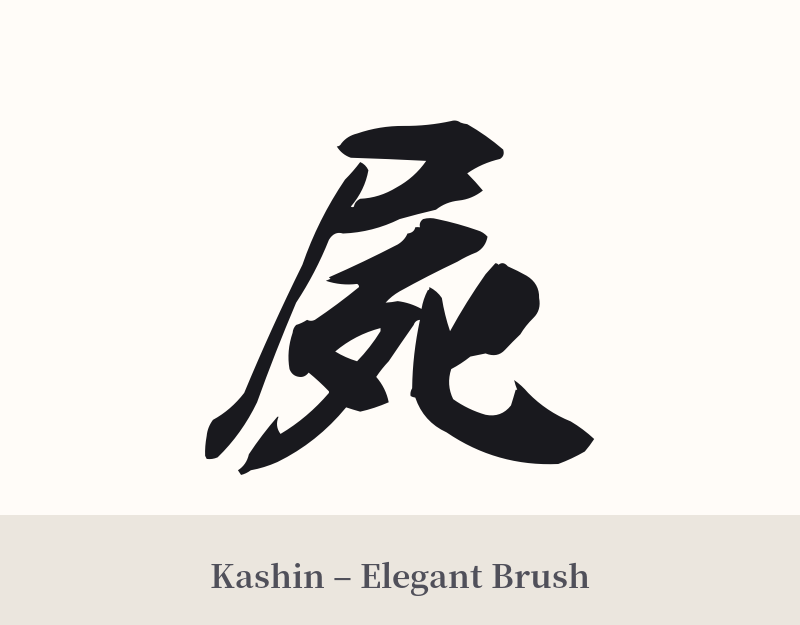
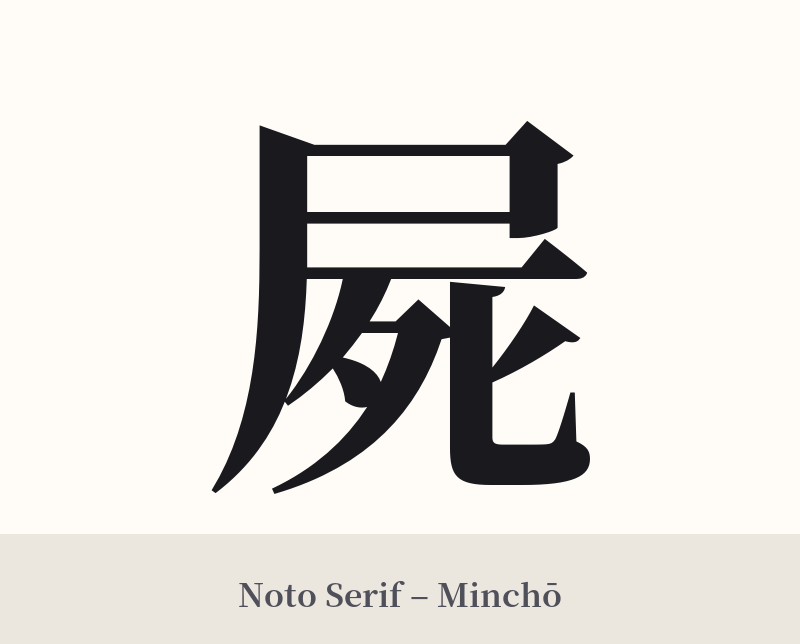
The same kanji can look dramatically different depending on the calligraphy style. Choose a font that matches the mood you want for your tattoo or design.
🎨 Tattoo Suitability
📐 Tattoo Design Guide
Due to its intense and potentially shocking meaning, a tattoo of 屍 requires careful consideration of design and placement.
– Placement: This is not a kanji for a highly visible area like the forearm or neck unless you intend to make a very provocative statement. Consider more personal placements like the ribs, back, or thigh. This allows the design to be a personal reflection rather than a public declaration.
– Font Style: The style can dramatically alter the mood. A rough, jagged calligraphy style (gyōsho or sōsho) can emphasize the violent, chaotic nature of the word. Conversely, a stark, clean, block-like font (kaisho) can highlight its cold finality. An overly elegant or flowing script would likely clash with the grim meaning.
– Visual Tips: As a standalone piece, 屍 is a powerful statement. It can also be integrated into a larger tattoo. Consider pairing it with imagery that complements its theme, such as crows, a desolate battlefield, withered trees, or a skull. This can create a more complete narrative around the concepts of mortality and decay.
Comments