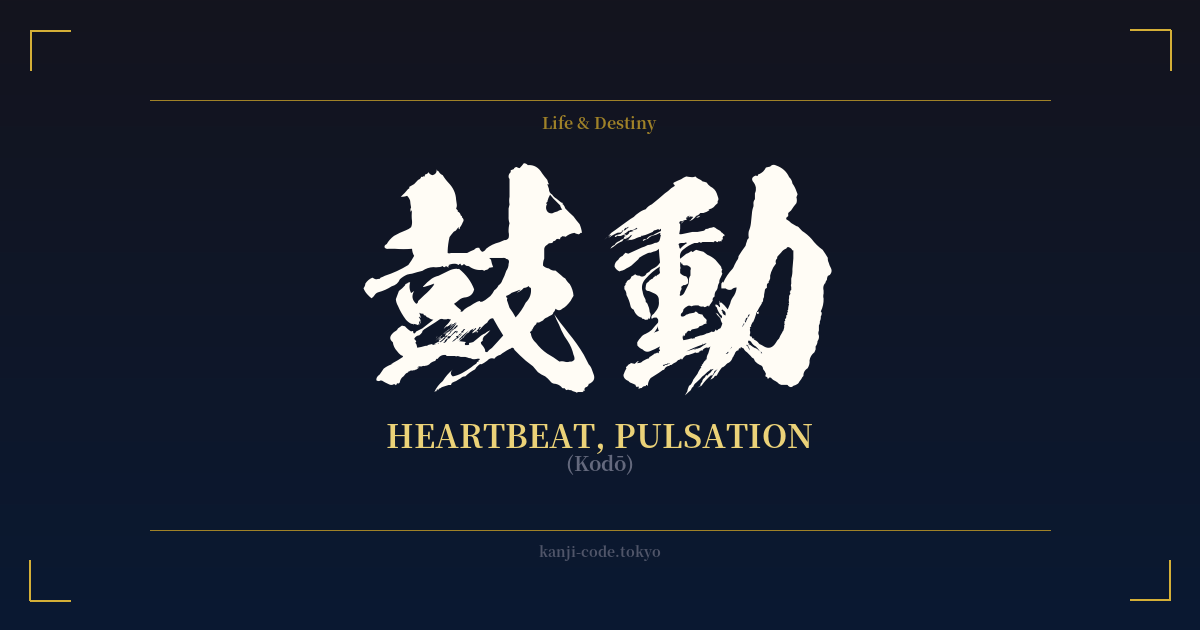
✍️ 鼓動 (Kodō) — Contexto cultural
Kodō (鼓動) es la palabra japonesa para 'latido' o 'pulsación'. A primera vista, se refiere al latido físico y rítmico del corazón que sustenta la vida. Pero, como las mejores palabras, su significado trasciende lo literal y toca la esencia misma de la expresión emocional japonesa.
El poder del Kodō reside en sus caracteres kanji: 鼓 (ko), que significa 'tambor', y 動 (dō), que significa 'movimiento'. Juntos, no solo describen un latido; pintan una imagen del movimiento de un tambor. Esta imaginería es profundamente visceral, evocando el profundo y resonante golpeteo de los enormes tambores taiko de Japón. Al escuchar el taiko, no solo se percibe con los oídos, sino que se sienten las vibraciones en el pecho, una sensación que refleja un potente y acelerado latido. Esta conexión dota al Kodō de una sensación de energía primordial, ritmo y fuerza vital.
En el lenguaje cotidiano y la literatura, Kodō es la palabra clave para expresar emociones intensas. Cuando un personaje de una novela o anime experimenta una oleada de amor, miedo o emoción, a menudo se describe su 'mune no kodō' (胸の鼓動), el latido de su corazón. Es el pulso palpitante de la anticipación antes de una confesión, el frenético martilleo del terror al enfrentarse a un enemigo y el ritmo constante y poderoso de la determinación ante un gran desafío. Es el sonido de estar intensamente, innegablemente, vivo.
Este concepto se extiende metafóricamente al mundo en general. Podríamos hablar del 'Kodō de la ciudad' para describir la energía vibrante y palpitante de una metrópolis como Tokio. Puede representar el ritmo frenético de un movimiento social o el pulso subyacente de una pieza musical. Esta versatilidad convierte a Kodō en una palabra que captura no solo una función biológica, sino la esencia misma de la vitalidad, la pasión y el imparable avance de la vida.
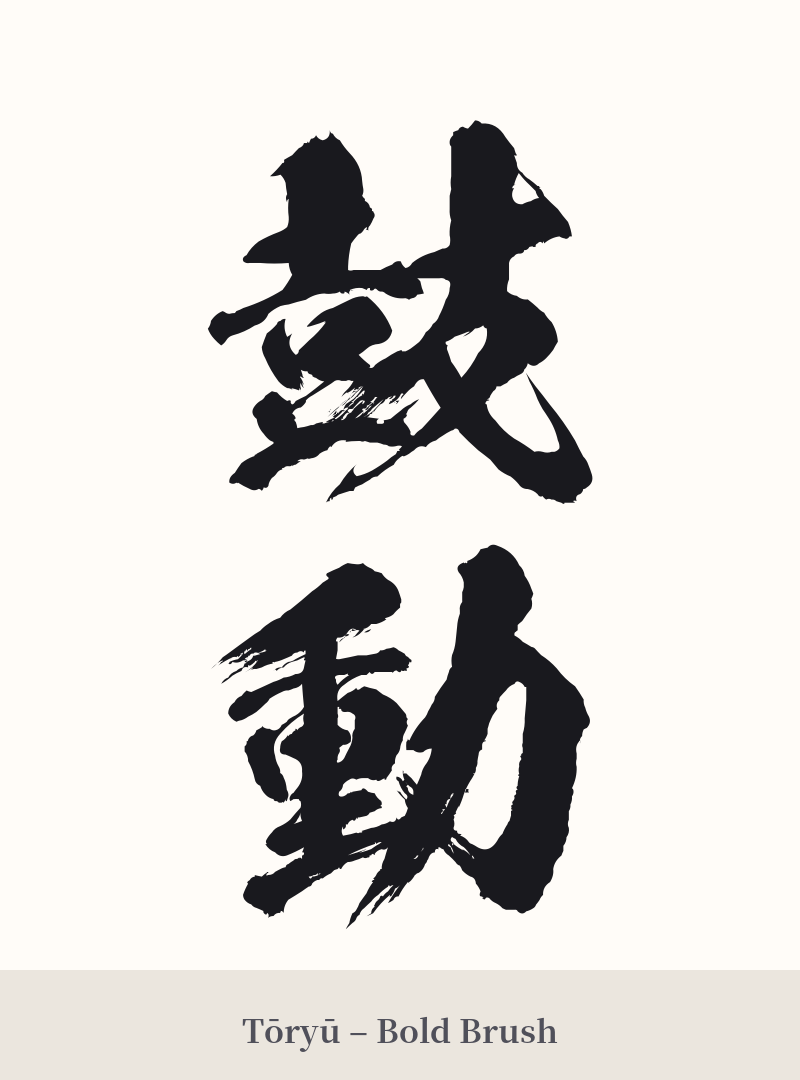
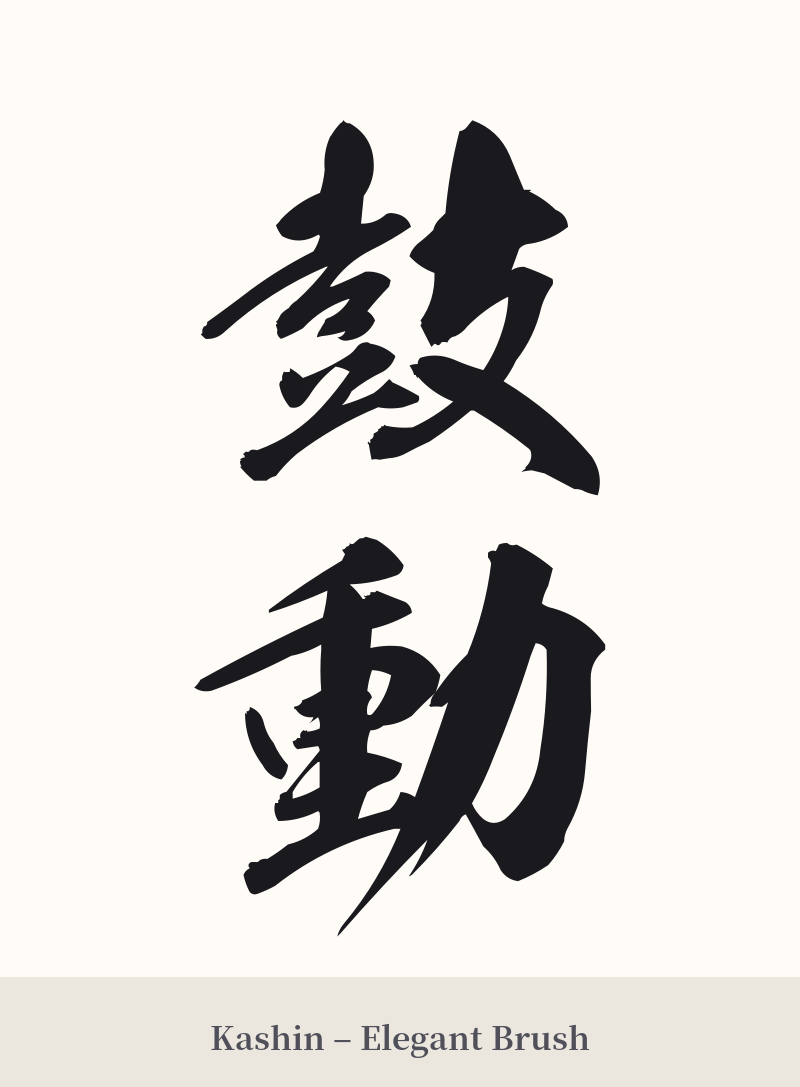
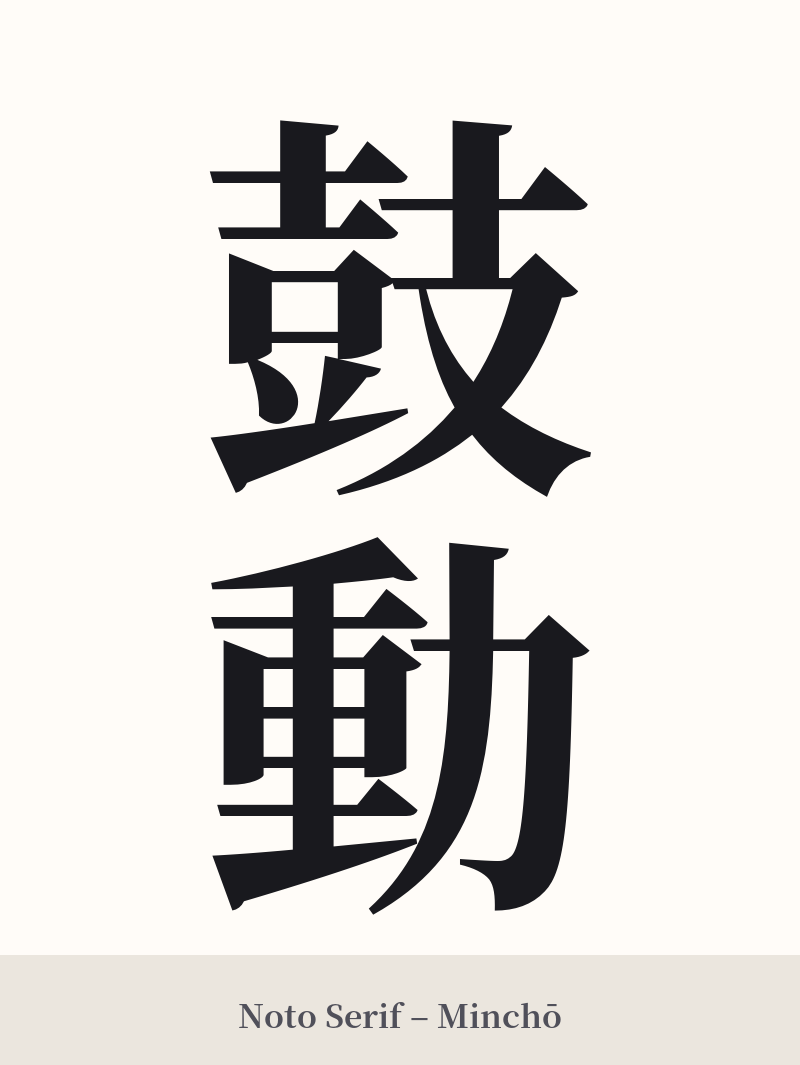
🖌️ Estilos de fuente para 鼓動
Los mismos caracteres kanji pueden verse muy diferentes según el estilo de caligrafía. Elige una fuente que se ajuste al ambiente que deseas para tu tatuaje o diseño.
🎨 Idoneidad para tatuajes
📐 Guía de diseño de tatuajes
Un tatuaje de 鼓動 (Kodō) es una poderosa declaración sobre la vida, la pasión y el ritmo. Su diseño debe reflejar esta energía.
– Ubicación: Este diseño luce espectacular en zonas donde se siente el pulso, como la muñeca, el cuello o justo sobre el corazón, en el pecho. Para un diseño más grande, el antebrazo o las costillas permiten plasmar los caracteres con un nivel de detalle impresionante.
Estilo: La orientación vertical tradicional siempre es una excelente opción. Para un toque dinámico, considere una caligrafía semicursiva (Gyōsho) o cursiva (Sōsho). Estas escrituras fluidas pueden imitar el ritmo de un latido real. Para un estilo más moderno e impactante, una fuente Mincho o gótica, limpia y nítida, puede proporcionar un contraste marcado y poderoso.
Consejos visuales: Considere integrar los kanji con un elemento visual. Una sutil línea de electrocardiograma que se entrelace con los caracteres es una opción popular y efectiva. También puede usar una pincelada de tinta roja, quizás con un estilo de acuarela, para representar la sangre, la pasión o la vida misma. Colocar los kanji dentro del contorno de un corazón o junto a un tambor taiko puede realzar aún más su significado simbólico.
Comentarios