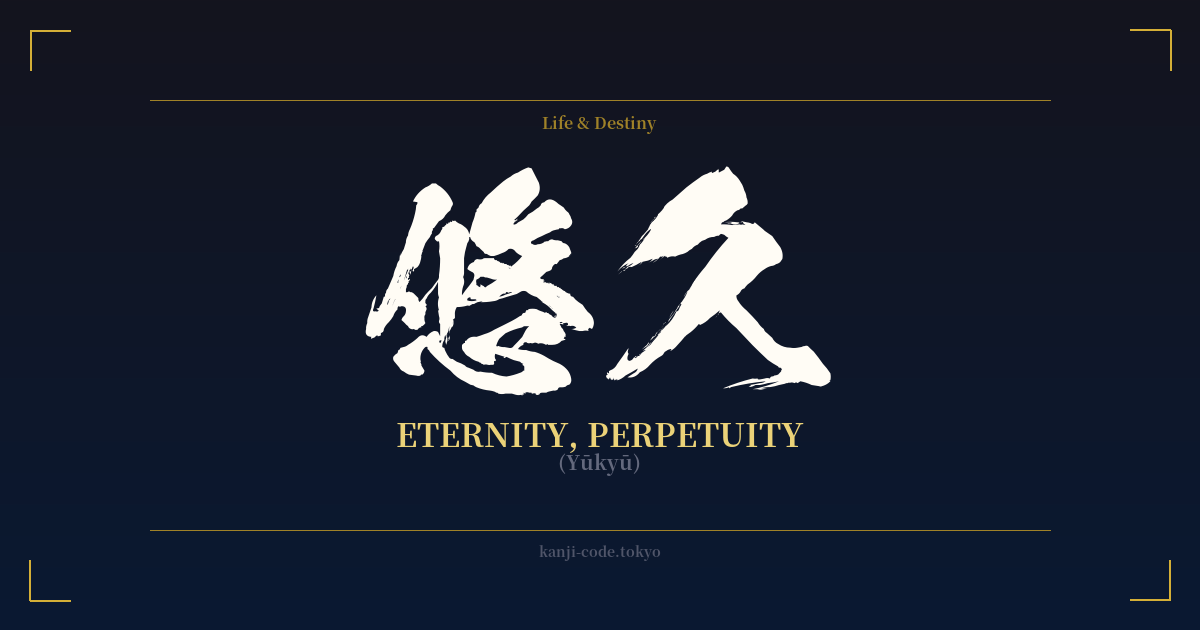
✍️ 悠久 (Yūkyū) — Cultural Context
悠久 (Yūkyū) is a Japanese word that captures a sense of eternity, but not in the way one might first assume. It doesn't just mean 'a very long time'; it evokes a feeling of serene, unending permanence and grandeur. It speaks to a timescale that is vast, quiet, and almost beyond human comprehension, like the age of the mountains or the slow, silent turning of the cosmos.
To truly grasp its nuance, it's helpful to compare it with another word for eternity, 永遠 (Eien). While Eien often refers to a personal, emotional, or promised eternity—like 'eternal love' or 'friends forever'—Yūkyū is impersonal and majestic. You would use Yūkyū to describe the 'eternal history' of a nation (悠久の歴史, yūkyū no rekishi) or the 'perpetual flow' of a great river (悠久の流れ, yūkyū no nagare). It connects to things that exist on a geological or cosmic scale, things that were here long before us and will remain long after.
This concept is deeply woven into the Japanese cultural and spiritual landscape, particularly within Shintoism and certain Buddhist philosophies. Shinto, Japan's indigenous religion, perceives divinity (kami) in natural objects like ancient trees, massive rocks, and towering mountains. These elements are revered for their longevity and enduring presence, embodying the very essence of Yūkyū. They are silent witnesses to the passage of countless generations, representing a stability that transcends the fleeting nature of human life.
The word itself is a beautiful fusion of its two characters. The first, 悠, suggests distance, leisure, and permanence. It contains the radical for 'heart' or 'mind' (心) at the bottom, implying that this sense of timelessness is something felt and perceived—a state of being in awe of the vastness of time. The second character, 久, simply means 'a long time' or 'enduring.' Together, they create a term that is both descriptive and deeply emotive, painting a picture of a calm, profound, and unending existence.
In literature and poetry, Yūkyū is used to evoke a sublime and contemplative mood. It invites the reader to step back from their own immediate concerns and consider their place within the grand, perpetual tapestry of the universe. It is a word of peace, stability, and the quiet power of endurance.
🖌️ Font Styles for 悠久
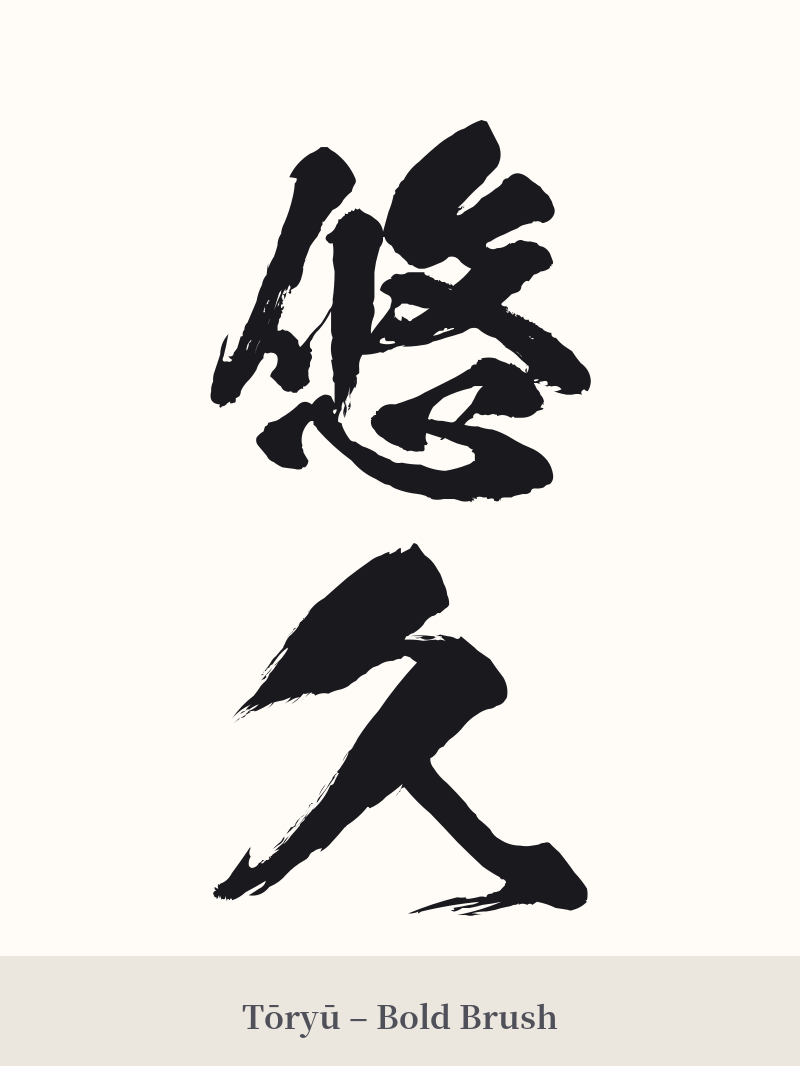
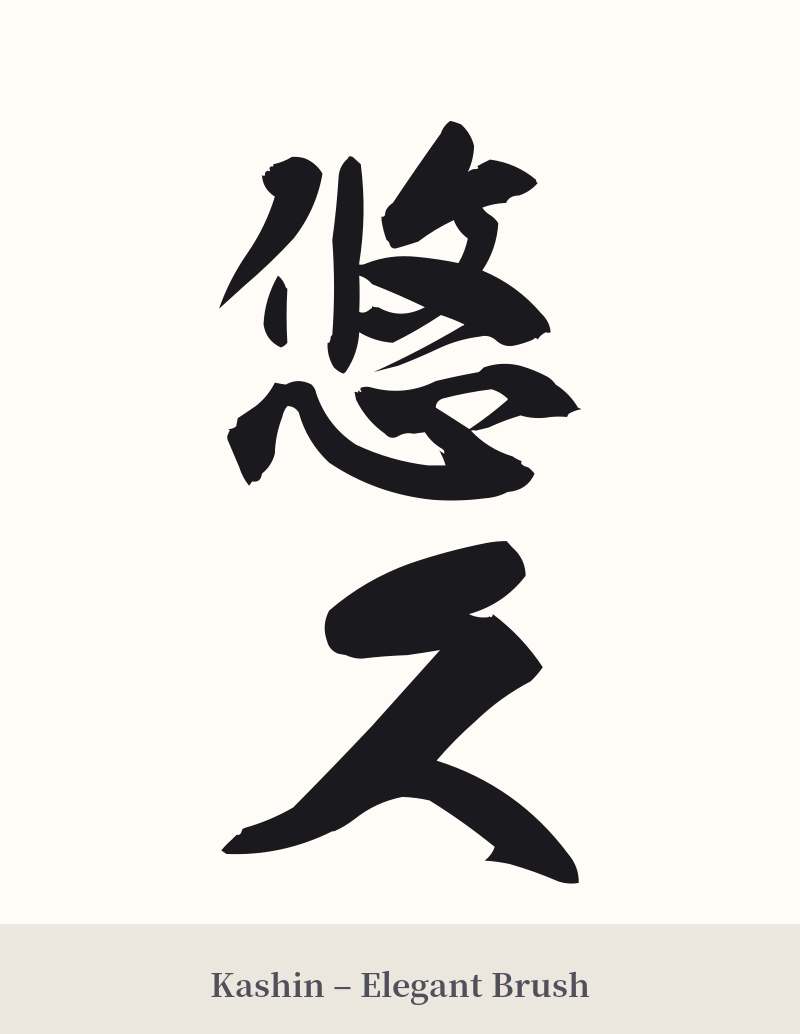
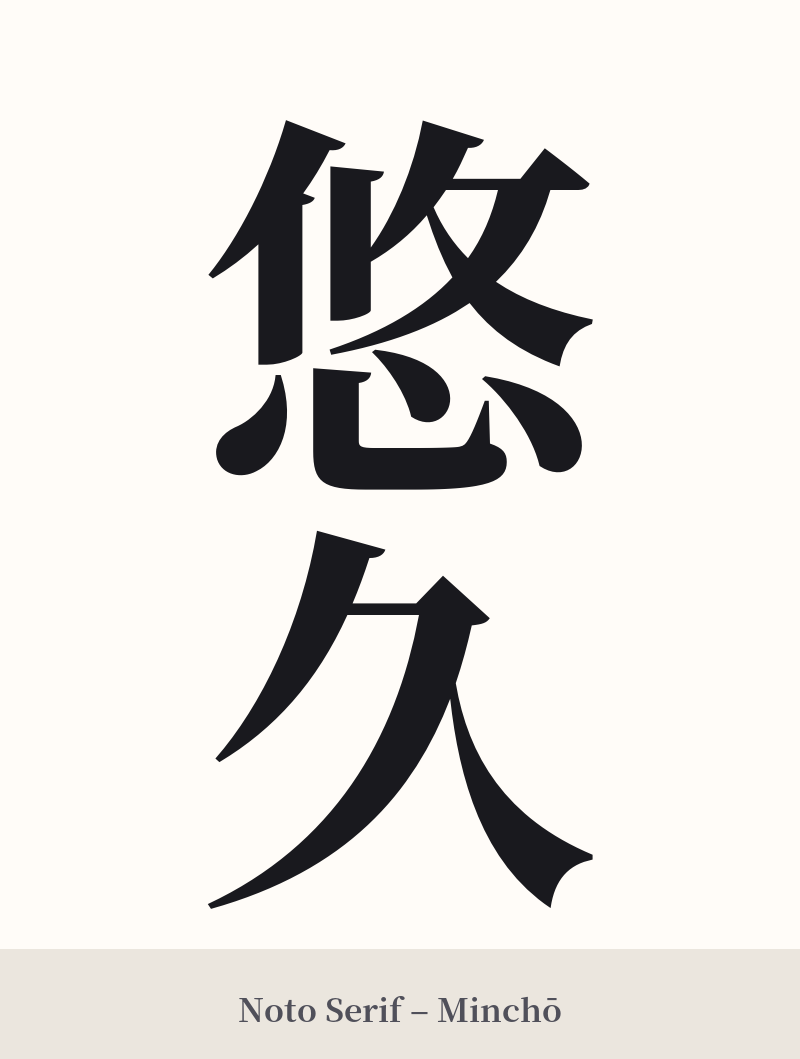
The same kanji can look dramatically different depending on the calligraphy style. Choose a font that matches the mood you want for your tattoo or design.
🎨 Tattoo Suitability
📐 Tattoo Design Guide
悠久 offers a beautiful and balanced aesthetic for a tattoo, combining a complex character with a simple one.
– Placement: A vertical alignment is highly recommended to honor traditional calligraphy. This looks powerful along the spine, forearm, or calf. A horizontal placement can also work well across the chest or upper back.
– Font Style: The choice of script can dramatically alter the feeling of the design. A flowing, semi-cursive style like Gyōsho emphasizes the 'eternal flow' aspect of the word. For a more formal and solid look that speaks to permanence, a crisp Kaisho (block) script is an excellent choice. Mincho, a classic serif-style font, provides an elegant and timeless print look.
– Visual Tips: To enhance the meaning, consider integrating the kanji with imagery that evokes eternity. A subtle background of a starry nebula, the gentle curves of an Enso circle (a symbol of the universe and enlightenment), or a design that mimics a flowing river can beautifully complement the characters without overpowering them.
Comments