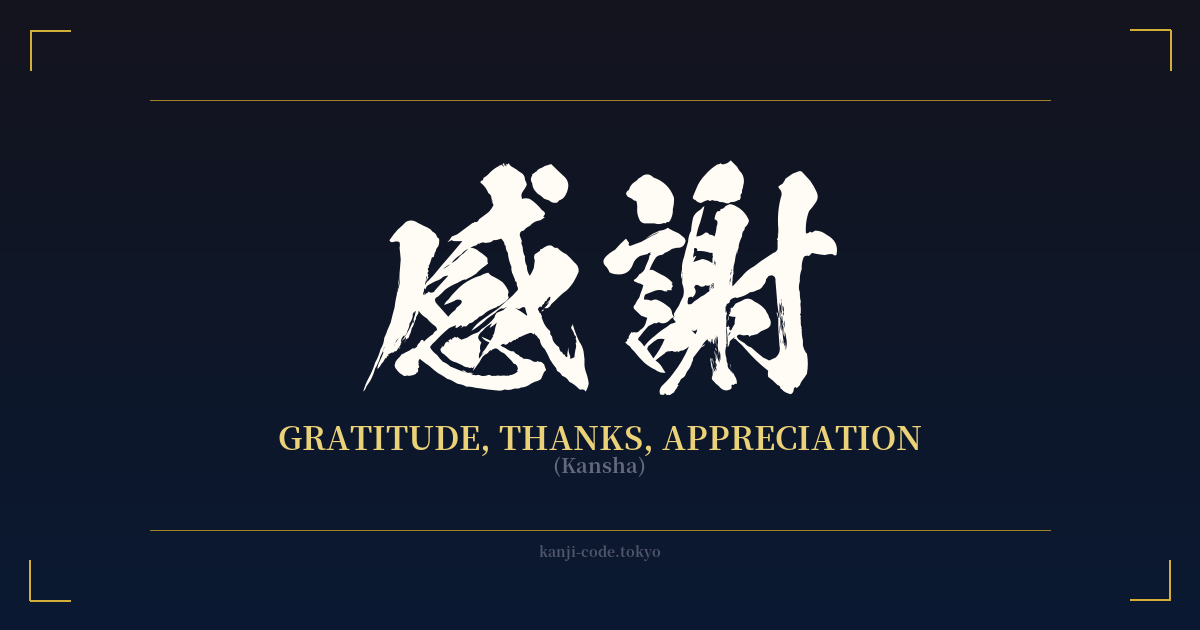
✍️ 感謝 (Kansha) — Cultural Context
感謝 (Kansha) is one of the most beautiful and significant words in the Japanese language, encapsulating a sense of deep, heartfelt gratitude that goes far beyond a simple 'thank you'. While 'arigatou' is the common phrase for everyday thanks, 'Kansha' represents the profound emotion and state of being grateful. It is a feeling that resides in the heart, often expressed for significant acts of kindness, support, or for life's blessings in general.
This concept is deeply woven into the fabric of Japanese society, which places a high value on mutual respect and the acknowledgment of debts of gratitude, known as 'on' (恩). Expressing 'Kansha' is not just polite; it's a crucial component of maintaining social harmony ('wa', 和). It reflects an understanding that one's existence and successes are interconnected with the help and support of others—family, friends, teachers, and even society as a whole.
The word itself offers a glimpse into its meaning. It combines '感' (kan), meaning 'feeling' or 'sensation', with '謝' (sha), meaning 'thanks'. It literally translates to a 'feeling of thanks'. This emphasizes that true gratitude is not merely a spoken word but an internal experience, a genuine emotion that moves the heart.
In practice, 'Kansha' is often invoked during more formal or significant moments. You might hear it in speeches at weddings or graduations, in letters to mentors, or in personal reflections during moments of introspection. It's a word that carries weight and sincerity, used when 'arigatou' doesn't seem strong enough to convey the depth of one's feelings.
From a philosophical perspective, 'Kansha' aligns with principles found in Zen Buddhism, where gratitude for the present moment, for simple things, and for the interconnectedness of all life is a cornerstone of mindfulness. To live with a spirit of 'Kansha' is to live with an open, appreciative heart, recognizing the good in one's life and the people who contribute to it. This makes it a powerful and positive concept, representing humility, respect, and a deep appreciation for the world around you.
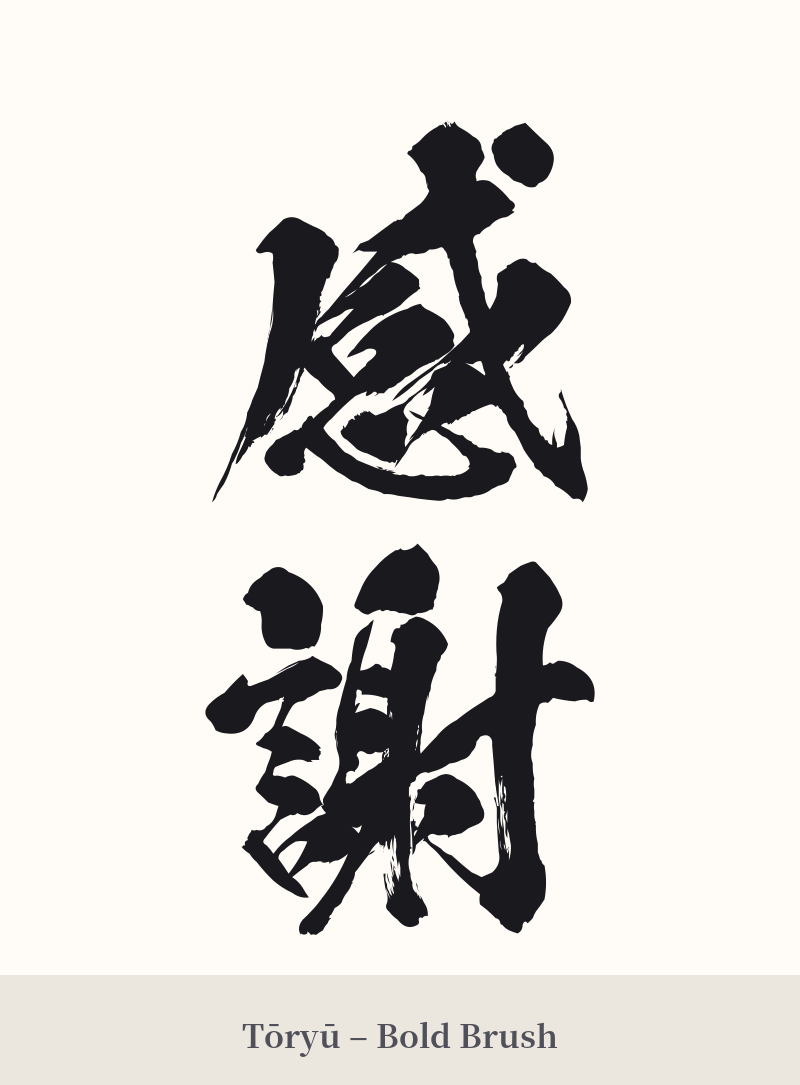
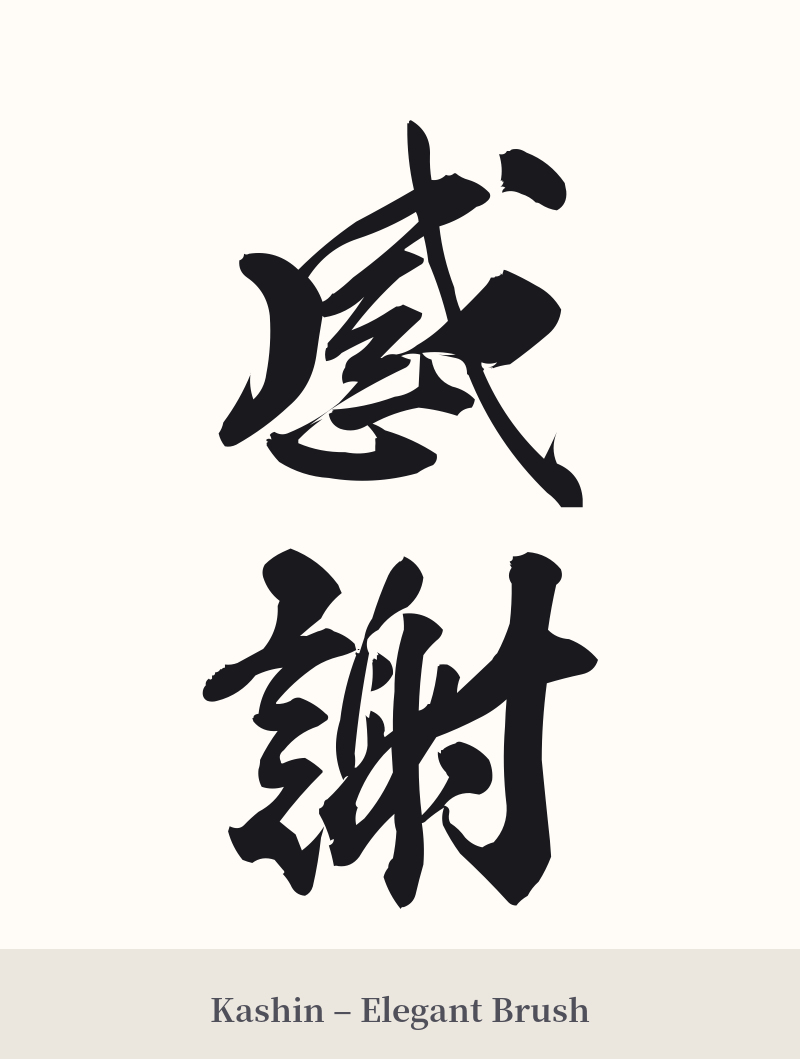
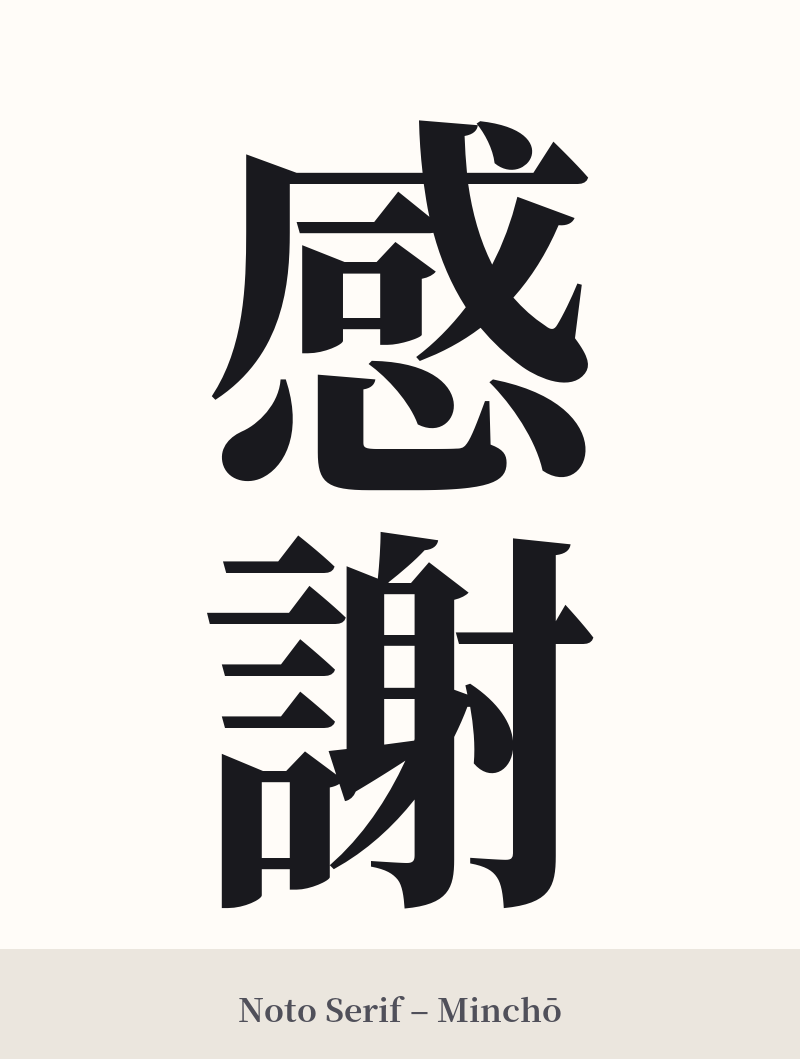
🖌️ Font Styles for 感謝
The same kanji can look dramatically different depending on the calligraphy style. Choose a font that matches the mood you want for your tattoo or design.
🎨 Tattoo Suitability
📐 Tattoo Design Guide
When designing a tattoo for 感謝 (Kansha), the goal is to reflect its sincere and heartfelt meaning. The two characters have a good balance, with the first being slightly more open and the second being denser, creating a nice visual rhythm.
– Placement: Vertical alignment is traditional and highly recommended. It looks elegant along the spine, down the forearm, or on the calf. For a horizontal design, it works well across the chest, upper back, or along the collarbone.
– Font Style: The choice of script can dramatically alter the feel. A clean, precise 'Kaisho' (block script) emphasizes sincerity and clarity. For a more emotional and fluid look, 'Gyōsho' (semi-cursive) or 'Sōsho' (cursive) styles are excellent choices, as the flowing lines can represent the outpouring of emotion.
– Visual Elements: Consider pairing 感謝 with other symbolic imagery. A lotus flower can represent purity and enlightenment stemming from this gratitude. An 'ensō' (Zen circle) drawn around the kanji can symbolize the completeness and perfection of the feeling. A simple, single falling maple leaf or cherry blossom petal can evoke a sense of beautiful, transient moments for which one is grateful.
Comments