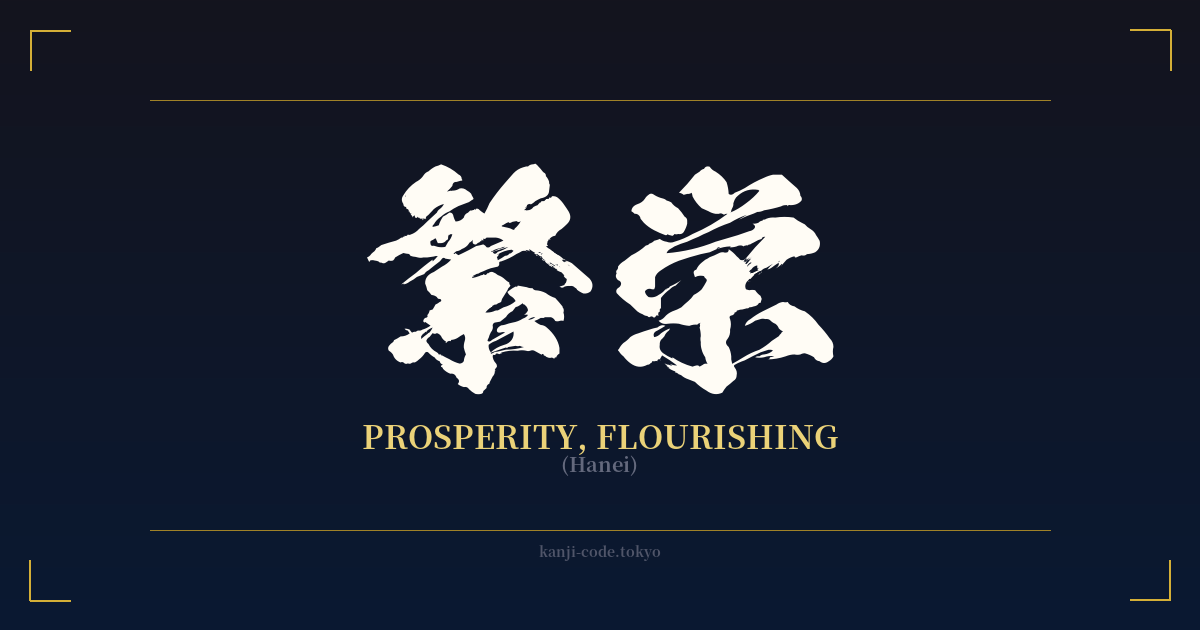
✍️ 繁栄 (Hanei) — Cultural Context
繁栄 (Hanei) is a Japanese word that encapsulates a profound and holistic concept of prosperity. It goes far beyond mere financial wealth, touching on the ideas of flourishing, thriving, and sustained growth. While it can certainly refer to economic success, its core meaning is more organic, like a forest growing thick and luxuriant or a family line continuing strong through generations.
In a business context, you'll often hear the phrase 「企業の繁栄」 (kigyō no hanei), which means 'corporate prosperity'. This isn't just about profit margins; it implies a healthy, growing company with a stable future and happy employees. It speaks to the overall vitality of the organization.
Similarly, 「子孫繁栄」 (shison hanei) is a traditional wish for the 'prosperity of one's descendants'. This is a cornerstone concept in Japanese family values, representing the hope that future generations will be healthy, numerous, and successful. It’s a common prayer at Shinto shrines, especially during New Year's visits or family-related ceremonies.
This connection to nature is embedded in the kanji themselves. The first character, 繁, depicts something dense and complex, evoking an image of overgrown, thriving plant life. The second character, 栄, means to flourish or to be glorious. Together, they paint a picture of glorious, abundant growth—a powerful visual and conceptual metaphor.
Unlike the word 成功 (seikō), which means 'success' and often refers to achieving a specific, finite goal, 繁栄 (Hanei) implies a continuous, ongoing state of flourishing. Seikō is reaching the peak of a mountain; Hanei is the thriving ecosystem of the entire mountain range. It’s a state of being rather than a single event.
This makes 繁栄 a deeply aspirational word in Japanese culture. It represents a universal desire for a life, a family, or a community that is not just surviving, but actively thriving in every aspect. It embodies a dynamic, positive energy of growth and abundance.
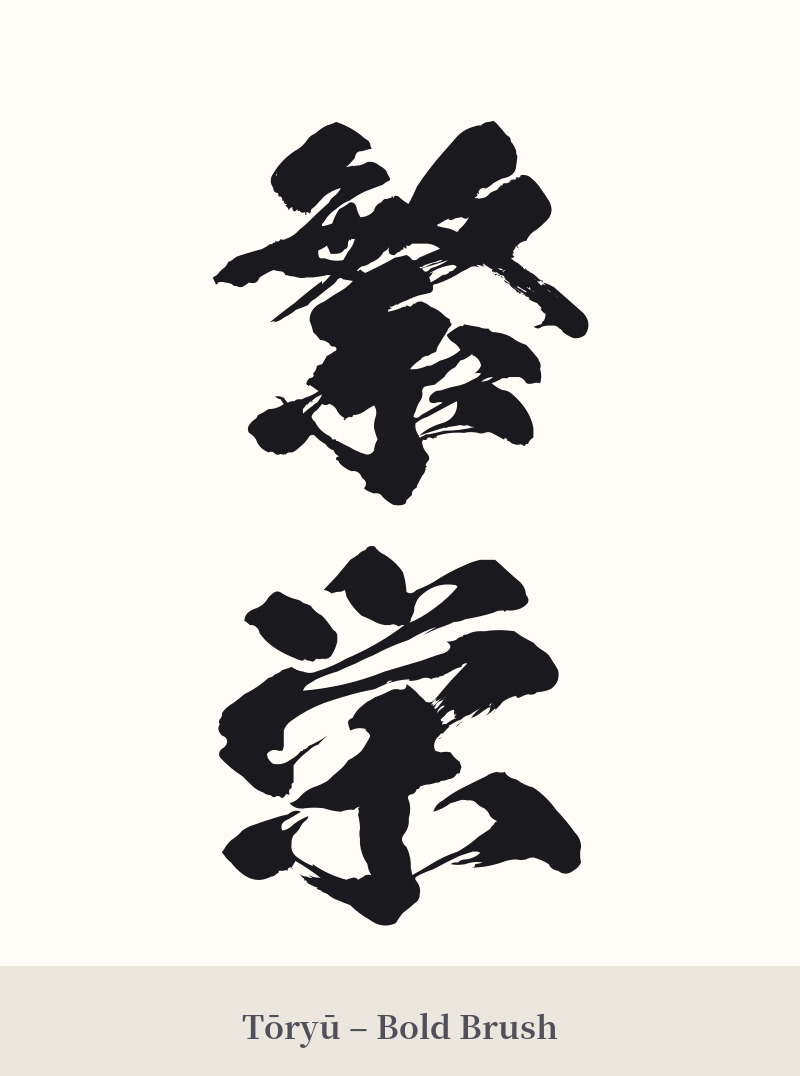
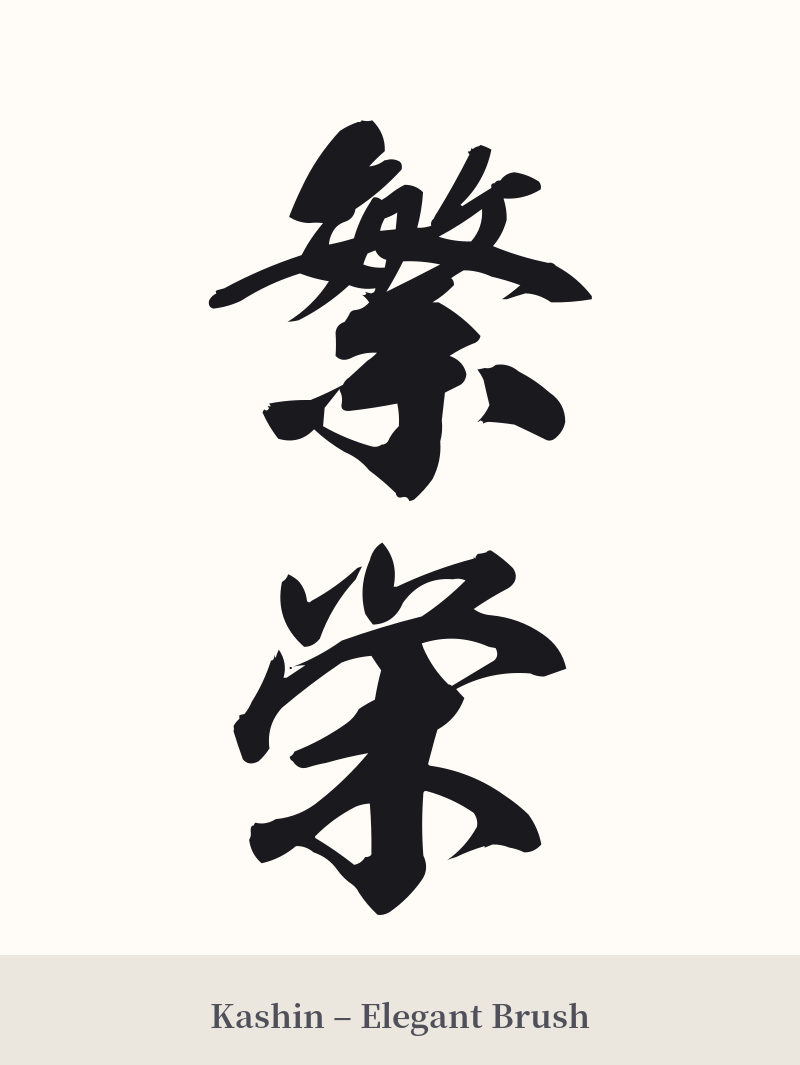
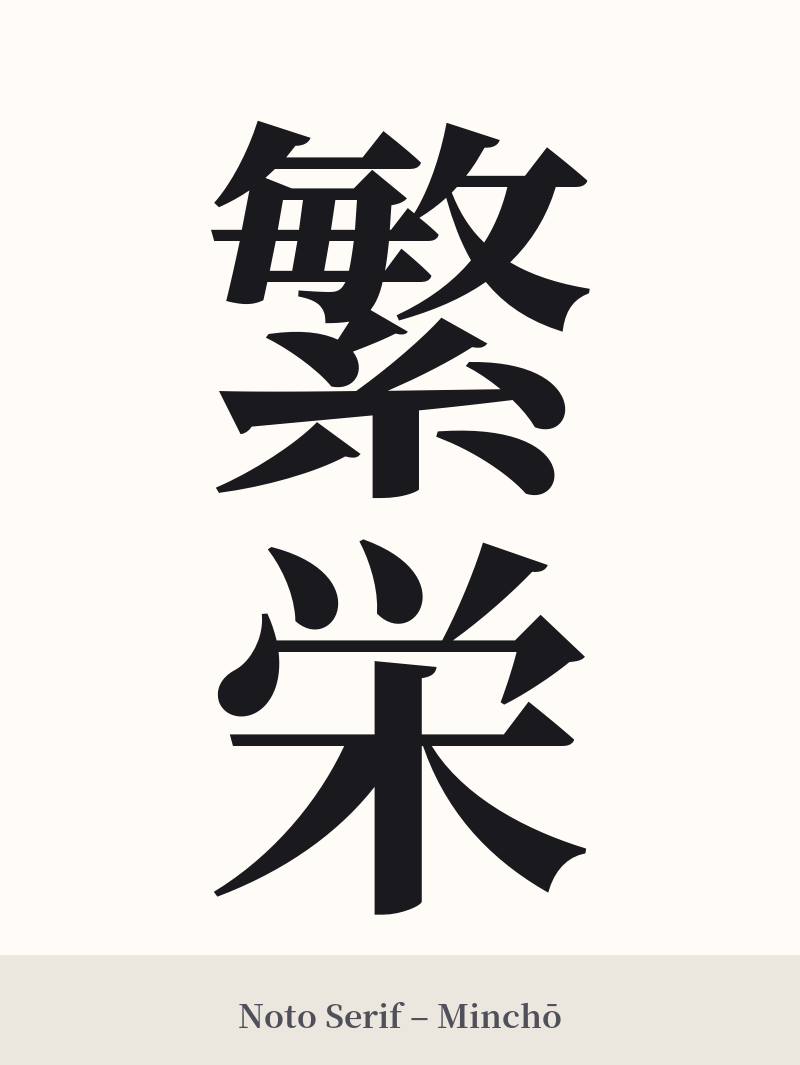
🖌️ Font Styles for 繁栄
The same kanji can look dramatically different depending on the calligraphy style. Choose a font that matches the mood you want for your tattoo or design.
🎨 Tattoo Suitability
📐 Tattoo Design Guide
For a tattoo of 繁栄 (Hanei), the design needs to respect the complexity of the characters while amplifying their powerful meaning.
– Placement: Vertical alignment is traditional and visually striking. Consider placements like the forearm (inner or outer), the calf, or along the spine. These areas provide enough space for the characters to be rendered clearly without feeling cramped.
– Font Style: A bold, clear script is recommended. A standard `Kaisho` (block script) will emphasize the strength and stability of the concept. For a more dynamic feel that captures the 'flourishing' aspect, a `Gyosho` (semi-cursive script) can add a sense of flow and energy, but ensure the artist is experienced with this style to maintain legibility.
– Visual Tips: To enhance the theme, consider incorporating complementary imagery. Elements like a blooming lotus flower, a climbing koi fish, or stalks of rice can visually represent the themes of growth and abundance. However, the kanji itself is powerful enough to stand alone.
Comments