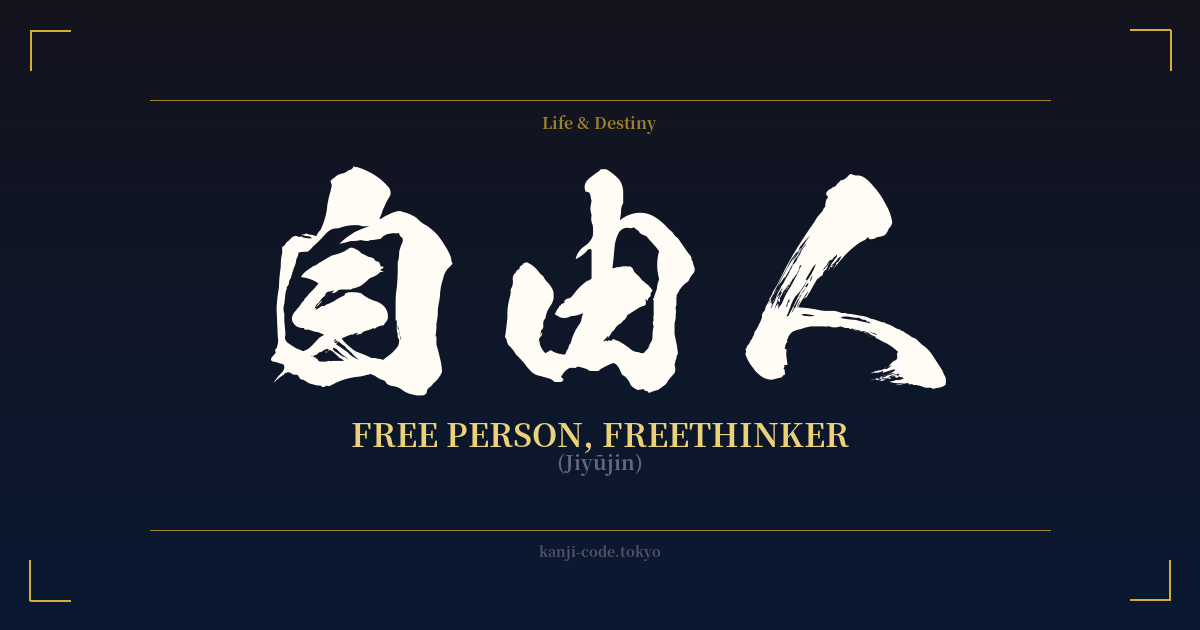
✍️ 自由人 (Jiyūjin) — Cultural Context
自由人 (Jiyūjin) translates to 'free person,' but its meaning runs deeper than a simple definition. It evokes the image of a freethinker, a wanderer, or an individual who lives by their own code, unconstrained by the conventions of society. It’s a word that embodies a philosophical stance on life itself.
To truly grasp its significance, we must first look at the word for 'freedom,' 自由 (jiyū). This term is a fascinating product of cultural exchange. It was coined in the 19th century during the Meiji Restoration, a period when Japan was rapidly modernizing and importing Western ideas. Scholars needed a word to translate the concept of 'liberty,' and they created 自由 by combining two kanji: 自 (ji), meaning 'oneself,' and 由 (yū), meaning 'reason' or 'cause.' Together, they literally mean 'by one's own reason'—the idea that the source of one's actions and beliefs comes from within, not from an external authority. This was a revolutionary concept in a society traditionally built on group harmony and fulfilling prescribed roles.
Adding the character 人 (jin), meaning 'person,' transforms the abstract concept of 'freedom' into a human identity. A 自由人 is therefore not just someone who has freedom, but someone who is the embodiment of it. This person charts their own course, values their independence, and is often seen as creative, unconventional, and self-reliant.
In modern Japan, the term can describe anyone from an artist living a bohemian lifestyle to a globetrotting backpacker or an entrepreneur who forges their own path. It stands in contrast to the traditional ideal of the 'salaryman,' who dedicates their life to a single company. The 自由人 chooses a different way, prioritizing personal fulfillment and autonomy over stability and social expectation.
While the idea of the 'free person' is aspirational and largely positive, it can sometimes carry a subtle, double-edged connotation. In a culture that values community and responsibility, a 自由人 might occasionally be viewed as someone who is detached, unpredictable, or avoids the obligations of the group. However, this is a minor nuance. For most, 自由人 remains a powerful and inspiring symbol of individuality and the courage to live an authentic life.
🖌️ Font Styles for 自由人
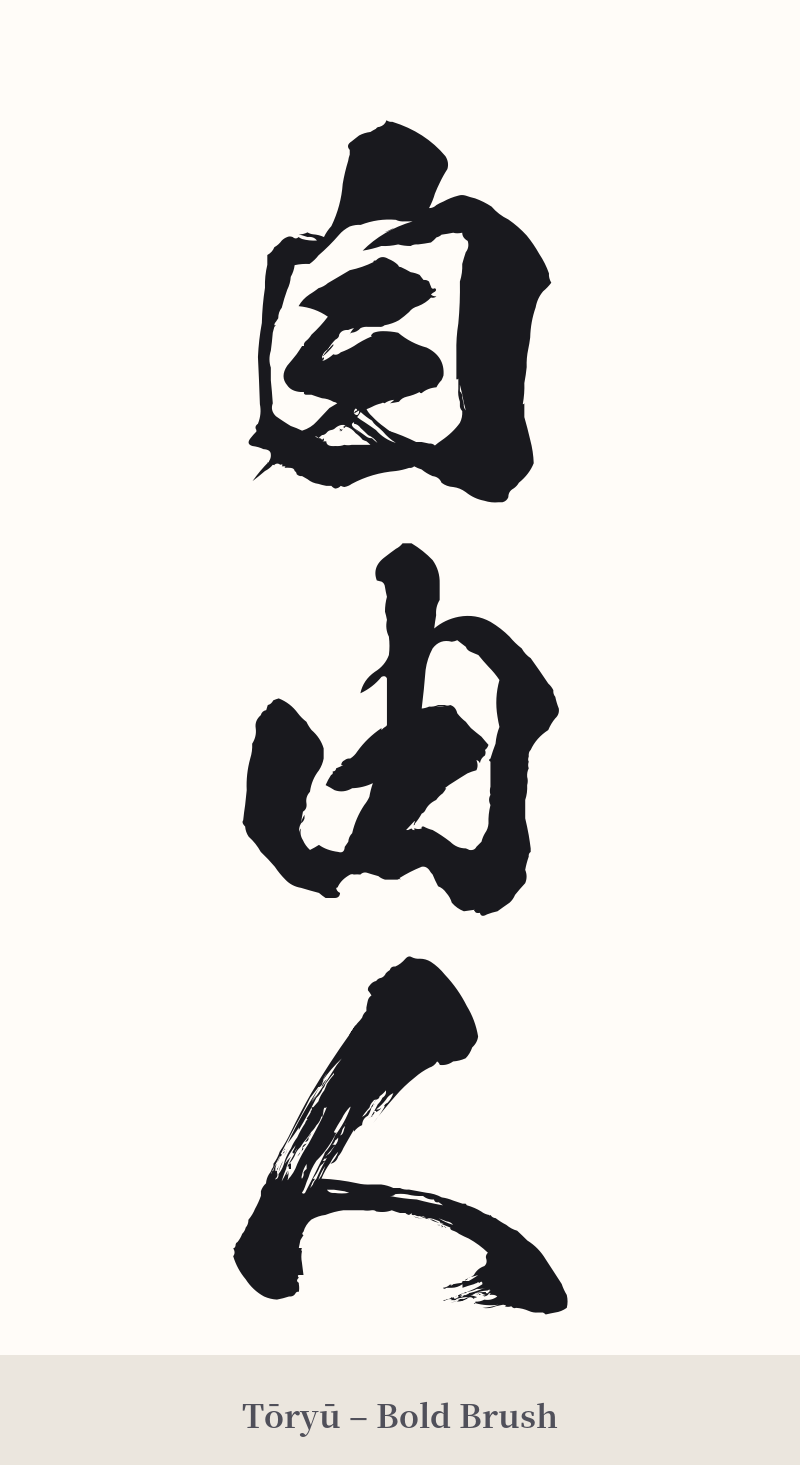
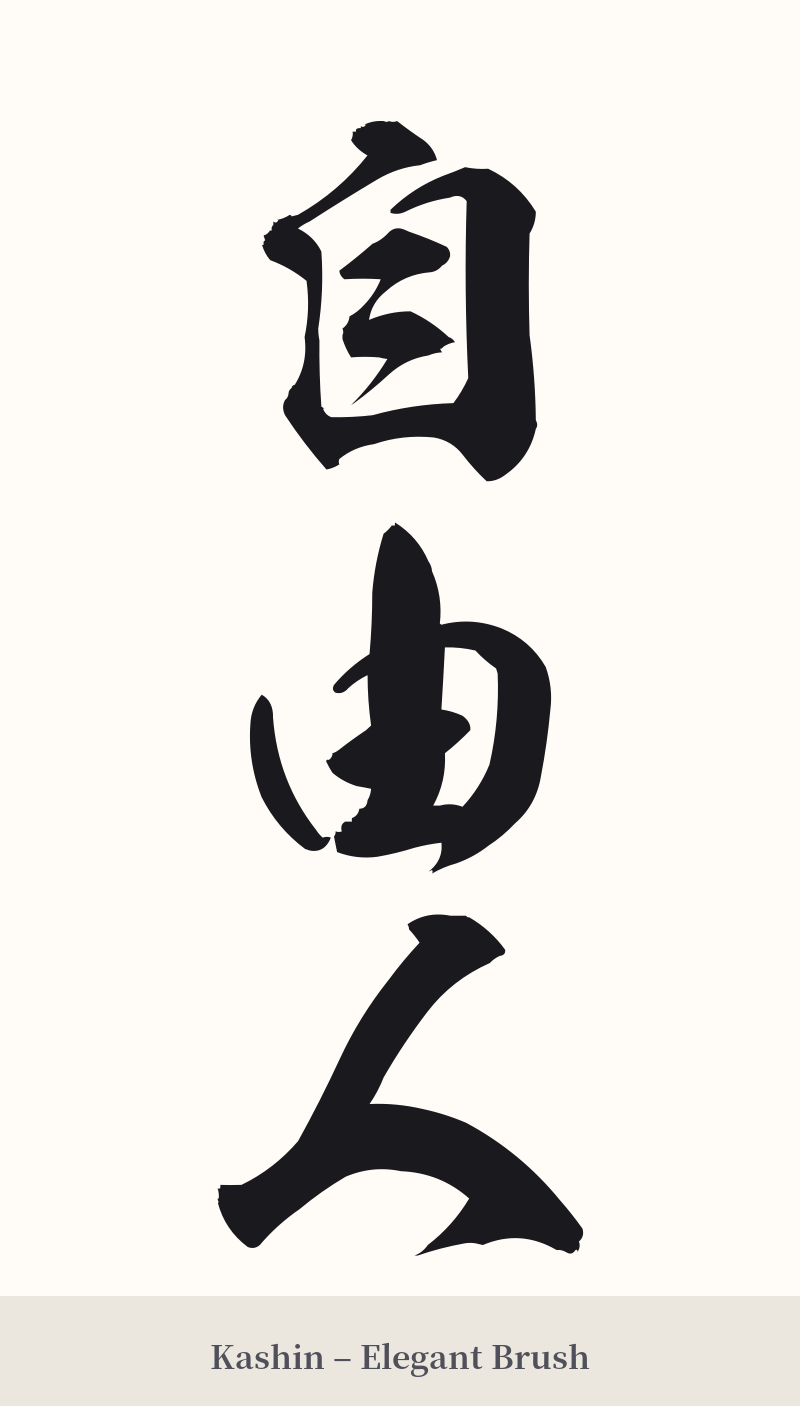
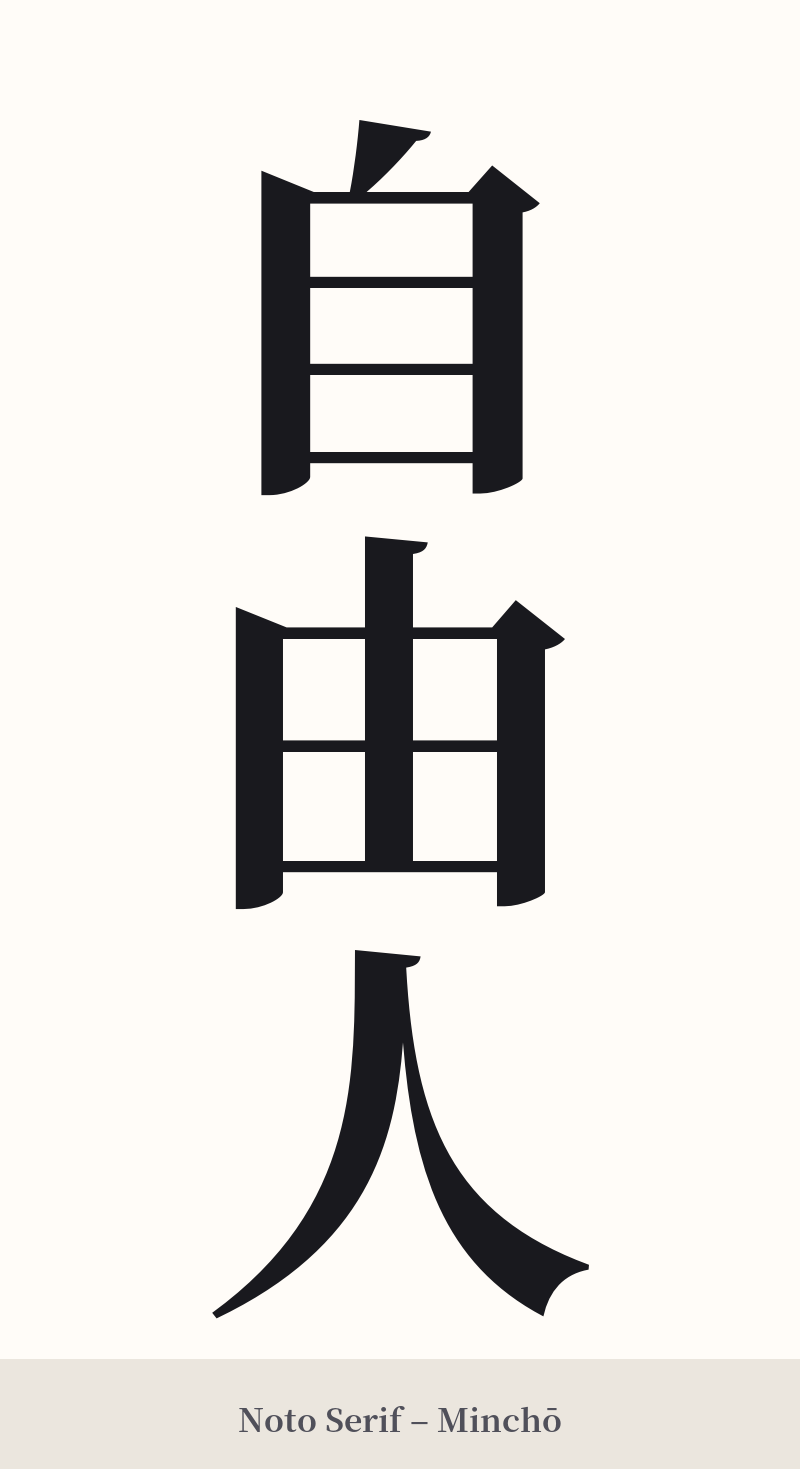
The same kanji can look dramatically different depending on the calligraphy style. Choose a font that matches the mood you want for your tattoo or design.
🎨 Tattoo Suitability
📐 Tattoo Design Guide
For a 自由人 tattoo, the design should reflect the concept's blend of simplicity and depth.
– Placement: A vertical alignment is traditional and visually striking for three-character words. This looks excellent running down the forearm, along the bicep, on the calf, or even centered on the spine. A horizontal placement can also work well across the chest, collarbone, or upper back.
– Font Style: The choice of script can dramatically alter the feeling. For a dynamic, expressive feel that captures the 'freedom' aspect, consider a semi-cursive (gyōsho) or fully cursive (sōsho) calligraphic style. For a more modern, grounded, and clear statement, a crisp block script (kaisho) is an excellent choice.
– Visual Tips: The characters themselves are relatively simple, with a low stroke count. This means the quality of the line work is paramount. The clean look allows for creative pairing; consider integrating the kanji with an enso circle (a symbol of enlightenment and the void) or a simple, personal motif that represents your own journey of freedom.
Comments