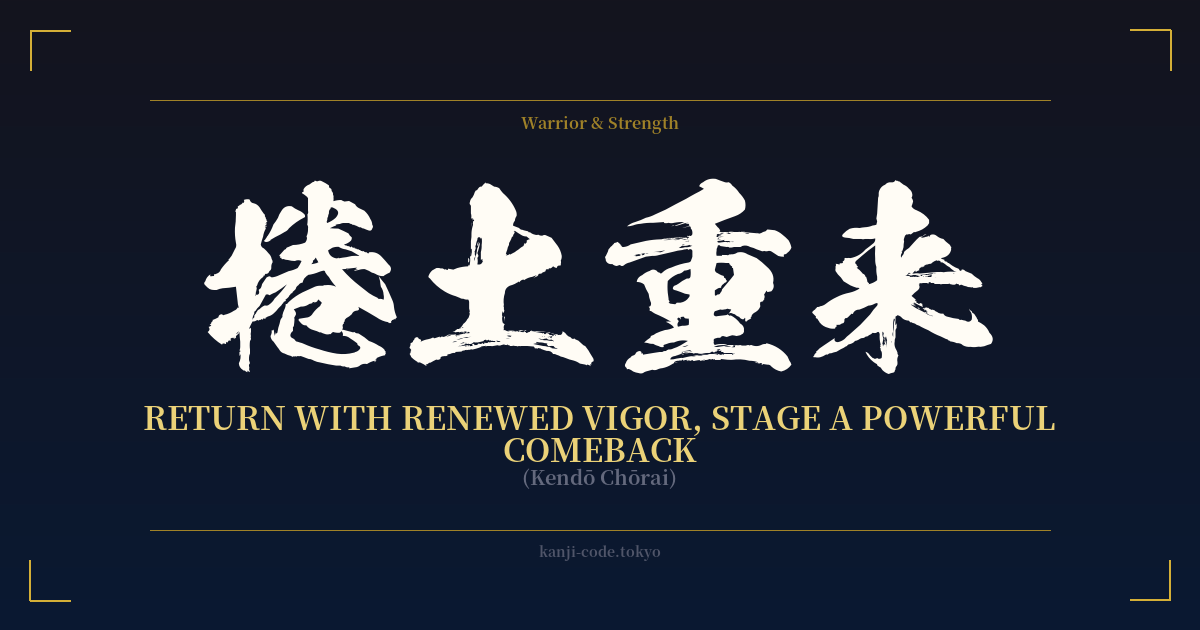
✍️ 捲土重来 (Kendō Chōrai) — Cultural Context
捲土重来 (Kendō Chōrai) is a four-character idiom that paints a vivid, powerful picture of resilience and redemption. Literally translated, it means "to roll up the earth and come again." This evocative phrase conjures the image of a cavalry charge so immense and forceful that it kicks up a great cloud of dust, announcing a return to the battlefield with renewed strength and determination.
The idiom's origins trace back to a poem by the Tang Dynasty poet Du Mu. The poem reflects on the fate of the warlord Xiang Yu, a formidable rival to Liu Bang, who would go on to found the Han Dynasty. After a catastrophic defeat at the Battle of Gaixia, a proud Xiang Yu felt too ashamed to face the families of the men he had led to their deaths. Instead of retreating across the Yangtze River to regroup, he chose to take his own life.
Du Mu's poem muses on this historical turning point, suggesting that the outcome was not yet sealed. He writes that if Xiang Yu had swallowed his pride and returned to his homeland, he might have rallied his forces and staged a comeback. The phrase 捲土重来 captures this very idea: the potential for a triumphant return, born from the ashes of a crushing defeat.
In modern Japan, Kendō Chōrai has shed its purely military context and is used to describe any situation where an individual or group overcomes a significant setback to challenge for success once more. You'll often hear it in the world of sports, where a team that lost a championship vows to return the next season with Kendō Chōrai spirit. It's also used in business for a company that recovers from a crisis, or on a personal level for someone who bounces back from failure.
What makes this idiom so compelling is that it’s not just about trying again. It embodies the idea of learning from failure, regrouping, and returning with greater force, wisdom, and an unshakeable will to win. It is a testament to the idea that defeat is not the end, but rather a catalyst for a more powerful beginning.
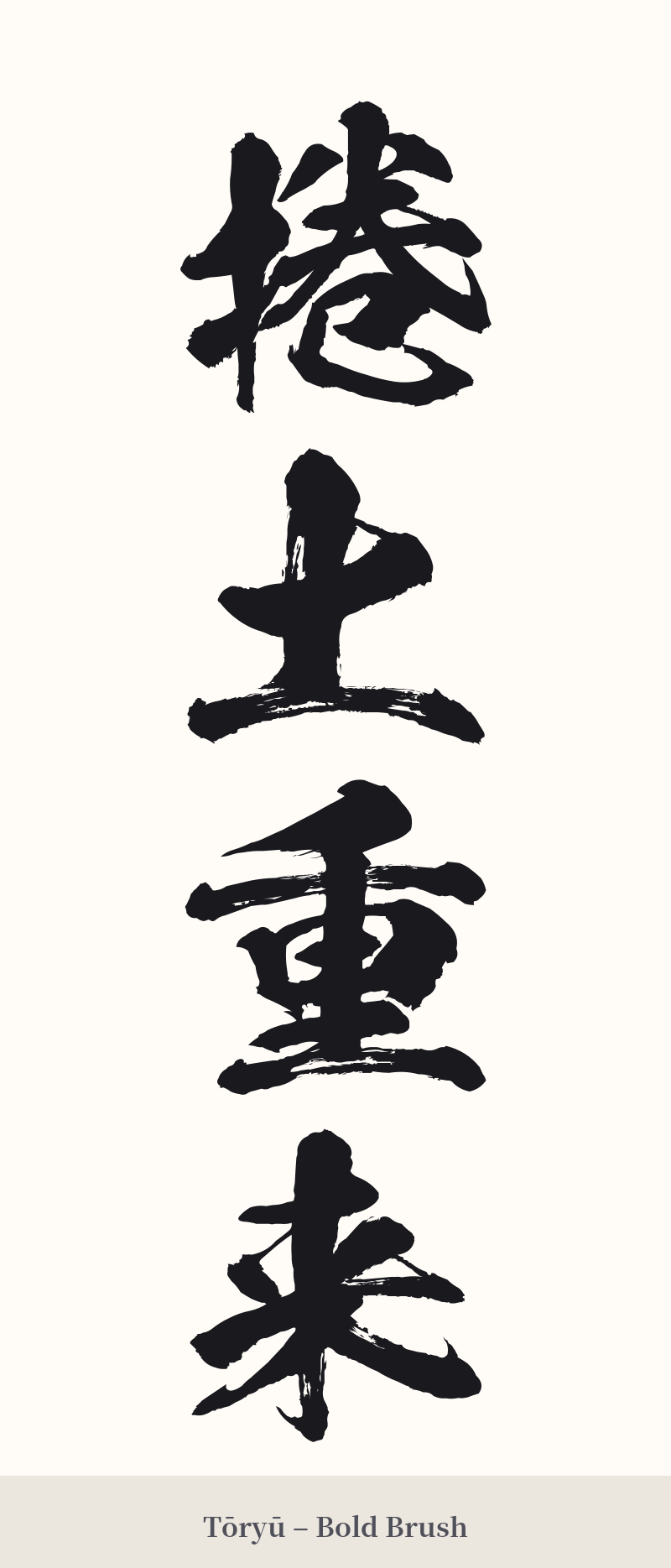
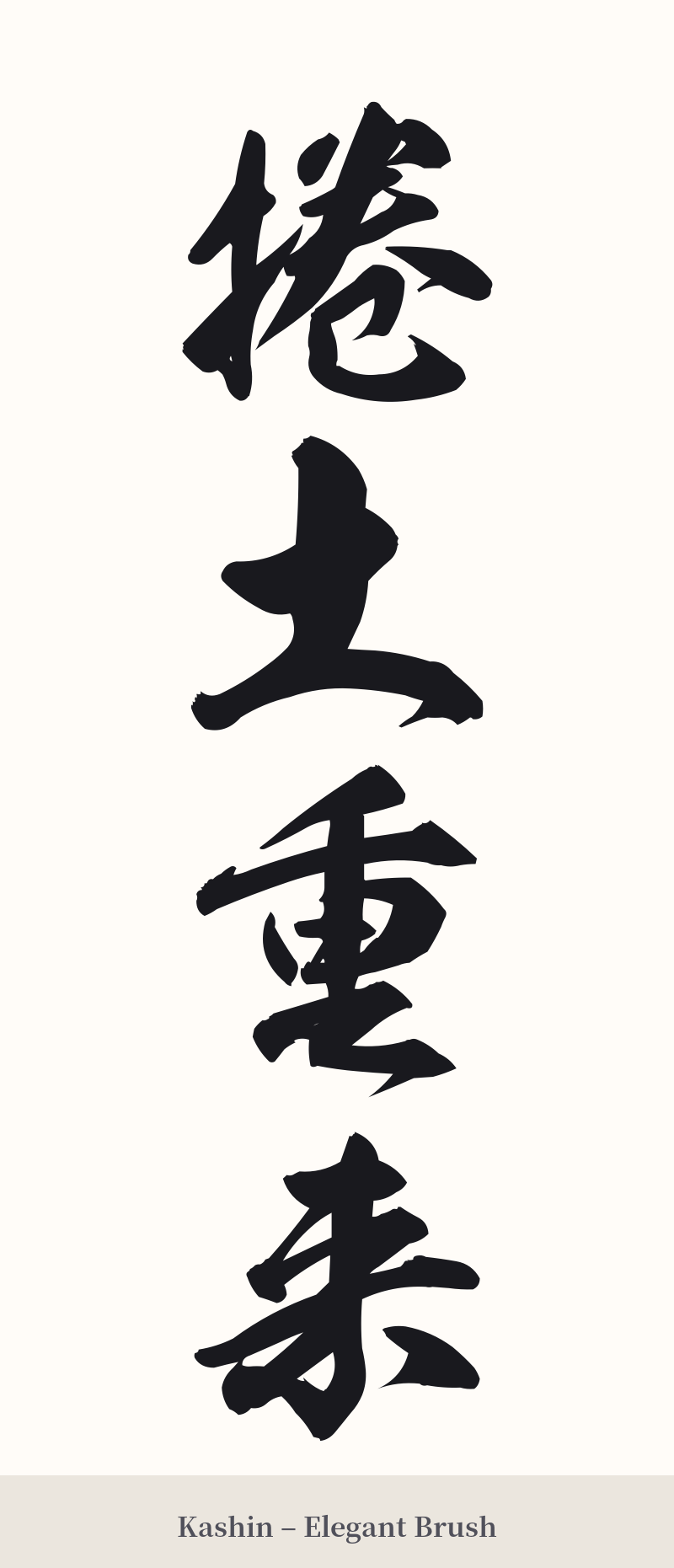
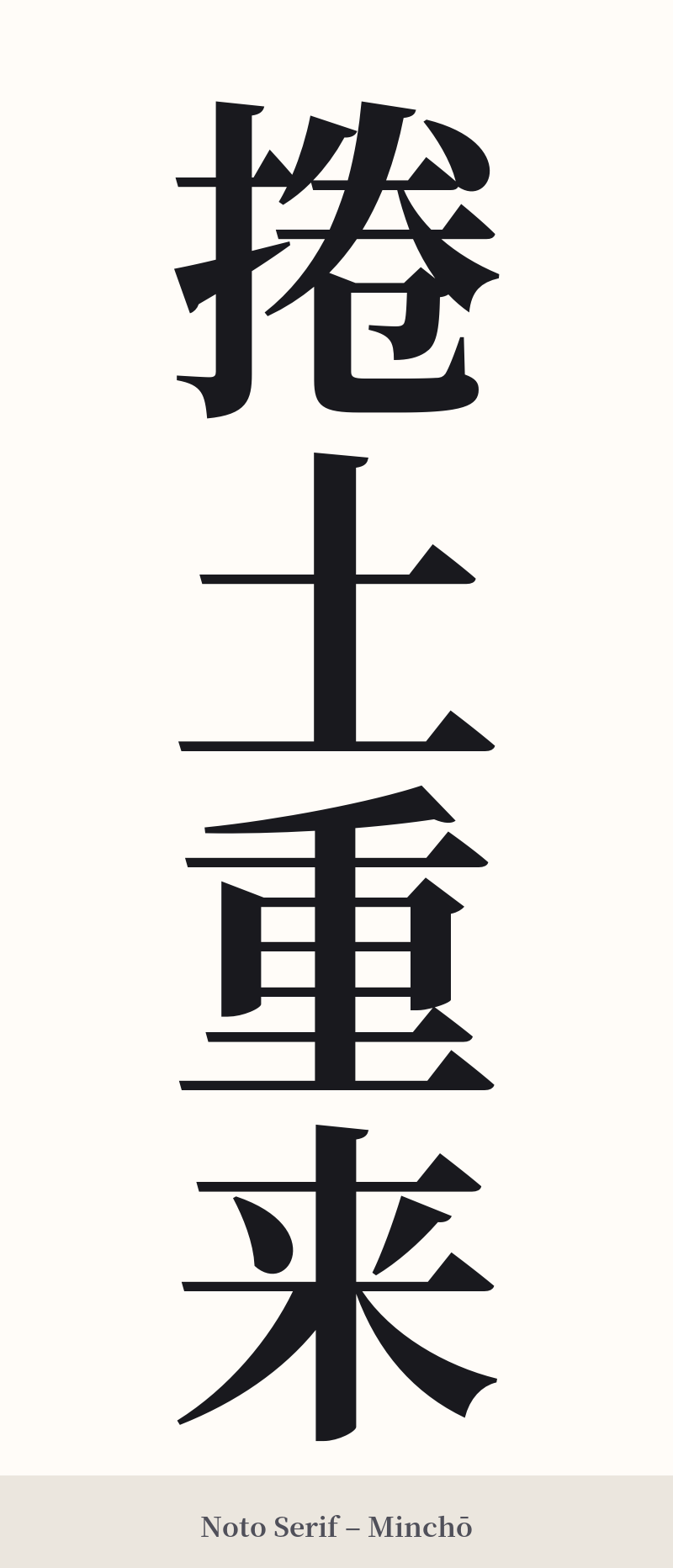
🖌️ Font Styles for 捲土重来
The same kanji can look dramatically different depending on the calligraphy style. Choose a font that matches the mood you want for your tattoo or design.
🎨 Tattoo Suitability
📐 Tattoo Design Guide
The four-character nature of 捲土重来 (Kendō Chōrai) makes it ideal for a visually striking tattoo. Its composition lends itself well to classic calligraphic layouts.
– Placement: A vertical column is the most traditional and aesthetically pleasing arrangement for a yojijukugo. This design works exceptionally well along the spine, the forearm, or the calf, creating a line of powerful text.
– Font Style: The style of calligraphy can dramatically alter the mood. A dynamic, semi-cursive script (Gyōsho) can capture the 'rolling dust' energy of the phrase. For a more stoic and resolute feel, a clean, precise block script (Kaisho) emphasizes determination and strength.
– Visual Elements: While the four characters are powerful enough to stand alone, they can be complemented by subtle background elements. Consider a splash of ink or a wash effect that mimics a cloud of dust or smoke. Other symbolic visuals like a rising phoenix or a crashing wave can echo the theme of rebirth and powerful return, but be careful not to overcrowd the kanji, which should remain the focus.
Comments