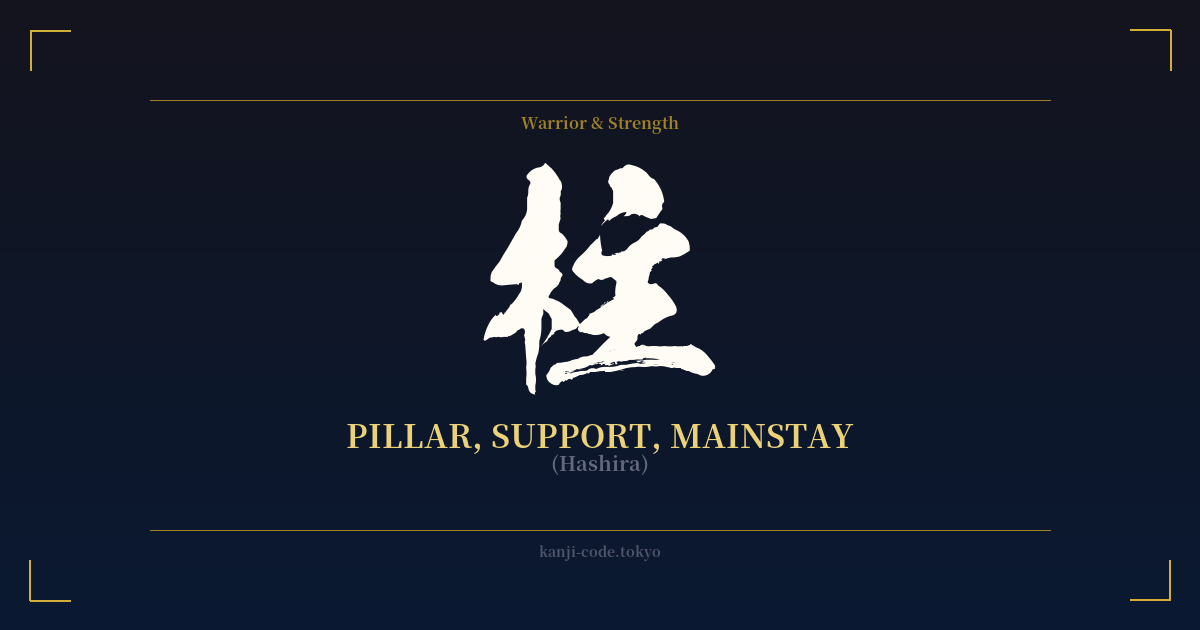
✍️ 柱 (Hashira) — Cultural Context
The kanji 柱 (hashira) is a character deeply embedded in the foundations of Japanese culture, both literally and figuratively. At its most basic, it means a physical pillar or post—an essential component in traditional Japanese architecture, holding up the roofs of temples, shrines, and homes. The image it evokes is one of unyielding strength and stability, a silent guardian against the elements.
From this architectural origin, the meaning of 'hashira' blossoms into a powerful metaphor. It represents a person who is a mainstay or a cornerstone of a group. The term 大黒柱 (daikokubashira), which literally translates to "the big black pillar," refers to the central pillar of a traditional house. Figuratively, it describes the person who is the primary support of a family—the breadwinner, the emotional rock, the one everyone depends on. To be called a 'hashira' is a high compliment, acknowledging one's reliability and indispensable role.
The spiritual significance of pillars is also profound in Japanese culture. In Shintoism, Japan's indigenous religion, certain pillars are considered sacred. The 心柱 (shinbashira), or "heart pillar," found at the center of major shrines like the Ise Grand Shrine, is believed to be a yorishiro—an object capable of attracting and housing kami (gods or spirits). This elevates the concept from mere structural support to a sacred conduit between the earthly and divine realms. Uniquely, the counter for gods in Shinto is '-hashira', further cementing the character's association with reverence and importance.
In the modern era, the kanji has seen a massive surge in global recognition thanks to the blockbuster anime and manga series, Demon Slayer: Kimetsu no Yaiba. In the series, the Hashira are the nine most powerful swordsmen in the Demon Slayer Corps. They are the elite defenders of humanity, each having mastered a different "Breathing Style." These characters are the pillars of the organization, embodying its strength and resolve. This association has imbued the kanji with a new layer of meaning for a global generation, linking it to themes of extraordinary skill, unwavering duty, and the fight for good.
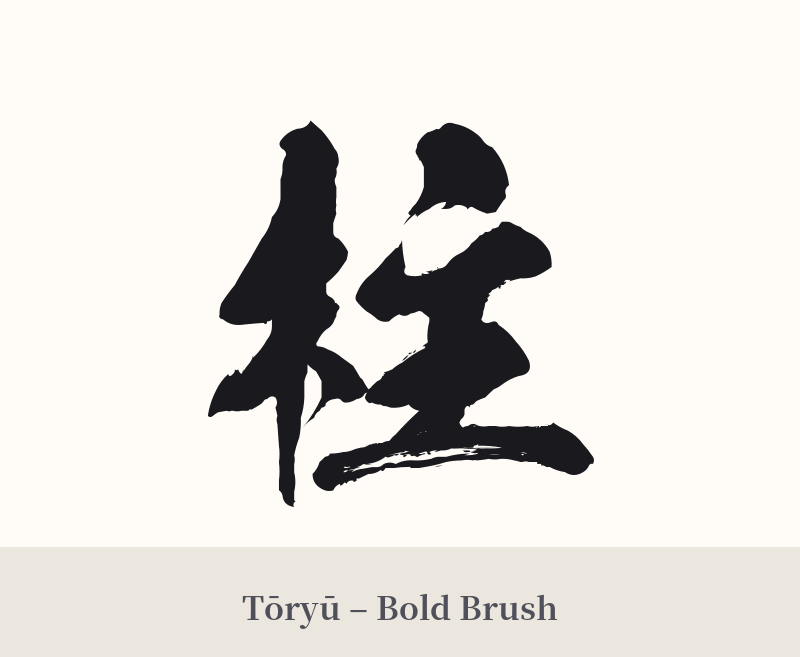
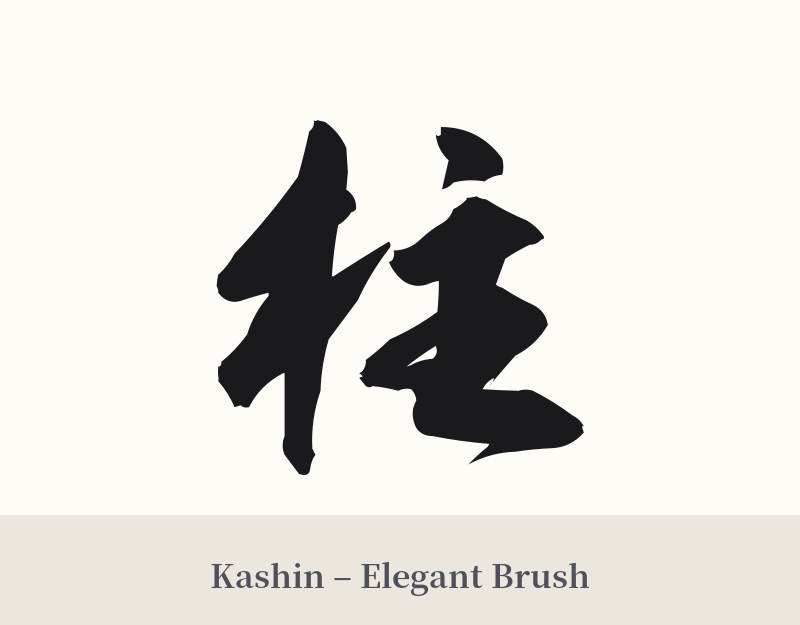
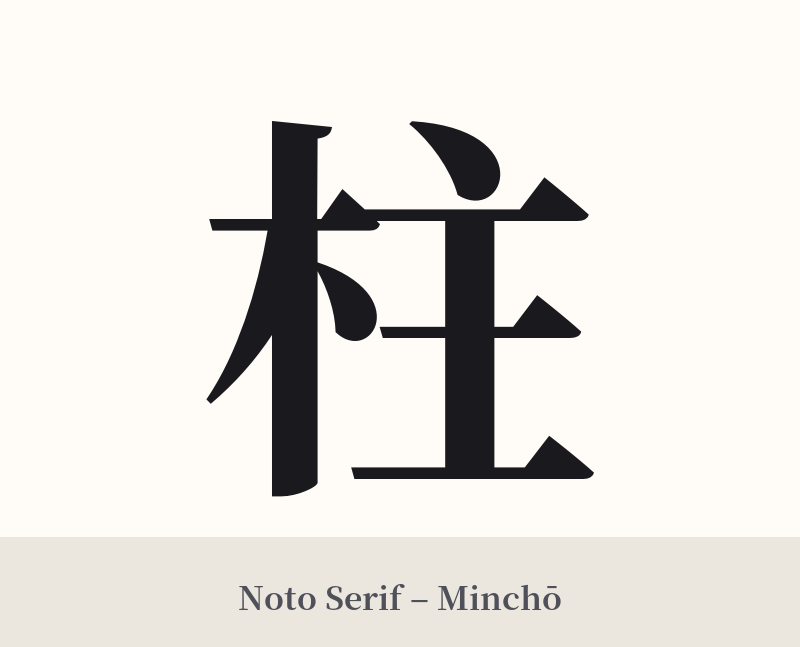
🖌️ Font Styles for 柱
The same kanji can look dramatically different depending on the calligraphy style. Choose a font that matches the mood you want for your tattoo or design.
🎨 Tattoo Suitability
📐 Tattoo Design Guide
The kanji 柱 (Hashira) offers a solid, grounded aesthetic for a tattoo, symbolizing strength and support.
– Placement: Vertical placements are highly effective, mirroring the form of a pillar. Consider the forearm, the calf, or along the spine. Placing it on the chest or back can also symbolize being a "pillar" of support for others.
– Style: A bold, strong script like Kaisho (block style) emphasizes its architectural stability. For a more fluid, powerful look, Gyosho (semi-cursive) can add a sense of dynamic strength. A distressed or weathered font style can evoke the image of ancient wooden temple pillars.
– Visuals: For fans of 'Demon Slayer,' the kanji can be combined with the element associated with a specific Hashira, such as flames for Rengoku or water patterns for Giyū. For a more traditional or personal design, pairing it with a strong tree (like pine) or subtle architectural elements can reinforce its meaning of foundational strength without the pop culture reference.
Comments