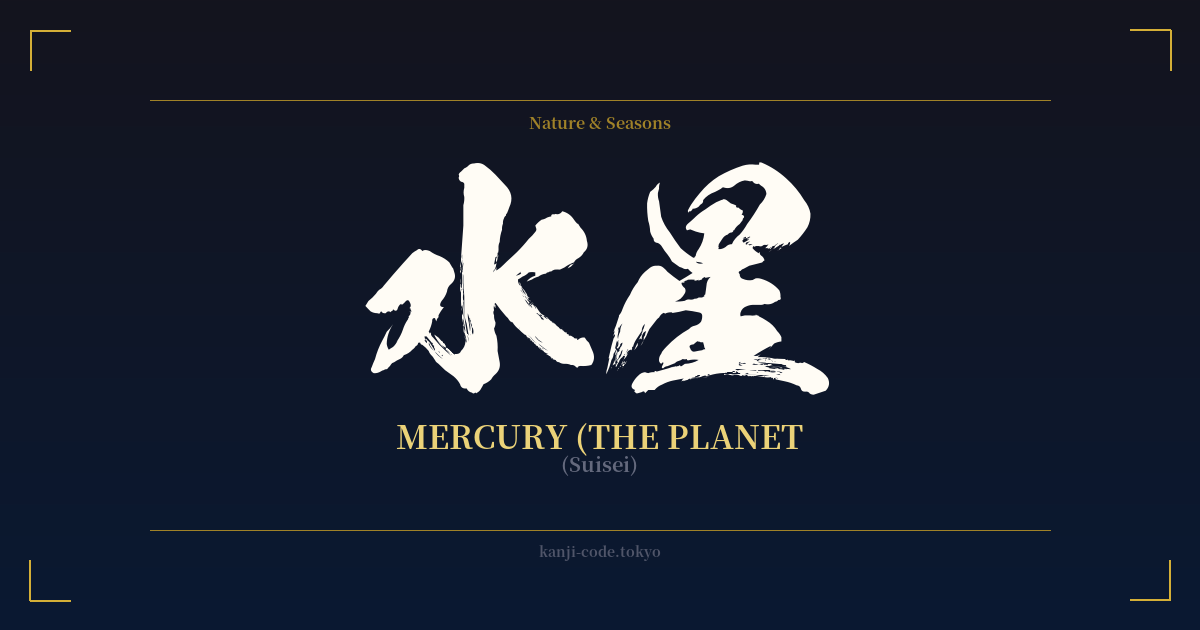
✍️ 水星 (Suisei) — Cultural Context
The Japanese name for Mercury, 水星 (Suisei), translates literally as "Water Star." This name isn't arbitrary; it's a direct inheritance from ancient Chinese astronomy and philosophy, deeply rooted in the concept of Wu Xing, or the Five Elements (五行, Gogyō in Japanese).
In this system, the five classical planets visible to the naked eye were each assigned an element: Water (Mercury), Metal (Venus), Fire (Mars), Wood (Jupiter), and Earth (Saturn). This created a beautiful, symmetrical system where the cosmos mirrored the elemental forces believed to govern the world. Unlike the Greco-Roman tradition, which named planets after gods, the East Asian approach was philosophical and elemental.
水星 was associated with water due to its perceived characteristics. While modern science tells us Mercury is a scorched, rocky world, ancient observers connected it to the element of water through philosophical attributes like communication, intelligence, and changeability—qualities also associated with the Roman god Mercury. In traditional Chinese astrology, the planet Mercury governs the north, the winter season, and the color black, all of which are linked to the water element.
This elemental naming scheme paints a fascinating picture of how ancient cultures sought to understand the heavens. The sky was not a collection of random objects but a reflection of the fundamental principles of nature. The name 水星 is a living fossil of this worldview, a reminder of a time when astronomy, philosophy, and spirituality were inextricably linked.
In modern Japan, the word 水星 refers almost exclusively to the planet. However, its cultural resonance has been given new life through popular culture. The most famous example is Sailor Mercury from the iconic anime and manga series Sailor Moon. Her civilian name, Ami Mizuno (水野 亜美), literally contains the kanji for water (水), tying her directly to her planetary identity. More recently, the song "Suisei" by the artist tofubeats became a massive hit, introducing the word to a new generation in a cool, contemporary context.
🖌️ Font Styles for 水星
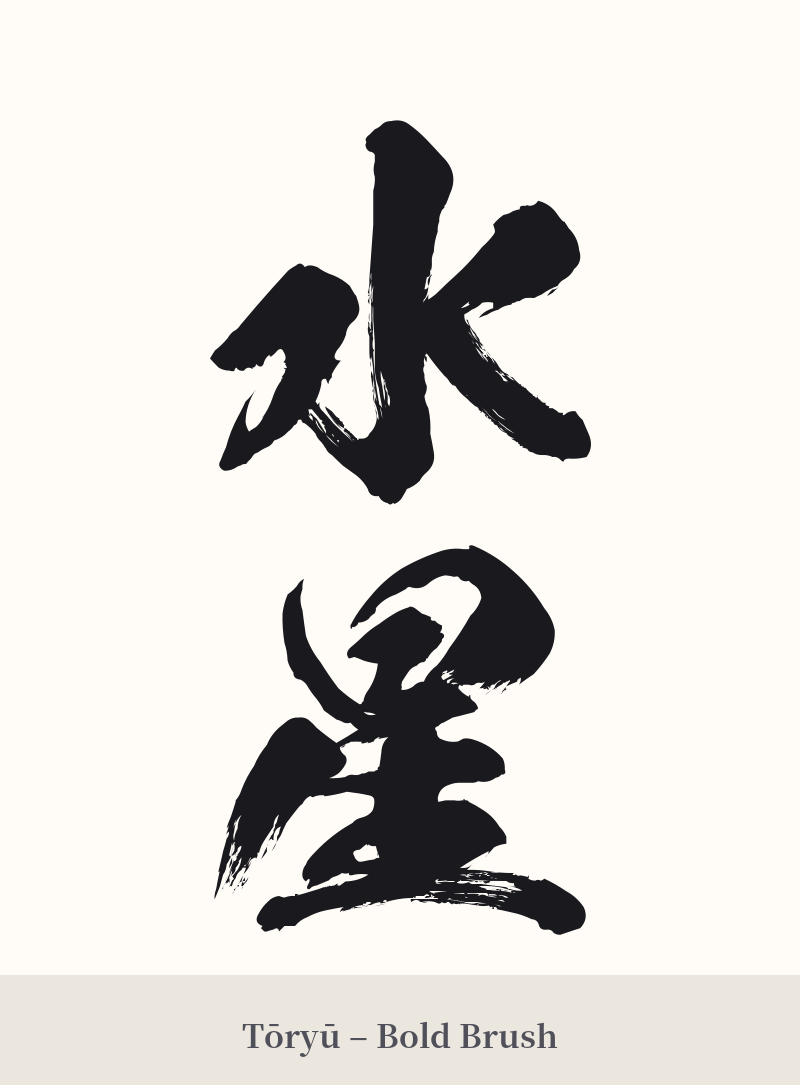
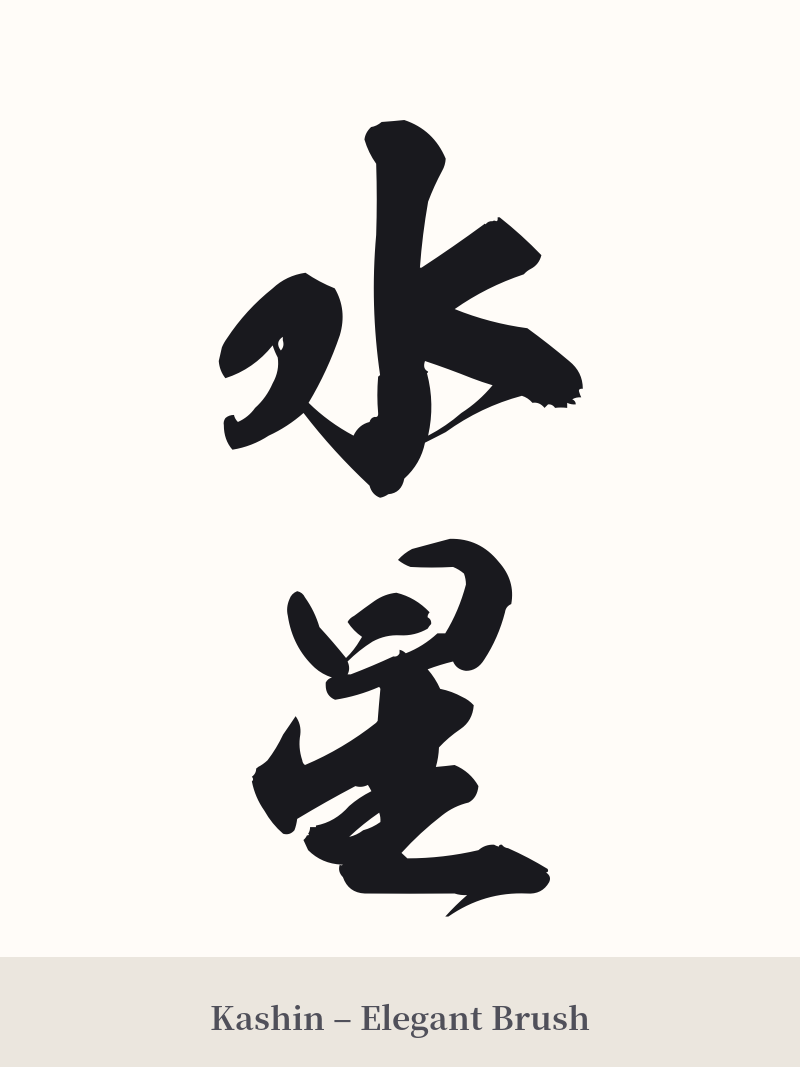
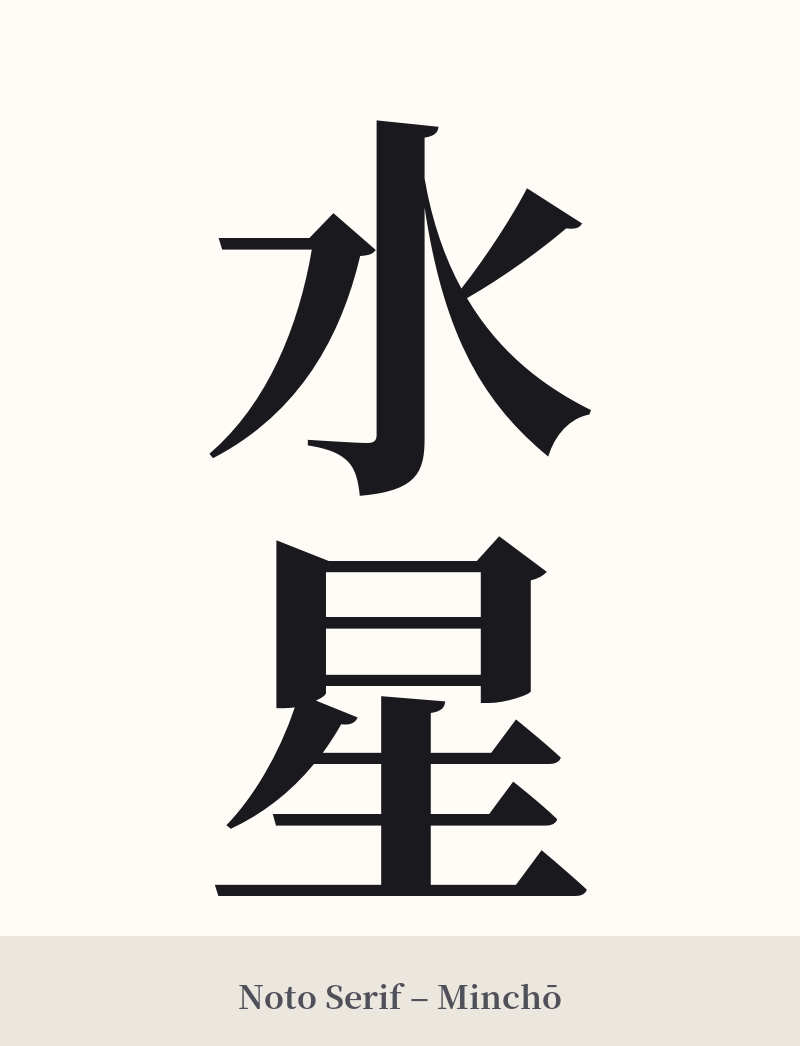
The same kanji can look dramatically different depending on the calligraphy style. Choose a font that matches the mood you want for your tattoo or design.
🎨 Tattoo Suitability
📐 Tattoo Design Guide
The two characters in 水星 (Suisei) offer a nice visual balance, making it versatile for tattoo design.
– Placement: A vertical orientation is classic and works well on the forearm, bicep, calf, or along the spine. For a horizontal design, it fits cleanly across the chest, upper back, or above the collarbone. A smaller, more subtle version could be placed on the wrist or ankle.
– Style: For an ancient, elemental feel, a dynamic calligraphy or brushstroke (shodō) style is perfect. It emphasizes the 'water' kanji's fluid origins. For a more modern, astronomical take, a clean, minimalist Mincho or Gothic font can look sharp and scientific.
– Visuals: Consider pairing the kanji with related imagery. A subtle wave pattern, a splash of watercolor ink in blue or black, or a simple orbital ring can enhance the theme without overpowering the characters.
Comments