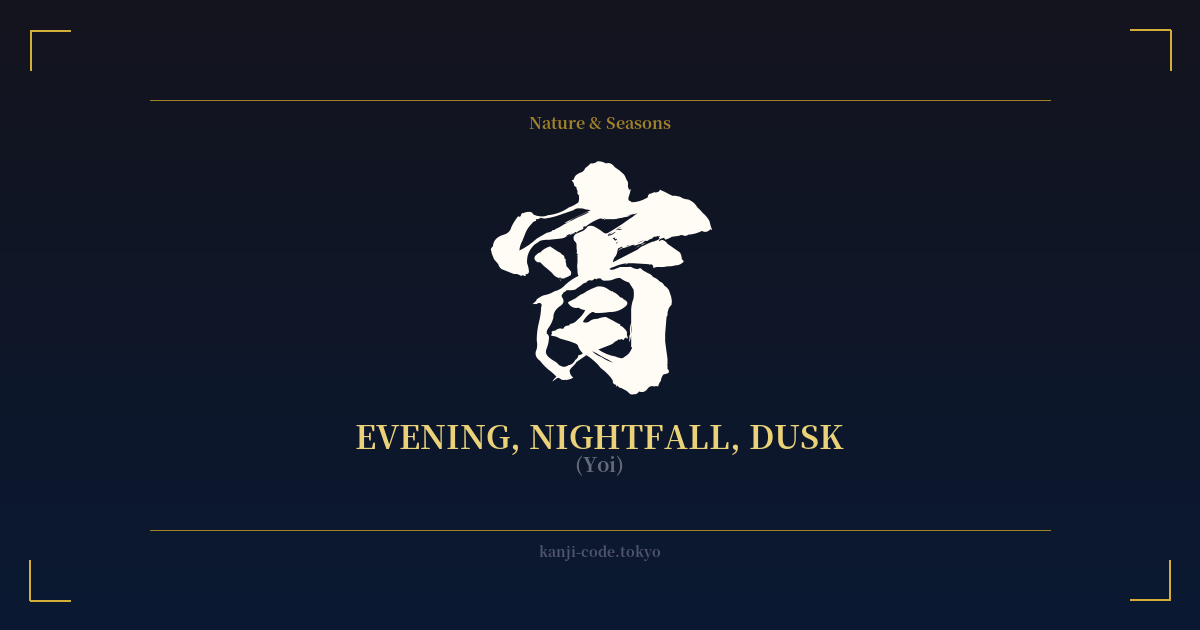
✍️ 宵 (Yoi) — Cultural Context
The kanji 宵 (yoi) is more than a simple marker of time; it is a vessel of poetic and cultural significance in Japan. It doesn't just mean 'evening' in a general sense. Instead, it captures the specific, transient period of dusk or early nightfall—the magical interlude between the sun's departure and the deep black of midnight.
This character paints a picture of a world settling into quiet. Its etymology hints at this intimacy. The character is composed of the radical 宀 (ukammuri), meaning 'roof,' placed over 肖 (shō), which contributes the phonetic sound. This combination evokes the image of people returning to the shelter of their homes as darkness descends, the day's work done and a period of rest beginning. It’s the time when the first stars begin to appear, and the world is painted in shades of indigo and violet.
In Japanese literature and art, 'yoi' is a powerful and frequently used concept. It is a classic 'kigo,' or seasonal word, used in haiku poetry, often associated with autumn when the nights grow longer and carry a touch of melancholy. The feeling it conveys is closely tied to the Japanese aesthetic of 'mono no aware' (物の哀れ), the gentle sadness and appreciation for the transience of all things. The beauty of 'yoi' is precisely that it is fleeting—a delicate moment that cannot be held.
To understand 'yoi,' it's crucial to distinguish it from other words for night. While 晩 (ban) is a general term for evening (as in the greeting こんばんは, 'konbanwa'), and 夜 (yoru) refers to the entire period of night from dusk till dawn, 'yoi' is more specific and atmospheric. It is the '宵の口' (yoi no kuchi), the 'mouth of the evening,' when the day is over but the night has just begun. It's the time of '宵闇' (yoiyami), the 'gloom of dusk,' a quiet and introspective period. This nuance makes 'yoi' a word cherished by poets and writers for its ability to evoke a specific mood of serenity, nostalgia, and quiet contemplation.
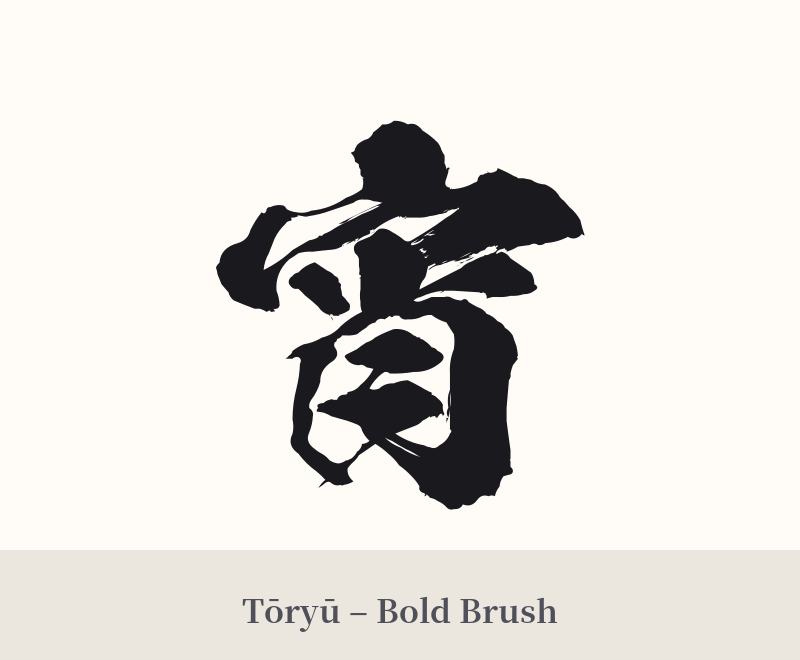
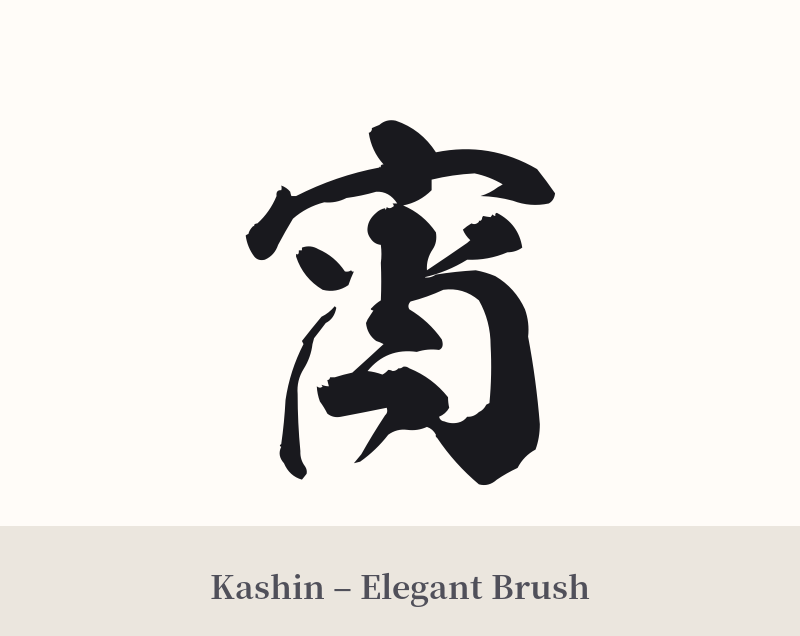
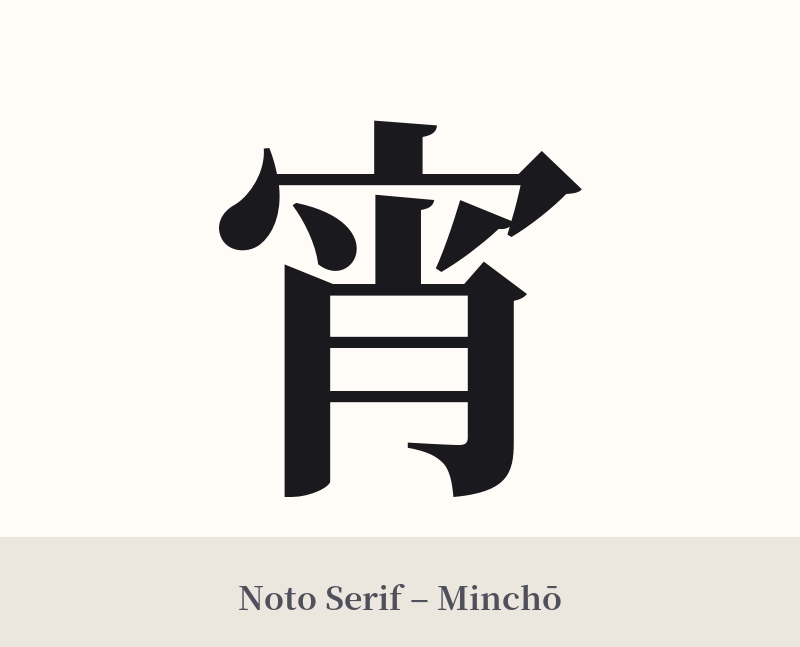
🖌️ Font Styles for 宵
The same kanji can look dramatically different depending on the calligraphy style. Choose a font that matches the mood you want for your tattoo or design.
🎨 Tattoo Suitability
📐 Tattoo Design Guide
The kanji 宵 (yoi) lends itself to designs that are elegant, subtle, and atmospheric, reflecting its poetic meaning.
– Placement: Consider placements that enhance its delicate nature. The inner wrist, behind the ear, on the ankle, or along the collarbone are excellent choices for a small, personal design. For a larger piece, a vertical orientation on the forearm, calf, or flowing down the spine can be very graceful.
– Font Style: The choice of script is crucial. A flowing, semi-cursive style like 'Gyōsho' (行書) or a full cursive 'Sōsho' (草書) beautifully captures the transient, ephemeral quality of dusk. For a more classic and serene feel, a clean and slender 'Mincho' (明朝) font works well. Avoid heavy, blocky, or aggressive fonts, as they clash with the kanji's gentle spirit.
– Visual Tips: While 宵 stands beautifully on its own, it can be paired with other elements to deepen its narrative. Consider incorporating a single first star, a delicate crescent moon, or the silhouette of a firefly (蛍, hotaru). A soft watercolor background with a gradient of orange, purple, and deep blue can represent the twilight sky, creating a stunning visual context for the character.
Comments