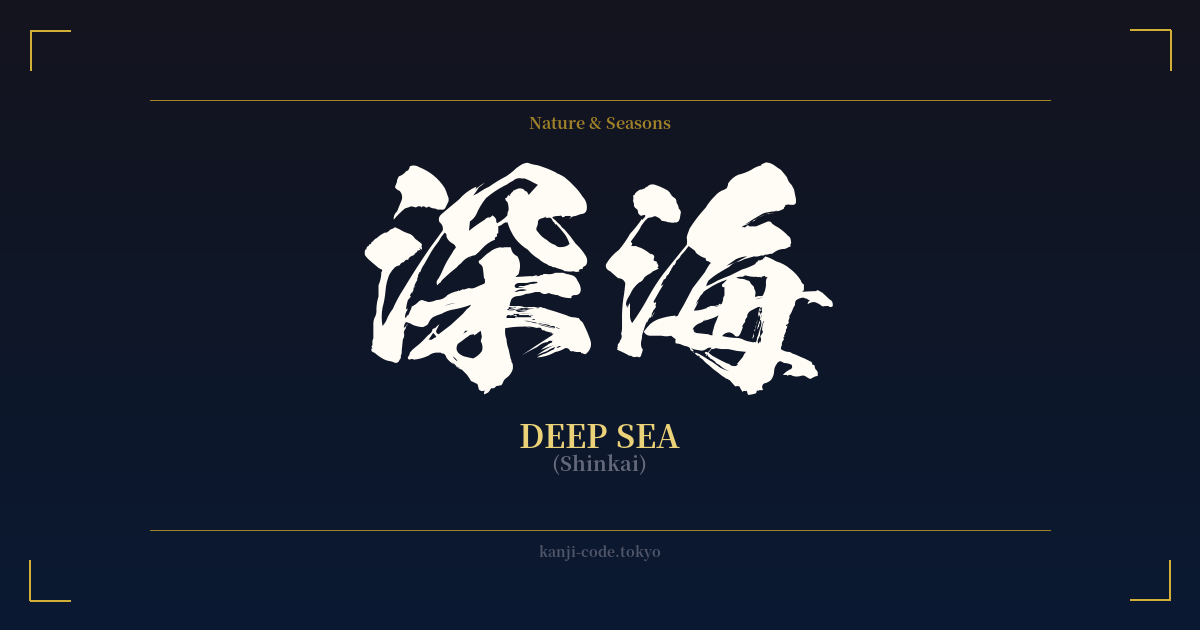
✍️ 深海 (Shinkai) — Cultural Context
深海 (Shinkai) literally translates to 'deep sea,' a term that immediately evokes images of immense pressure, crushing darkness, and the strange, bioluminescent life that thrives in the abyss. In Japan, an island nation whose culture is inextricably tied to the ocean, the concept of Shinkai holds a special place, representing the ultimate frontier—a world more alien than the surface of the moon.
The word itself is a direct and powerful combination. It’s not just 'the sea' (海, umi), but the 'deep' (深, fukai) sea, a place beyond the reach of the sun. This distinction is crucial. While the 'umi' is a source of life, food, and transport, the 'shinkai' is a realm of mystery, danger, and profound discovery. This is embodied by the Japan Agency for Marine-Earth Science and Technology (JAMSTEC) and its famous submersible, the Shinkai 6500, which has become a symbol of national pride and humanity's drive to explore the unknown.
Beyond its literal, scientific meaning, 深海 carries significant metaphorical weight. It is often used to symbolize the depths of the human psyche, the subconscious mind, or hidden, powerful emotions. Just as the deep sea conceals ancient secrets and undiscovered creatures, the human heart and mind have their own 'shinkai'—a place of profound thoughts, fears, and desires that lie beneath the surface of everyday consciousness. This makes it a popular theme in Japanese literature, anime, and film, where it can represent introspection, isolation, or a journey into one's own inner world.
Culturally, the deep sea taps into a sense of awe and humility before nature, a concept deeply rooted in Shinto and Buddhist philosophies. It is a reminder of the vast, uncontrollable forces that shape our world. The silence and stillness of the abyss can be seen as a form of 'ma' (間), the pregnant pause or negative space that is so important in Japanese aesthetics. It is a world of pure being, stripped of the noise and distractions of the surface, offering a sense of profound, if intimidating, peace.
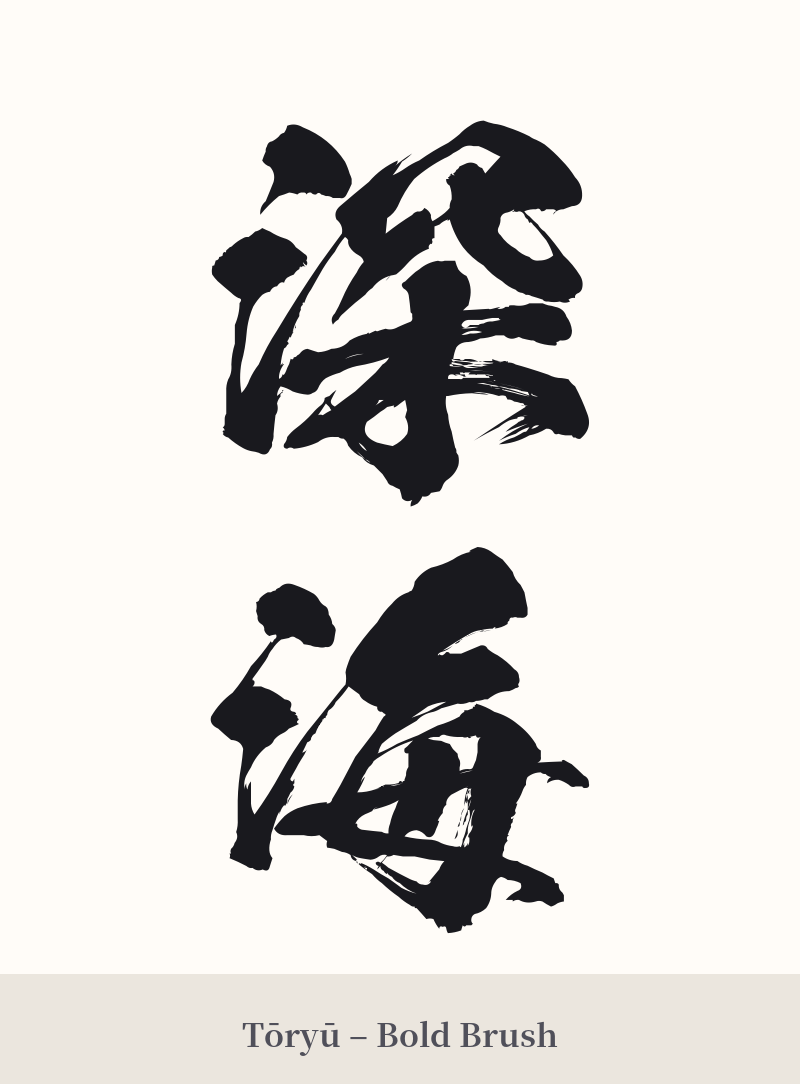
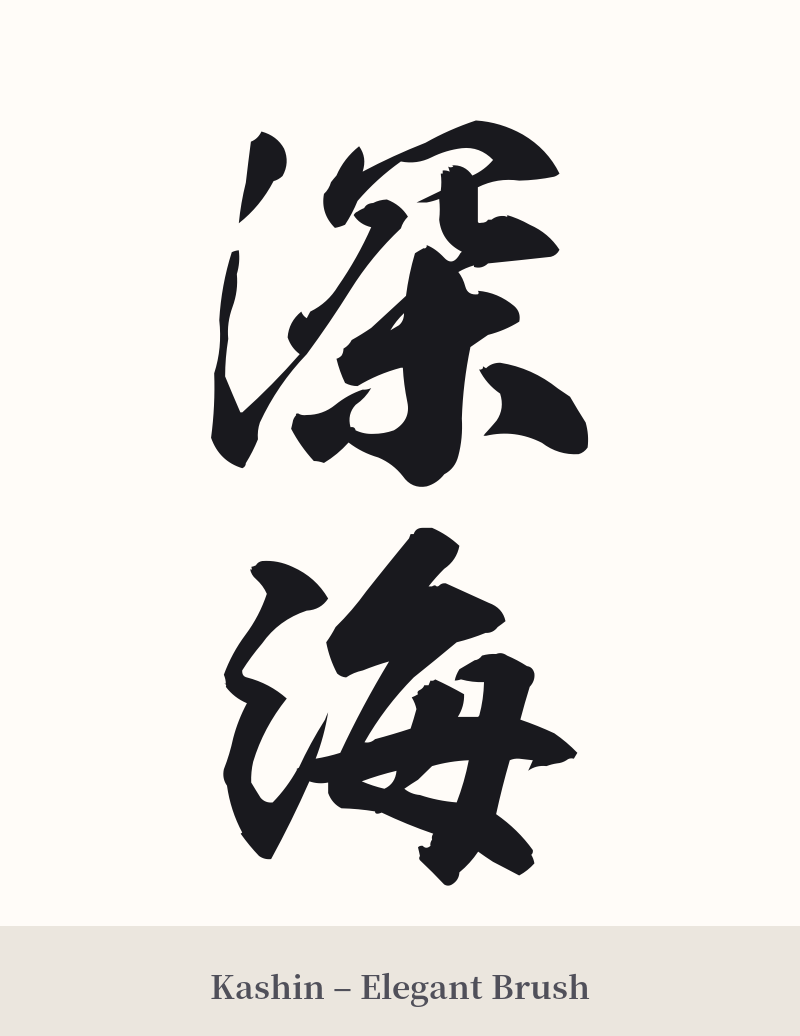
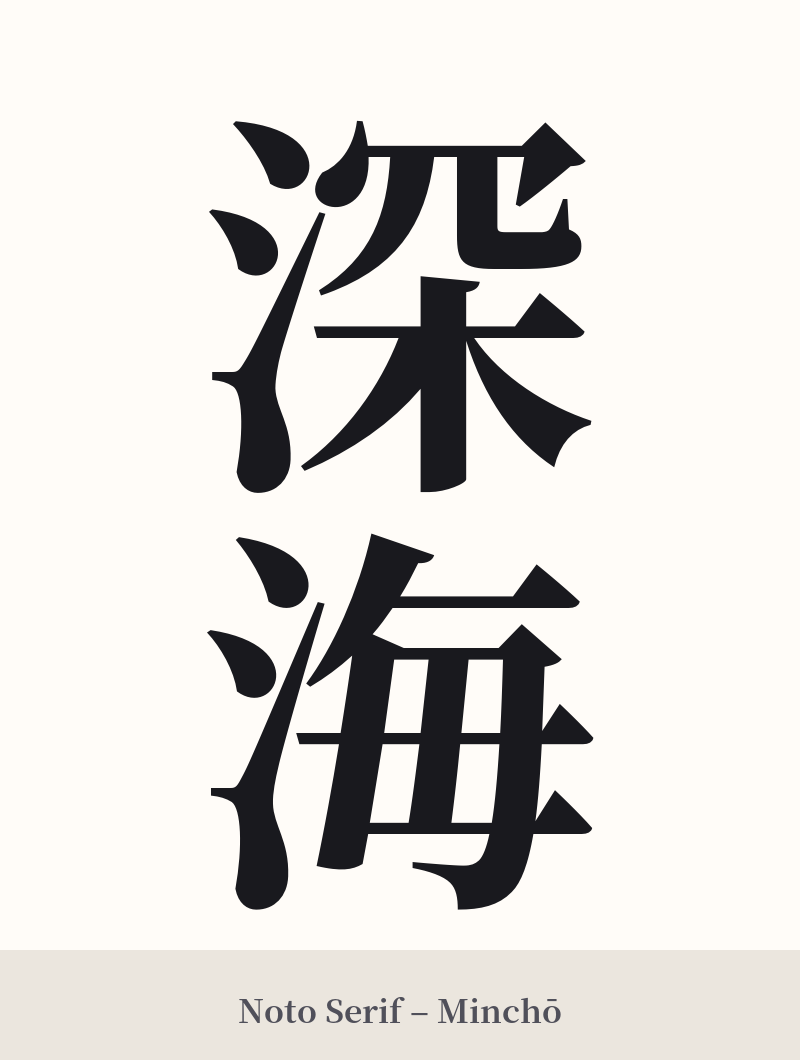
🖌️ Font Styles for 深海
The same kanji can look dramatically different depending on the calligraphy style. Choose a font that matches the mood you want for your tattoo or design.
🎨 Tattoo Suitability
📐 Tattoo Design Guide
A 深海 tattoo offers a wealth of design possibilities that can emphasize its mysterious and profound nature.
– Placement: Vertical alignment is highly recommended to evoke a sense of depth and descent. Popular spots include the spine, the length of the forearm, or down the calf. A horizontal placement across the chest or upper back can convey a sense of vastness and stillness.
– Font Style: For a fluid, organic feel, consider a semi-cursive script (gyōsho) that mimics the flow of water currents. A bold, angular block script (kaisho) can represent the immense pressure and solid stillness of the abyss. For a more artistic take, a highly stylized, almost abstract script could be used to hint at the strange forms of deep-sea life.
– Visual Tips: Enhance the kanji by incorporating surrounding elements. Faint bubbles rising, a single beam of light penetrating the darkness from above, or the ghostly silhouette of a giant squid or anglerfish can add narrative context. Using a gradient of blue-black ink can physically represent the descent from the twilight zone into the abyss.
Comments