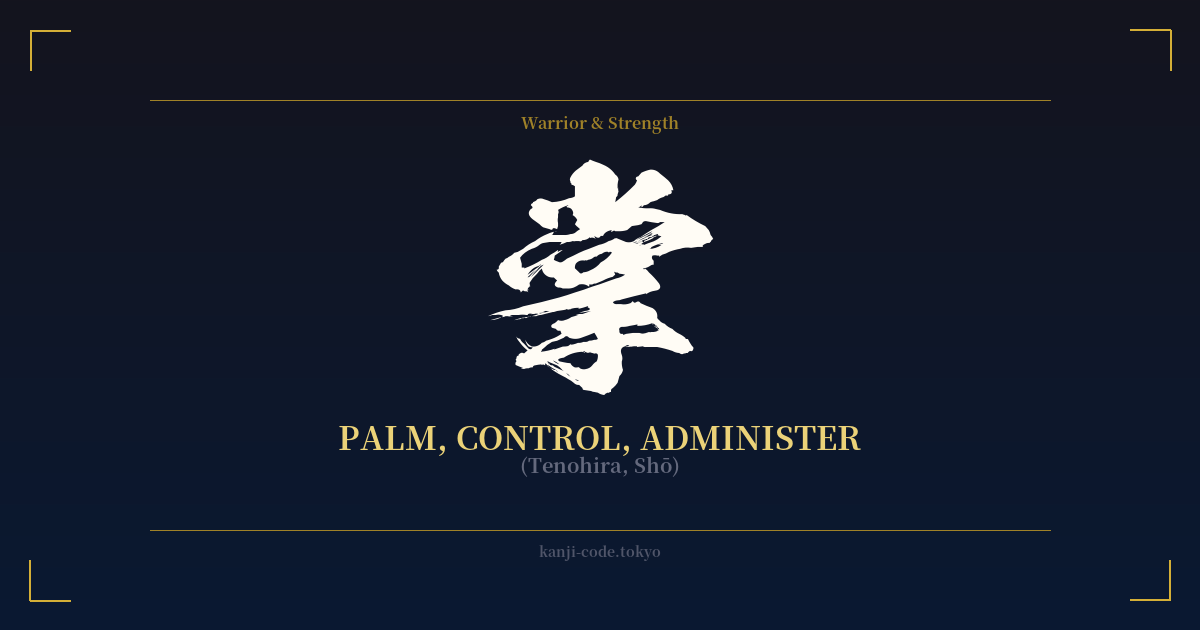
✍️ 掌 (Tenohira, Shō) — Cultural Context
The Japanese kanji 掌, read as 'tenohira' or 'shō,' is a character rich with dual meaning. On the surface, it simply refers to the palm of the hand. This is its most direct and common usage, a fundamental part of human anatomy. The lines on our palms are even the subject of fortune-telling, known as 'tesō' (手相), where one's fate is believed to be written in their own hand.
However, the true depth of 掌 lies in its metaphorical extension. To hold something in the palm of your hand is to have it under your control. This concept is deeply embedded in the Japanese language and psyche. The expression 'shuchū ni osameru' (手中に収める) literally means 'to place in the middle of the hand,' but it translates to gaining control over a situation, a company, or a victory. It signifies mastery and complete authority.
This idea of control is not necessarily aggressive. Think of a train conductor, or 'shashō' (車掌). Their role is to administer the vehicle, ensuring the safety and order of the journey. They hold the responsibility for the passengers in their hands, embodying a form of stewardship and management. This administrative nuance separates 掌 from more forceful words for power.
In the world of Japanese martial arts (budō), the open palm strike, or 'shōda' (掌打), is a powerful technique. Unlike a closed fist (拳), which represents concentrated, percussive force, the open palm is often used for deflecting, redirecting energy, and striking with a different kind of impact. It symbolizes a more strategic and sometimes more devastating form of power—control over an opponent's momentum and balance rather than just brute force.
This duality between the open, receptive palm and the controlling, authoritative hand makes 掌 a fascinating character. It speaks to the idea that true control isn't just about force, but also about holding, guiding, and managing. It represents the potential that lies within our grasp, the destiny we can shape, and the responsibility we hold. From the spiritual gesture of 'gasshō' (合掌), pressing palms together in prayer, to the firm grasp of a leader, 掌 encapsulates a wide spectrum of human agency.
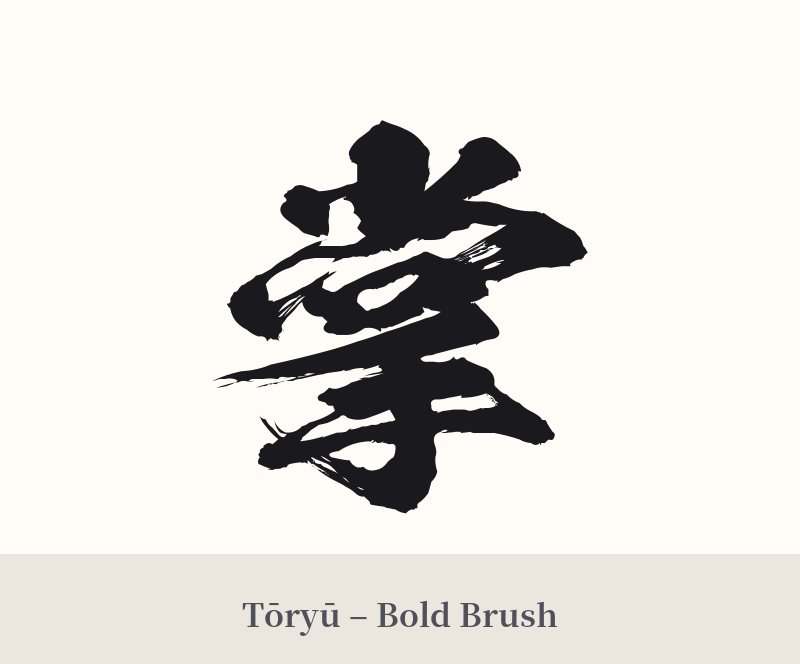
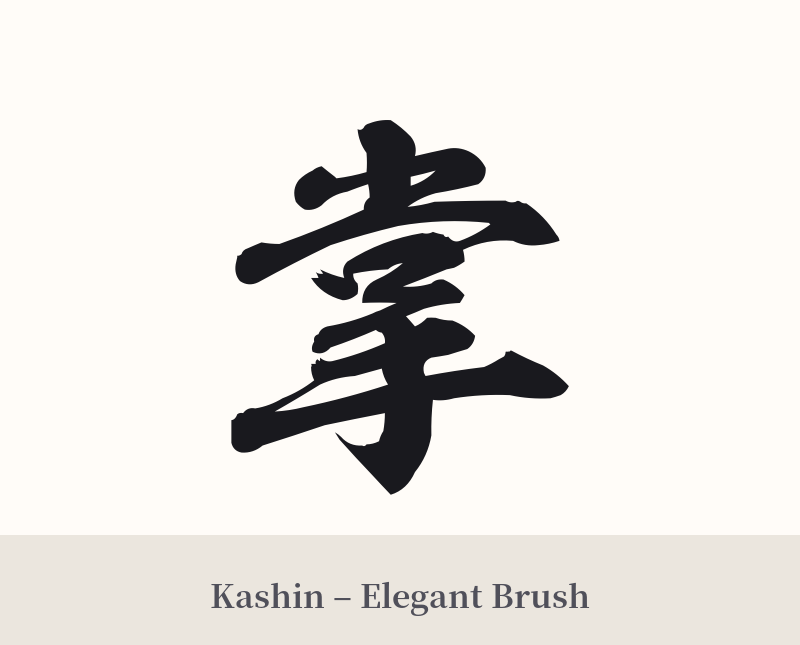
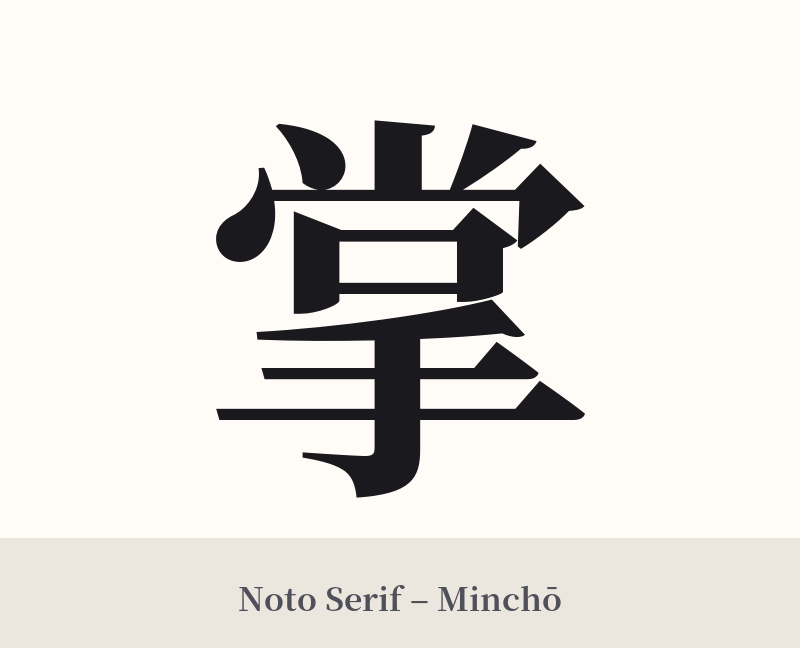
🖌️ Font Styles for 掌
The same kanji can look dramatically different depending on the calligraphy style. Choose a font that matches the mood you want for your tattoo or design.
🎨 Tattoo Suitability
📐 Tattoo Design Guide
For a tattoo, 掌 offers a balanced and meaningful design. Its structure is neither too simple nor overly complex, making it suitable for various sizes.
– Placement: The forearm, bicep, or calf provides a great canvas for a clear, vertical orientation. The back of the shoulder is another excellent spot. A literal placement on the palm itself is a conceptually interesting idea, but tattoos in this area fade very quickly and are painful to get.
– Style: A bold, semi-cursive calligraphy script (gyōsho) can emphasize the power and control aspects of the character. For a more subtle, philosophical interpretation focusing on destiny, a clean and precise block script (kaisho) works beautifully.
– Visual Elements: Consider incorporating the kanji within a larger design. It could be placed at the center of an Enso circle to symbolize the universe held in one's hand, or paired with a subtle drawing of hand lines to evoke the idea of fate and palmistry.
Comments