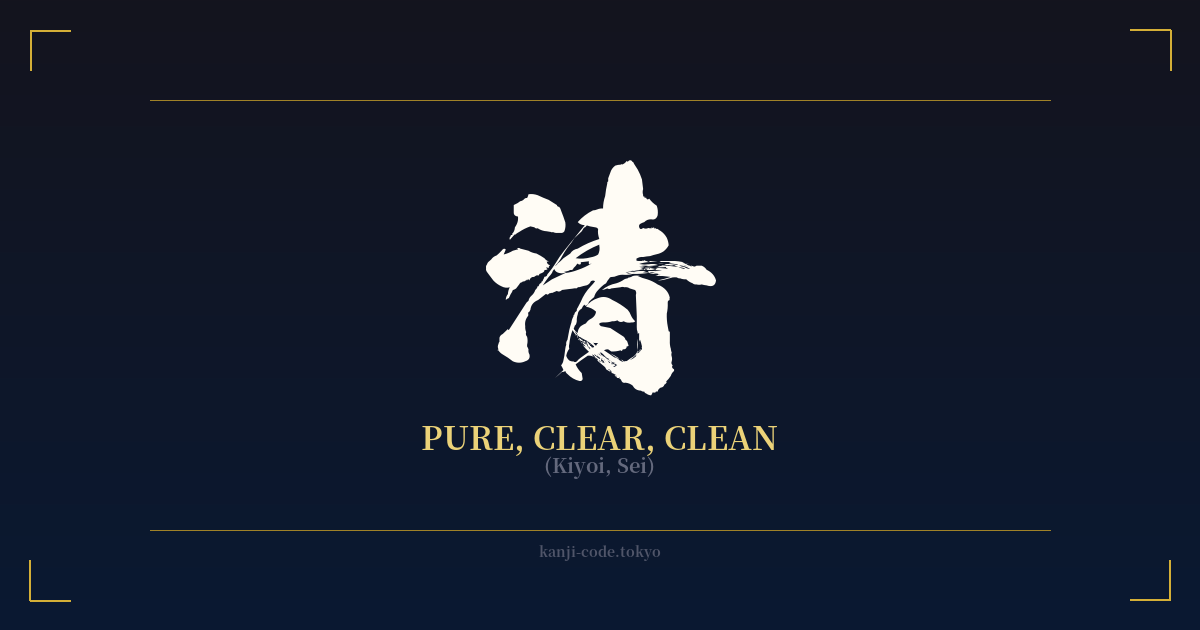
✍️ 清 (Kiyoi, Sei) — Cultural Context
The kanji 清 (kiyoi) is a beautiful and profound character that encapsulates concepts of purity, clarity, and cleanliness. Its meaning extends far beyond simple physical tidiness, touching the very core of Japanese spiritual and aesthetic sensibilities. At its heart, 清 represents a state of being that is unadulterated, clear, and serene.
In the context of Shinto, Japan's indigenous religion, 清 is a fundamental principle. Shintoism operates on a dualism of purity (清) and pollution or impurity (穢れ, kegare). Kegare is not sin in the Western sense, but a natural impurity that accumulates through contact with death, disease, or negative events. To restore balance, one must undergo purification rituals. This is why visitors to a Shinto shrine perform temizu (手水), a ritual cleansing of the hands and mouth at a water basin, an act of embodying 清 before approaching the kami (deities).
The character itself visually reinforces this connection. The left-side radical, 氵 (sanzui), is a depiction of water, the ultimate purifying agent in many cultures. The right side, 青 (ao), means 'blue' or 'green' and originally depicted a plant growing from a well, evoking an image of fresh, vibrant life sustained by pure water. Together, they create a powerful symbol of water that cleanses and clarifies.
In Zen Buddhism, 清 takes on a more internal, psychological meaning. It refers to a state of mental clarity (清心, seishin) – a mind free from the clutter of worldly desires, attachments, and distractions. To achieve enlightenment, one must cultivate a pure and clear heart, like a calm, undisturbed pond that can perfectly reflect the sky. This concept is central to meditation and the pursuit of inner peace.
This appreciation for clarity and simplicity permeates Japanese aesthetics. You can see the spirit of 清 in the uncluttered space (余白, yohaku) of an ink wash painting, the stark simplicity of a Zen rock garden (枯山水, karesansui), or the clean lines of traditional architecture. It is the beauty of the essential, stripped of all that is superfluous. It’s a quiet, understated elegance that values substance and serenity over ornamentation.
Even in modern Japan, the concept remains vital. The word seiketsu (清潔) means 'cleanliness' and is a highly valued social virtue, evident in the immaculate streets and public spaces. The character is also common in names, like Kiyoshi for a boy or Kiyoko for a girl, expressing a parent's wish for their child to lead a pure, virtuous life.
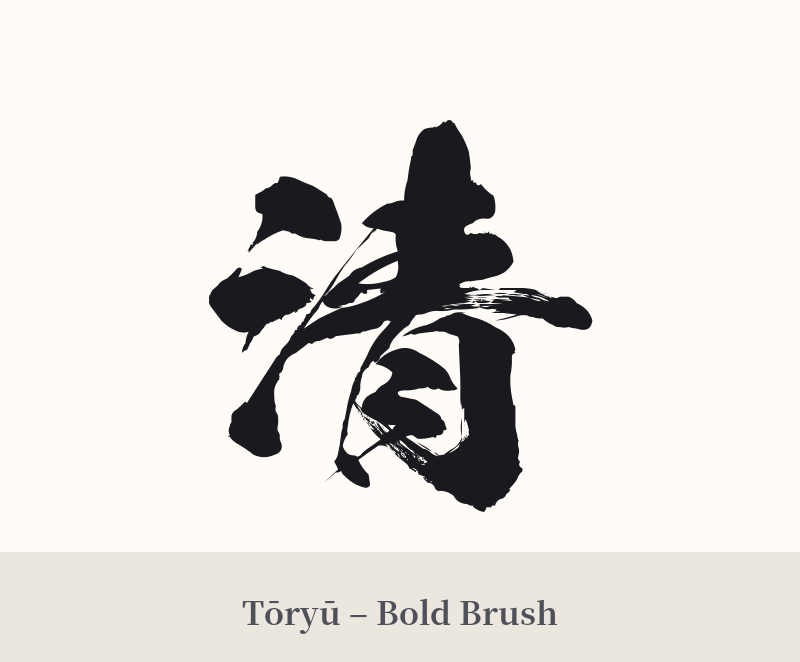
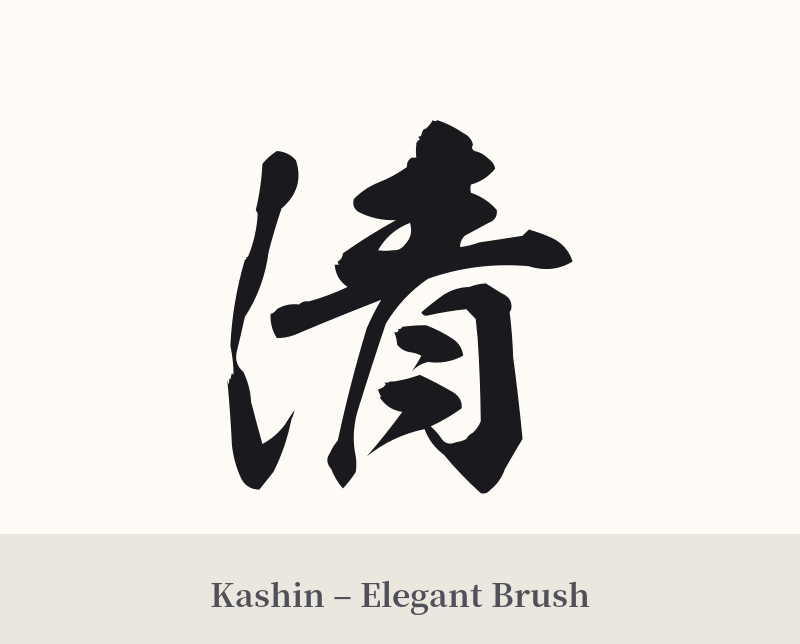
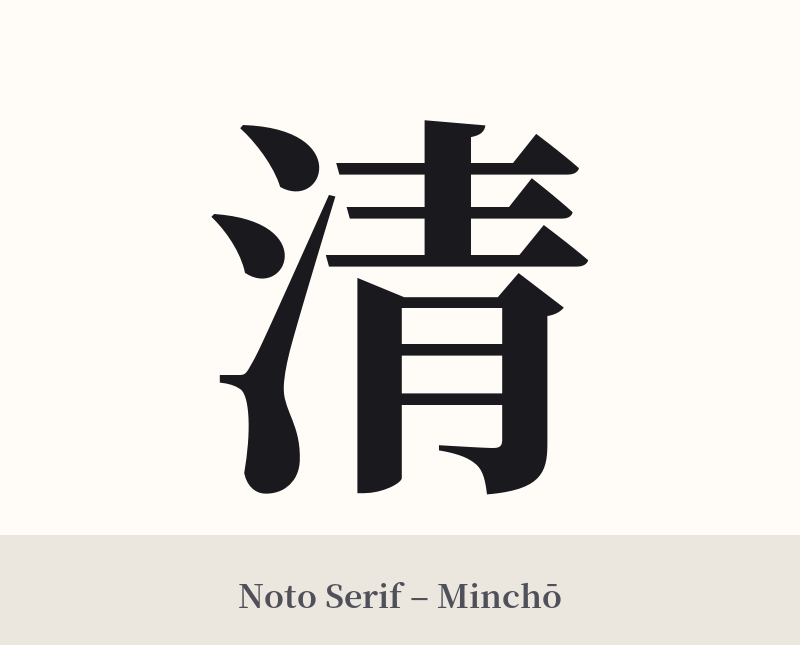
🖌️ Font Styles for 清
The same kanji can look dramatically different depending on the calligraphy style. Choose a font that matches the mood you want for your tattoo or design.
🎨 Tattoo Suitability
📐 Tattoo Design Guide
The kanji 清 offers a blend of elegance and simplicity, making it versatile for various tattoo designs.
– Placement: This character works beautifully in vertical orientations. Consider the inner forearm, the back of the neck running down the spine, the calf, or along the rib cage. These placements accentuate its graceful form.
– Style: For a traditional and fluid feel, a semi-cursive script (gyōsho) is an excellent choice. It mimics the flow of water, echoing the kanji's own radical. For a more solid, formal, and clear statement, the standard block script (kaisho) is timeless. A minimalist, fine-line approach can also highlight its structural beauty in a modern way.
– Pairings: While 清 is powerful enough to stand alone, it can be paired with subtle elements. Consider placing it within a soft watercolor splash of blue or light grey. It also complements natural imagery like a single lotus flower (symbolizing purity rising from mud), gentle ripples of water, or a sprig of bamboo.
Comments