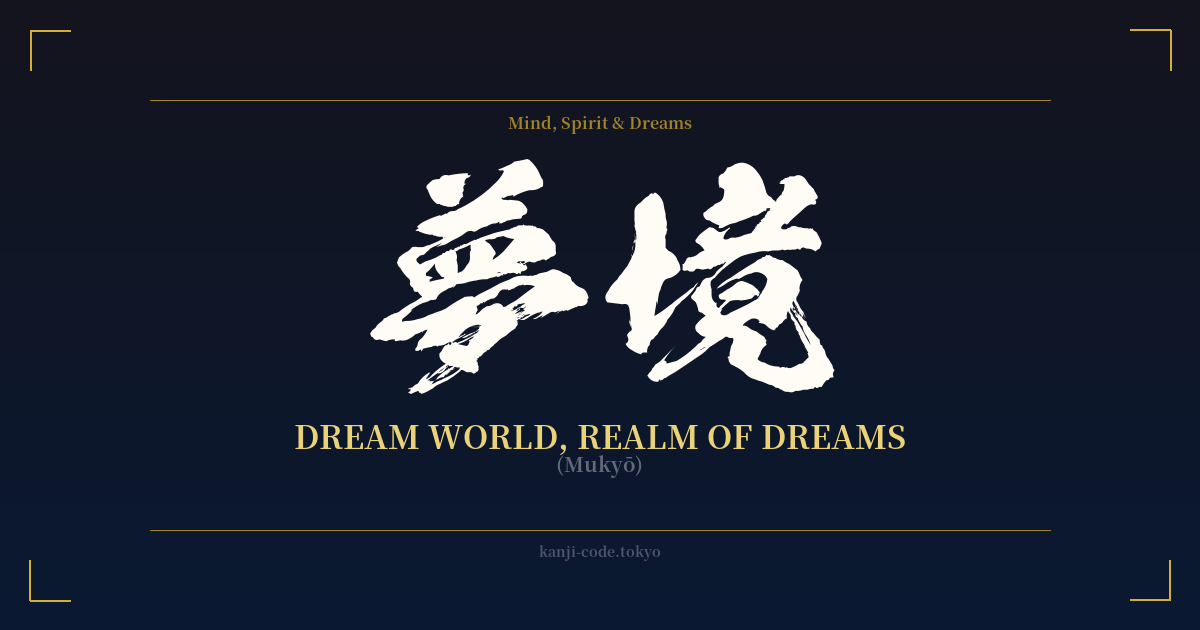
✍️ 夢境 (Mukyō) — Cultural Context
夢境 (Mukyō) is a beautiful and literary Japanese word that translates to "Dream World" or "Realm of Dreams." It’s not a term you’d hear in everyday conversation, but rather one found in poetry, literature, and art, used to evoke a sense of the ethereal and the surreal.
The word is a powerful combination of two kanji: 夢 (mu), meaning "dream," and 境 (kyō), meaning "boundary," "region," or "state." Together, they don't just describe a dream, but an entire landscape of the subconscious. It paints a picture of a place with its own rules, geography, and atmosphere, distinct from the waking world.
In Japanese culture, the line between reality and illusion has long been a source of artistic and philosophical fascination. Concepts like yūgen (幽玄), a profound and subtle beauty that hints at a reality beyond what is visible, resonate deeply with the idea of a Mukyō. The dream world is a classic example of yūgen—a mysterious, dimly lit space that is felt more than it is understood. It's a place of transition, existing in the liminal space between consciousness and unconsciousness, life and a different state of being.
This theme is prevalent in classical Japanese stories, such as those in Noh theater, where spirits and mortals interact in dreamlike sequences. The dream world is often a setting for pivotal self-realization, a confrontation with one's own ghosts, or a message from the divine.
In modern times, the concept of 夢境 has been embraced by pop culture, especially in anime, manga, and video games. It's the perfect term for the fantastical, often dangerous, worlds that characters might find themselves transported to, whether through sleep, magic, or technology. These modern interpretations keep the word alive, imbuing it with new layers of meaning for a global audience, connecting it to psychological exploration and digital realms.
Choosing 夢境 is to choose a word that speaks to the inner world, the power of the imagination, and the mysterious landscapes of the mind. It represents a place of infinite possibility, where the logic of the waking world dissolves, and the deeper truths of the soul can emerge.
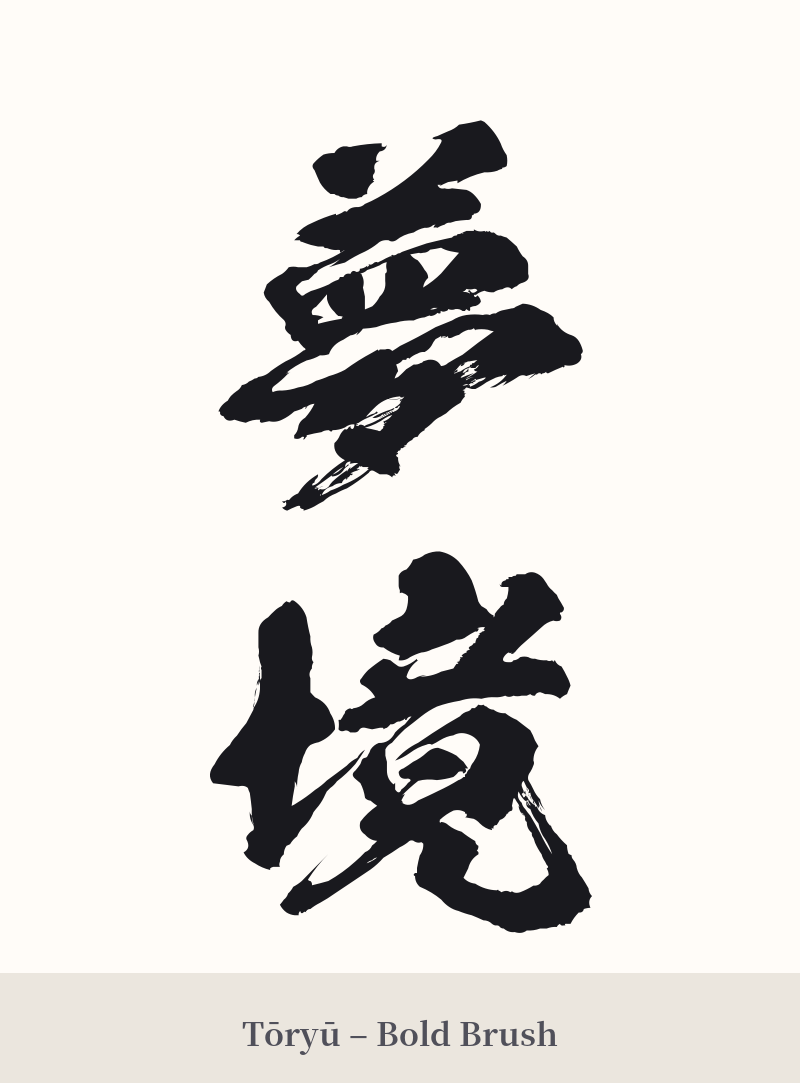
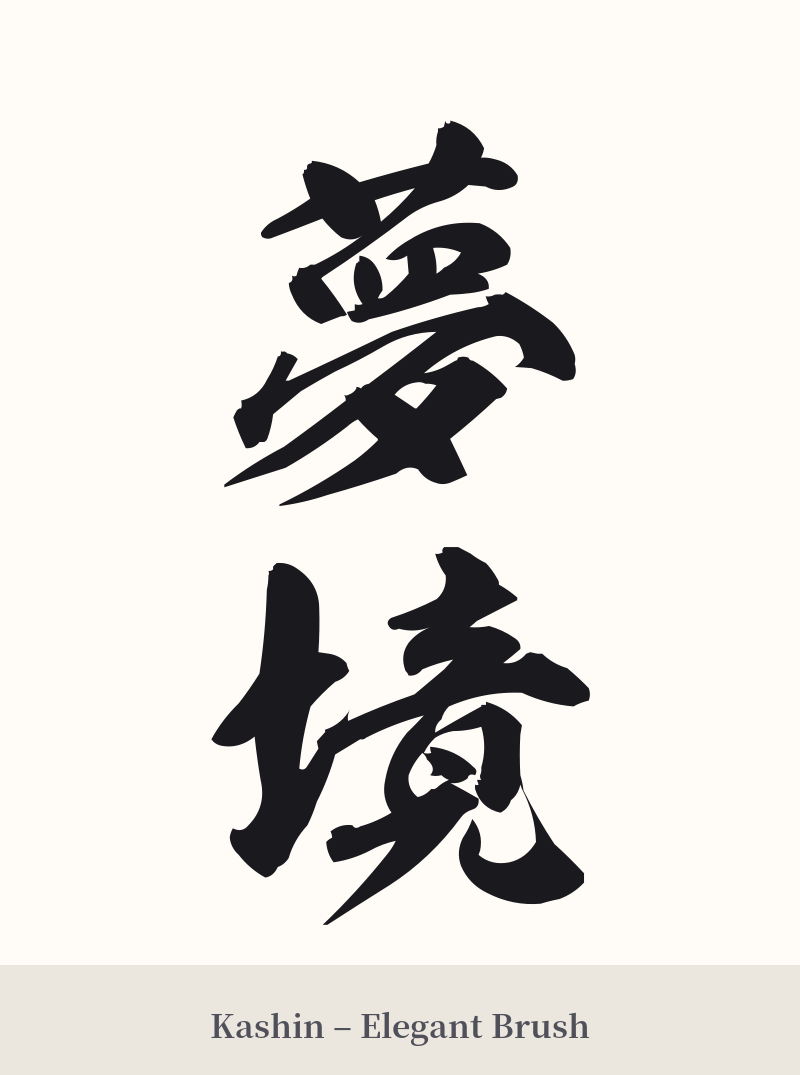
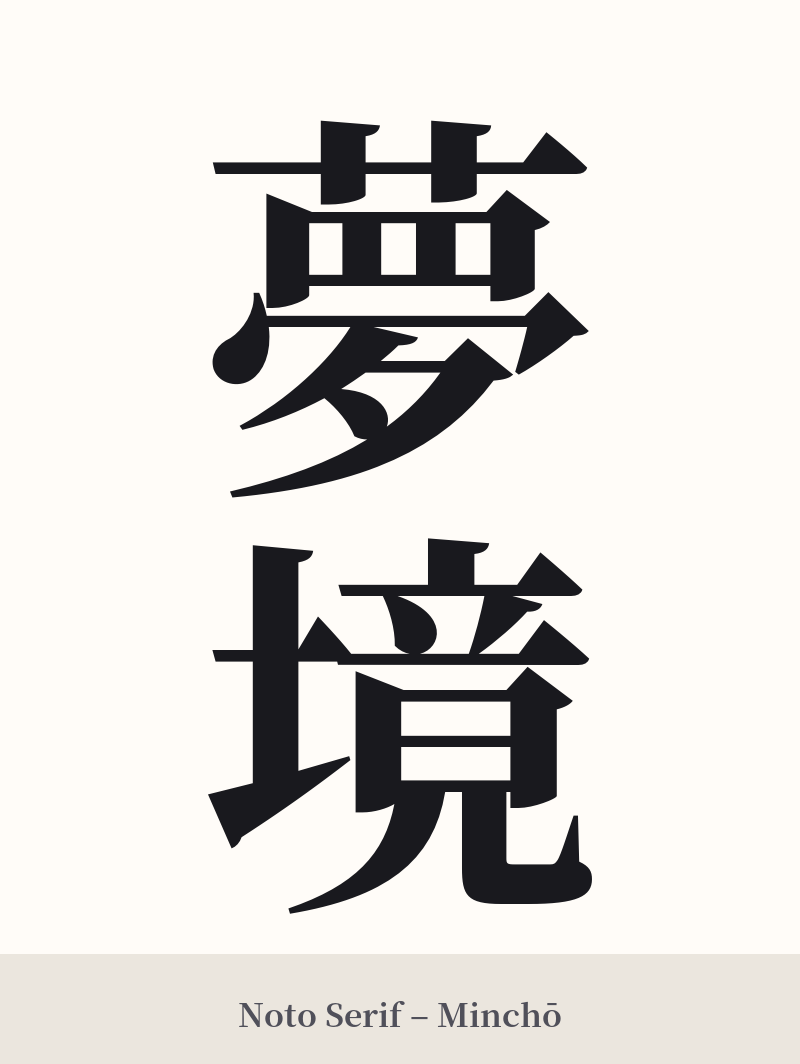
🖌️ Font Styles for 夢境
The same kanji can look dramatically different depending on the calligraphy style. Choose a font that matches the mood you want for your tattoo or design.
🎨 Tattoo Suitability
📐 Tattoo Design Guide
When designing a tattoo for 夢境, the goal is to capture its ethereal and mysterious quality. The two characters offer a balanced, intricate look that can be styled in various ways.
– Placement: Vertical alignment is highly recommended and looks stunning on the forearm, calf, or along the spine. For a more subtle placement, the back of the neck or behind the ear works well. A horizontal design would be powerful across the chest or upper back.
– Font Style: A semi-cursive (gyōsho) or fully cursive (sōsho) script can enhance the flowing, dreamlike feel of the word. For a more classic and literary look, a Mincho-style font with its delicate serifs is an excellent choice. A dynamic brushstroke (shodō) style can emphasize the personal and expressive nature of the dream world.
– Visual Tips: Consider integrating the kanji with other visual elements. Fading the characters into mist, clouds, or a starry night sky can directly represent the theme. Using watercolor techniques with deep blues, purples, and blacks can create a beautiful, blended background that feels like a dreamscape. A tattoo of 夢境 could also serve as a gateway, with surreal imagery like floating islands or distorted architecture emerging from it.
Comments