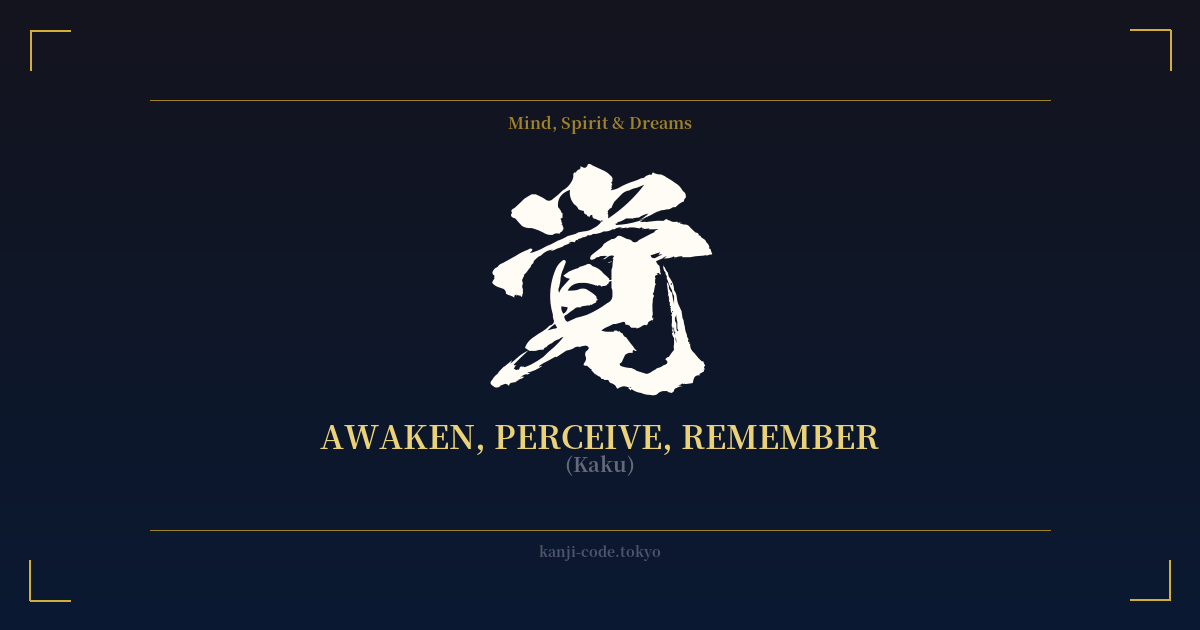
✍️ 覚 (Kaku) — Cultural Context
The kanji 覚 (kaku) is a character rich with philosophical and psychological depth, encapsulating the entire spectrum of consciousness from simple memory to profound spiritual awakening. Its origins offer a clue to its meaning: the character is a combination of a simplified form of 學 (gaku – to learn) on top and 見 (miru – to see) on the bottom. In essence, its original meaning was 'to learn by seeing,' a direct, experiential form of knowledge.
This idea of direct perception is central to its use in Japanese culture. It's not just about recalling information but about a dawning realization. This is why it’s a cornerstone in Buddhist philosophy. The term 覚醒 (kakusei) means 'awakening,' and while it can describe literally waking from sleep, it more powerfully refers to a spiritual or intellectual awakening—the moment the mind becomes clear and achieves a new level of understanding. This is closely related to the concept of 悟り (satori), or enlightenment, where one 'awakens' to the true nature of reality.
Beyond the spiritual, 覚 forms the basis for many words related to the mind and senses. 感覚 (kankaku) refers to one's 'senses' or 'feeling,' while 直覚 (chokkaku) means 'intuition'—a direct perception of truth without conscious reasoning. This highlights the character's connection to an innate, almost primal form of understanding that bypasses logical thought.
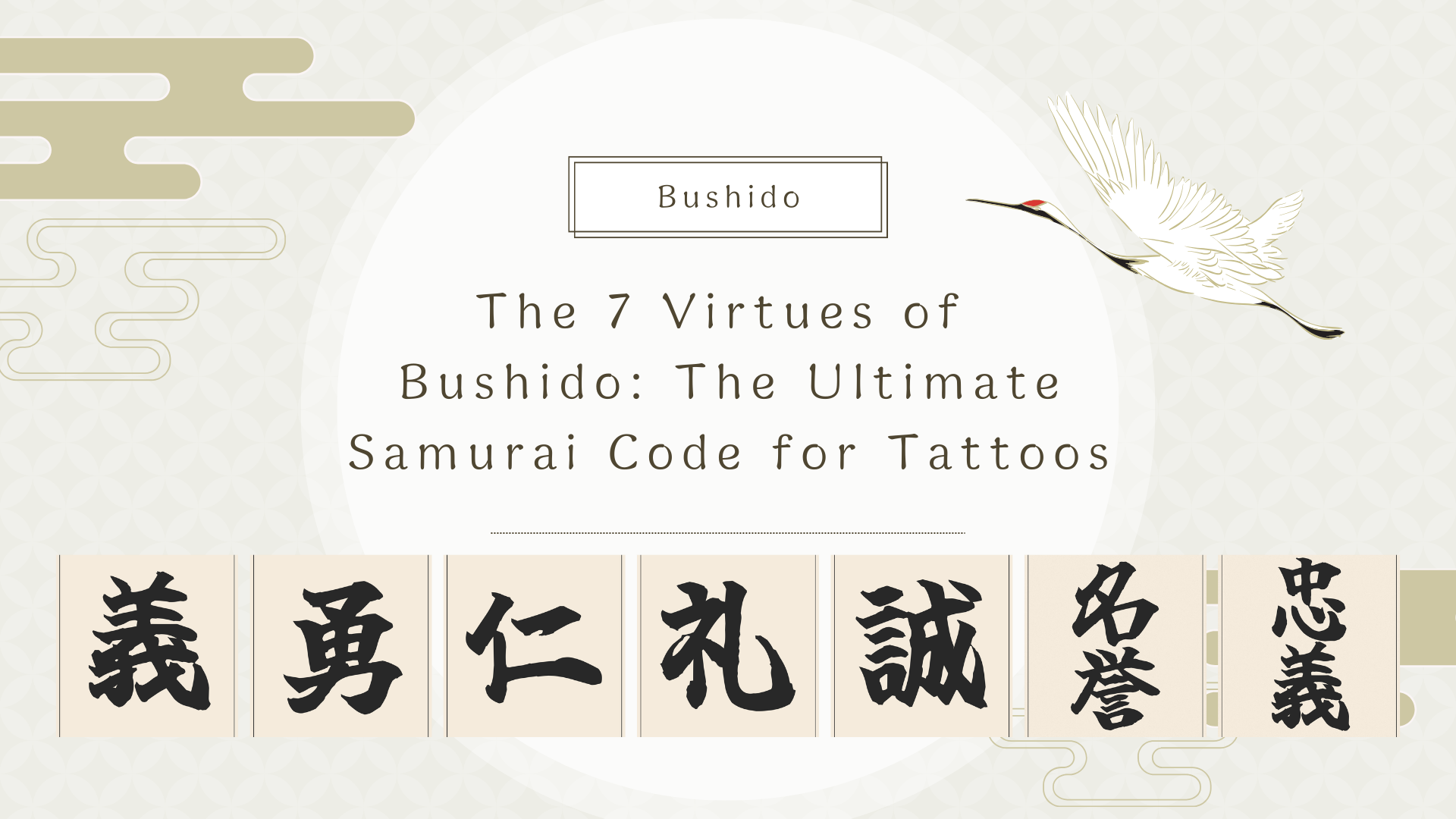
One of the most powerful and culturally significant words using this kanji is 覚悟 (kakugo). Often translated as 'resolve' or 'preparedness,' kakugo implies a deeper state of mind. It means to be fully aware of the potential consequences of your actions, to accept them, and to move forward with unwavering determination. This concept was vital to the samurai code of Bushido, where a warrior had to be prepared for death at any moment. Today, kakugo is used to describe a firm, conscious decision made in the face of a great challenge, whether in business, personal life, or sports.
From the mundane act of remembering a fact (覚える, oboeru) to the life-altering moment of spiritual awakening, 覚 charts the journey of the human mind as it perceives, understands, and becomes aware of itself and the world around it. It represents that flash of insight, the clarity that follows confusion, and the quiet strength of a mind that is fully prepared.
🖌️ Font Styles for 覚
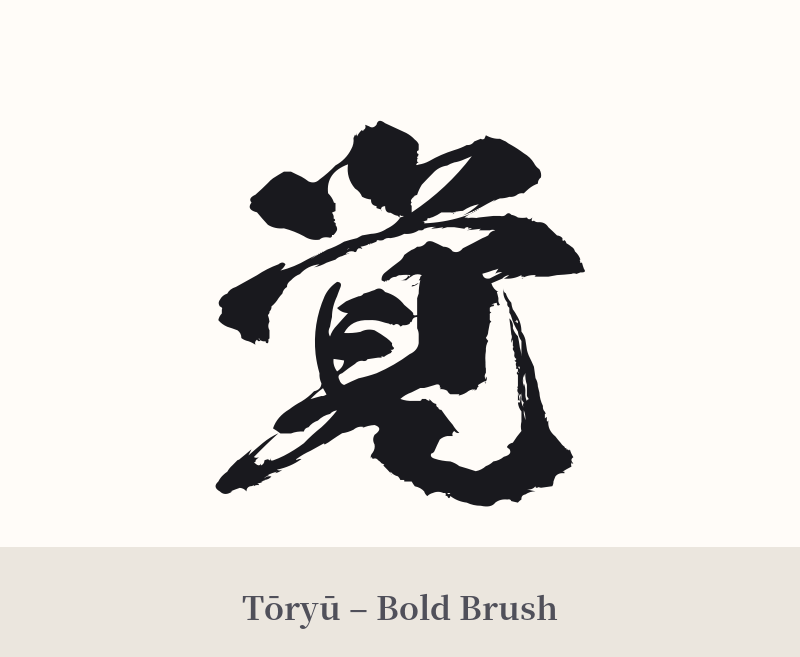
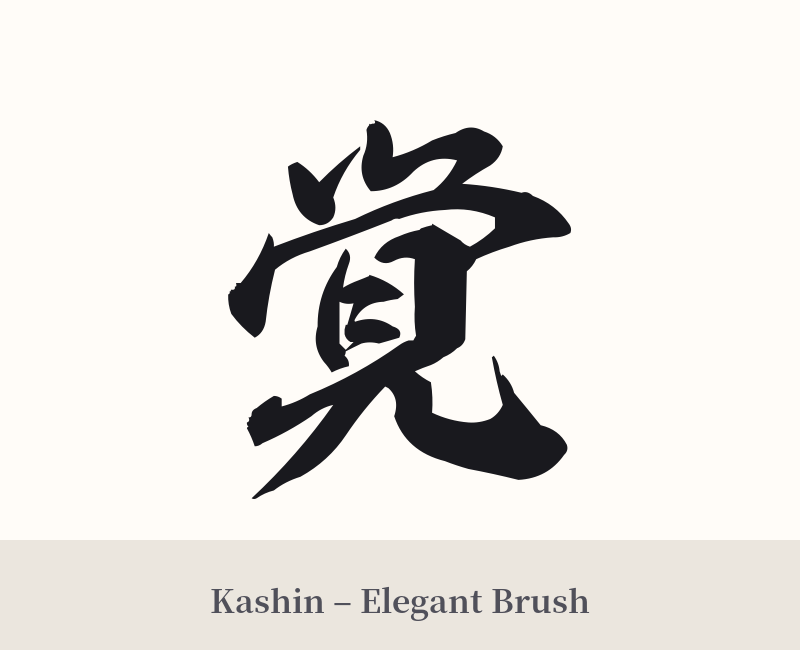
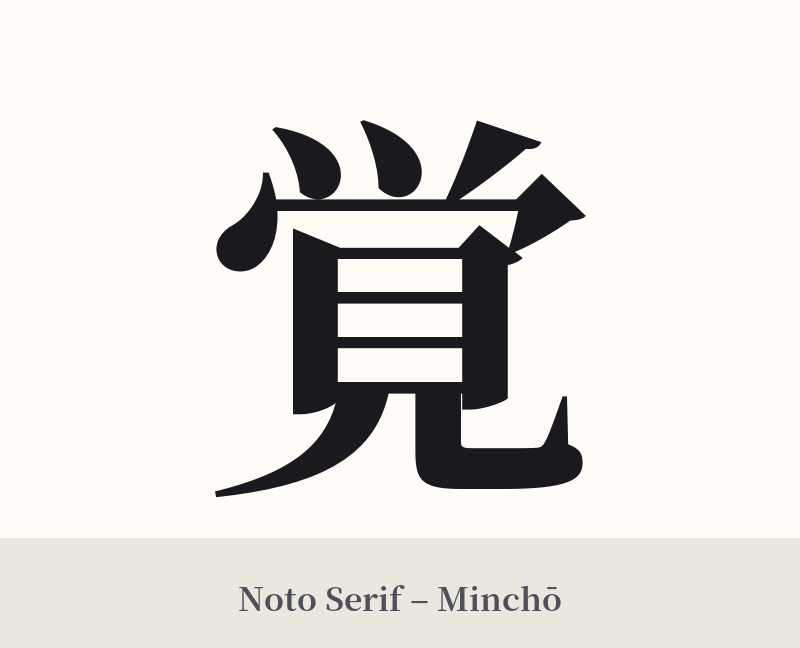
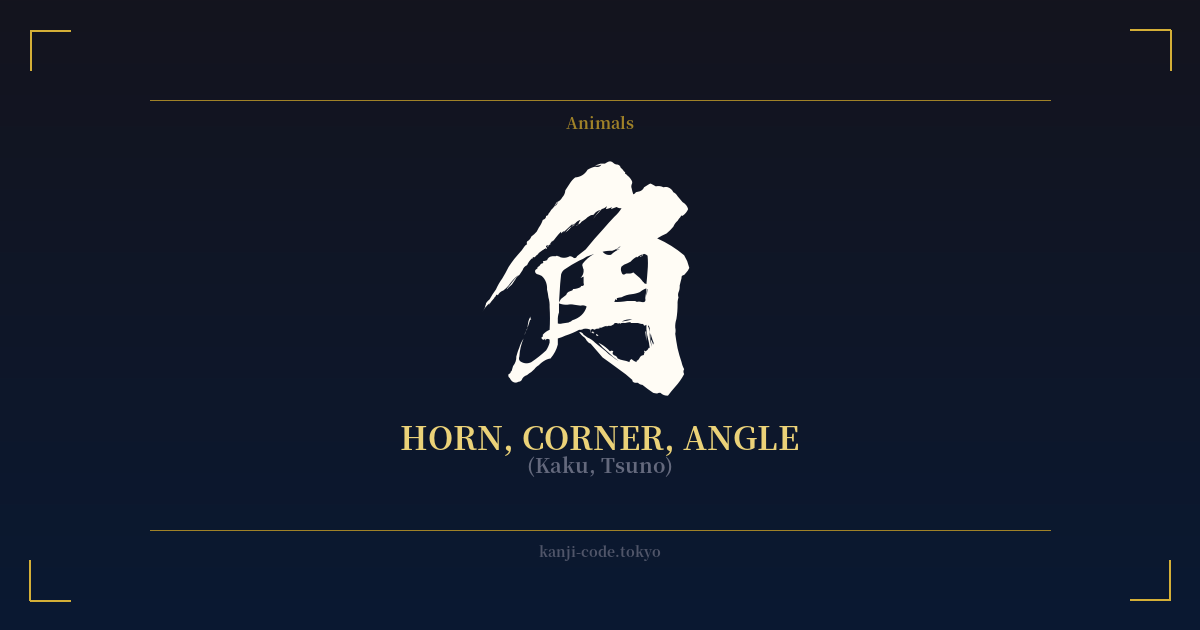
The same kanji can look dramatically different depending on the calligraphy style. Choose a font that matches the mood you want for your tattoo or design.
🎨 Tattoo Suitability
📐 Tattoo Design Guide
The kanji 覚 offers a balanced and aesthetically pleasing form for a tattoo. Its mix of straight and curved lines gives it both stability and a touch of elegance.
– Placement Suggestions: For a vertical design, the spine, forearm, or calf works well, emphasizing the idea of a core awakening. For a horizontal piece, the chest or back of the neck are excellent spots, symbolizing a state of mind or consciousness.
– Font Style: The choice of font can dramatically alter the feeling. A bold, blocky script like Kaisho or a modern Gothic style can emphasize the 'resolve' and 'preparedness' of 覚悟 (kakugo). In contrast, a flowing, semi-cursive script like Gyosho can capture the more fluid and gentle nature of a dawning realization or the act of perception.
– Visual Complements: While it stands strong on its own, 覚 can be paired with other imagery to enhance its meaning. Consider combining it with a lotus flower to symbolize enlightenment, an opening eye to represent perception, or a simple Enso circle to frame it within the concept of the universe and self.
Comments