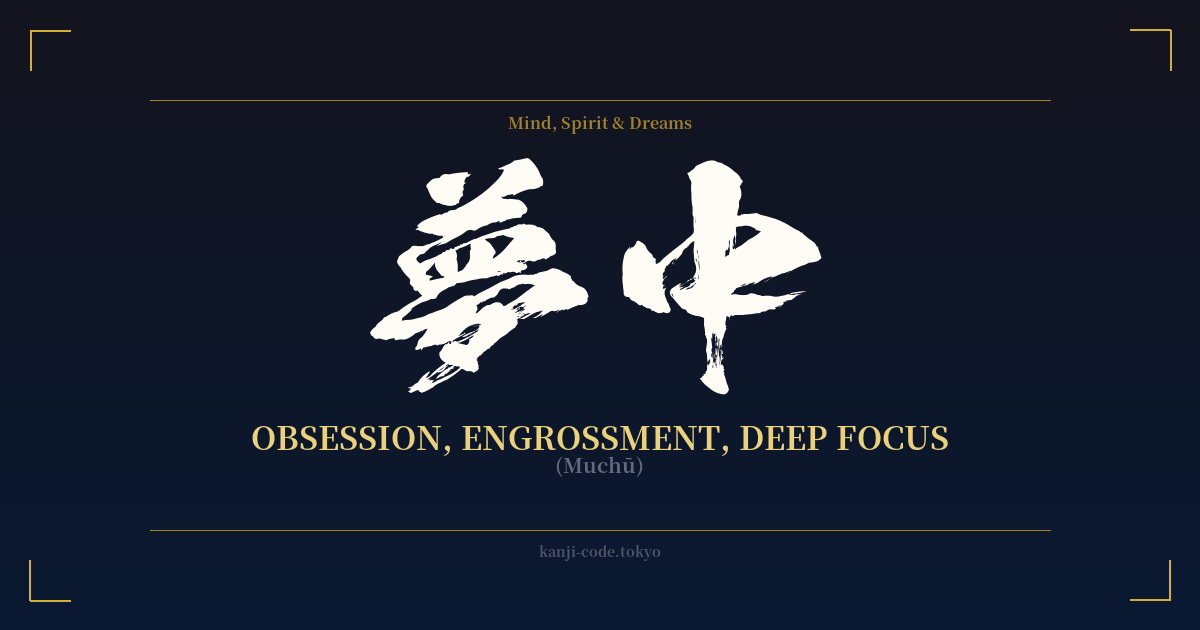
✍️ 夢中 (Muchū) — Cultural Context
夢中 (Muchū) is a beautiful and evocative Japanese word that captures the state of being completely absorbed, engrossed, or obsessed with something. Its literal translation offers a glimpse into its poetic core: 夢 (yume) means 'dream' and 中 (chū) means 'in' or 'middle.' To be 'muchū' is to be 'in the middle of a dream.'
This isn't about being asleep. Instead, it describes a waking state of such intense focus that the outside world fades away, much like when one is lost in a vivid dream. It’s the feeling of an artist lost in their painting, a musician consumed by a melody, or a child so engrossed in a game that they don't hear their parents calling. This is the Japanese equivalent of the psychological concept of 'flow state'—a feeling of energized focus, full involvement, and enjoyment in the process of an activity.
In Japanese culture, which often values dedication and mastery, 夢中 carries a highly positive connotation. It speaks to the passion that drives the 'shokunin' (artisan) to perfect their craft over a lifetime. When someone says they are 'muchū' about their hobby, work, or even a person (in the context of falling in love), it conveys a pure and powerful form of dedication. It is the engine of creativity and expertise.
While the English word 'obsession' can carry negative undertones of unhealthy fixation, 夢中 is almost always used to describe a joyful and productive absorption. It implies that the activity is so compelling and rewarding that it commands one's full attention. For example, you might hear someone say, '子供の頃、ゲームに夢中だった' (Kodomo no koro, gēmu ni muchū datta), meaning 'When I was a kid, I was completely absorbed in video games.' This is a fond memory, not a confession of a problem.
This word frequently appears in manga, anime, and literature to characterize individuals who are passionately driven. A protagonist training to become the best swordsman, a chef striving for the perfect dish, or a student studying for a crucial exam—they are all 夢中. They are living in the 'dream' of their goal, and this state of mind is what allows them to achieve extraordinary things.
🖌️ Font Styles for 夢中
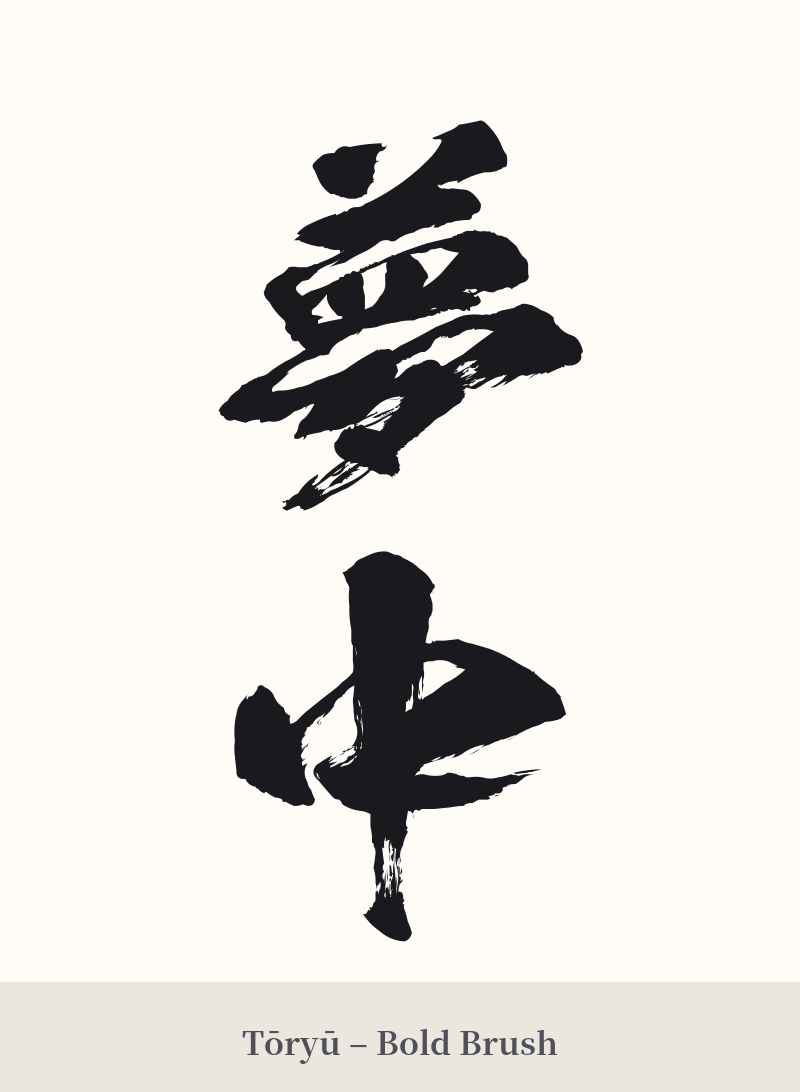
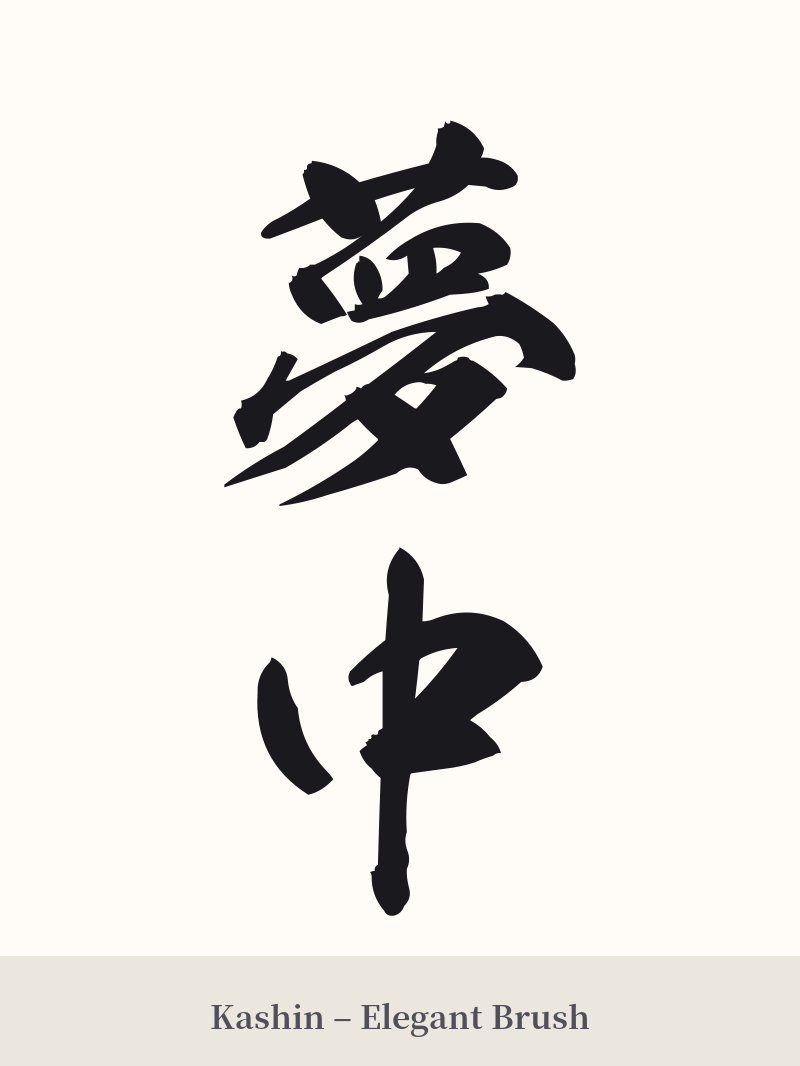
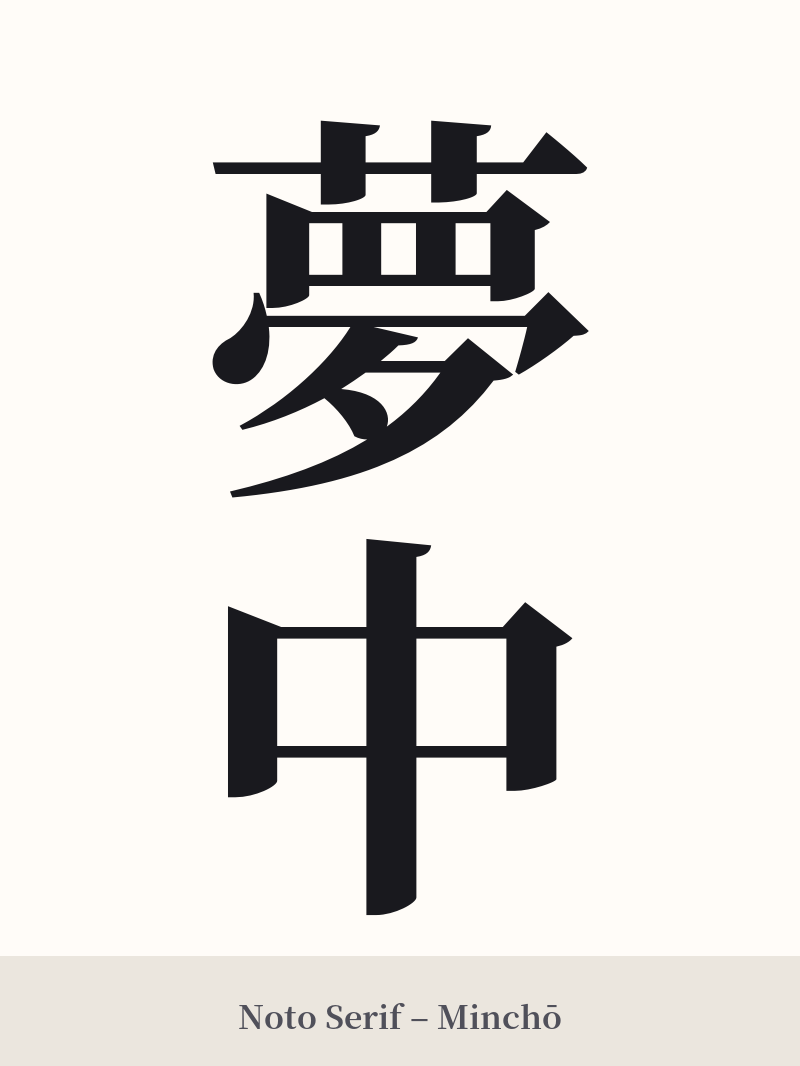
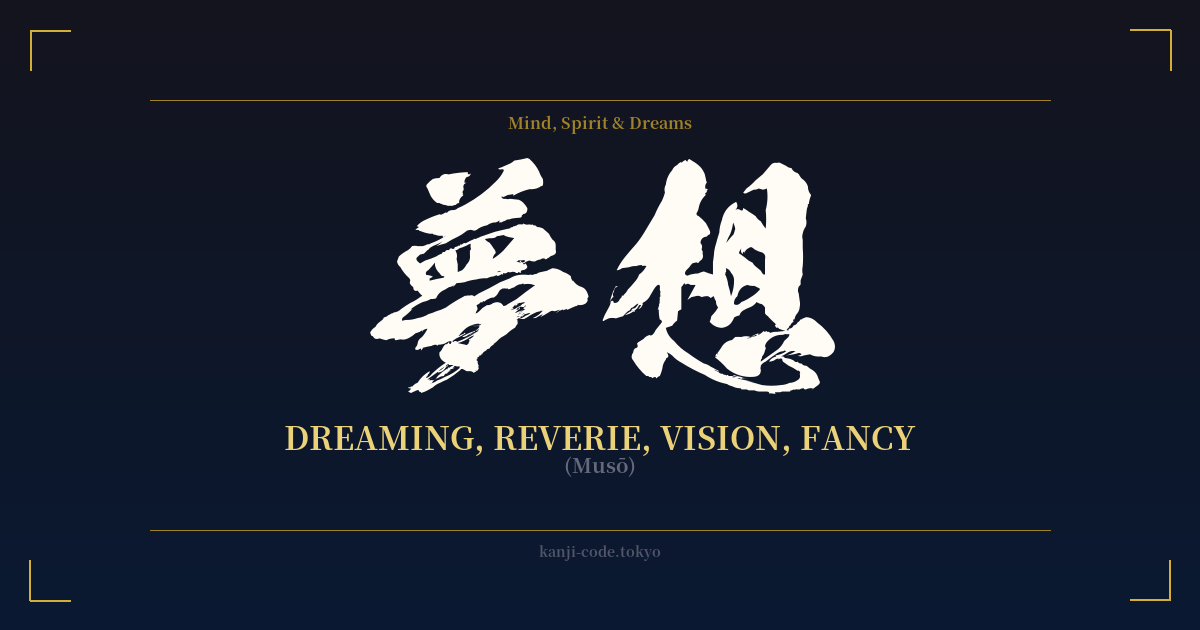
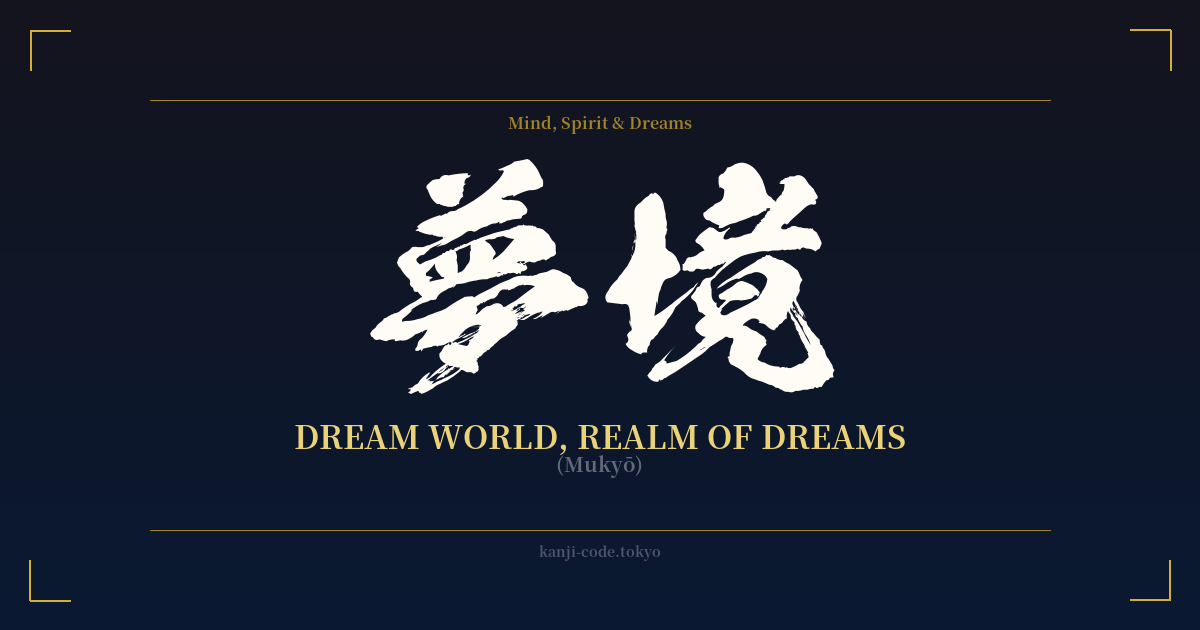
The same kanji can look dramatically different depending on the calligraphy style. Choose a font that matches the mood you want for your tattoo or design.
🎨 Tattoo Suitability
📐 Tattoo Design Guide
夢中 is a visually balanced and meaningful choice for a tattoo. Its structure lends itself well to several design approaches.
– Placement: Vertical alignment is classic for two-character kanji. Consider the forearm, the calf, the spine, or the back of the neck. This allows the characters to flow downwards naturally.
– Font Style: The choice of script can dramatically alter the feel. A 'Gyosho' (semi-cursive) style can emphasize the 'dreamlike' flow and passion. For a stronger, more deliberate statement of focus, a crisp 'Kaisho' (block) script is an excellent choice. A minimalist, modern font can also work for a more subtle and personal tattoo.
– Visual Embellishments: Consider weaving elements that represent the object of your 'muchū' state. For an artist, this could be a brushstroke that wraps around the kanji. For a musician, it could be faint music bars in the background. Adding a splash of watercolor behind the characters can enhance the 'dreamy' quality of the word.
Comments