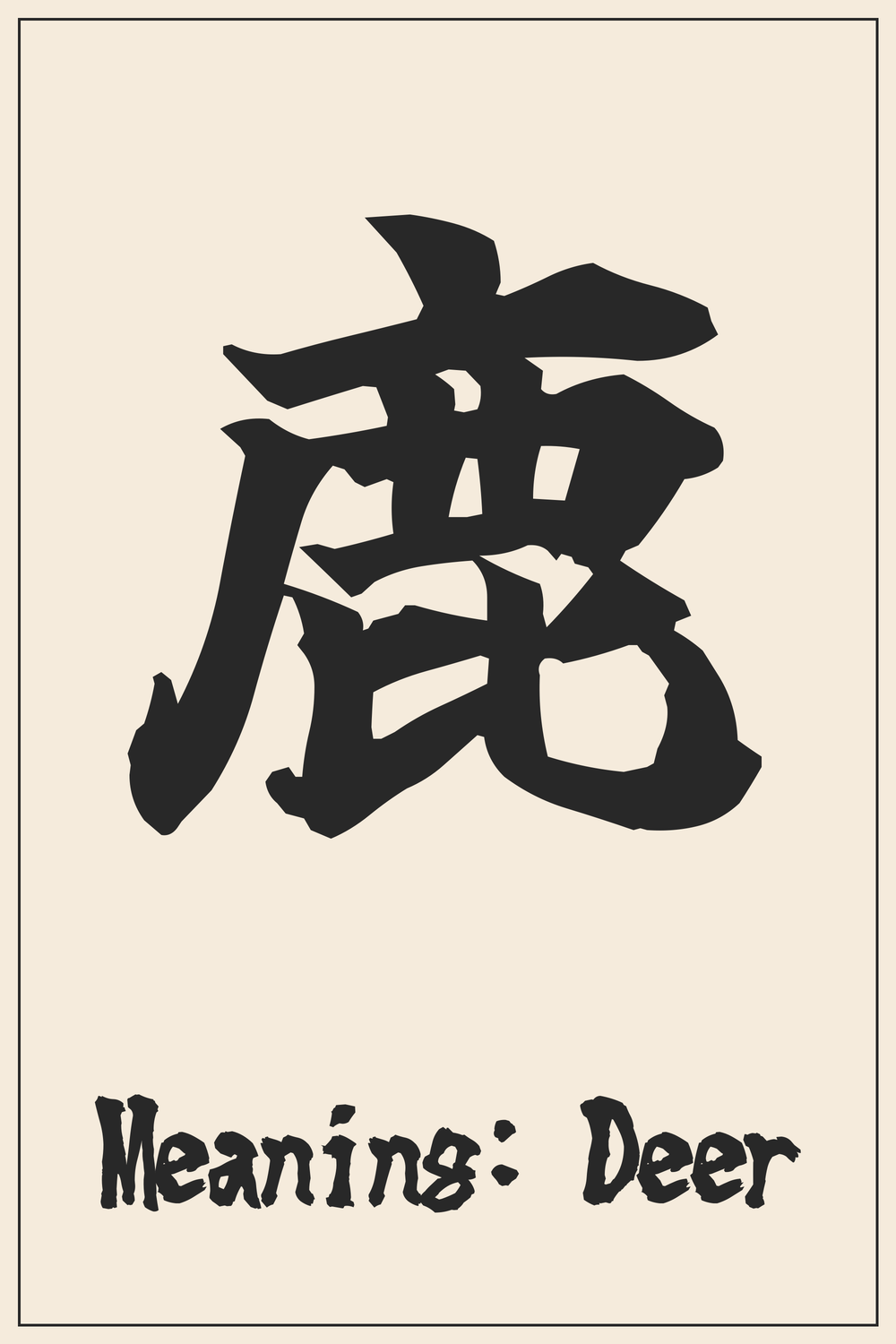
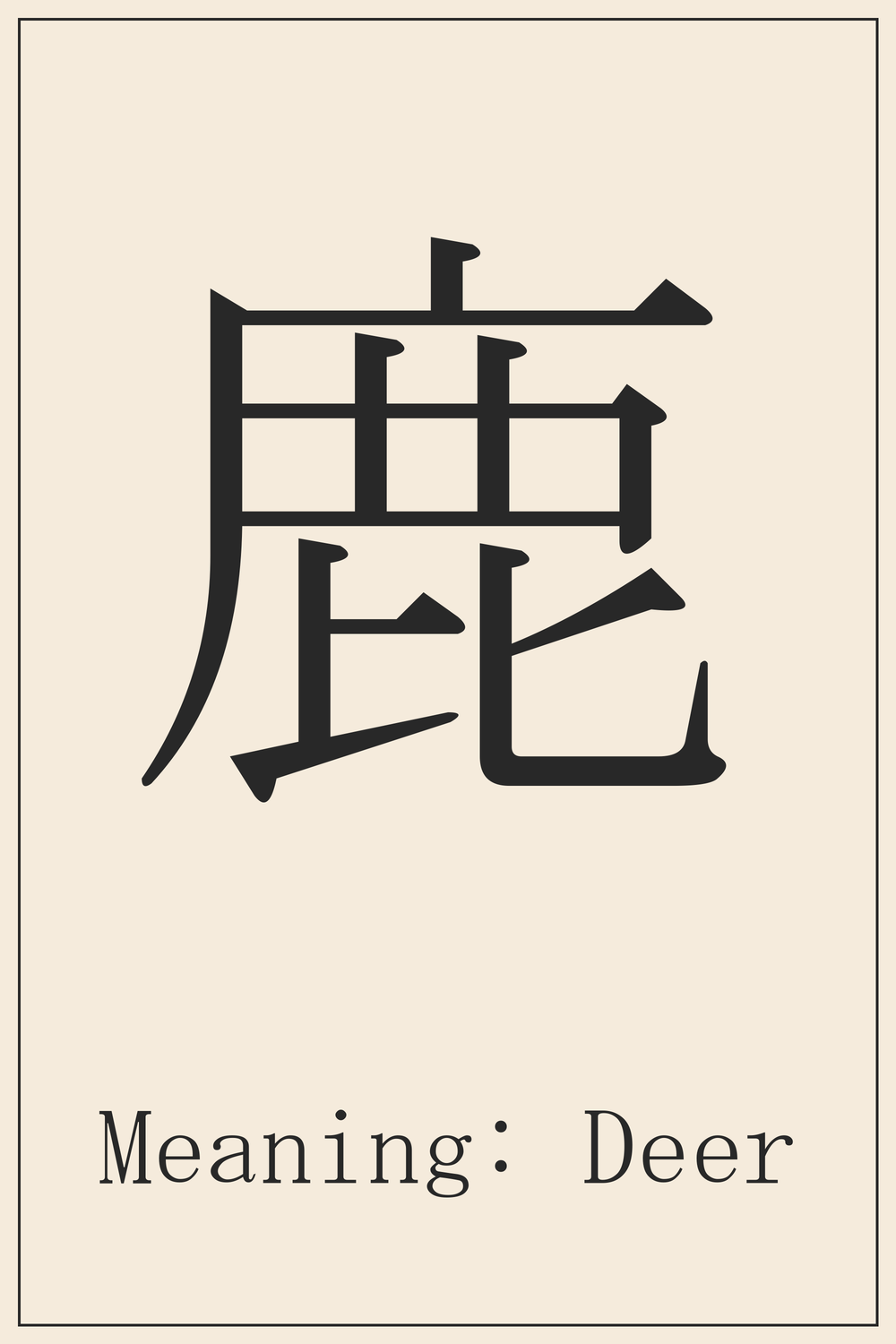
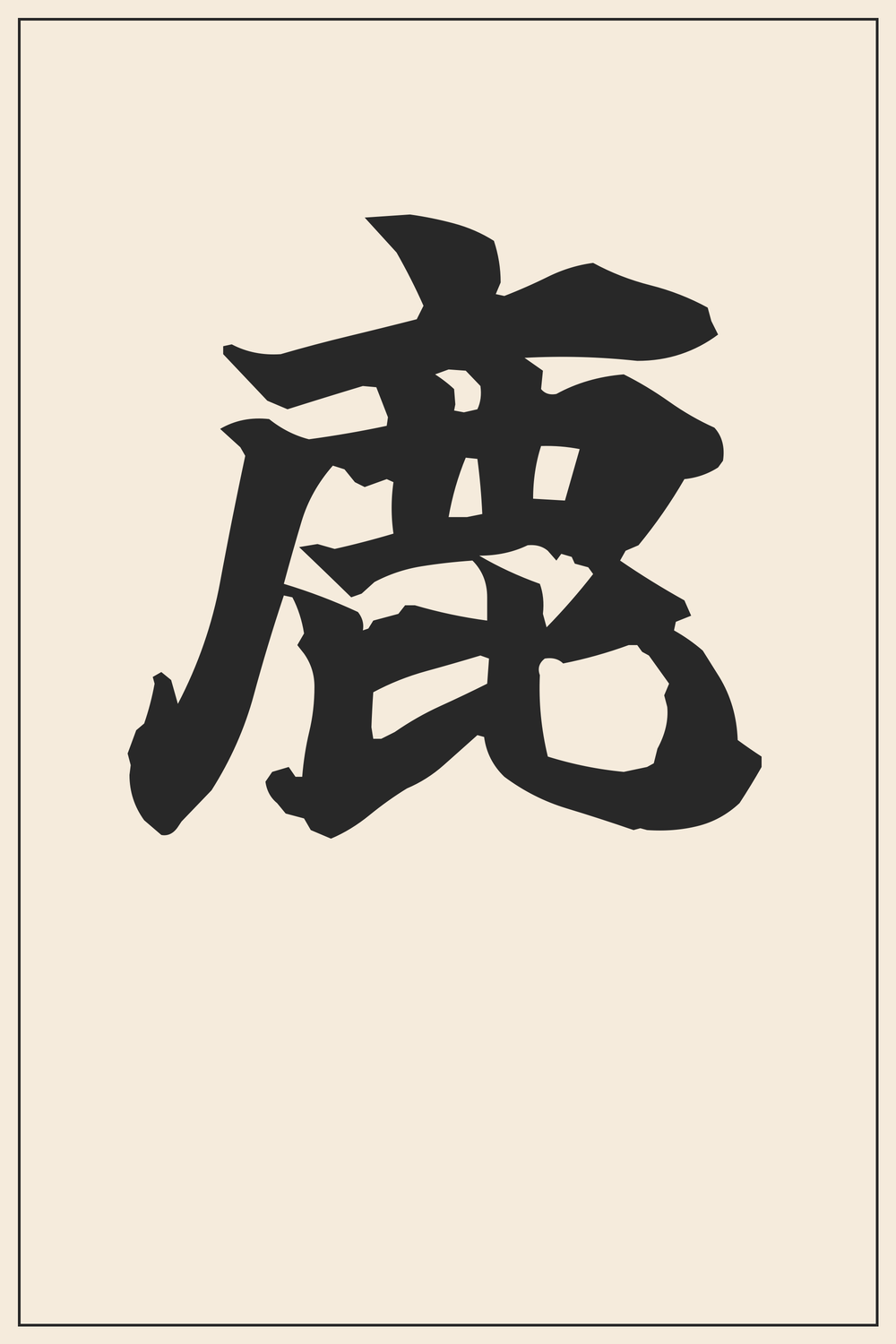
The Kanji 鹿 embodies the spirit of the wild deer, a creature revered for its grace and connection to nature. It represents a gentle strength and ancient wisdom, making it a profound symbol.
The atmosphere of a Kanji character changes dramatically depending on the font style. A character that looks elegant in a brush style might look bold and modern in a different font.
Recommendation:
Since a tattoo is permanent, we strongly recommend comparing various font styles beyond what is shown here. Use our designs as a trusted reference for the correct structure, but feel free to explore different artistic variations to find the perfect match for your vision.
The Deep Meaning Behind 鹿
The Kanji 鹿 (shika) is an ancient pictograph, originating from a stylized depiction of a deer with its prominent antlers, body, and legs. This visual representation captures the essence of the animal, reflecting its physical attributes directly into the written character.
In Japanese culture, deer are highly revered, often seen as messengers of the gods or symbols of nature’s delicate beauty. The deer of Nara, for instance, are considered sacred. They embody grace, longevity, and a deep connection to the spiritual world, appearing frequently in traditional art, poetry, and folklore.
Kanji Breakdown
The character 鹿 is a single ideogram that visually represents the deer itself. Its form has evolved from a detailed pictograph.
Deer: This character is a direct representation of a deer. It depicts the animal’s head, antlers, body, and legs, capturing its form in a simplified yet recognizable manner. It stands as a powerful symbol of nature and elegance on its own.
Conclusion
The Kanji 鹿 is more than just the word for ‘deer’; it encapsulates an entire cultural appreciation for elegance, wild beauty, and spiritual connection. It serves as a reminder of nature’s delicate balance and the gentle power found within it.
For those seeking a tattoo that symbolizes grace, longevity, and a deep respect for the natural world, 鹿 is an exceptional choice. Its classic design and profound cultural resonance make it a timeless and meaningful addition to any collection of Kanji art.
Comments