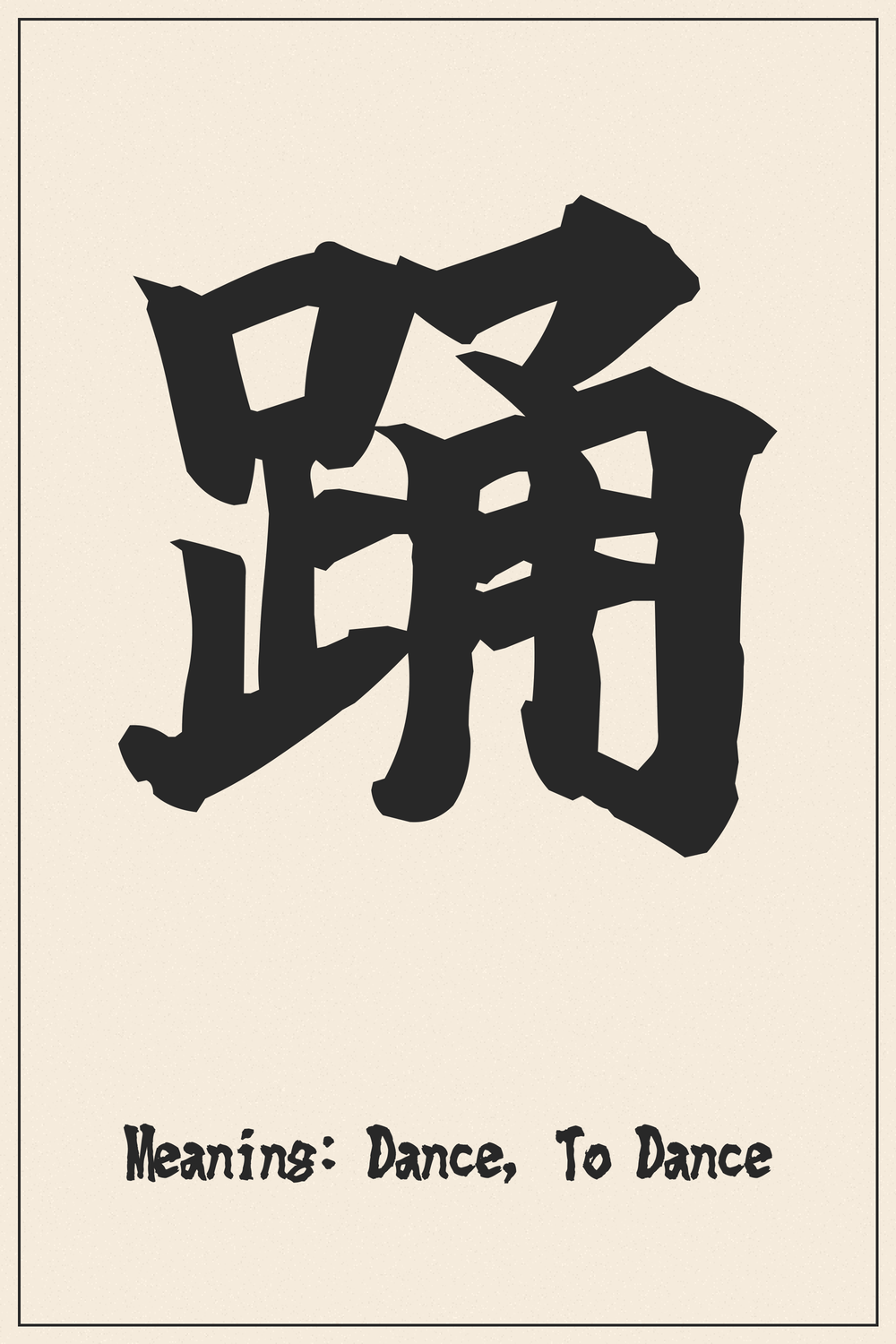
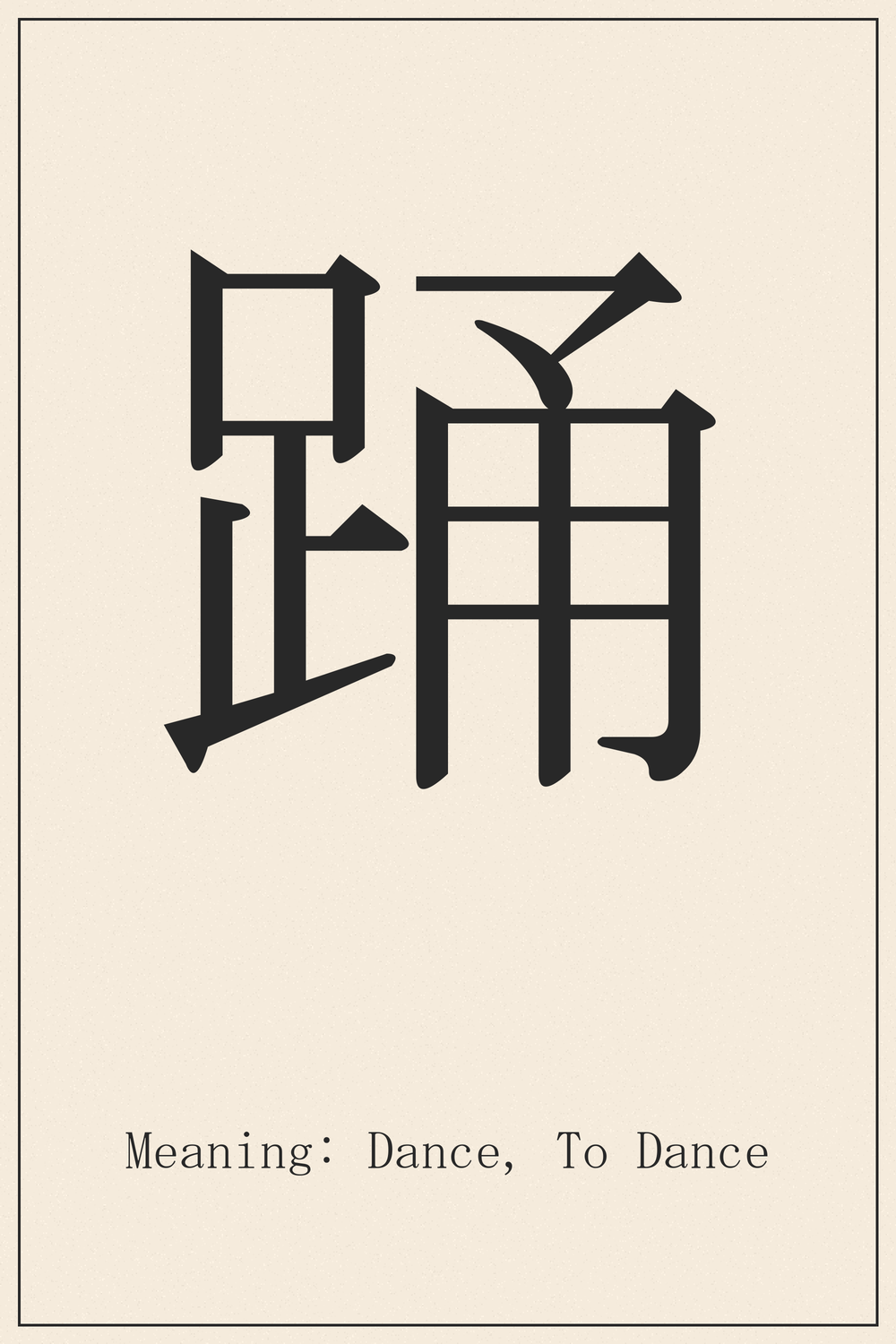
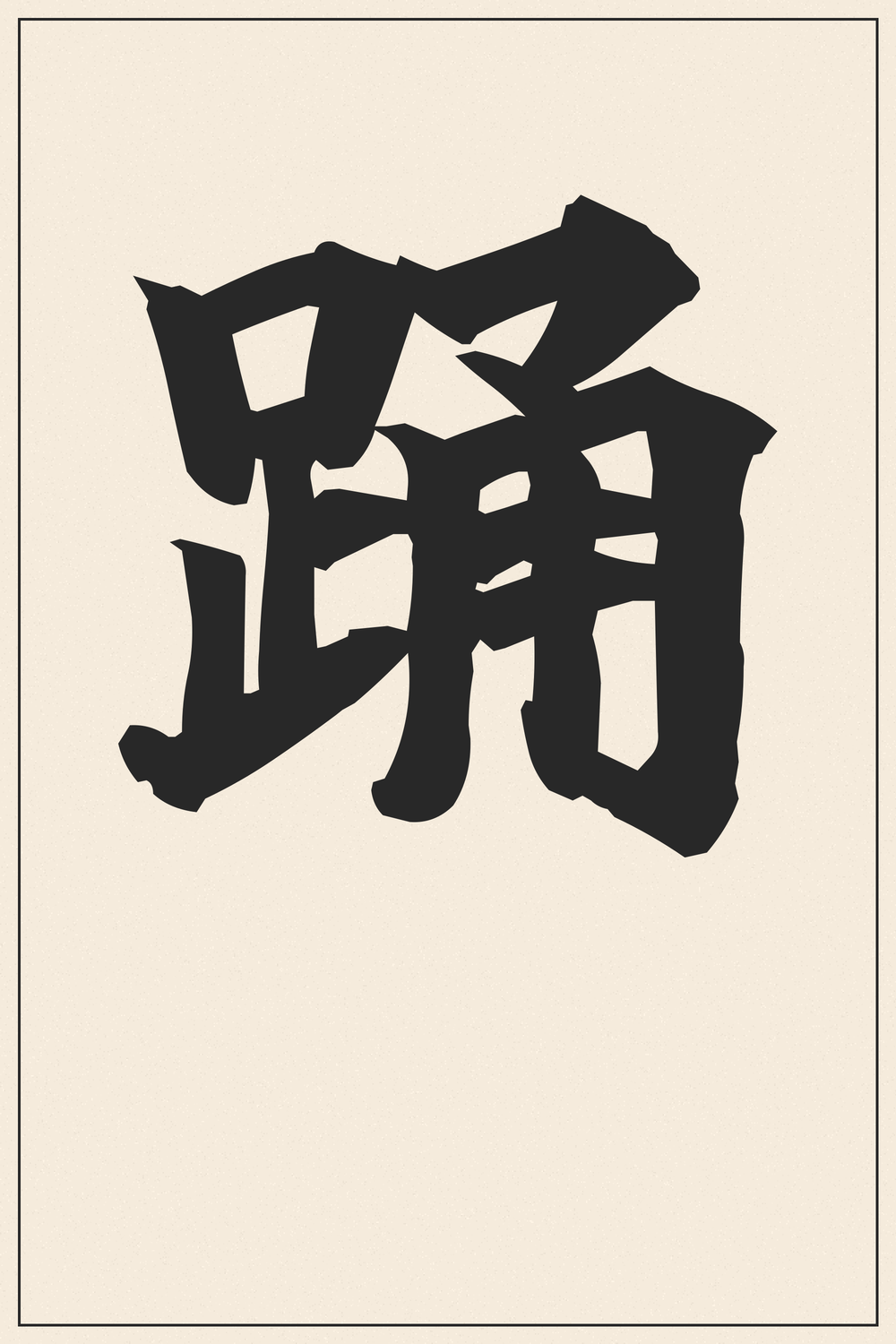
The Kanji 踊 encapsulates the vibrant spirit of dance, a timeless expression of human emotion and movement. It symbolizes not just physical action, but also the inner rhythm and joy that define us.
The atmosphere of a Kanji character changes dramatically depending on the font style. A character that looks elegant in a brush style might look bold and modern in a different font.
Recommendation:
Since a tattoo is permanent, we strongly recommend comparing various font styles beyond what is shown here. Use our designs as a trusted reference for the correct structure, but feel free to explore different artistic variations to find the perfect match for your vision.
The Deep Meaning Behind 踊
The character 踊 (odor/odoru) combines the radical 足 (ashi), meaning ‘foot’ or ‘leg,’ with the phonetic component 甬 (yō), which implies a sense of ‘flow’ or ‘rhythm.’ This etymological construction vividly depicts the rhythmic movement of feet, essential to the act of dancing.
Across Japanese culture, dance has always been a profound form of expression, from ancient Shinto ritualistic dances known as Kagura, to the lively folk dances of Bon Odori, and various traditional performing arts. It serves as a celebration of life, a connection to the spiritual world, and a powerful communal bond.
Kanji Breakdown
The Kanji 踊 is composed of two primary elements, each contributing to its overall meaning and visual representation of dance.
Meaning: Foot, leg. This radical directly anchors the Kanji to physical movement, specifically the use of feet, which is fundamental to any form of dance or leaping.
Meaning: Phonetic element, flow, rhythm. While primarily providing the ‘yō’ sound, this component can subtly convey the rhythmic and fluid motion inherent in dance.
Conclusion
The Kanji 踊 beautifully embodies the art of dance, symbolizing freedom, rhythm, and profound self-expression. It captures not only the physical act but also the spiritual and emotional liberation that dance provides.
A tattoo of 踊 can serve as a powerful emblem of one’s passion for dance, a reminder to embrace life’s natural rhythm, or a celebration of personal freedom and cultural heritage. Its dynamic form and rich cultural context make it a truly inspiring and meaningful choice for body art.
Comments