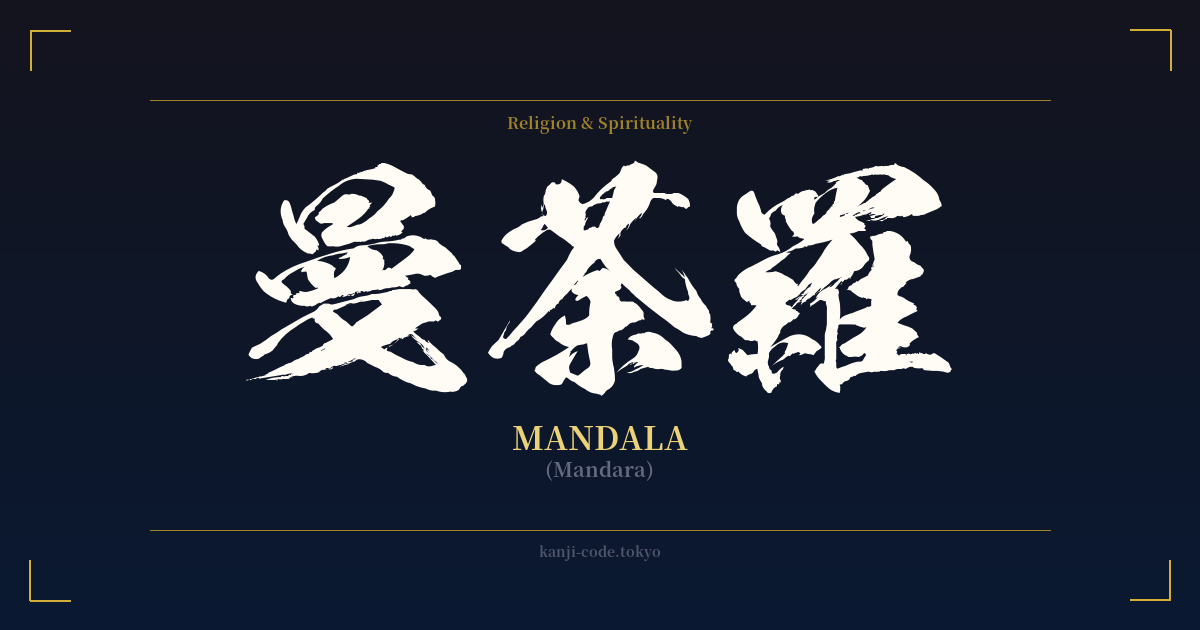
✍️ 曼荼羅 (Mandara) — Cultural Context
The Japanese word 曼荼羅 (Mandara) is far more than a simple translation of 'mandala.' It represents a profound spiritual technology, a map of the cosmos, and a cornerstone of Japanese Esoteric Buddhism (密教, Mikkyō).
Originating from the Sanskrit word 'maṇḍala' (meaning 'circle' or 'essence'), the concept traveled along the Silk Road, arriving in Japan in the 9th century. It was introduced primarily by the monk Kūkai, founder of the Shingon school of Buddhism. For Kūkai, the Mandara was not merely a decorative picture but a vital tool for realizing enlightenment.
In Japan, the term most famously refers to the Mandala of the Two Realms (両界曼荼羅, Ryōkai Mandara). This pair consists of the Diamond Realm Mandala (金剛界曼荼羅, Kongōkai Mandara) and the Womb Realm Mandala (胎蔵界曼荼羅, Taizōkai Mandara). The Diamond Realm represents the unchanging, eternal wisdom of the Buddha, while the Womb Realm symbolizes the world of compassion and the potential for enlightenment within all beings. Together, they depict the entire spiritual universe, a complex hierarchy of deities, buddhas, and bodhisattvas in a structured, geometric form.
Crucially, the kanji used for Mandara—曼, 荼, and 羅—are examples of ateji (当て字). This means the characters were chosen purely for their phonetic values to approximate the sound of the original Sanskrit word. Their individual meanings ('wide', 'weed', 'gauze') are completely irrelevant to the meaning of Mandara. This is a common point of confusion for Westerners, but it highlights how Japanese incorporates foreign concepts, bending its writing system to fit new sounds.
These diagrams were used in initiation rituals and as focal points for meditation. By visualizing oneself within the Mandara, a practitioner could understand their place in the cosmos and connect with the divine. The Mandara acts as both a guide for the mind and a depiction of the goal: the unified, enlightened state.
Today, while the intricate Mandara paintings remain sacred treasures in temples, the word and concept have seeped into the broader culture. It can be used metaphorically to describe any complex, interconnected system. However, its core identity remains deeply tied to the spiritual quest for understanding the nature of reality.
🖌️ Font Styles for 曼荼羅
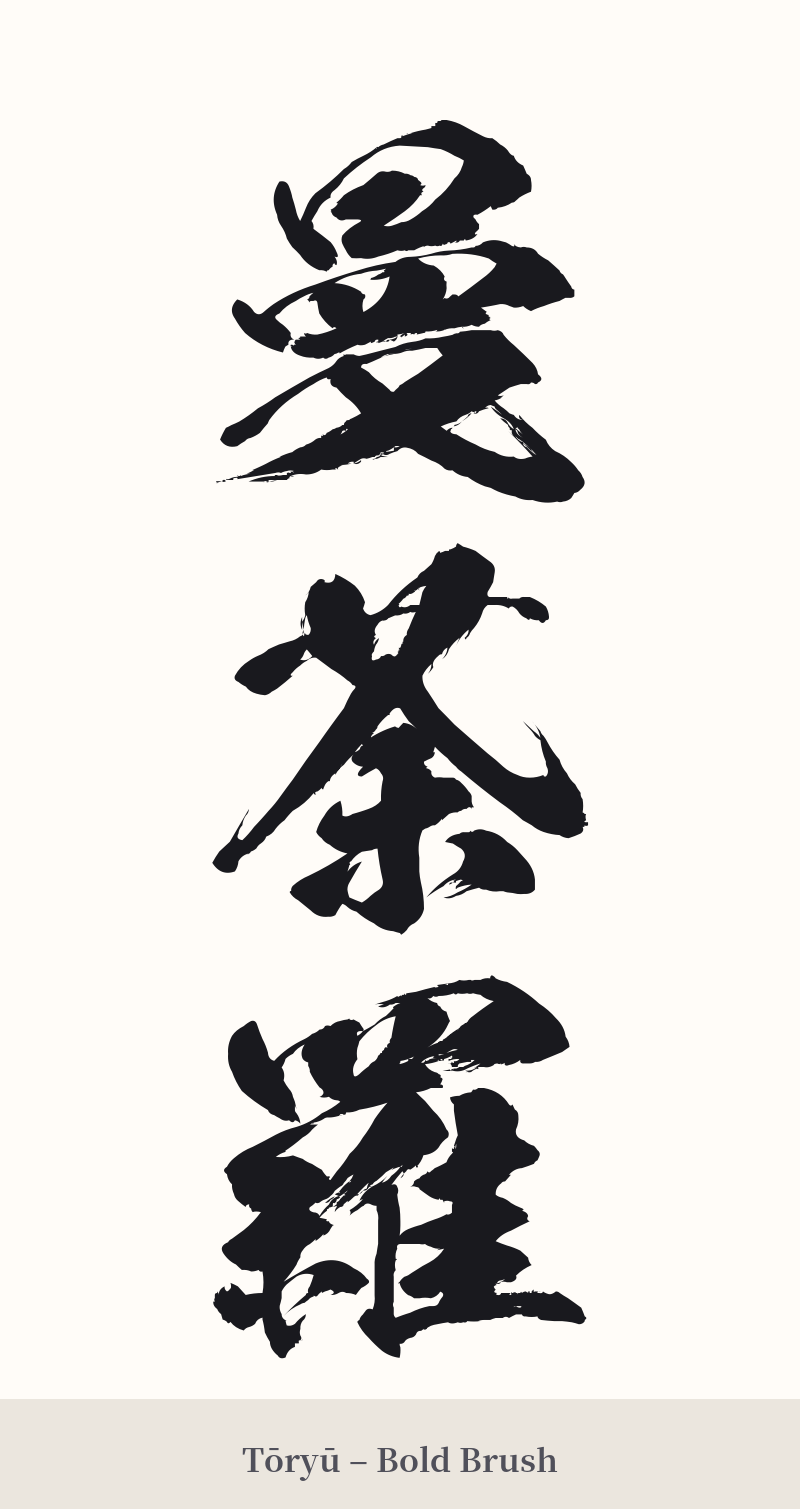
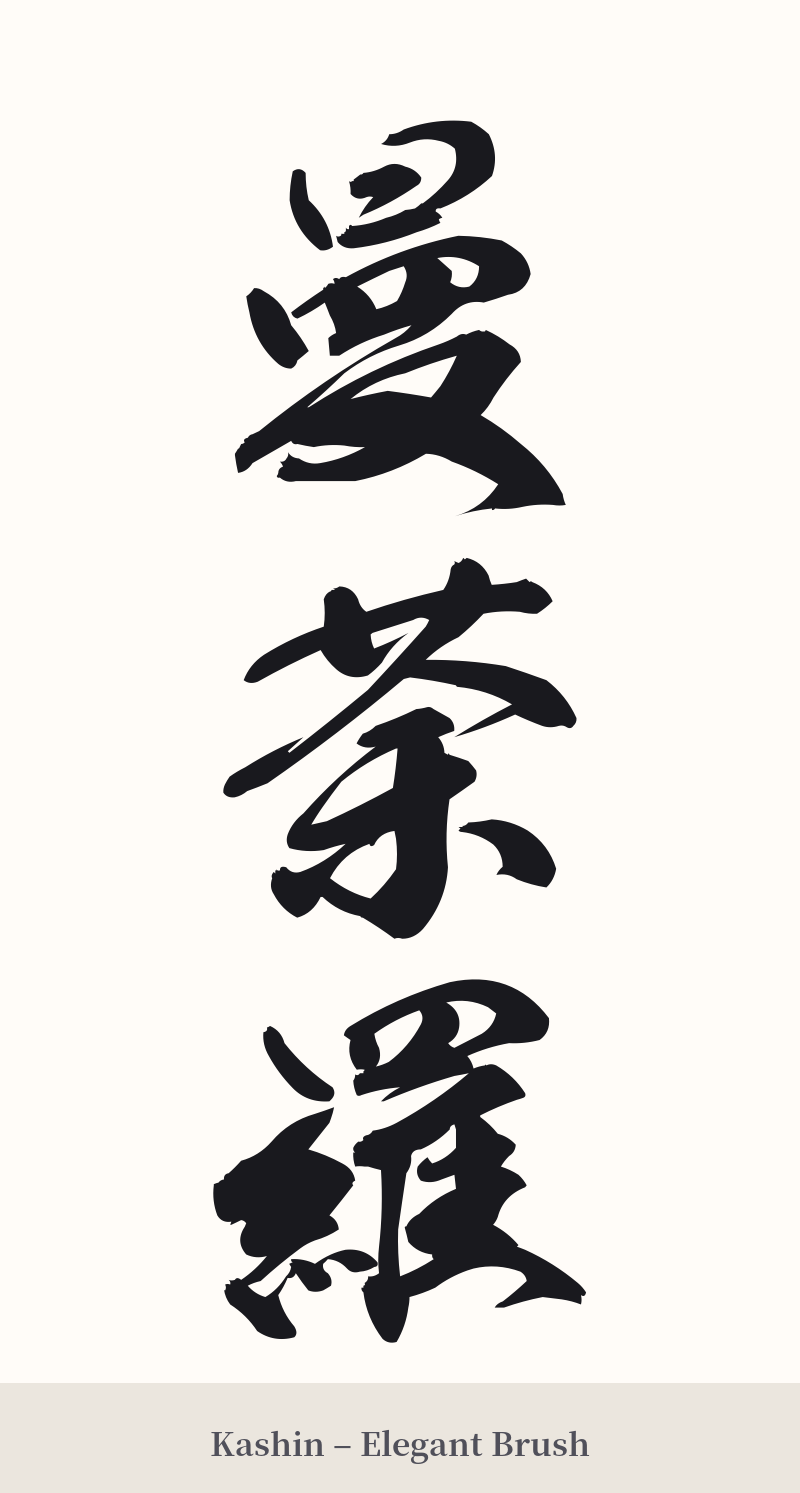
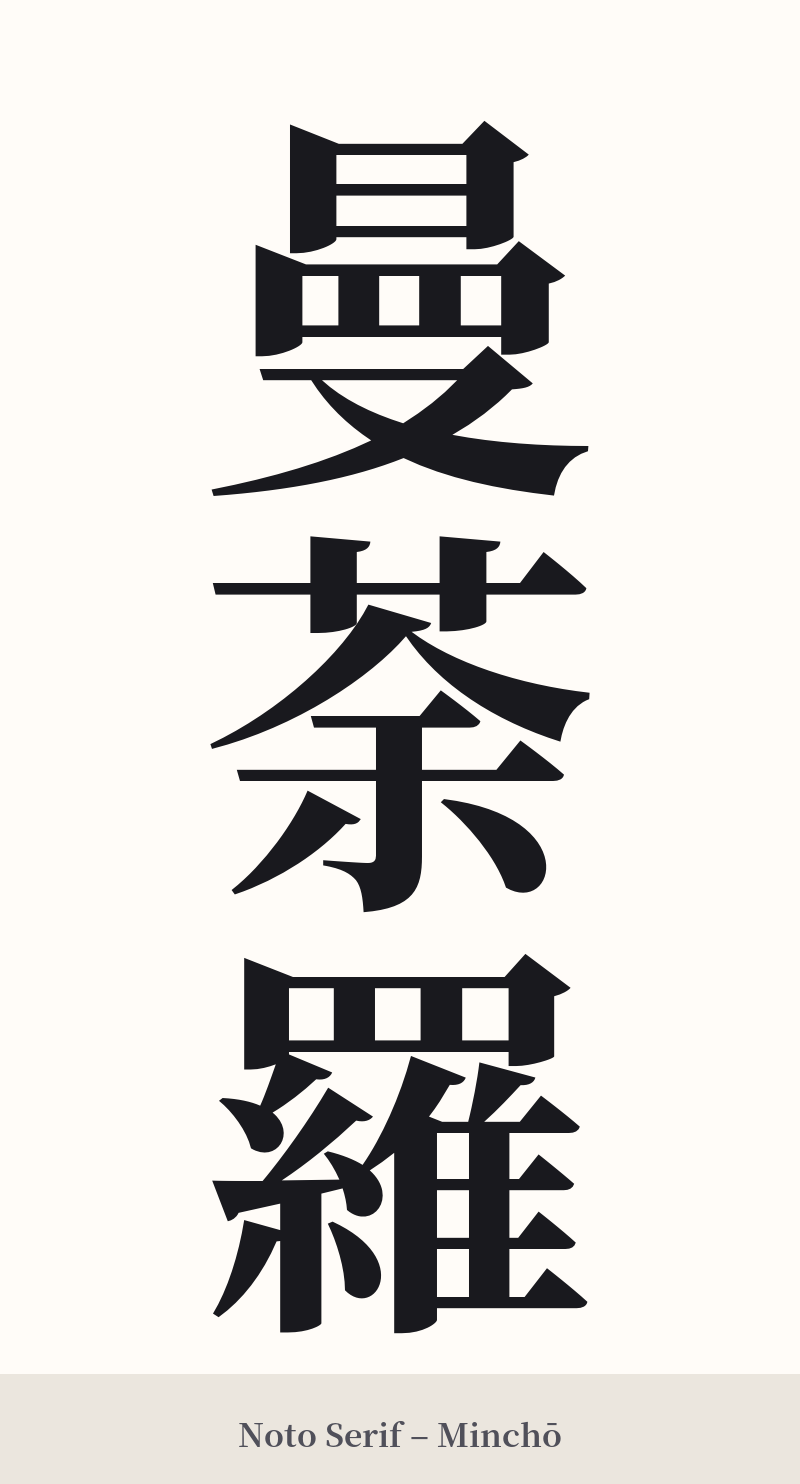
The same kanji can look dramatically different depending on the calligraphy style. Choose a font that matches the mood you want for your tattoo or design.
🎨 Tattoo Suitability
📐 Tattoo Design Guide
A 曼荼羅 tattoo is a powerful statement that benefits from thoughtful design.
– Placement: Vertical orientation is traditional and visually powerful, making it ideal for the spine, forearm, or calf. A horizontal arrangement can work well across the chest or upper back.
– Style: A dynamic calligraphy or brushstroke style (書道, shodō) can capture the spiritual energy and flow of the concept. For a cleaner look, a crisp Mincho (serif) font can emphasize the intricate details of each character, especially the complex 羅.
– Visual Integration: Consider embedding the kanji within a larger geometric mandala design. Alternatively, let the three characters stand alone; their complexity and balance are artistic in their own right. Avoid scaling it too small, as the high stroke count of 羅 can blur and become illegible over time.
Comments