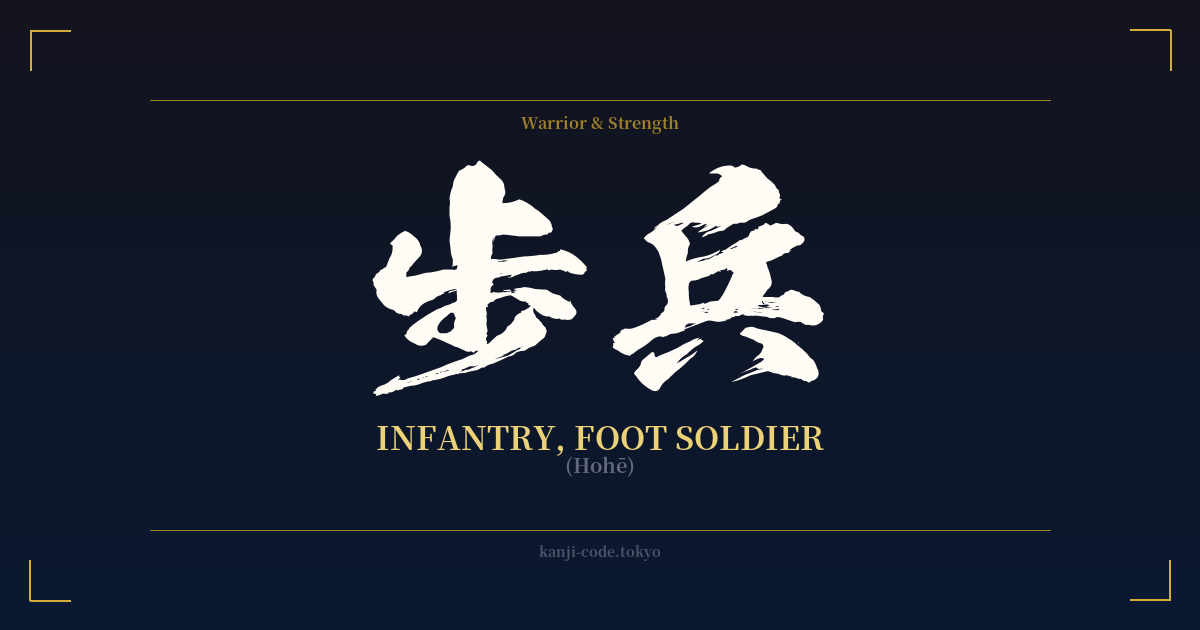
✍️ 歩兵 (Hohē) — Cultural Context
歩兵 (Hohē) literally translates to 'walking soldier,' a simple and direct term that encapsulates the essence of the infantry. This is the soldier who moves on foot, the foundation of any army, representing endurance, discipline, and collective strength. The concept is less about individual heroism and more about the unwavering power of the group.
Historically, the idea of the foot soldier in Japan is deeply connected to the rise of the ashigaru (足軽), or 'light-footed,' soldiers during the Sengoku period (1467-1615). These were often peasant conscripts who, when organized and equipped with pikes and firearms, became the decisive force on the battlefield, supplanting the mounted samurai archer. The 歩兵, therefore, carries a legacy of being the unglamorous but essential backbone of military power—the force that holds the line and achieves victory through numbers and grit.
Unlike the aristocratic and often romanticized 武士 (Bushi) or 侍 (Samurai), 歩兵 is a term grounded in practicality. It speaks to the reality of warfare, where the majority of fighters are not lords or heroes but common individuals performing a vital, dangerous role. This gives the word a humble yet powerful connotation of reliability and steadfastness.
This idea is perfectly mirrored in the game of Shogi, or Japanese chess. The 歩兵 is the most basic piece, equivalent to the pawn. It can only move one space forward at a time, but it is the most numerous piece on the board. Its power lies in its numbers and its potential. When a 歩兵 reaches the opponent's back rank, it gets promoted to a tokin (と金), gaining the powerful movement of a gold general. This symbolizes the idea that even the lowliest soldier, through perseverance and reaching a goal, can become a powerful asset. The journey of the 歩兵 in Shogi is a metaphor for potential, struggle, and eventual transformation.
In a modern sense, 歩兵 can represent a 'boots on the ground' mentality—a commitment to doing the hard, fundamental work necessary for any great undertaking. It’s a tribute to the unsung hero, the team player, and the quiet strength that forms the base of any success.
🖌️ Font Styles for 歩兵
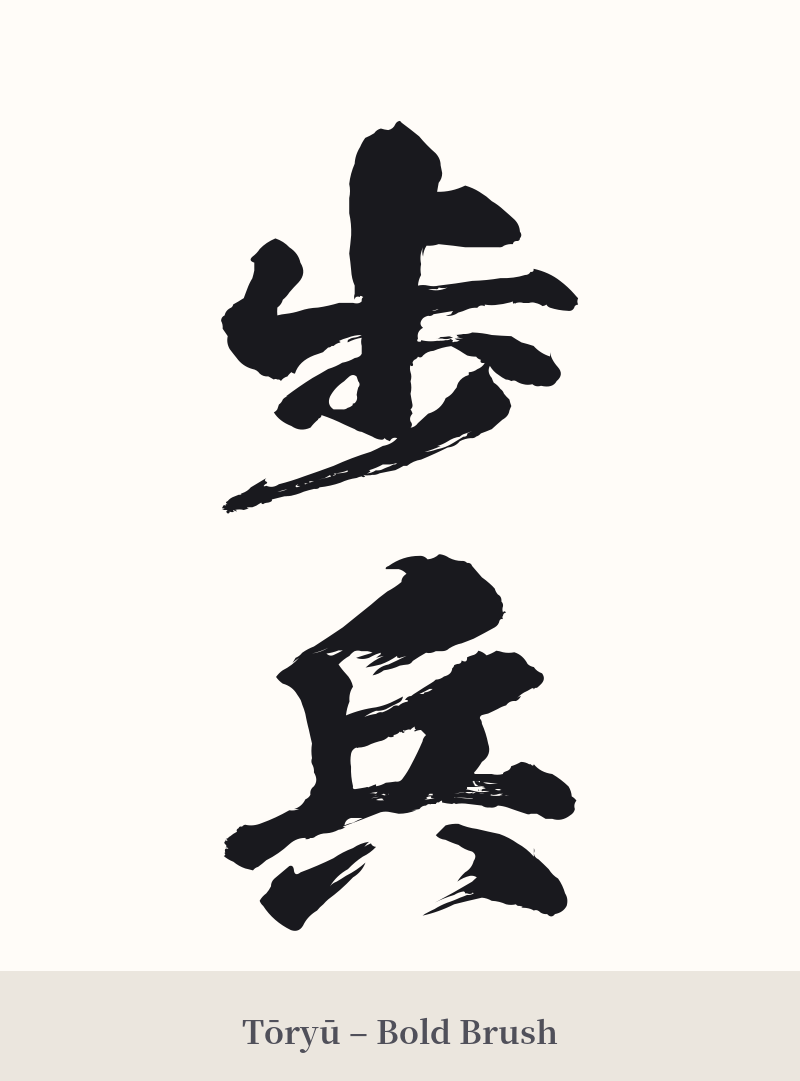
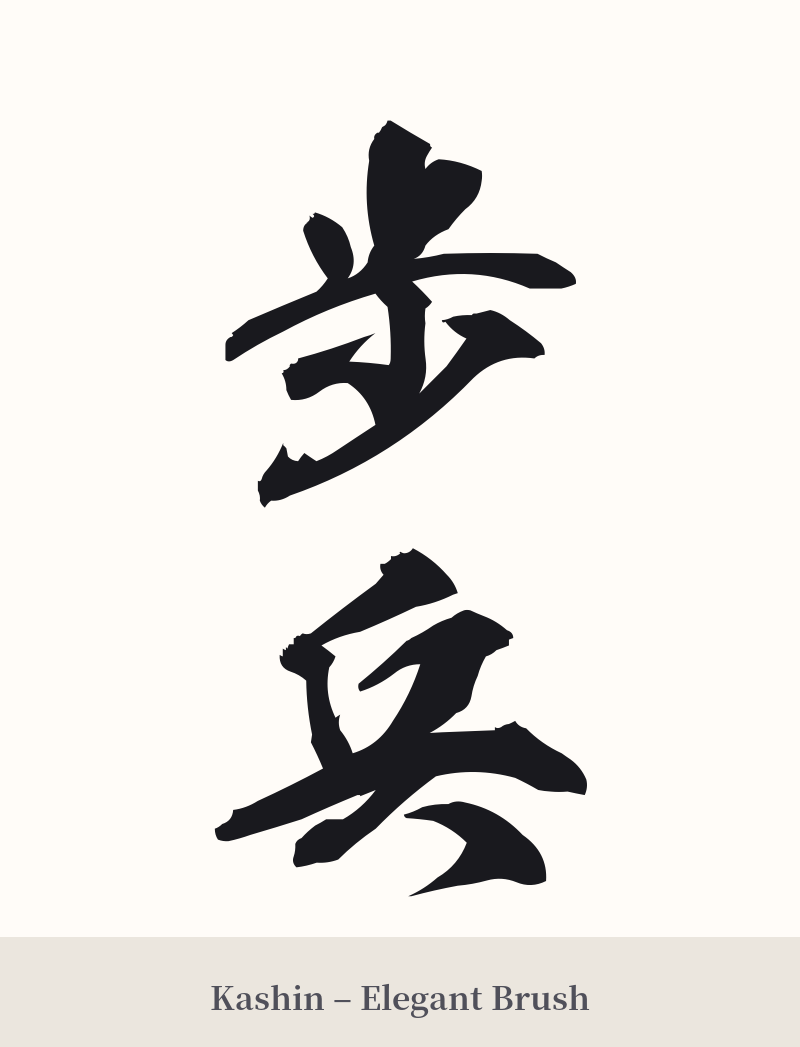
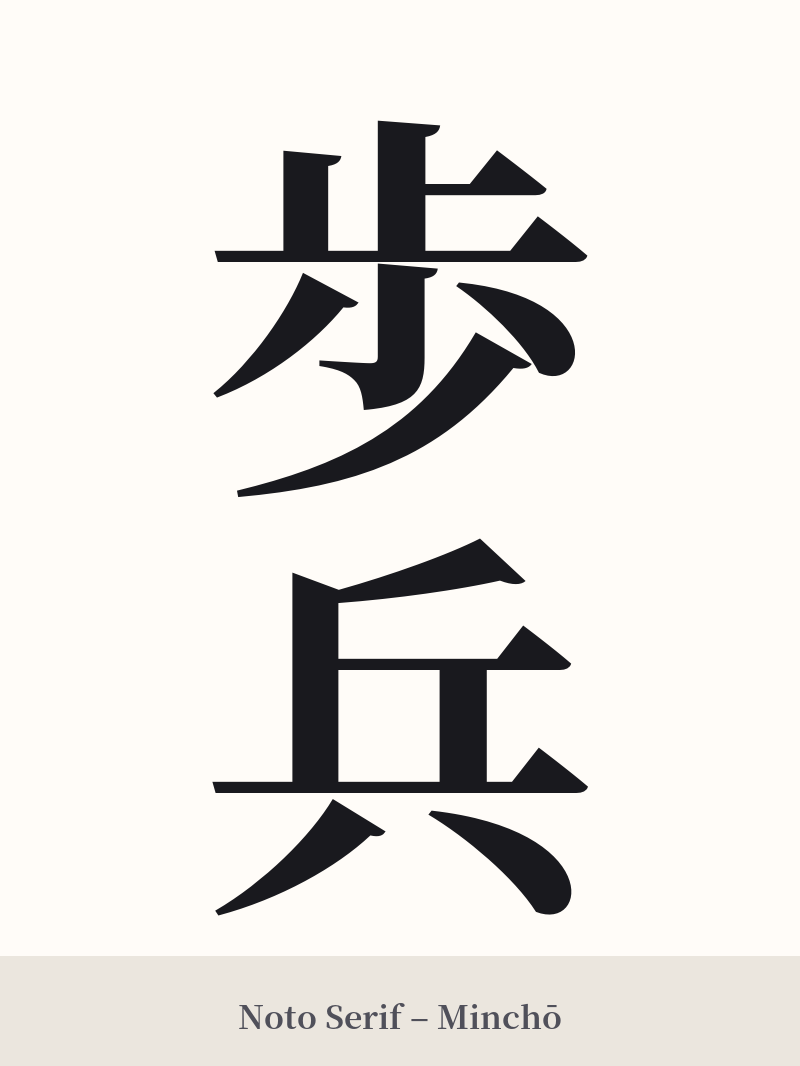
The same kanji can look dramatically different depending on the calligraphy style. Choose a font that matches the mood you want for your tattoo or design.
🎨 Tattoo Suitability
📐 Tattoo Design Guide
The kanji 歩兵 has a straightforward and grounded feel, making it versatile for various tattoo designs.
– Placement: This two-character compound works exceptionally well in a vertical orientation. Consider placements like the forearm, the calf, or along the spine or sternum. A horizontal placement on the bicep or across the chest can also look strong.
– Font Styles: A bold, blocky script like a Kaisho (formal block) or a Gothic-style font will emphasize the stability and strength inherent in the word. For a sense of movement and adaptability, a semi-cursive Gyosho style could be effective, hinting at the 'walking' aspect of the kanji.
– Visual Tips: Given its simple and direct meaning, 歩兵 pairs best with minimalist additions. Consider placing it within a simple Enso circle to symbolize the cycle of struggle and completion. Alternatively, a subtle, stylized mountain range behind the kanji could reinforce themes of endurance and steadfastness. Avoid overly elaborate imagery that might overshadow the humble, powerful nature of the word.
Comments