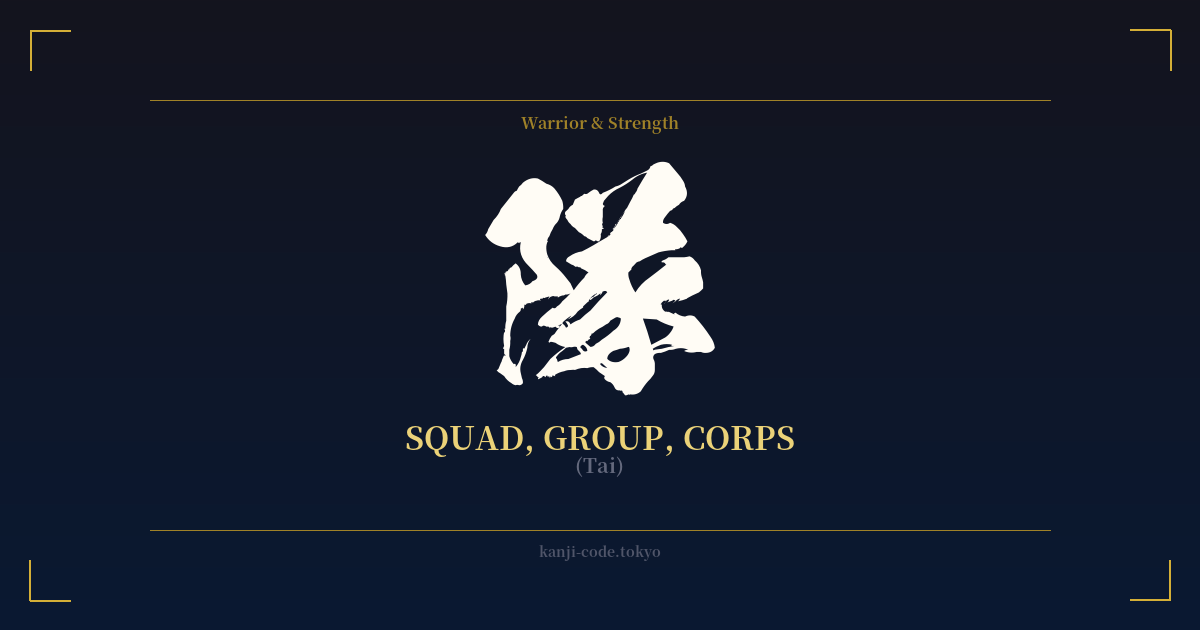
✍️ 隊 (Tai) — Cultural Context
The kanji 隊 (tai) is a cornerstone character for understanding the concept of organized groups in Japanese culture. Its meaning extends far beyond a simple gathering of people; it signifies a structured, disciplined unit with a shared purpose or mission. This character is fundamental to the language of organization, from emergency services to epic adventures.
Etymologically, the character offers a fascinating glimpse into its own meaning. It is composed of two main parts. On the left is the radical 阝(kozato-hen), a variant of 阜, which means 'hill' or 'mound.' This grounds the character in a physical space, suggesting a unit positioned on the landscape. The right side provides the sense of a group, historically related to a procession or followers. Together, they paint a picture of an organized party moving through or holding a position in the terrain—a perfect visual for a squad or corps.
Its most prominent and powerful association is with military and uniformed services. The word for 'army' is 軍隊 (guntai), 'police force' is 警察隊 (keisatsutai), and Japan's modern armed forces are called the 自衛隊 (Jieitai), or Self-Defense Forces. In these contexts, 隊 conveys hierarchy, discipline, and official duty.
However, the use of 隊 is not limited to the battlefield. It extends to any group organized for a specific task. A fire brigade is a 消防隊 (shōbōtai), an expedition team is a 探検隊 (tankentai), and even a cheering squad can be called an 応援隊 (ōentai). This demonstrates its flexibility in describing any collective that is more than just a casual crowd—they are a team with a function.
In Japanese pop culture, this kanji is everywhere. Anime, manga, and video games are filled with special units and task forces whose names end in 隊. The Science Ninja Team Gatchaman (科学忍者隊, Kagaku Ninjatai) is a classic example. This usage has solidified 隊 in the popular imagination as a symbol of elite teamwork and specialized skills, often against overwhelming odds.
Ultimately, 隊 embodies the principle of collective strength. It represents the idea that individuals, when organized and unified by a common goal, become something more powerful and effective. It’s a character that speaks not of individuality, but of the power found in structure, unity, and a shared mission.
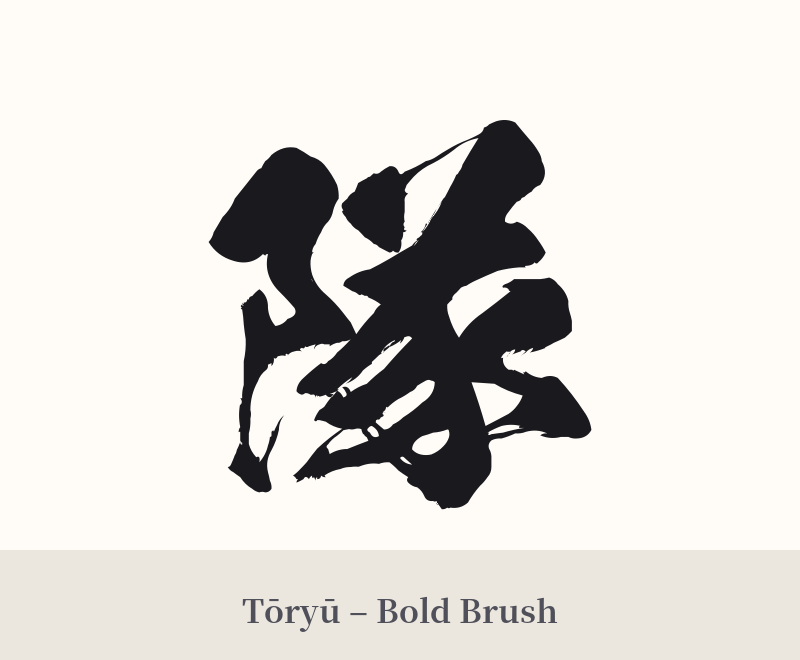
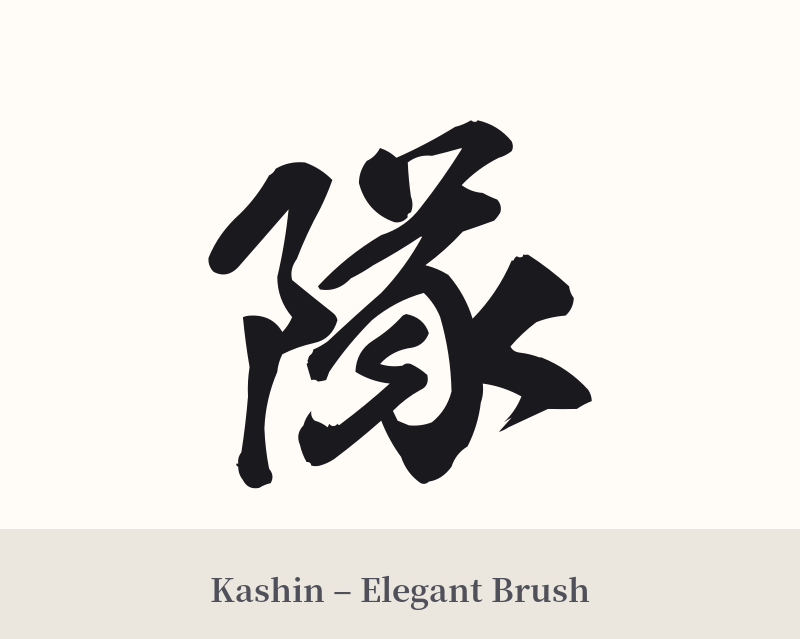
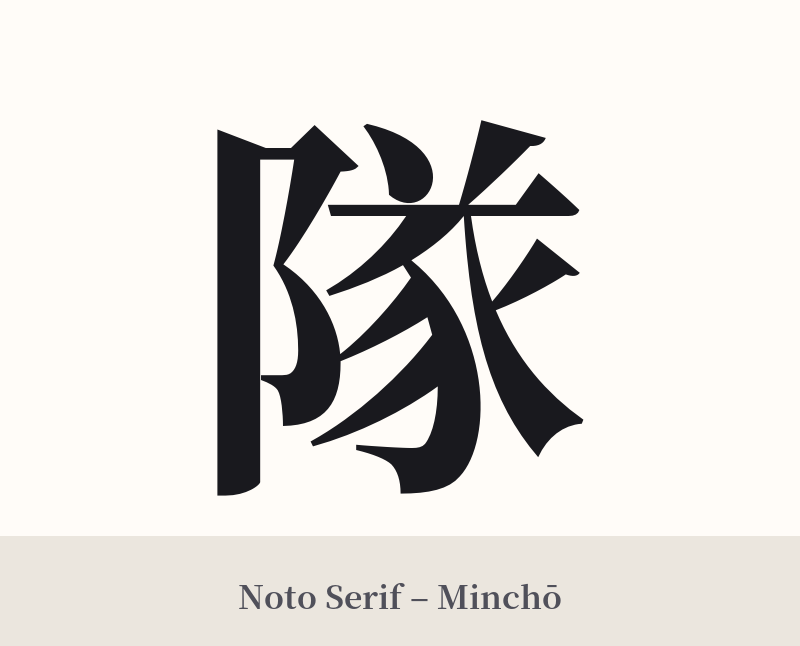
🖌️ Font Styles for 隊
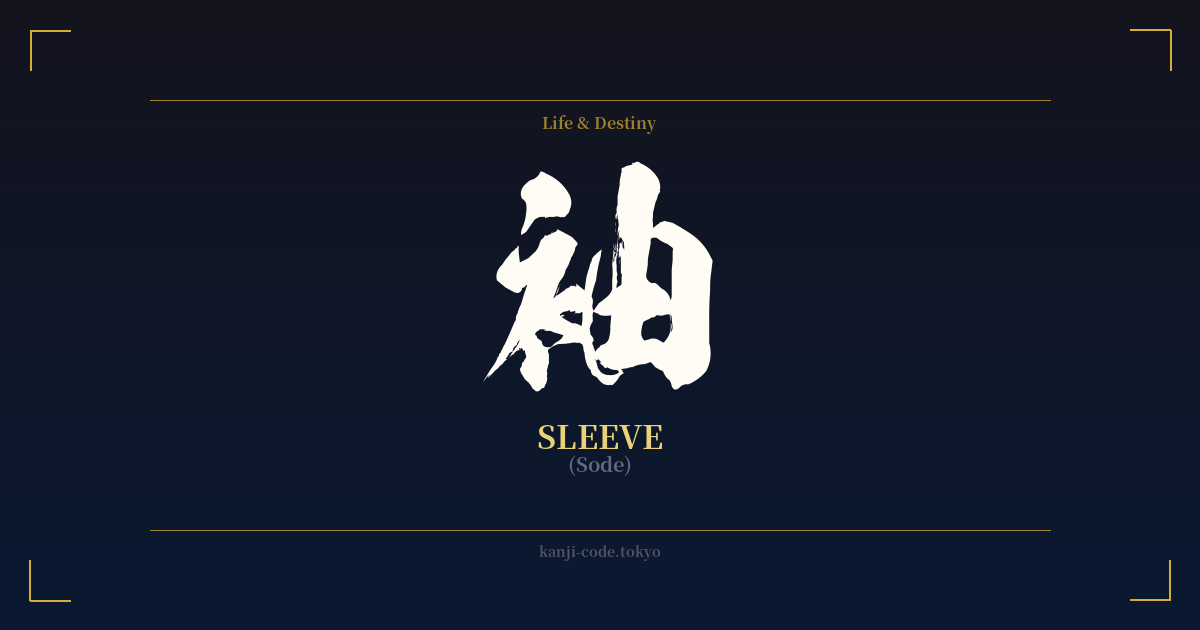
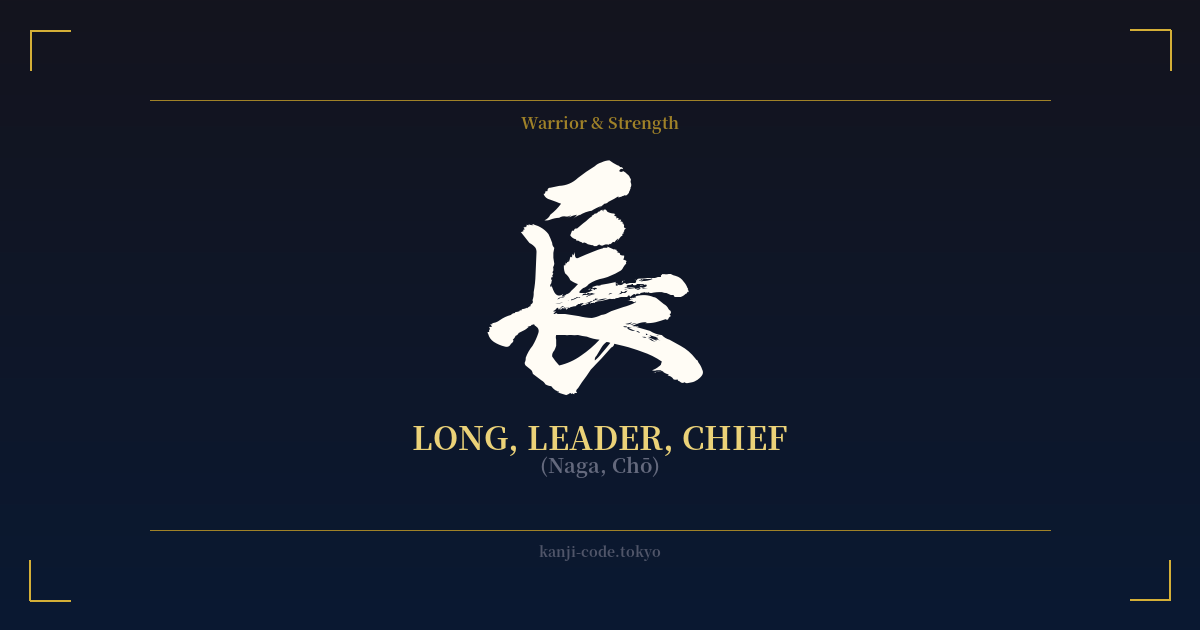
The same kanji can look dramatically different depending on the calligraphy style. Choose a font that matches the mood you want for your tattoo or design.
🎨 Tattoo Suitability
📐 Tattoo Design Guide
Because 隊 functions best as part of a larger concept, its design should reflect this. If you are set on using it alone, it needs to be rendered with intention and strength.
– Placement: Consider areas that lend themselves to a single, strong symbol, such as the forearm, the back of the shoulder, or the calf. These placements allow the character to stand with authority.
– Font Style: A strong, blocky script like Kaisho (standard script) is highly recommended to emphasize its structured, disciplined nature. A bold, angular font will enhance its military and official connotations. For a more dynamic feel, a controlled Gyosho (semi-cursive) could work, but avoid overly fluid styles that might undermine its core meaning.
– Visual Tips: The best way to use this kanji in a tattoo is often to make it part of a compound word that is meaningful to you, such as forming a two-kanji word with another character representing your 'squad' (e.g., 'Fire,' 'Art,' 'Music'). Alternatively, it could be a smaller element in a larger pictorial tattoo that depicts a team or group you belong to.
Comments