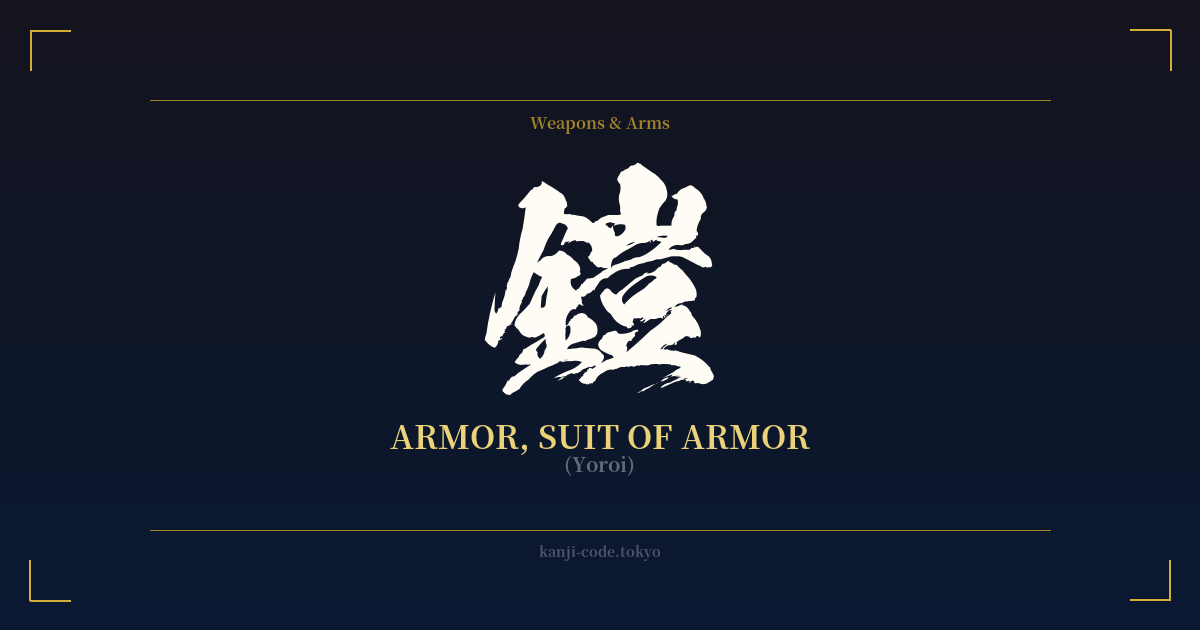
✍️ 鎧 (Yoroi) — Cultural Context
The kanji 鎧 (Yoroi) is far more than a simple word for 'armor'; it is a direct and powerful link to the heart of Japan's feudal history and the iconic figure of the samurai. When a Japanese person sees this character, they don't just think of generic protection; they envision the intricate, lacquered plates, silk cords, and fearsome masks of the armor worn by the warrior class.
Historically, Yoroi were not just functional pieces of military equipment. They were symbols of status, clan identity, and personal honor. The most famous early style, the Ō-yoroi (大鎧, literally 'great armor'), was a large, boxy suit designed for mounted archers. As warfare shifted to ground-based combat with spears and swords, the armor evolved into the more form-fitting Tōsei-gusoku (当世具足), or 'modern armor.' Each suit was a work of art, often bearing the family crest (mon) and reflecting the aesthetic and financial power of its owner.
The word itself encapsulates the concept of formidable defense. It's a character built on the radical for 'metal' (金) on the left, hinting at its material composition. The rest of the character contributes to the sound and a sense of encompassing protection. To wear the yoroi was to embody the principles of Bushido—the warrior's code. It represented a readiness to face death, a duty to protect one's lord, and an unyielding physical and spiritual fortitude.
In modern Japan, while samurai no longer exist, the idea of Yoroi endures. It is frequently used metaphorically. A person might be described as wearing 'kokoro no yoroi' (心の鎧), or 'armor of the heart,' to describe someone who is emotionally guarded. In pop culture, from anime and manga like 'Ronin Warriors' (Yoroiden Samurai Troopers) to video games, the yoroi remains a potent symbol of immense power, ancient tradition, and unbreakable will. It represents not just a physical shield, but a spiritual one, protecting one's resolve and integrity against the battles of life.
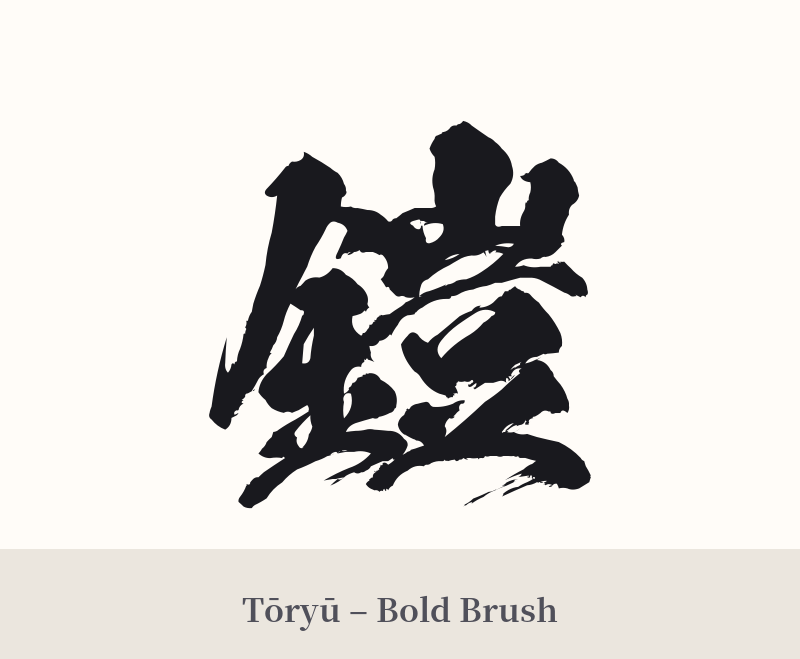
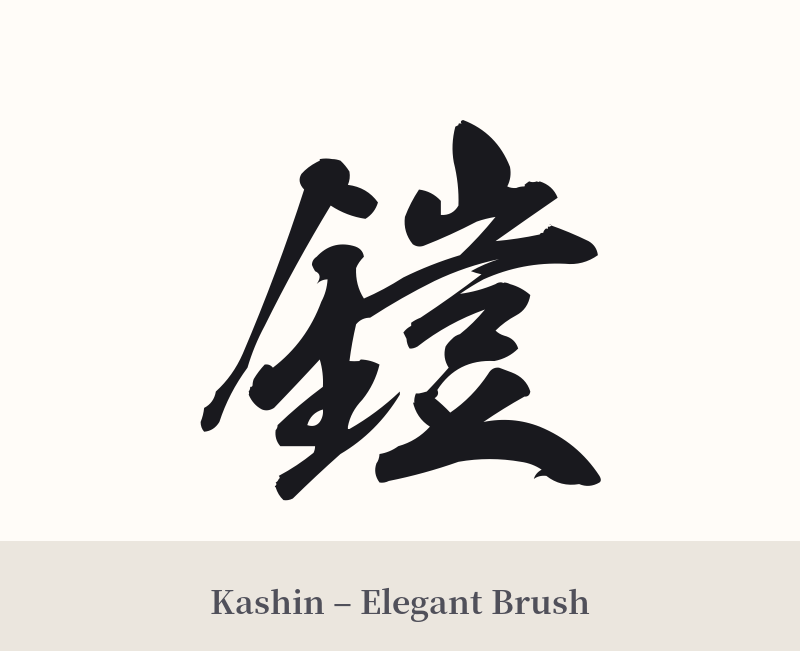
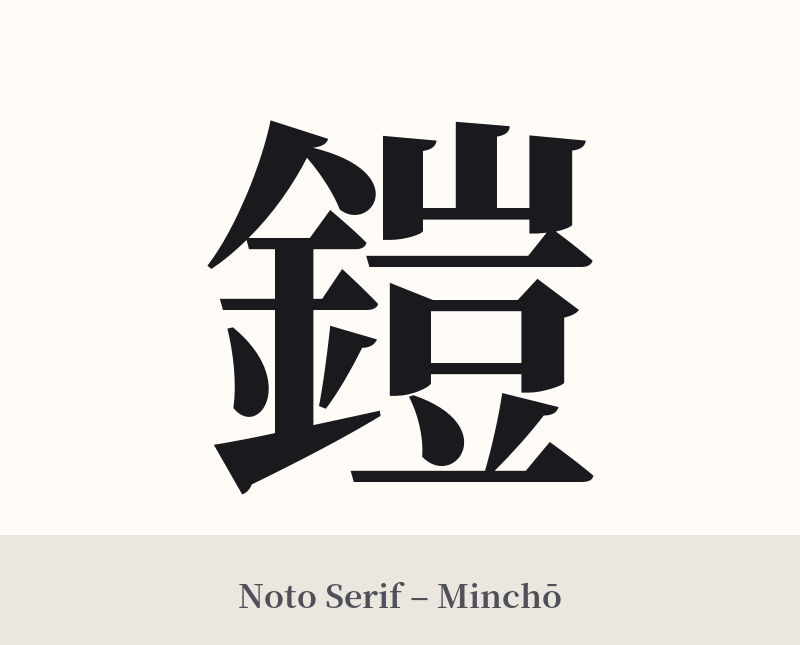
🖌️ Font Styles for 鎧
The same kanji can look dramatically different depending on the calligraphy style. Choose a font that matches the mood you want for your tattoo or design.
🎨 Tattoo Suitability
📐 Tattoo Design Guide
The kanji 鎧 (Yoroi) is a visually dense and powerful character, making it a statement piece. Its complexity demands careful consideration of placement and style.
– Placement: Due to its high stroke count, this kanji needs space. It is best suited for larger, flatter areas of the body where the details can be rendered clearly. Excellent choices include the back, chest, thigh, or the outer bicep.
– Style: A bold, expressive calligraphy style (shodō) works exceptionally well, conveying the raw power and history of the samurai. A thick brushstroke font can emphasize its strength. Alternatively, a crisp, architectural Kaisho (block) style can highlight its intricate structure and formal nature.
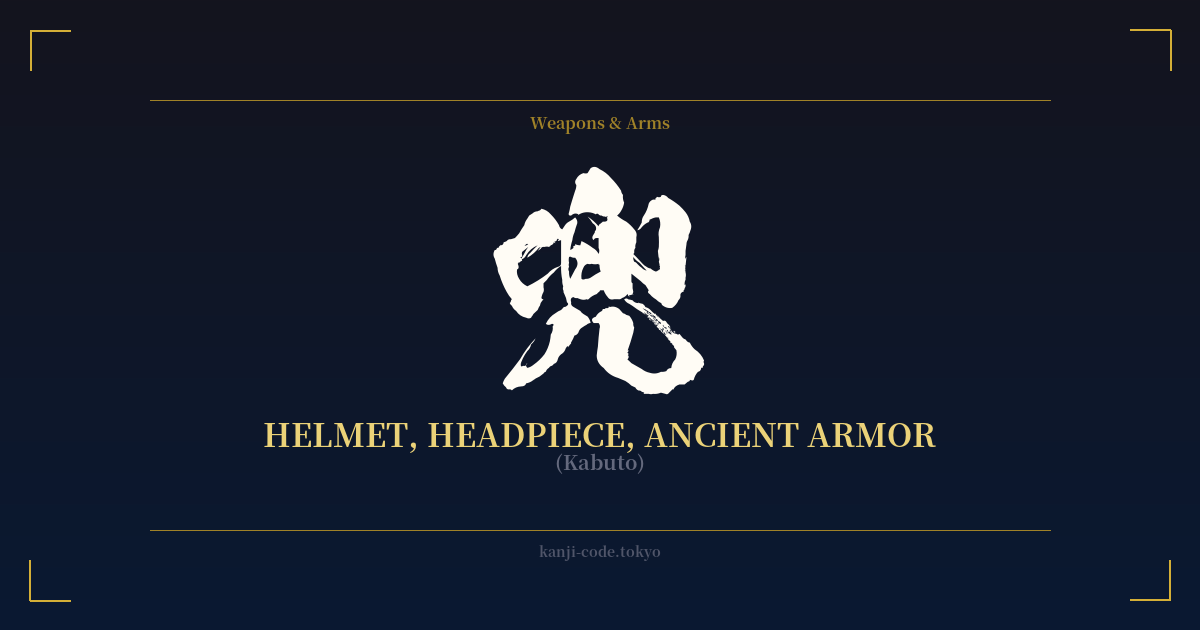
– Visuals: Consider pairing 鎧 with related imagery. It can be the centerpiece of a larger Japanese-style tattoo, accompanied by a samurai helmet (兜, Kabuto), a dragon, or crashing waves. Another powerful concept is to have the kanji appear as if made of steel or integrated into a background of traditional Japanese patterns.
Comments