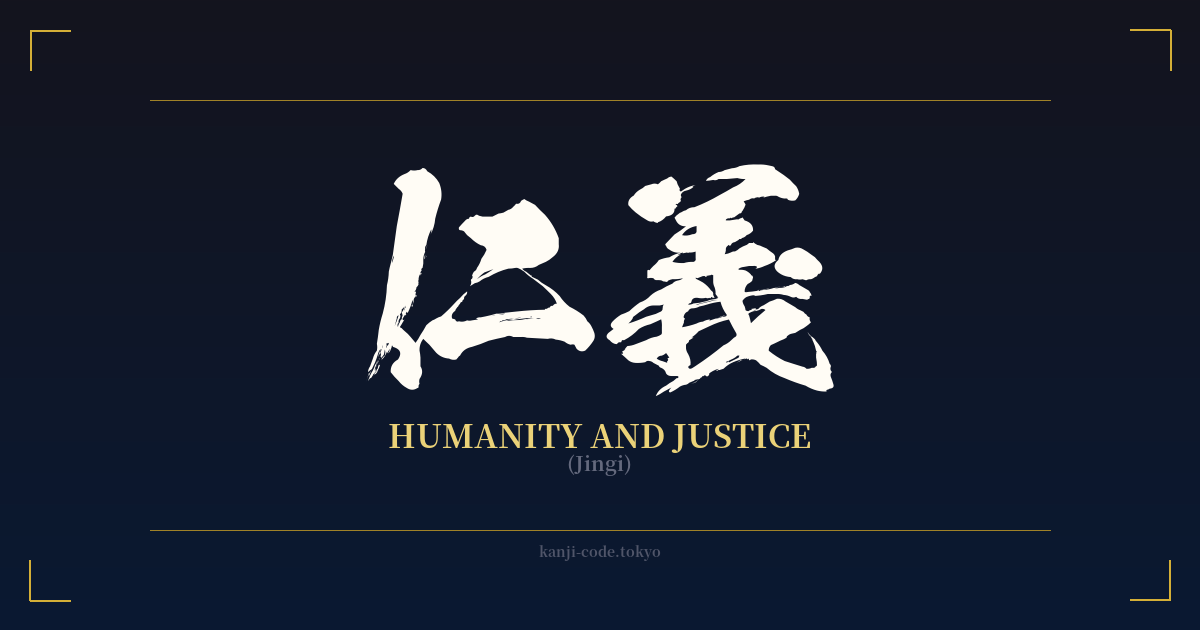
✍️ 仁義 (Jingi) — Cultural Context
仁義 (Jingi) is a profound and complex term that embodies a potent duality in Japanese culture. On the surface, it combines two of the most important virtues from Confucian philosophy: 仁 (Jin), meaning benevolence and humanity, and 義 (Gi), meaning righteousness and justice. Together, they form a concept representing the highest moral code—a path of compassionate action and unwavering duty.
In its classical sense, Jingi was a cornerstone of the samurai ethos, a guide for moral conduct that placed the well-being of others and righteous action above personal gain. It was about fulfilling one's obligations not out of fear, but out of a deep sense of what is right and just. This noble interpretation speaks to a world of honor, loyalty, and ethical responsibility.
However, the modern perception of Jingi has been overwhelmingly shaped by a very different cultural force: the yakuza. Japan's organized crime syndicates co-opted this noble term to define their own internal code of conduct. In the world of the yakuza, Jingi represents a strict code of loyalty, obligation, and chivalrous duty, primarily owed to one's boss and organization. This created a romanticized image of the "honorable outlaw," a figure who operates outside the law but adheres to his own strict moral framework.
This association was cemented in popular culture by the massively influential 1970s film series, "Battles Without Honor and Humanity" (仁義なき戦い, Jingi Naki Tatakai). The title itself is a cynical statement, suggesting that the brutal gang wars depicted were devoid of the very code the yakuza claimed to uphold. Ironically, the film series made the word Jingi synonymous with the yakuza world for generations of Japanese people and international audiences.
Therefore, the word exists in a state of tension. It is both a high-minded philosophical ideal and the romanticized, gritty code of the underworld. Understanding this duality is crucial. While the word itself is not inherently negative, its cultural baggage is heavy and its primary modern connotation points directly to the world of Japanese organized crime, making it a powerful but perilous choice for personal expression.
🖌️ Font Styles for 仁義
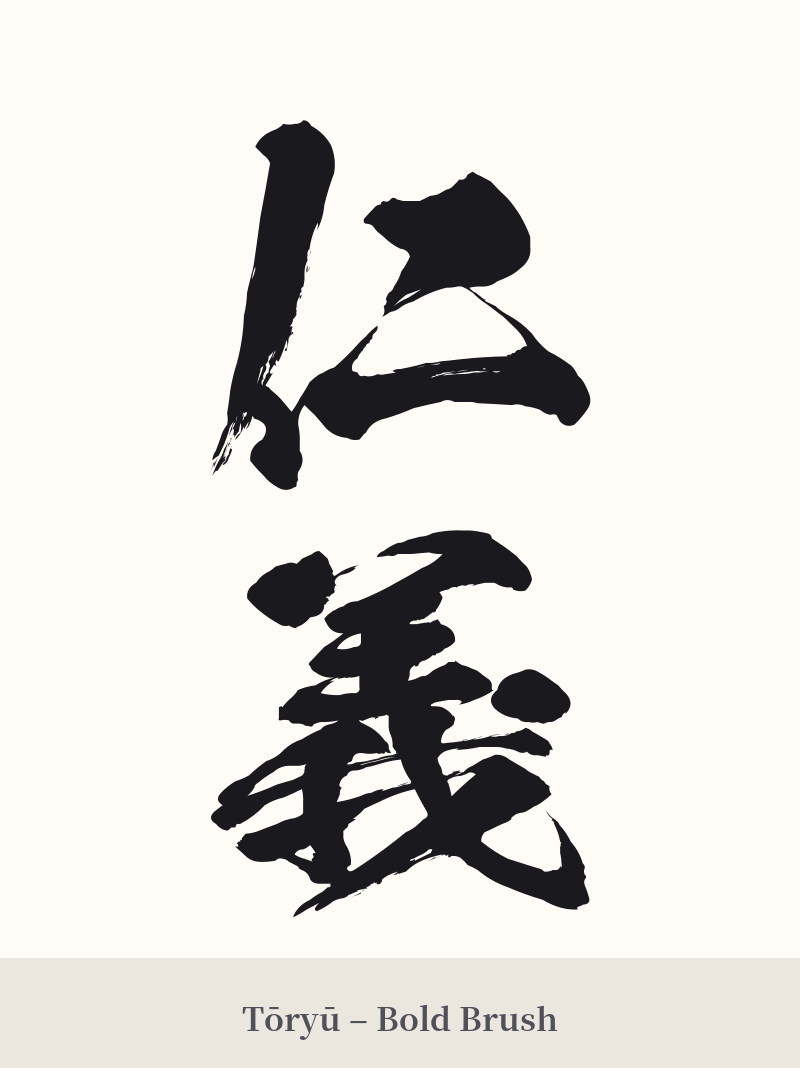
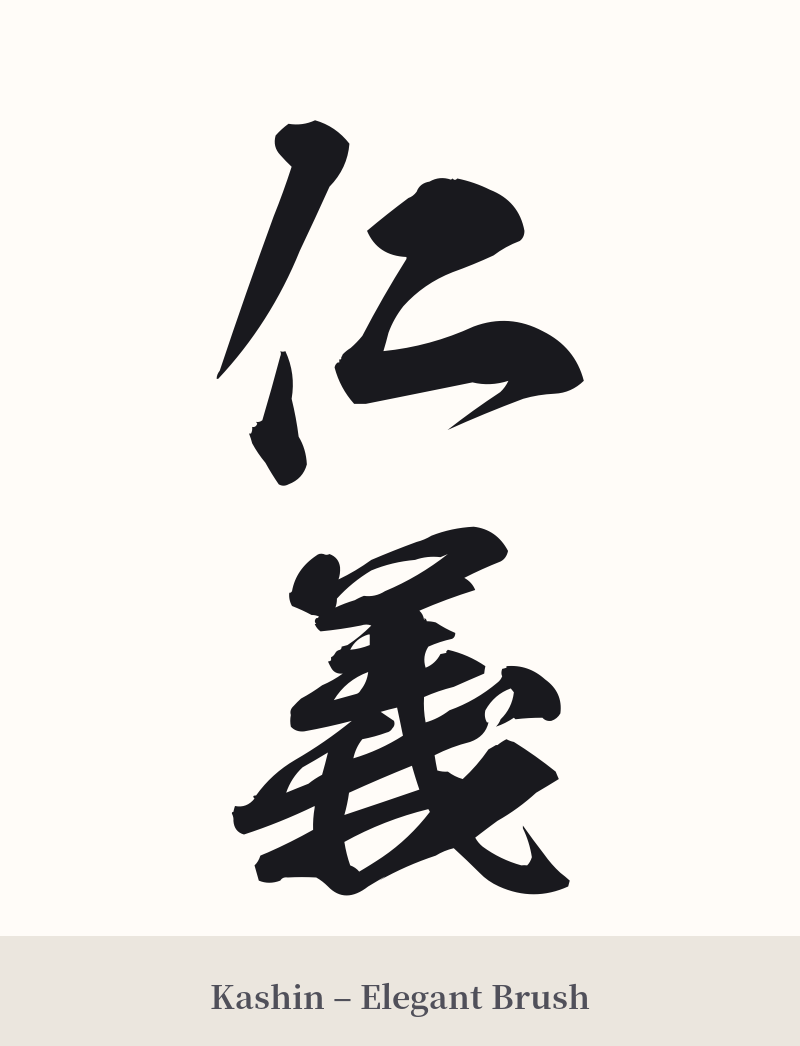
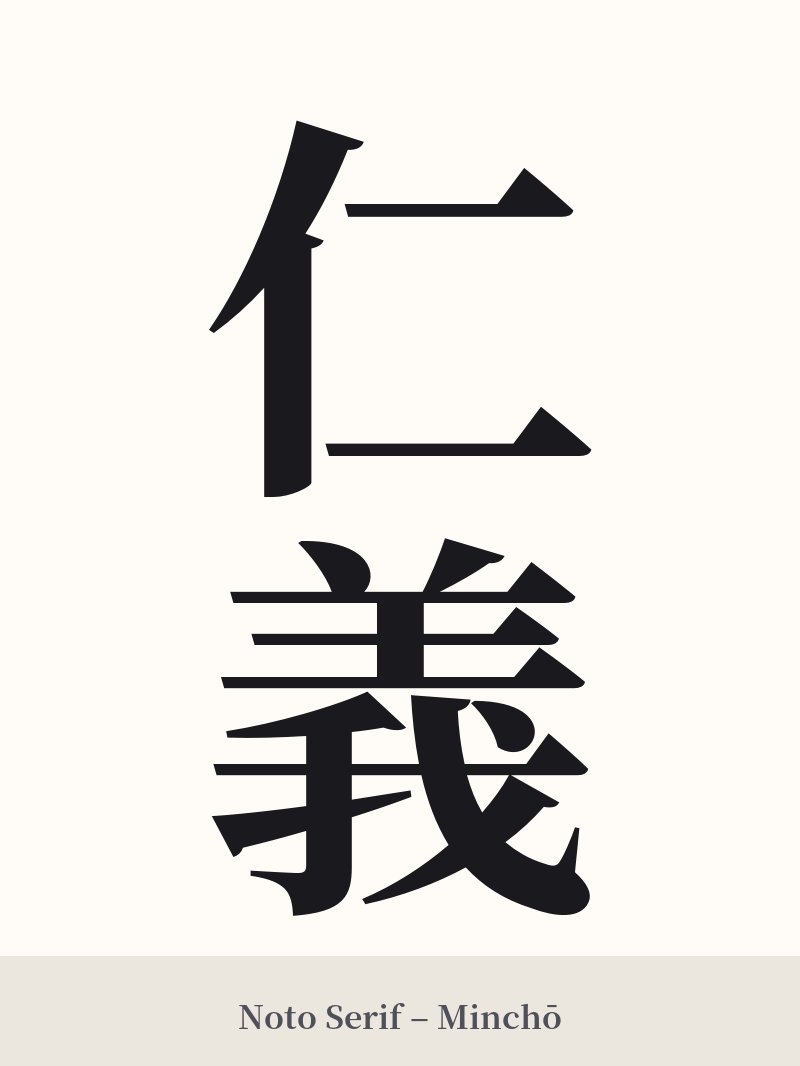
The same kanji can look dramatically different depending on the calligraphy style. Choose a font that matches the mood you want for your tattoo or design.
🎨 Tattoo Suitability
📐 Tattoo Design Guide
The word 仁義 is best rendered in a traditional vertical orientation, which honors its classical origins and creates a strong visual line. This makes it well-suited for placements like the forearm, the calf, or along the spine.
– Font Style: A bold, dynamic calligraphy style (草書, sōsho, or 行書, gyōsho) can capture the word's powerful and complex history. For a clearer, more formal look, a crisp block script (楷書, kaisho) is also an excellent choice. Avoid overly thin or modern fonts that would detract from its gravitas.
– Visual Tips: The visual contrast between the simple, open form of 仁 (Jin) and the dense, complex structure of 義 (Gi) is a key part of its appeal. Ensure your tattoo artist is skilled enough to render the 13 strokes of 義 clearly, especially if the tattoo is small. A good artist will balance the two characters so they feel like a cohesive unit.
Comments