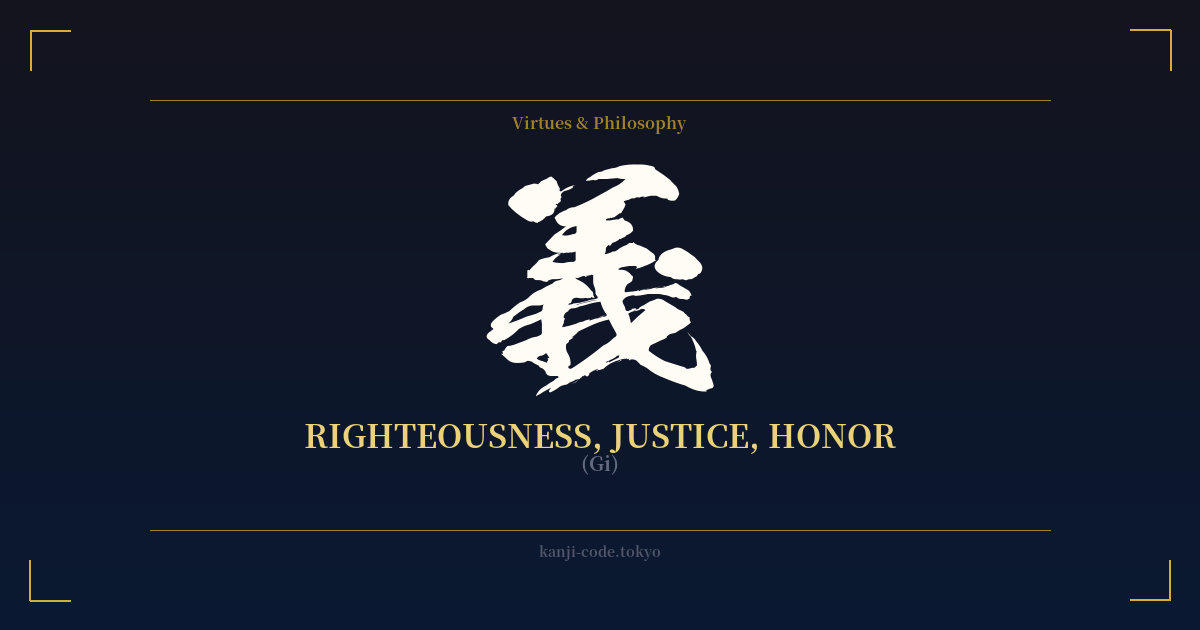
✍️ 義 (Gi) — Cultural Context
The kanji 義, read as 'Gi', is a cornerstone of Japanese ethics, representing a profound concept that transcends simple translations like 'righteousness' or 'justice'. It embodies a moral compass, the inherent ability to know right from wrong and the courage to act upon that knowledge, regardless of personal cost.
The character’s origin story offers a beautiful glimpse into its meaning. It is a composite of two older characters: 羊 (hitsuji) on top, meaning 'sheep,' and 我 (ware) on the bottom, meaning 'I' or 'self'. In ancient China, the sheep was a symbol of purity, goodness, and a sacrificial animal. Thus, 義 visually represents the act of sacrificing one's own self-interest (我) for a higher, purer good (羊). It is the very picture of selfless morality.
This principle became immortalized as one of the seven virtues of Bushido, the code of the samurai. For a warrior, Gi was not about following orders blindly but about possessing the rectitude to make the correct moral judgment in any situation. It was the power to decide upon a course of conduct in accordance with reason, without wavering. To a samurai, dying for an unjust cause was not bravery; it was a dog's death. Acting with Gi meant that every action, every decision, was weighed against an internal scale of absolute right and wrong.
While its roots are in feudal Japan, the spirit of Gi persists in the modern language and culture. It forms the basis of words like 正義 (seigi), meaning 'justice' in a societal or legal sense, and 義理 (giri), a complex term for social obligation or duty to one's community, family, or colleagues. It can also describe relationships, such as in 義兄弟 (gikyōdai), or 'sworn brothers,' who are bound not by blood but by a pact of loyalty and righteousness.
Understanding Gi is to understand the difference between passive goodness and active righteousness. It’s not just about knowing what is right; it is the unwavering commitment to do what is right, a principle that gives the character its enduring power and gravitas.
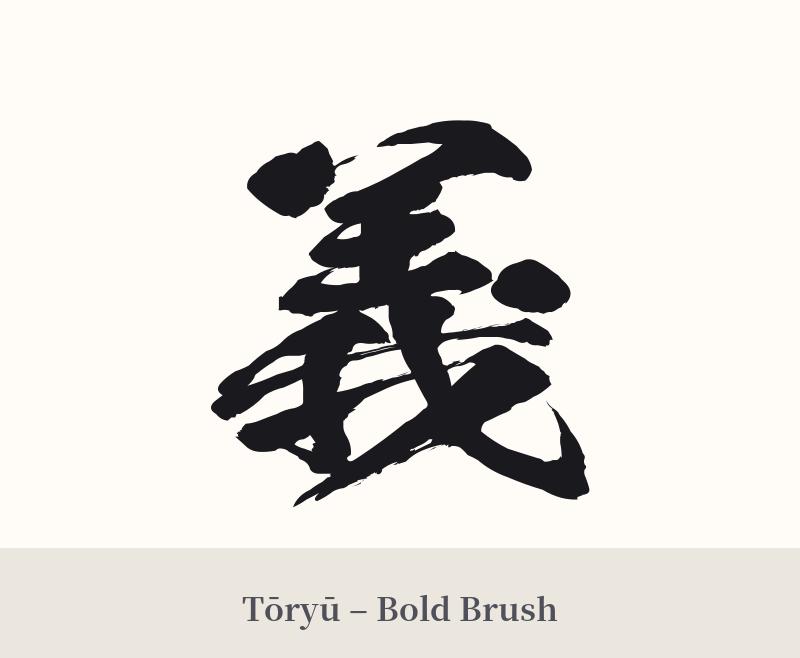
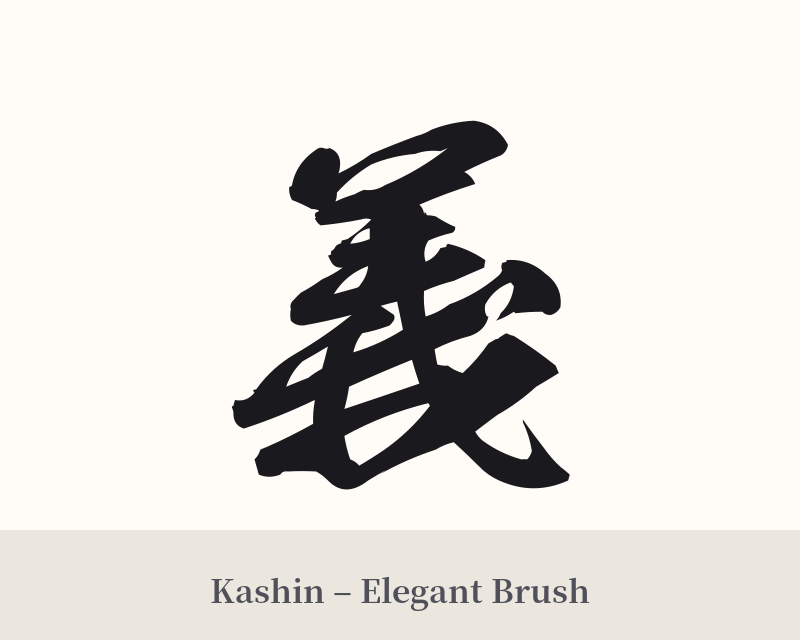
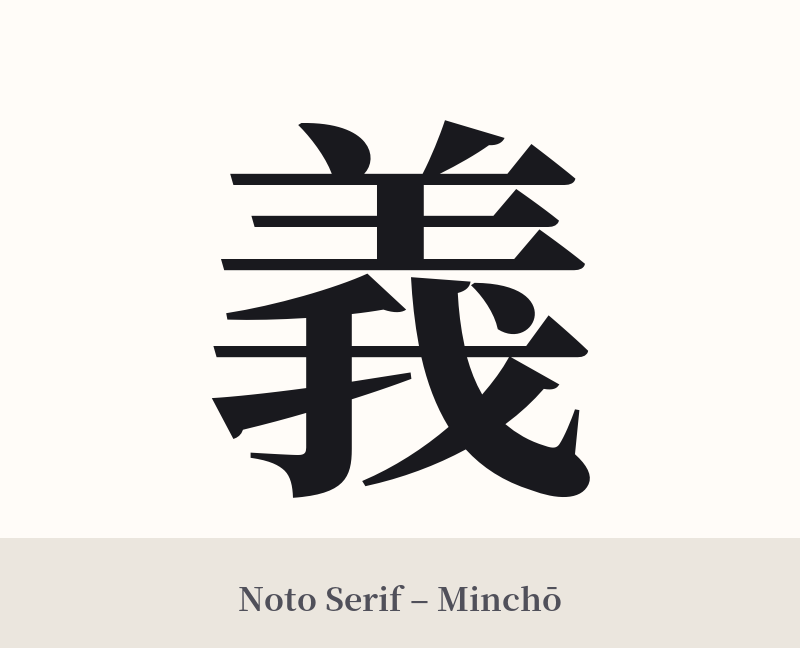
🖌️ Font Styles for 義
The same kanji can look dramatically different depending on the calligraphy style. Choose a font that matches the mood you want for your tattoo or design.
🎨 Tattoo Suitability
📐 Tattoo Design Guide
The kanji 義 has a strong, balanced structure that works well for tattoo designs. Its dignified meaning lends itself to prominent and respectful placements.
– Placement: Consider areas that allow for a clear, vertical presentation, such as the forearm, the back of the calf, or across the shoulder blade. A placement over the heart or on the ribs can also symbolically connect the design to one's core principles.
– Font Styles: The choice of font can dramatically alter the feeling. A bold, angular Kaisho (block script) style emphasizes its stability, strength, and connection to formal principles. For a more fluid and artistic look, a Gyosho (semi-cursive) or Sosho (cursive) script can evoke the image of a samurai's brushstroke, adding a sense of history and dynamism.
– Visual Tips: While 義 is powerful enough to stand alone, it can be subtly complemented. Pairing it with a single cherry blossom petal could symbolize the transient nature of life, a core samurai belief. An enso circle drawn around it can represent the wholeness and completeness of living a righteous life.
Comments