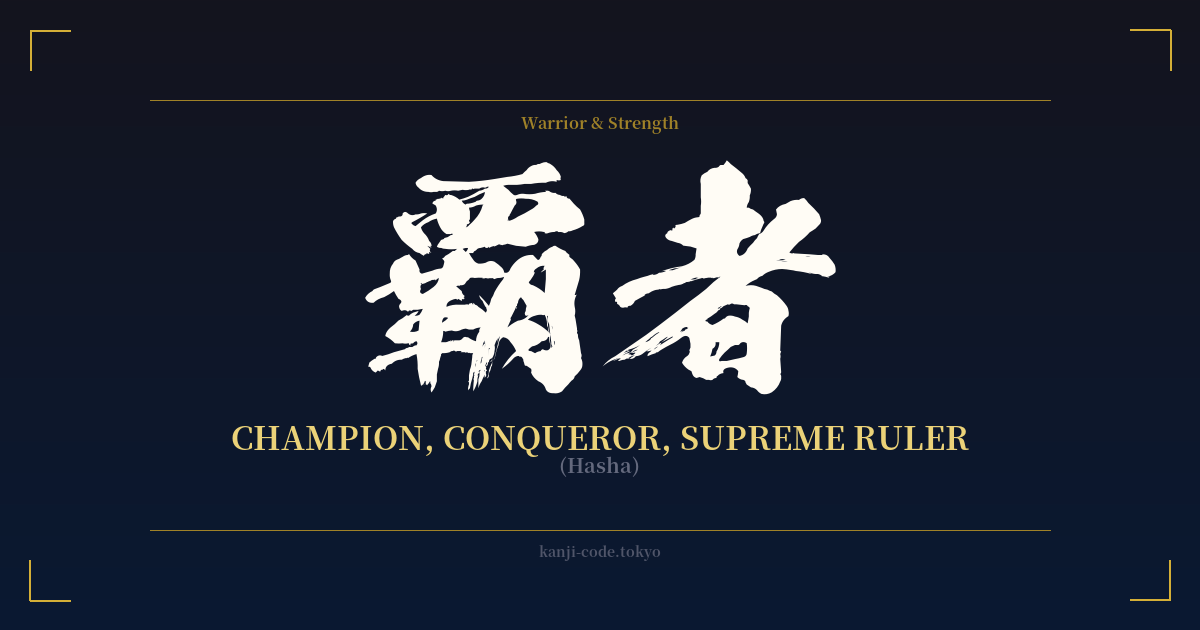
✍️ 覇者 (Hasha) — Cultural Context
覇者 (Hasha) is a Japanese word that resonates with raw power and absolute victory. It translates to 'champion,' 'conqueror,' or 'supreme ruler,' but its essence goes far beyond simply winning a competition. A Hasha is not just a winner; they are a dominant force that has crushed all opposition to stand alone at the pinnacle.
The term has deep historical roots, originating from ancient Chinese political philosophy. During the Spring and Autumn Period (771-476 BCE), the authority of the Zhou dynasty waned, and powerful feudal lords, known as 霸 (hà), vied for control. These lords established hegemony through military might and political maneuvering, effectively ruling in the emperor's stead without usurping the throne. This is the genesis of the Hasha: a ruler by force, not by divine right.
This historical context creates a crucial distinction between 覇者 (Hasha) and a similar term, 王者 (Ōja). An Ōja is a 'king' or 'monarch' who rules through virtue, benevolence, and a perceived mandate from heaven—a legitimate sovereign. In contrast, the Hasha achieves supremacy through sheer power and ambition. The Ōja is respected; the Hasha is feared. One rules by right, the other by might.
In modern Japan, the image of the Hasha is alive and well, particularly in pop culture. It's the perfect word to describe the final boss in a video game, the seemingly invincible antagonist in an anime series, or the dominant champion of a sports league who holds an undisputed long-term title. One of the most famous examples is Raoh from the manga and anime Fist of the North Star. Known as Ken-Ō (拳王, 'Fist King'), his entire philosophy is to rule the post-apocalyptic world through overwhelming force, making him the archetypal Hasha.
To choose the word Hasha is to embrace an identity of unyielding ambition and the will to dominate. It represents the person who doesn't just participate but seeks total conquest. It is the champion of champions, the one who stands on the mountain of the defeated, not just as a winner, but as the supreme and undisputed ruler of their domain.
🖌️ Font Styles for 覇者
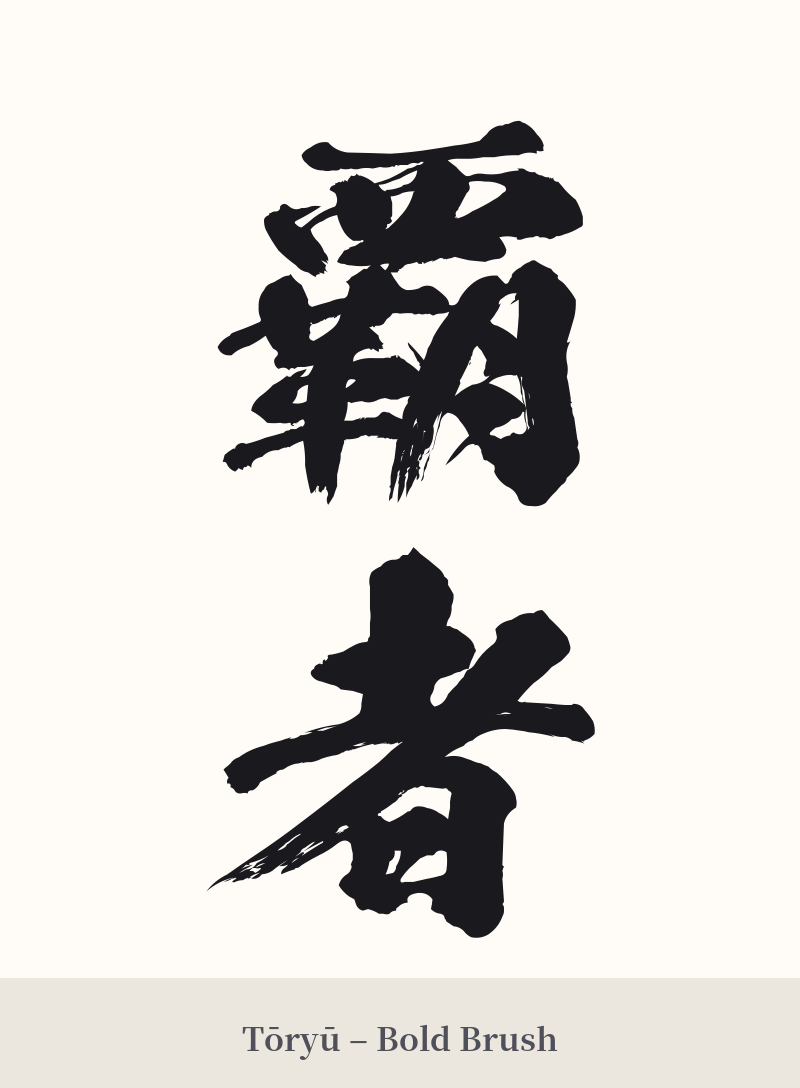
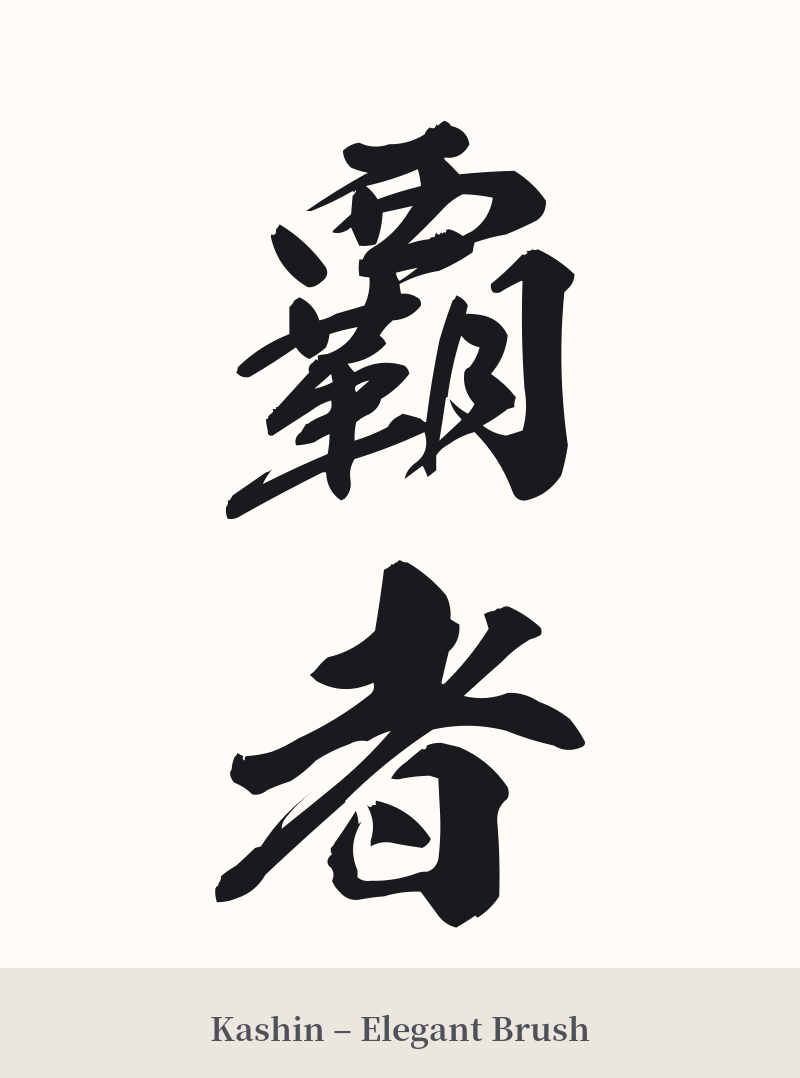
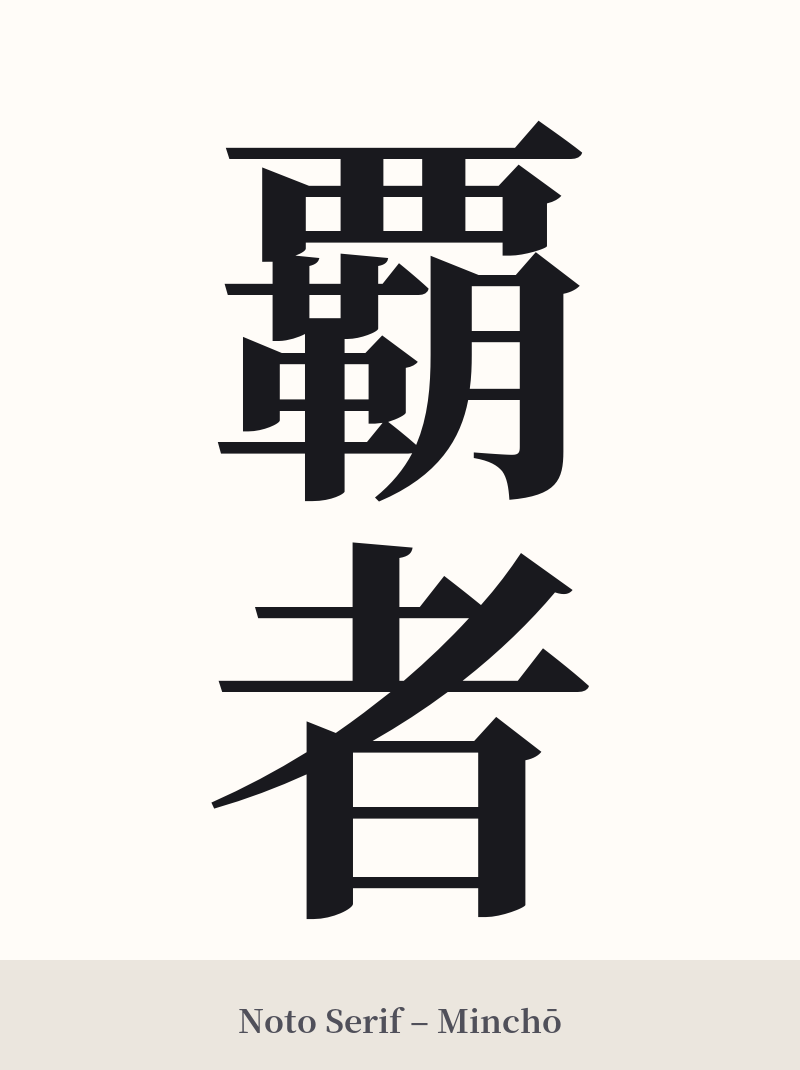
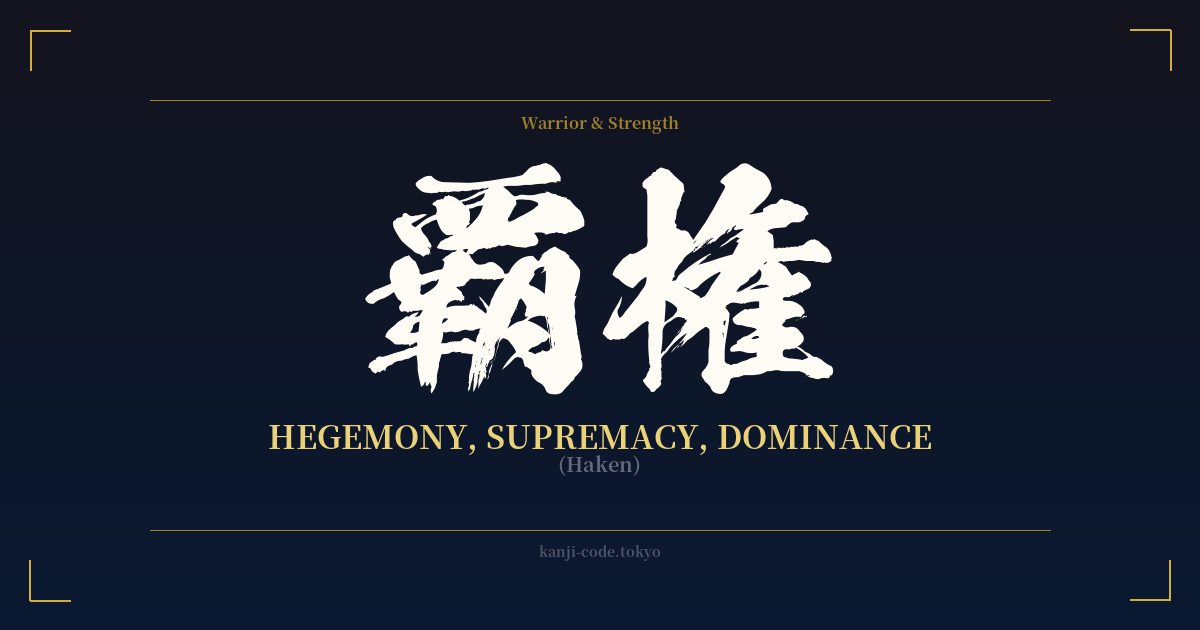
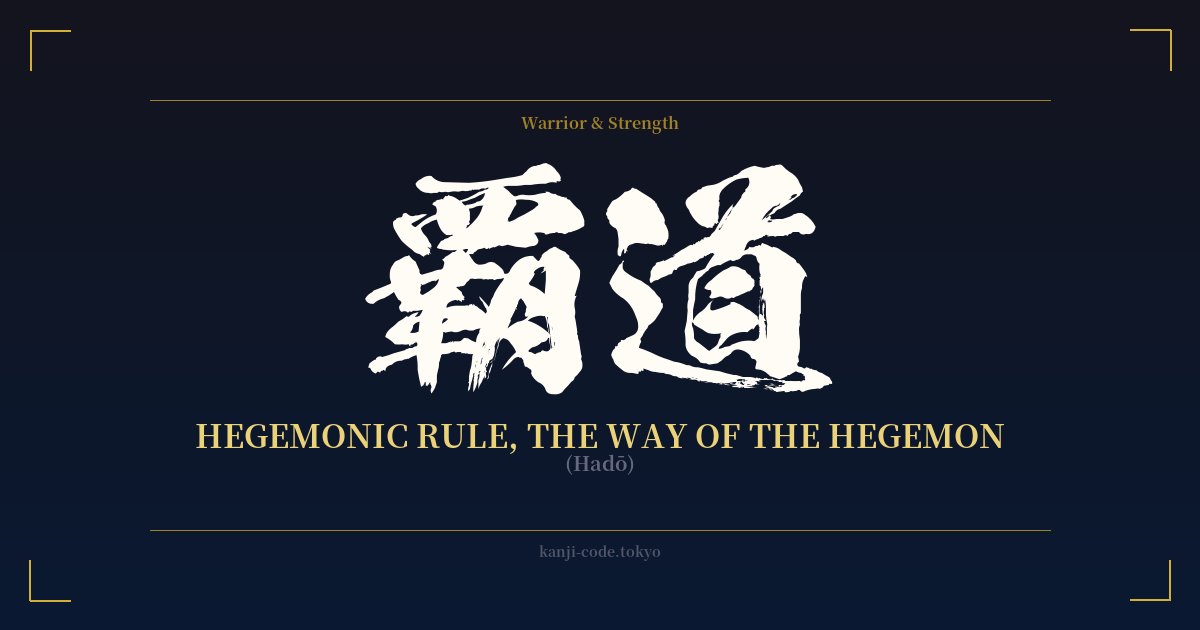
The same kanji can look dramatically different depending on the calligraphy style. Choose a font that matches the mood you want for your tattoo or design.
🎨 Tattoo Suitability
📐 Tattoo Design Guide
A tattoo of 覇者 (Hasha) is a bold declaration and should be designed to reflect its immense power.
– Placement: Due to the complexity of the first character (覇), this design needs space. Consider larger surface areas like the back, chest, or the length of a forearm or calf. Smaller placements like the wrist are not recommended as the intricate strokes will blur together over time.
– Font Style: Strong, impactful calligraphy styles are essential. A bold Kaisho (block script) can emphasize its rigid authority, while a dynamic Gyōsho (semi-cursive) or Sōsho (cursive) style can capture the chaotic energy of conquest. Avoid thin, delicate, or overly neat computer fonts.
– Visual Tips: The kanji alone is powerful enough to make a statement. However, if you wish to add imagery, consider motifs that echo themes of power and dominance, such as a roaring tiger, a soaring eagle, or dark, stormy clouds. A simple, bold Enso circle behind the kanji can also work to frame its power.
Comments