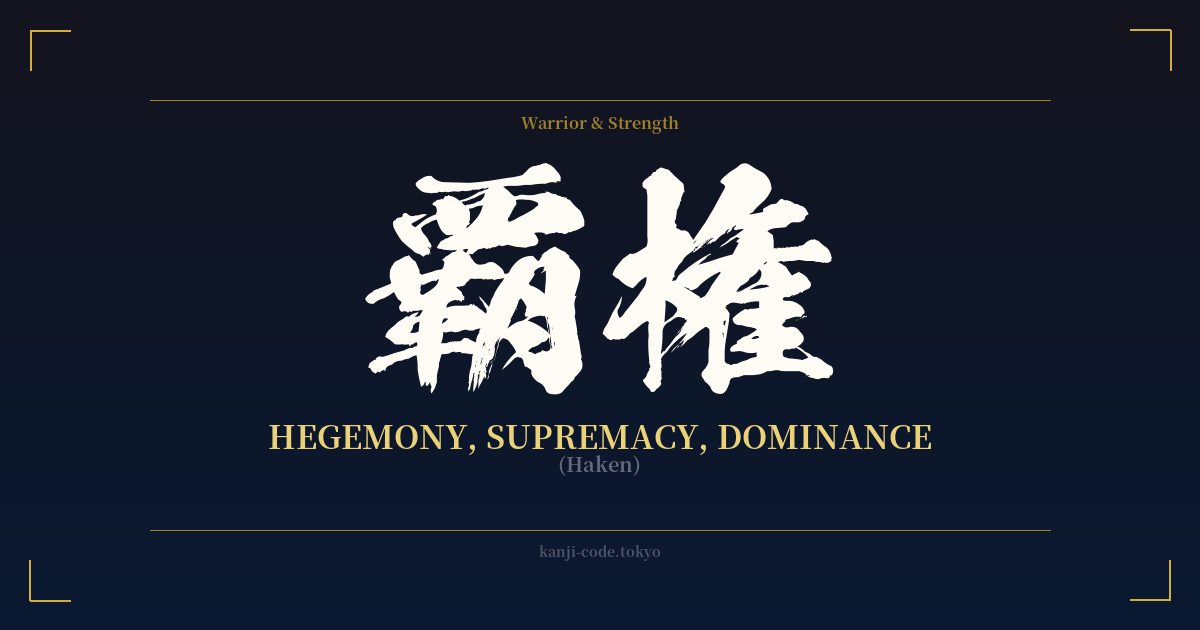
✍️ 覇権 (Haken) — Cultural Context
The Japanese word 覇権 (Haken) translates to 'hegemony,' 'supremacy,' or 'dominance.' It is a term loaded with historical and political weight, describing a state of supreme, overarching control, not just on a personal level, but on a national or even global scale.
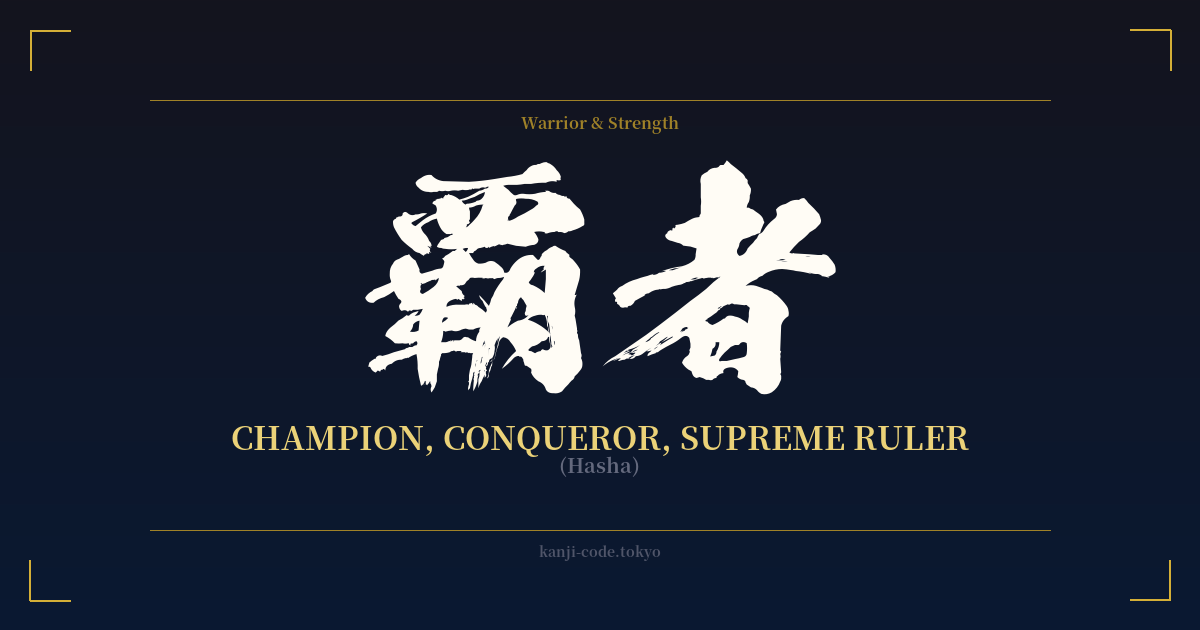
Historically, the concept of 覇権 is deeply intertwined with Japan's own turbulent past. The first character, 覇 (ha), is found in the word 覇王 (Haō), meaning 'supreme ruler' or 'overlord.' This title was often retrospectively applied to figures from the Sengoku Period (Warring States Period, 1467-1615), such as Oda Nobunaga, who sought to unify Japan under their absolute rule. This was a time when regional warlords (daimyō) vied for military and political supremacy, aiming to seize control of the entire realm (天下, Tenka). Therefore, 覇権 evokes this era of strategic warfare, ambition, and the quest for ultimate authority.
In modern Japanese, 覇権 is primarily a term used in political science, economics, and international relations. News and academic discussions might talk about America's economic hegemony (アメリカの経済覇権) or China's growing influence. It describes the complex web of power dynamics where one nation exerts significant, often unchallenged, influence over others through military might, economic leverage, or cultural exports. It is a formal, serious word, far removed from simple personal strength.
Interestingly, the word has found a new life in contemporary pop culture. In the world of anime and manga, fans use 'haken anime' (覇権アニメ) to refer to the single series that dominates a particular season in terms of popularity, sales, and discussion. It's a playful co-opting of a powerful term to describe a show's 'supremacy' in the cultural marketplace. This usage, while informal, highlights the core meaning of overwhelming dominance in a specific field.
Ultimately, 覇権 is a concept of scale. It is not the strength of a single warrior but the strategic dominance of a king, a nation, or a global corporation. It represents the pinnacle of power, the ability to shape the world and direct the course of history, for better or for worse.
🖌️ Font Styles for 覇権
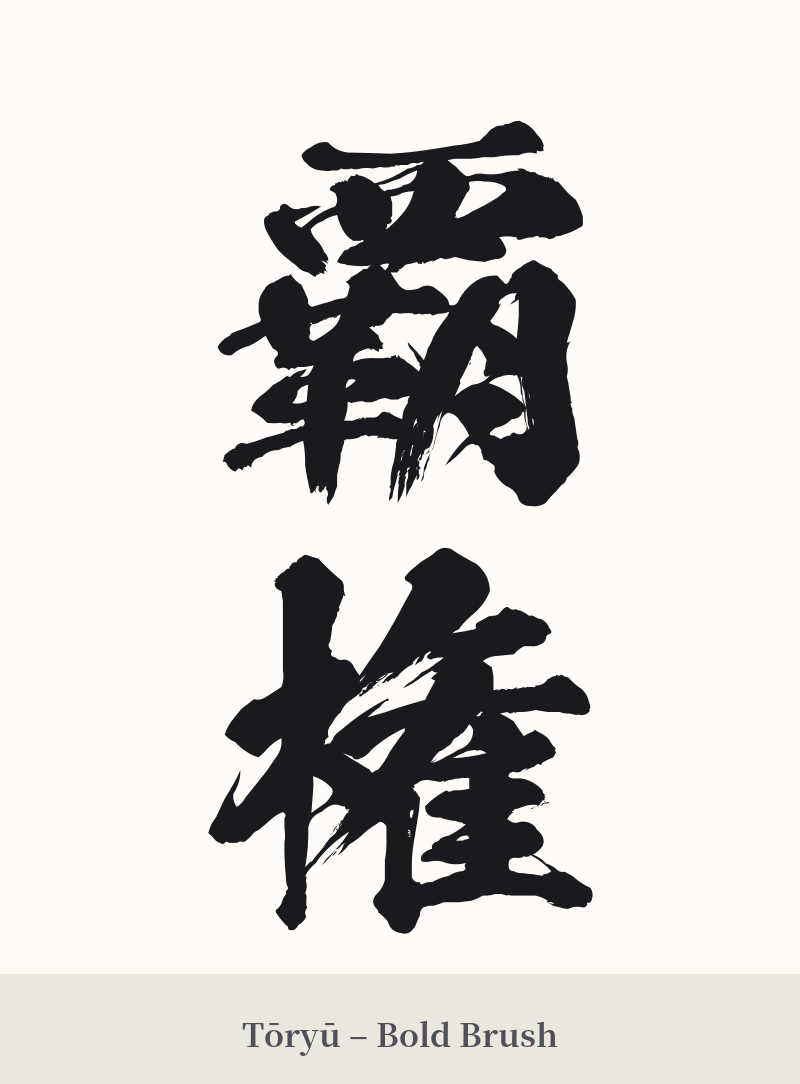
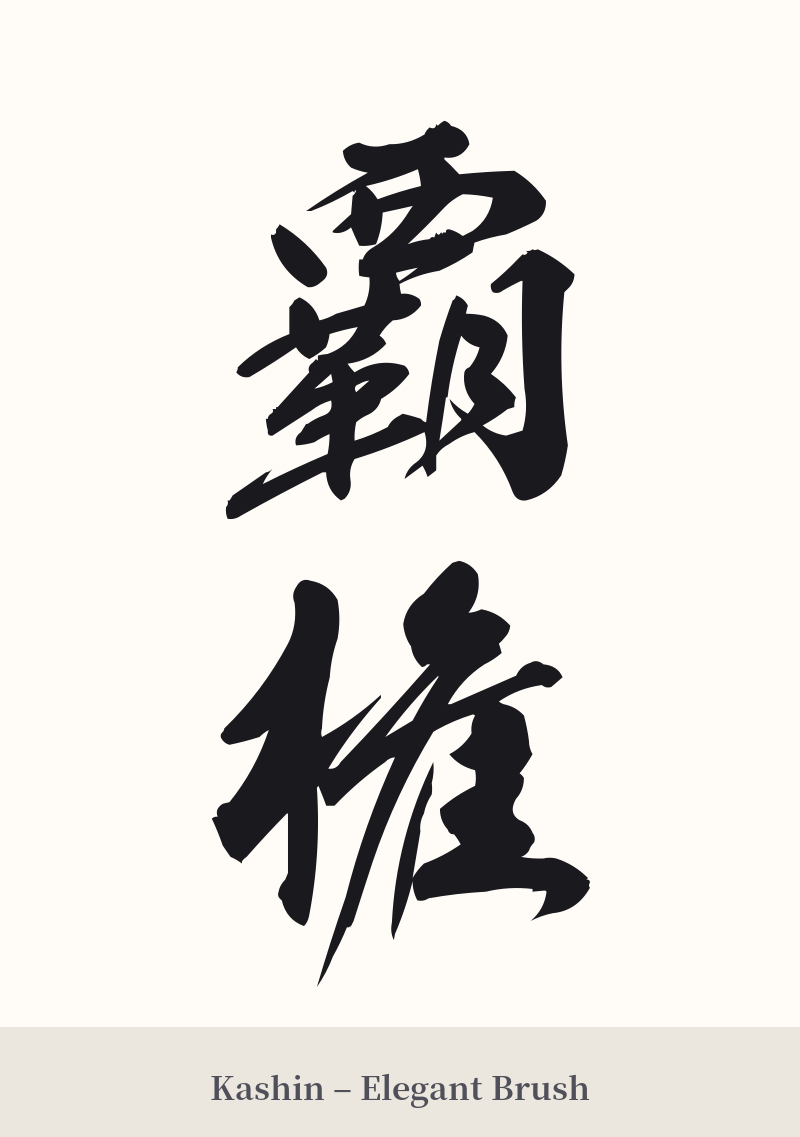
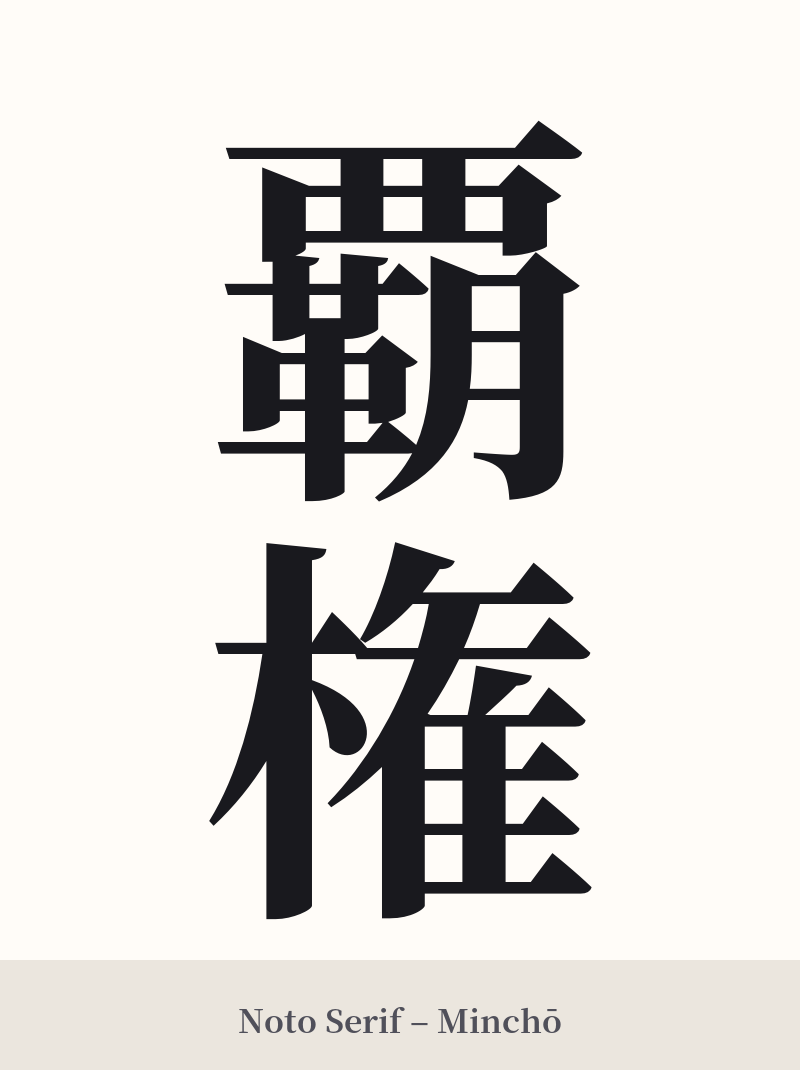
The same kanji can look dramatically different depending on the calligraphy style. Choose a font that matches the mood you want for your tattoo or design.
🎨 Tattoo Suitability
📐 Tattoo Design Guide
A design for 覇権 (Haken) must convey its immense weight and power. Due to the high complexity and stroke count of both characters, size and placement are critical.
– Placement: This word demands a large canvas to preserve detail. The back, chest, or the length of a thigh or upper arm are ideal. A vertical orientation is traditional and visually striking.
– Font Style: Opt for bold, commanding calligraphy styles. A strong, angular Kaishotai (block script) will emphasize its structure and authority. Alternatively, a dynamic and aggressive Gyōsho (semi-cursive) or Sōsho (cursive) style can capture the feeling of conflict and ambition inherent in the word.
– Visual Tips: It is crucial to choose a tattoo artist experienced with complex kanji. The artist must ensure there is enough negative space within each character to prevent the lines from blurring together over time. Pairing this kanji with symbols of power like a dragon, tiger, or a fierce eagle can amplify its theme, but be mindful that this can make the design even more aggressive.
Comments