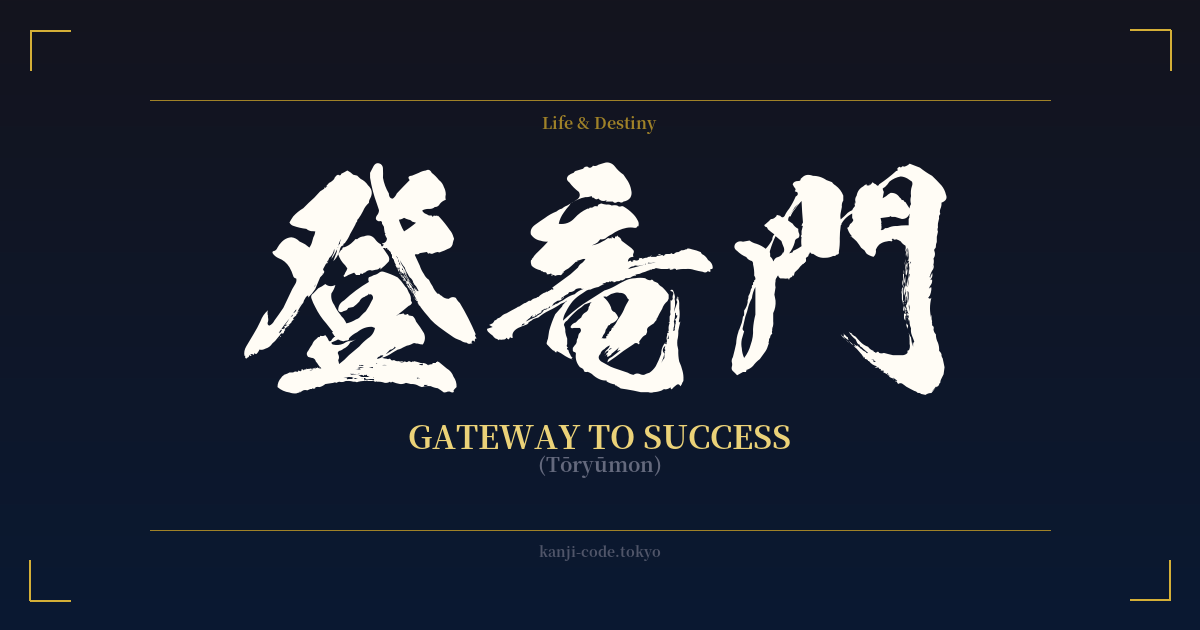
✍️ 登竜門 (Tōryūmon) — Cultural Context
登竜門 (Tōryūmon) translates to “Gateway to Success,” but its meaning is far deeper and more dramatic than this simple phrase suggests. It doesn’t just signify any success; it represents a single, crucial, make-or-break trial that, if overcome, leads to a complete transformation and a meteoric rise in status. The term is not just a metaphor—it’s a legend.
The origin of Tōryūmon lies in ancient Chinese folklore, specifically the story of the Dragon Gate (龍門, Lóngmén) on the Yellow River. The legend tells of a massive, powerful waterfall that countless koi fish attempt to swim up. The current is relentless, and most are swept away or give up. They represent the masses, striving but failing.
However, a few exceptionally determined koi persevere, fighting against the torrent with unwavering will. The climax of their journey is the final, impossible leap up the waterfall. The legend states that any koi with the strength and courage to make this leap and pass through the Dragon Gate at the top is instantly transformed into a powerful, magnificent dragon.
This dramatic metamorphosis from a common carp into a divine dragon is the heart of the Tōryūmon concept. It’s not about gradual improvement; it’s about a singular event that separates the ordinary from the extraordinary. The koi embodies perseverance and ambition, while the dragon symbolizes ultimate power, prestige, and success.
In Japan, Tōryūmon was adopted to describe any gateway to greatness. It’s often used to refer to notoriously difficult university entrance exams, critical job interviews for prestigious companies, or an artist’s debut that launches them into stardom. Passing a Tōryūmon means you haven't just succeeded—you have been fundamentally changed by the trial and have entered a new echelon of life. It is the ultimate symbol of overcoming adversity through sheer determination to achieve a higher state of being.
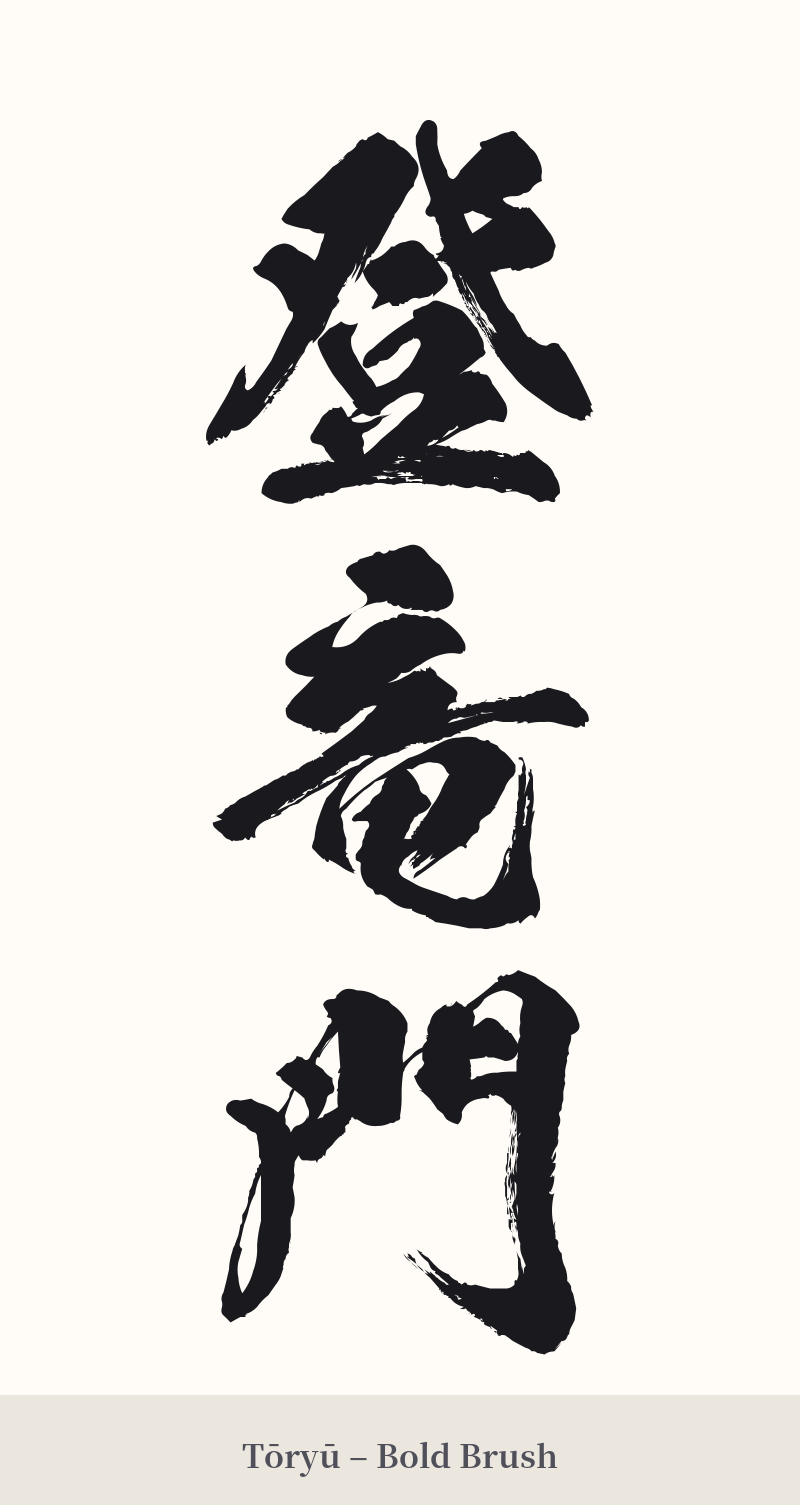
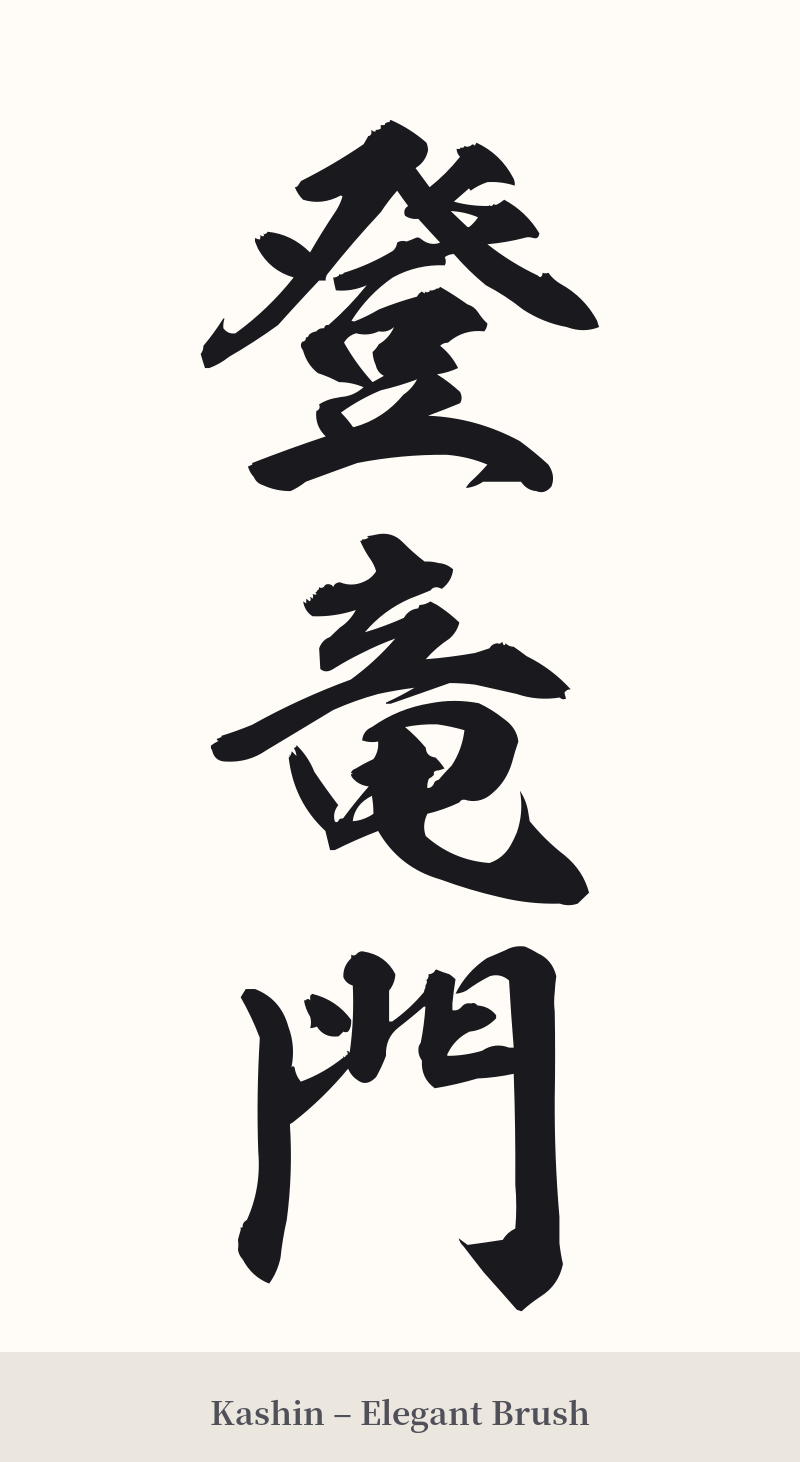
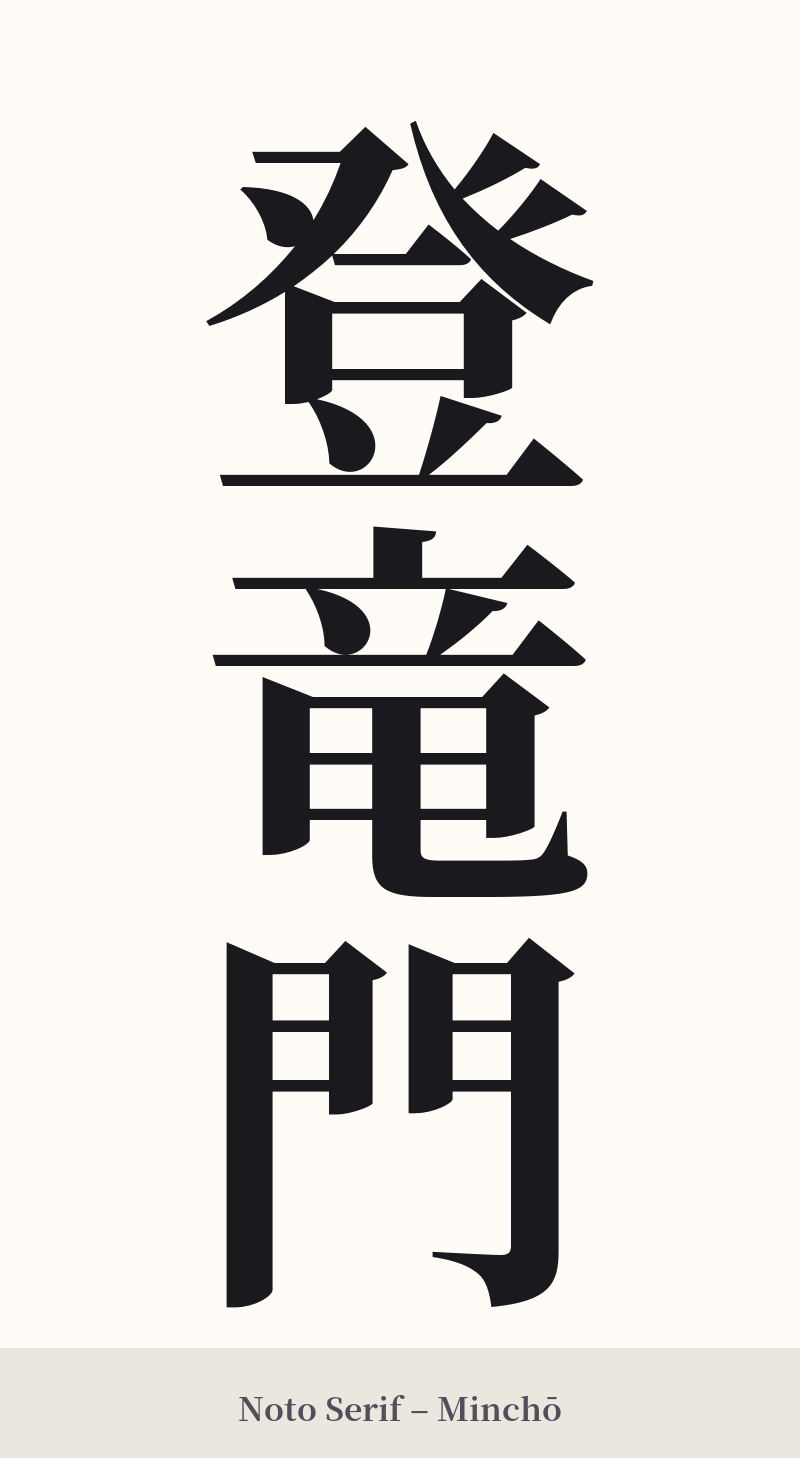
🖌️ Font Styles for 登竜門
The same kanji can look dramatically different depending on the calligraphy style. Choose a font that matches the mood you want for your tattoo or design.
🎨 Tattoo Suitability
📐 Tattoo Design Guide
The vertical orientation of 登竜門 lends itself beautifully to tattoo design, making it a natural fit for the spine, forearm, or calf. The characters carry a story of ascent and transformation, which can be visually enhanced through creative design choices.
– Font Style: A dynamic, semi-cursive calligraphy style (gyōsho) can capture the flowing water and the powerful transformation of the koi into a dragon. For a more solid, impactful look that emphasizes the 'gate' itself, a bold block script (kaisho) is an excellent choice.
– Placement: To honor the 'ascending' nature of the story, consider a vertical placement. The spine is a classic choice, symbolizing the core strength needed to overcome the trial. The inner forearm or the side of the calf also provide great canvases for a vertical script.
– Visual Integration: This is a prime candidate for a larger piece that incorporates imagery from the legend. Consider a design where the kanji flows vertically between a koi fish at the bottom and a dragon's head at the top. You could also frame the kanji with crashing waves or place it within the posts of a celestial gate (the 門) to tell the full story visually.
Comments