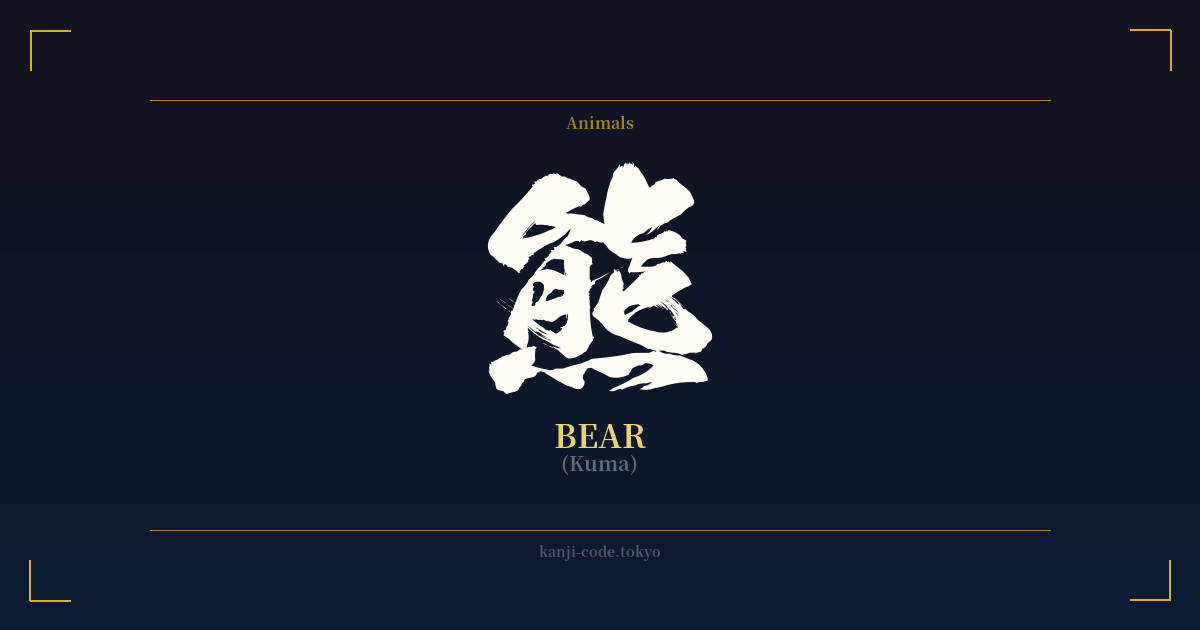
✍️ 熊 (Kuma) — Cultural Context
In Japan, an archipelago of dense forests and towering mountains, the bear (熊, Kuma) is a potent symbol of raw, untamed nature. It embodies a primal power that has been both feared and revered for centuries. The character itself, 熊, visually suggests this might, with the four dots at the bottom (灬) often interpreted as the animal's powerful legs, providing a solid foundation.
Two primary species inhabit Japan: the Ussuri brown bear (ヒグマ, Higuma) in the northern island of Hokkaido, and the smaller Asian black bear (ツキノワグマ, Tsukinowaguma) on the main island of Honshu. This geographical reality has deeply shaped the bear's cultural role.
Nowhere is this reverence more profound than among the Ainu, the indigenous people of Hokkaido. For the Ainu, the bear is not merely an animal but a 'kamuy'—a god or divine spirit visiting the human world in physical form. The 'iyomante' ceremony, a complex and often misunderstood ritual, involves the ceremonial sending-off of a bear's spirit back to the divine realm. This act underscores a deep respect and a belief in the spiritual connection between humans and the natural world, with the bear as a key intermediary.
In mainstream Japanese folklore, the bear serves as a benchmark for incredible strength. The legendary hero Kintarō (金太郎), or 'Golden Boy,' was a child of superhuman power raised in the mountains. He is famously depicted as being friends with animals and even sumo wrestling with a bear. This imagery doesn't portray the bear as a monster, but rather as a worthy, powerful opponent whose defeat or friendship proves the hero's immense capabilities.
Today, the bear's image persists in both modern and traditional contexts. It can be a symbol of looming danger in rural mountain communities, a cute and cuddly character like the famous Kumamoto Prefecture mascot, Kumamon, or a representation of the wild that many city-dwellers feel disconnected from. Choosing the kanji 熊 is to invoke this entire spectrum: the formidable power of nature, the deep spiritual respect of the Ainu, and the folkloric symbol of ultimate strength.
🖌️ Font Styles for 熊
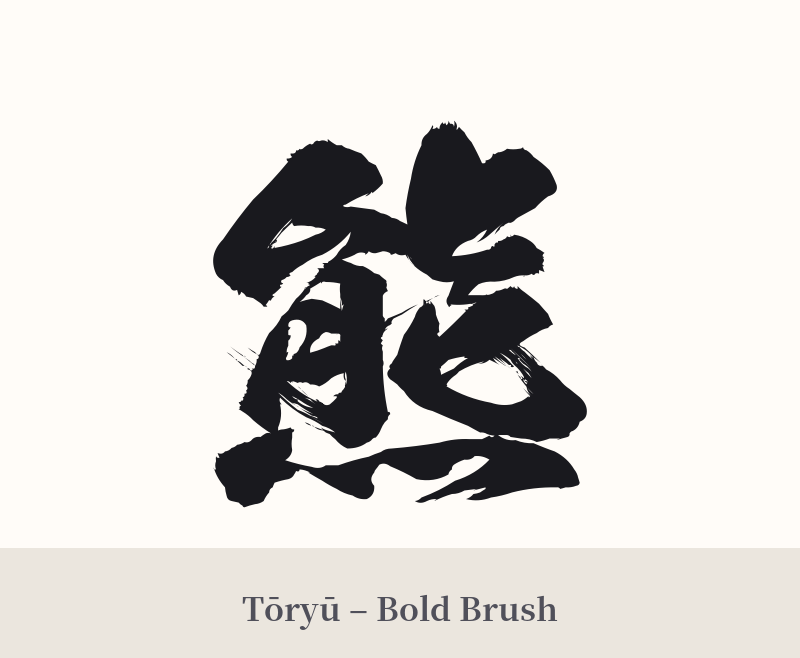
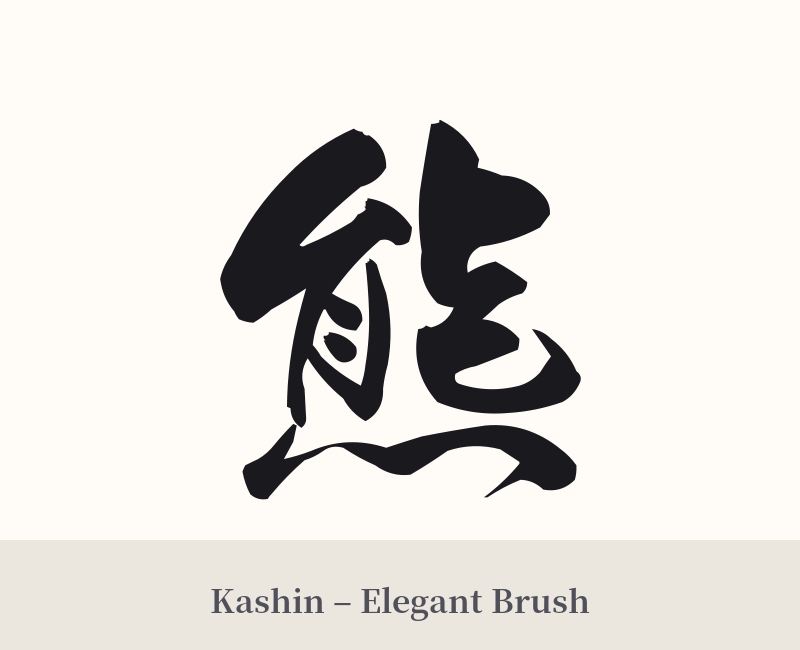
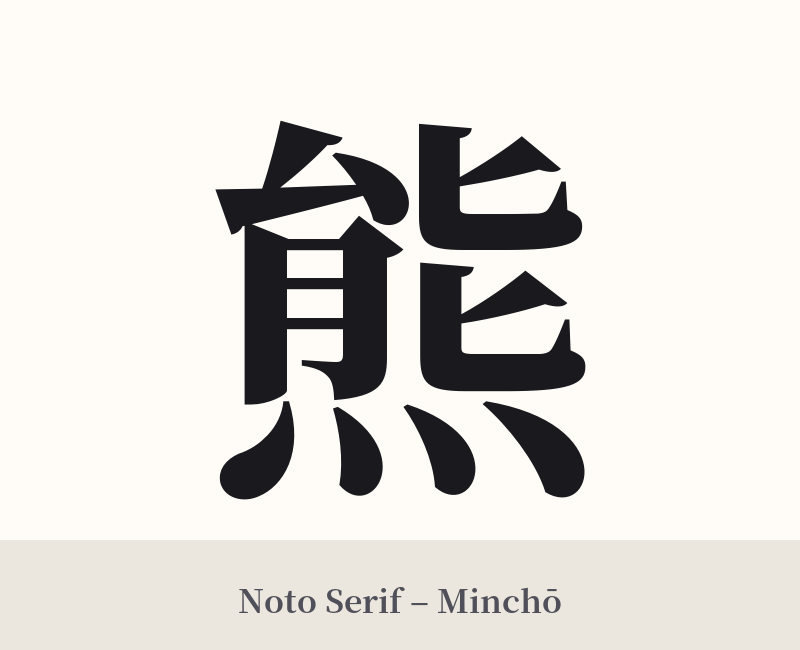
The same kanji can look dramatically different depending on the calligraphy style. Choose a font that matches the mood you want for your tattoo or design.
🎨 Tattoo Suitability
📐 Tattoo Design Guide
The kanji 熊 offers great versatility in tattoo design due to its strong, grounded presence.
– Placement: This character works best in areas that allow for sufficient size to preserve detail. Consider the calf, forearm, shoulder blade, or the back. Its balanced shape fits well in both vertical and horizontal spaces.
– Font Style: A bold, dynamic calligraphy style (shodō) can emphasize the bear's raw power and wild nature. Thick, energetic brushstrokes will give it a sense of movement. For a more refined look, a clean Mincho or Gyosho style can highlight the elegance within its strength.
– Visual Complements: While 熊 stands strong on its own, it can be beautifully integrated into a larger piece. Consider pairing it with elements of its natural habitat, such as bamboo stalks, pine trees, mountain ranges (山), or a full moon. Placing it within a scene inspired by traditional Sumi-e (ink wash painting) can create a stunning and culturally rich design.
Comments