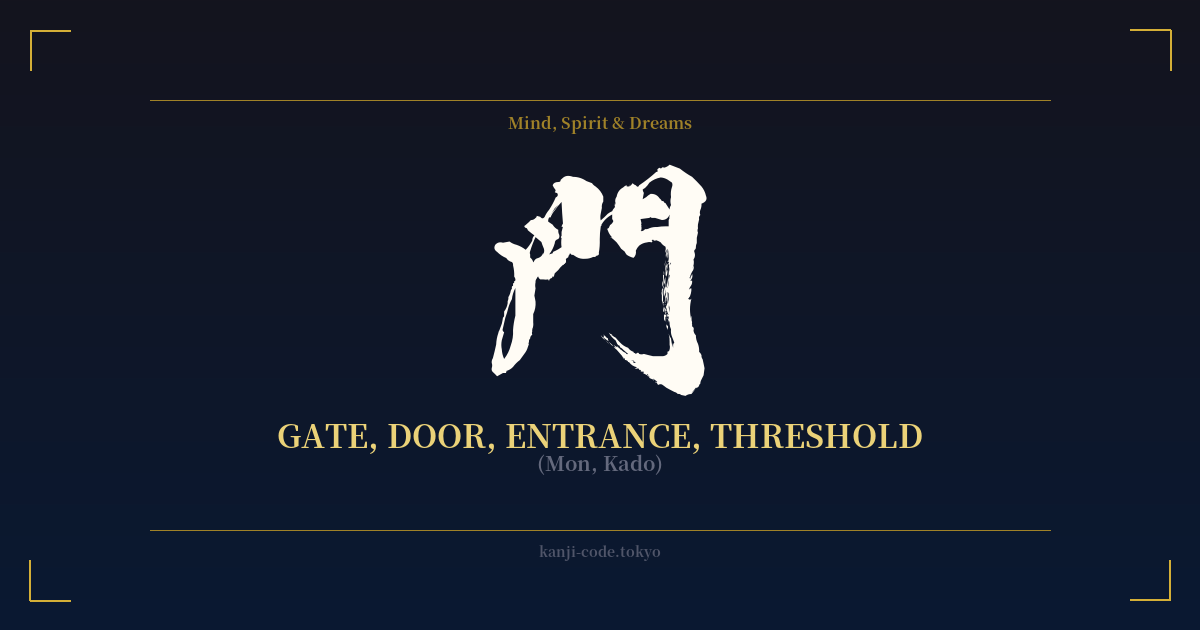
✍️ 門 (Mon, Kado) — Cultural Context
The kanji 門 (mon) is a beautiful example of a character that is both literal and profoundly symbolic. At its core, it is a pictograph, a stylized drawing of a two-paneled gate, the kind you would find at the entrance to a traditional home, temple, or castle in East Asia. This simple origin, however, opens up a world of meaning that is deeply embedded in Japanese culture and philosophy.
Physically, gates in Japan are more than just functional entryways. They are powerful demarcations. A grand temple gate like the Kaminarimon in Asakusa separates the bustling, secular world from the sacred space within. A simple gate to a private garden marks the transition from public to private. The act of passing through a gate is a conscious moment of transition, a crossing of a boundary. These structures are often imposing and architecturally significant, designed to inspire awe and respect.
Metaphorically, this idea of a threshold is where 門 truly shines. It represents opportunity, new beginnings, and the entrance to a new phase of life. The Japanese term 'kadode' (門出), which literally means 'leaving the gate,' is used to describe starting a new journey in life, such as getting married or starting a new career. It beautifully captures the feeling of standing at the threshold of your family home, about to step out into the wider world.
Furthermore, 門 is used to signify a school of thought, a discipline, or a field of expertise. The word 'senmon' (専門) means 'specialty' or 'major field of study,' implying that mastering a subject is like entering a specific gate of knowledge. Similarly, 'nyūmon' (入門) means 'introduction' or 'entry-level,' referring to the act of 'entering the gate' as a new student or apprentice. To become a disciple was to be accepted through the master's gate.
In Zen Buddhism, the concept is taken even further with the famous text 'Mumonkan' (無門関), or 'The Gateless Gate.' This collection of koans presents the idea that enlightenment is a gate that is, paradoxically, not a gate at all. It's a barrier of logic and ego that one must pass through without a physical entrance, highlighting the internal and non-rational nature of the spiritual journey. From a simple drawing of a door, 門 has evolved to represent the most significant passages of our lives—physical, intellectual, and spiritual.
🖌️ Font Styles for 門
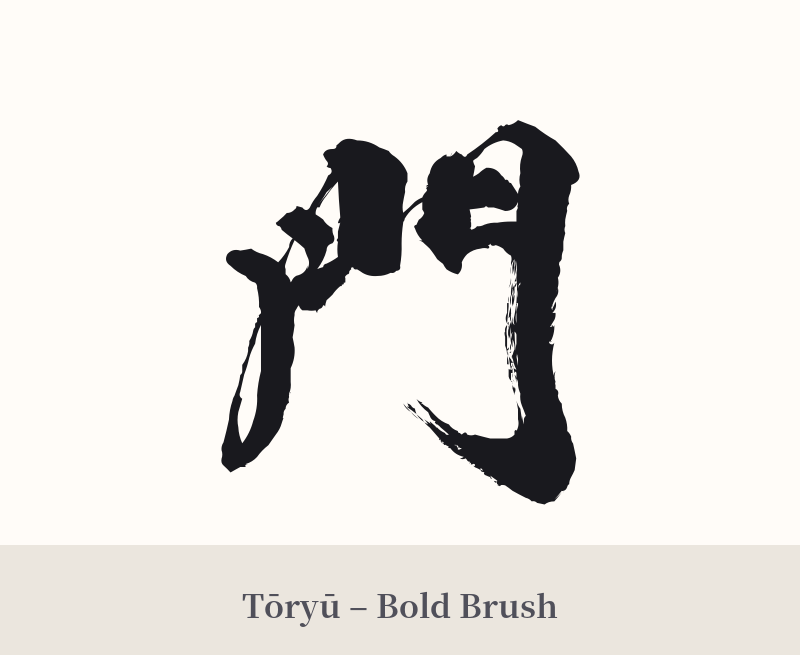
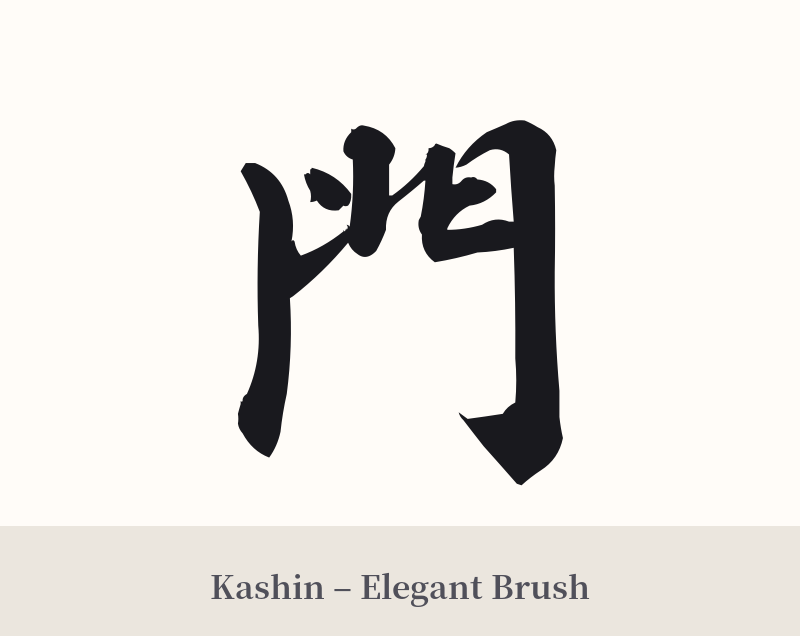
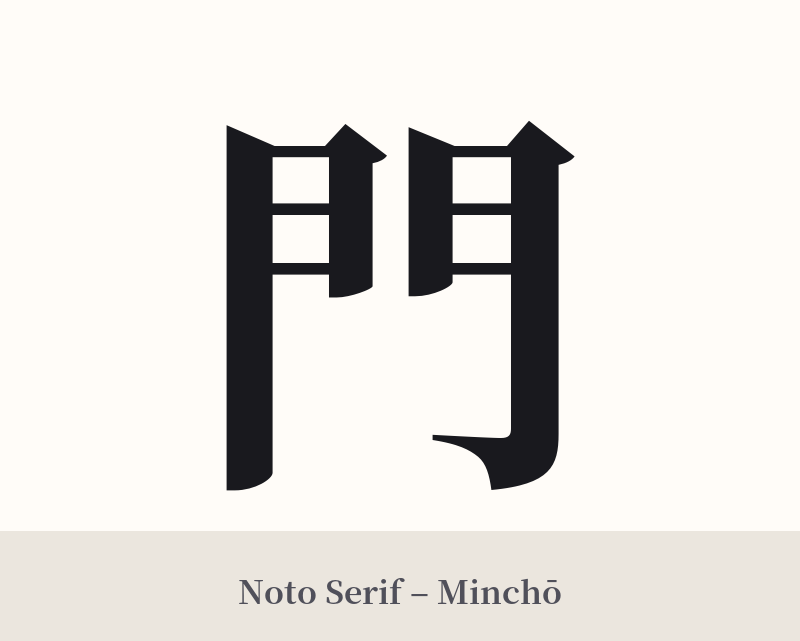
The same kanji can look dramatically different depending on the calligraphy style. Choose a font that matches the mood you want for your tattoo or design.
🎨 Tattoo Suitability
📐 Tattoo Design Guide
The symmetrical and architectural nature of 門 offers many design possibilities. Its strong, balanced form makes it an excellent standalone piece.
– Placement: Consider central locations on the body to emphasize its symmetry, such as the sternum, the back of the neck, or centered between the shoulder blades. It also works well on a forearm or calf where its vertical structure can be appreciated.
– Font Styles: For a powerful, solid look, a blocky Kaisho (regular script) or even a Mincho style with its classic serifs works beautifully. For a more fluid and spiritual feel, a semi-cursive Gyosho or fully cursive Sosho style can represent the personal journey and the act of passing through the gate.
– Visual Tips: You can incorporate 門 into a larger scene. It could be the entrance to a detailed temple background, or have subtle elements like wind or cherry blossom petals flowing through it to symbolize passage and transition. Some designs even render the kanji with the texture of wood or stone to enhance its architectural feel.
Comments