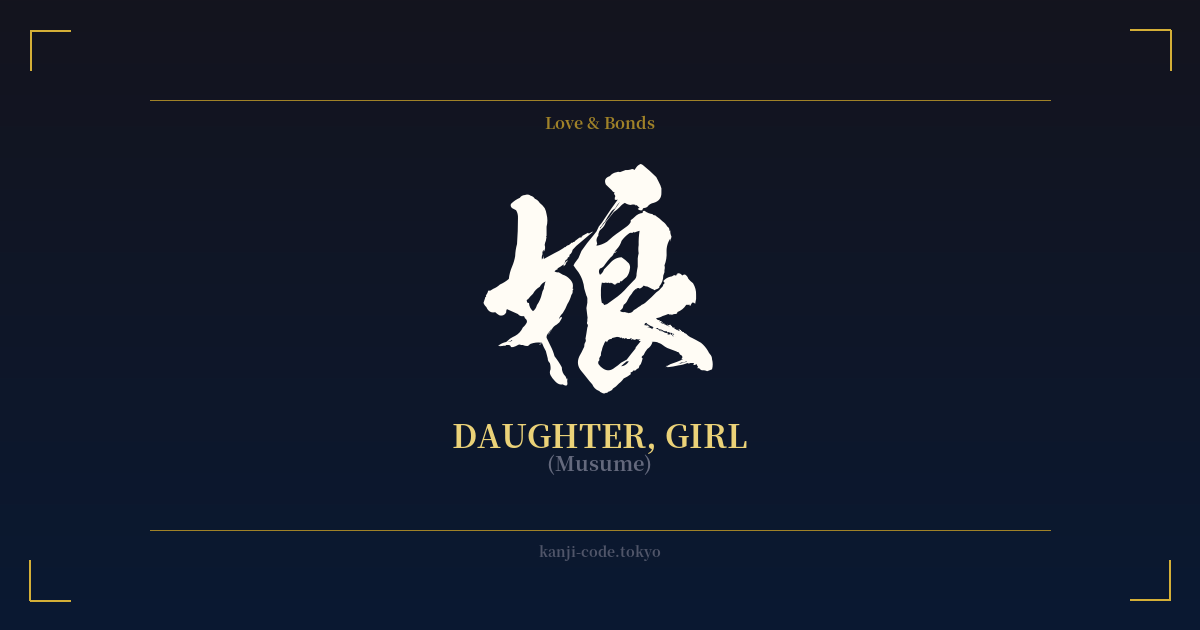
✍️ 娘 (Musume) — Cultural Context
The kanji 娘 (musume) is one of the most heartwarming and personal characters in the Japanese language, specifically meaning 'daughter'. Its very structure tells a beautiful story, combining the radicals 女 (onna), meaning 'woman', and 良 (yoi), meaning 'good'. This etymology paints a picture of a 'good woman', reflecting a traditional and affectionate view of a daughter within the family unit.
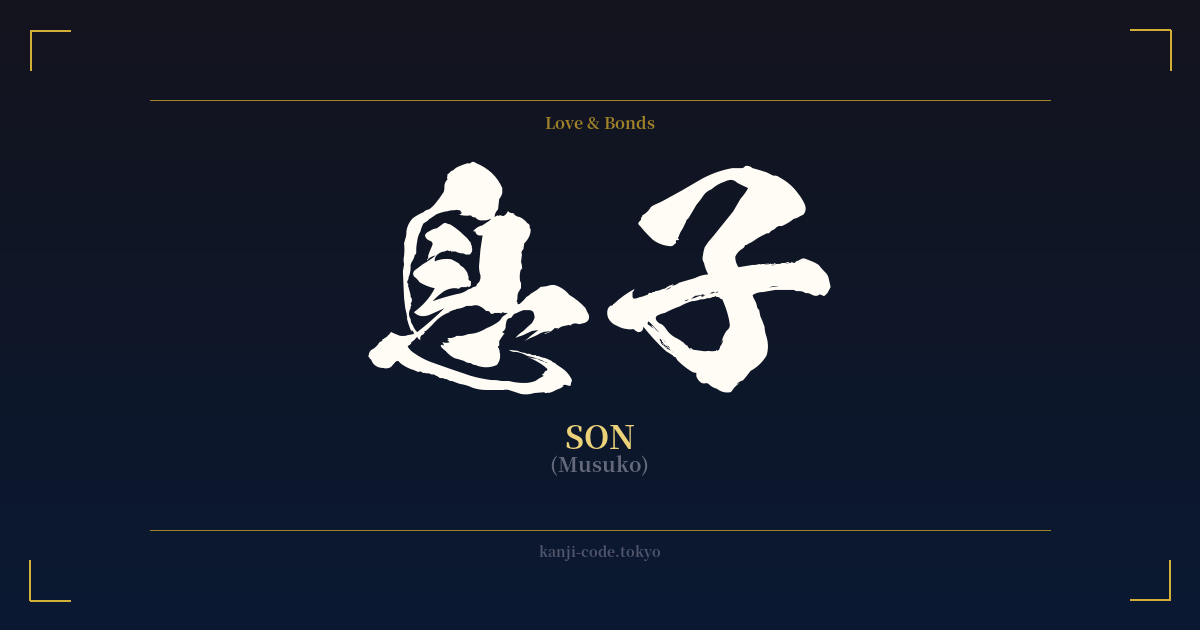
Primarily, 娘 is used by parents when referring to their own female child. It carries a deep sense of intimacy, love, and pride. You would say 'watashi no musume' (私の娘) for 'my daughter'. This is in direct contrast to 息子 (musuko), which means 'son'. Together, they form the core of the parent-child relationship in Japanese family terminology.
Beyond its primary meaning, 娘 can also refer to a young, unmarried woman in a more general sense. However, this usage requires some cultural sensitivity. In modern Japan, addressing a stranger or a young employee as 'musume-san' can come across as old-fashioned, condescending, or overly familiar, as if you're treating her like a child. The more neutral and common term for 'girl' is 女の子 (onnanoko). The use of 娘 for a non-relative often implies a generational gap and a paternalistic, albeit sometimes well-meaning, tone.
An interesting cultural phrase is 箱入り娘 (hakoiri musume), which literally translates to 'daughter in a box'. This idiom describes a sheltered daughter who has been lovingly protected from the hardships of the world by her family, often implying a certain naivety. It showcases the deep-seated cultural notion of cherishing and safeguarding a daughter.
In Japanese literature, film, and anime, the 'musume' character is a common archetype, often representing innocence, the future of the family, or the emotional heart of the story. Whether she is a dutiful daughter upholding tradition or a rebellious one breaking free, her role is pivotal, highlighting the cultural weight this single character carries. The concept of 娘 is not just a familial label; it's a symbol of love, legacy, and the tender bonds that tie generations together.
🖌️ Font Styles for 娘
The same kanji can look dramatically different depending on the calligraphy style. Choose a font that matches the mood you want for your tattoo or design.
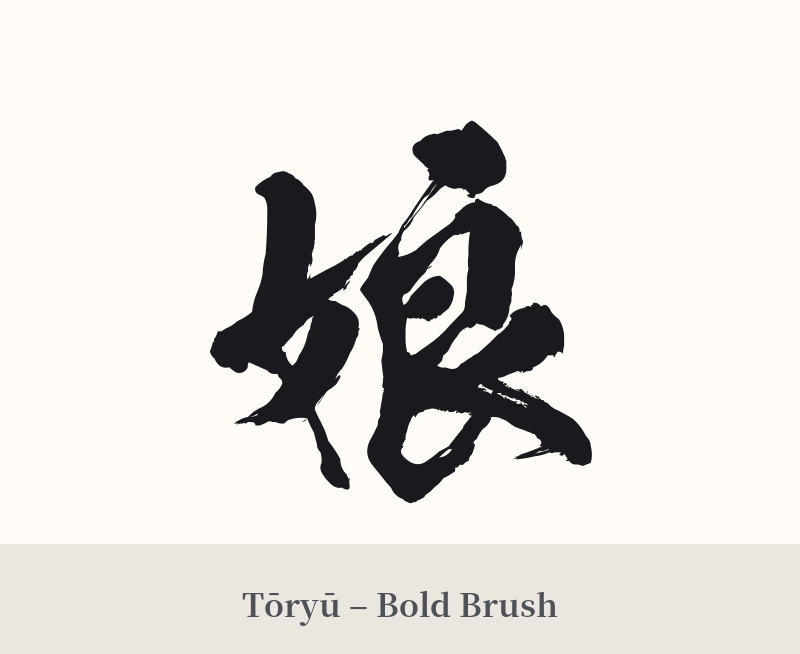
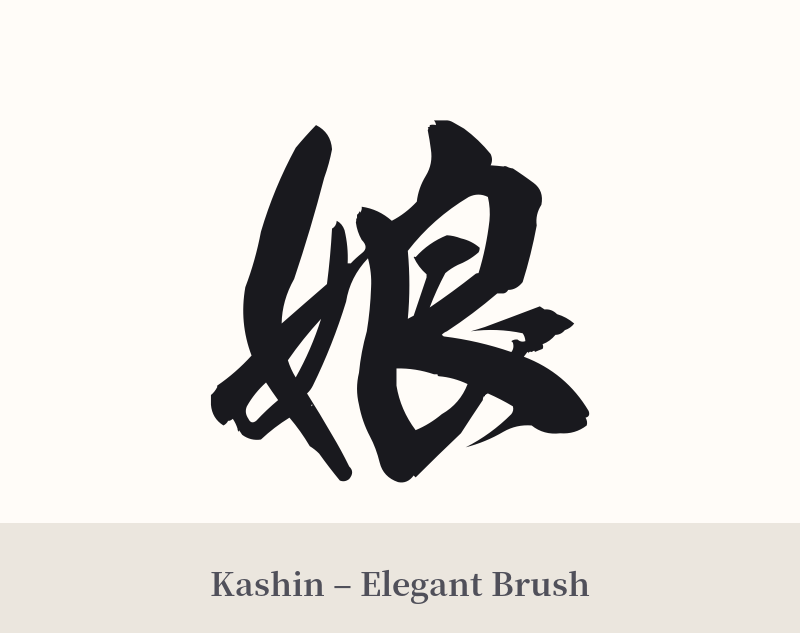
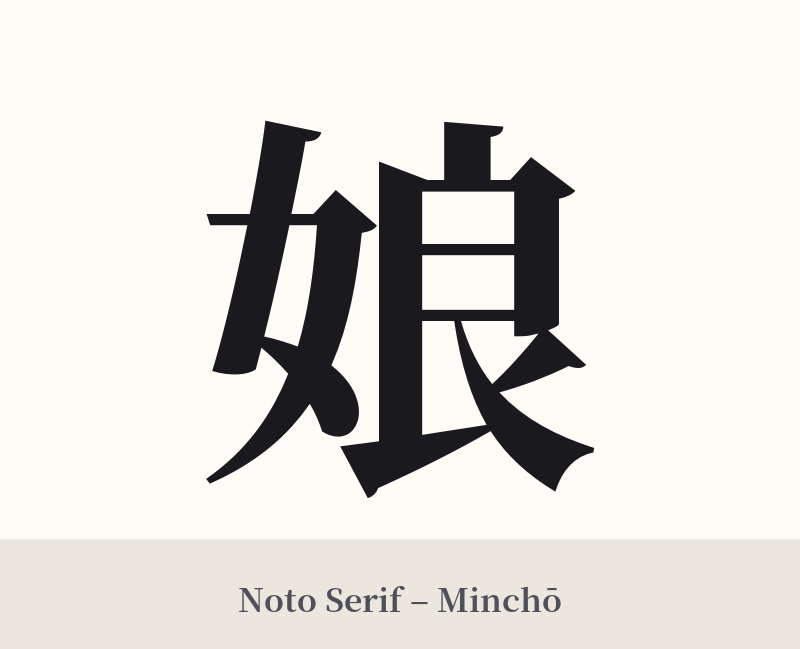
🎨 Tattoo Suitability
📐 Tattoo Design Guide
The kanji 娘 (musume) is a deeply personal choice, and its design should reflect that intimacy. Here are some recommendations:
– Placement: Consider locations that feel personal and close to you. The area over the heart, the inner wrist, or the forearm are popular choices that allow you to see the design often. For a more private tribute, the ribs or shoulder blade work beautifully.
– Font Style: A flowing, cursive script like 'gyosho' or 'sosho' can emphasize the gentle, loving nature of the word. For a bolder statement of pride and permanence, a clean and classic 'kaisho' (block) script provides clarity and strength.
– Visual Elements: While 娘 is powerful on its own, it can be combined with other imagery. Consider pairing it with a flower that represents your daughter's birth month or a symbol like a cherry blossom (sakura) to represent the beautiful but fleeting nature of childhood. A small, simple heart or a bird can also complement the kanji without overpowering it.
Comments