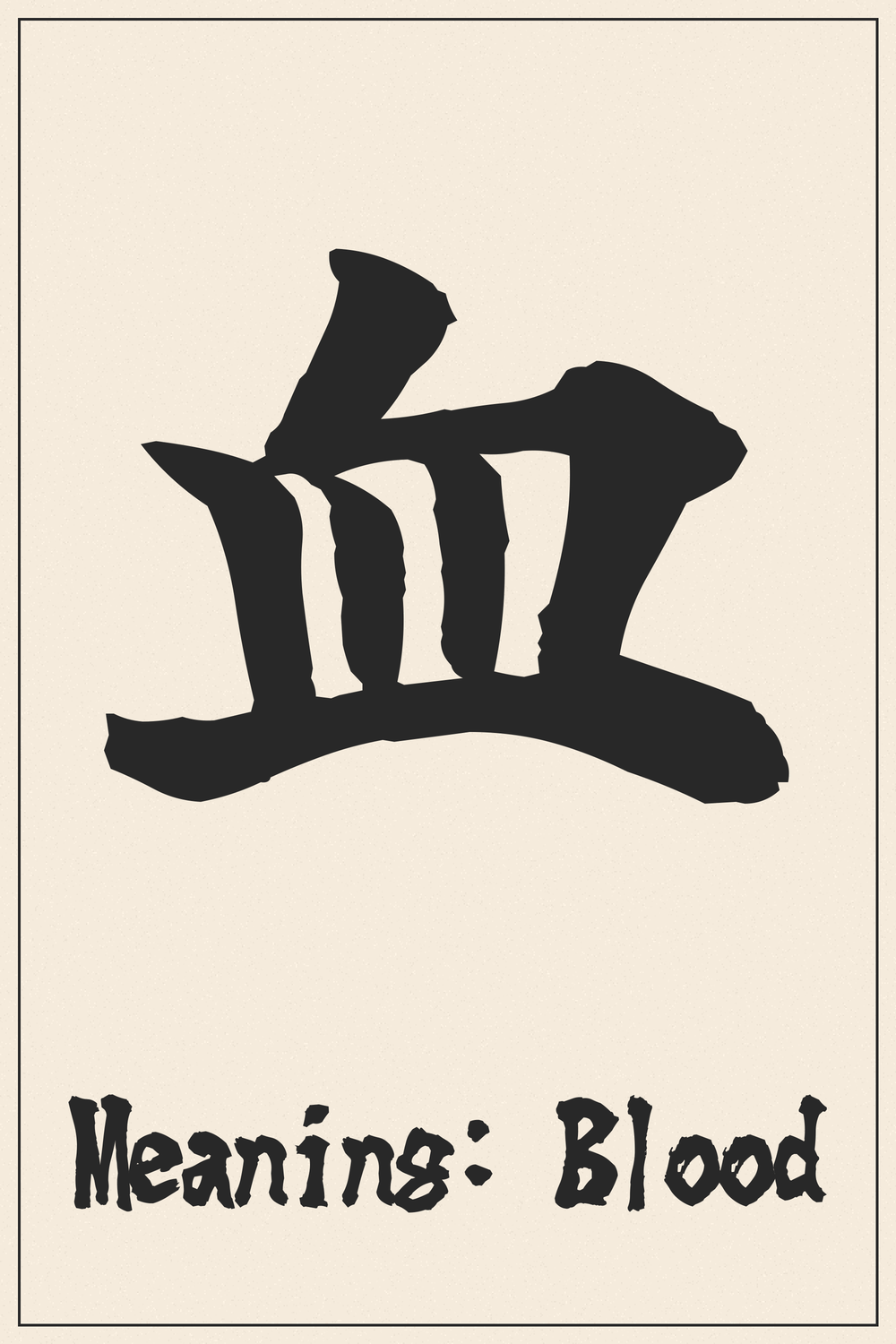

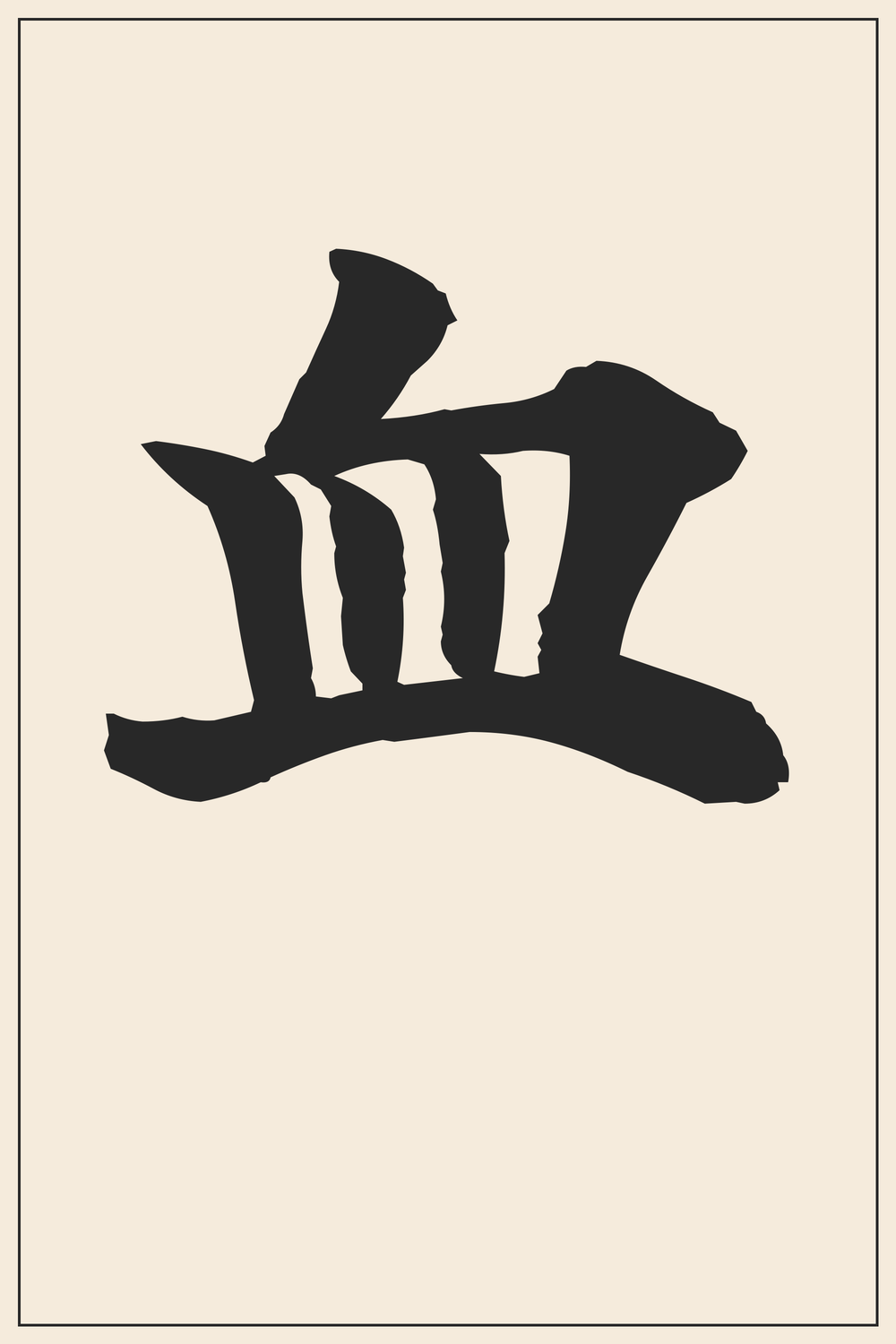
The Kanji for ‘Blood’ (血) carries profound significance, representing the very essence of life, lineage, and sacrifice. It’s a symbol of deep connection and vital energy that flows within us.
The atmosphere of a Kanji character changes dramatically depending on the font style. A character that looks elegant in a brush style might look bold and modern in a different font.
Recommendation:
Since a tattoo is permanent, we strongly recommend comparing various font styles beyond what is shown here. Use our designs as a trusted reference for the correct structure, but feel free to explore different artistic variations to find the perfect match for your vision.
The Deep Meaning Behind 血
The Kanji 血 (chi) is an ideogram that visually represents its meaning. Its ancient form depicted a drop or line (representing blood) falling into a vessel or dish. This early pictographic representation immediately conveyed the concept of collected blood.
In Japanese culture and beyond, blood symbolizes not just life itself, but also family lineage, shared ancestry, and the vital essence that binds individuals. It can also represent passion, sacrifice, or a deep, intrinsic connection, making it a powerful emblem for various personal meanings.
Kanji Breakdown
The character 血 is composed of fundamental elements that illustrate its meaning clearly.
Stroke: This top stroke, often appearing as a drop or a line, signifies the liquid essence or flow.
Dish/Bowl Radical: The bottom component (sara) directly translates to ‘dish’ or ‘plate,’ completing the image of liquid collected in a container.
Conclusion
The Kanji 血 is far more than just a word for ‘blood’; it embodies the fundamental aspects of life, heritage, and the unspoken bonds that connect us all. It’s a symbol of vitality, the life force that sustains us, and the ancestral ties that define our existence.
Choosing 血 for a tattoo is a powerful statement about one’s connection to life, family, or personal sacrifices made. Its simple yet profound form makes it an impactful and enduring symbol, a testament to the essential flow of existence.
Comments