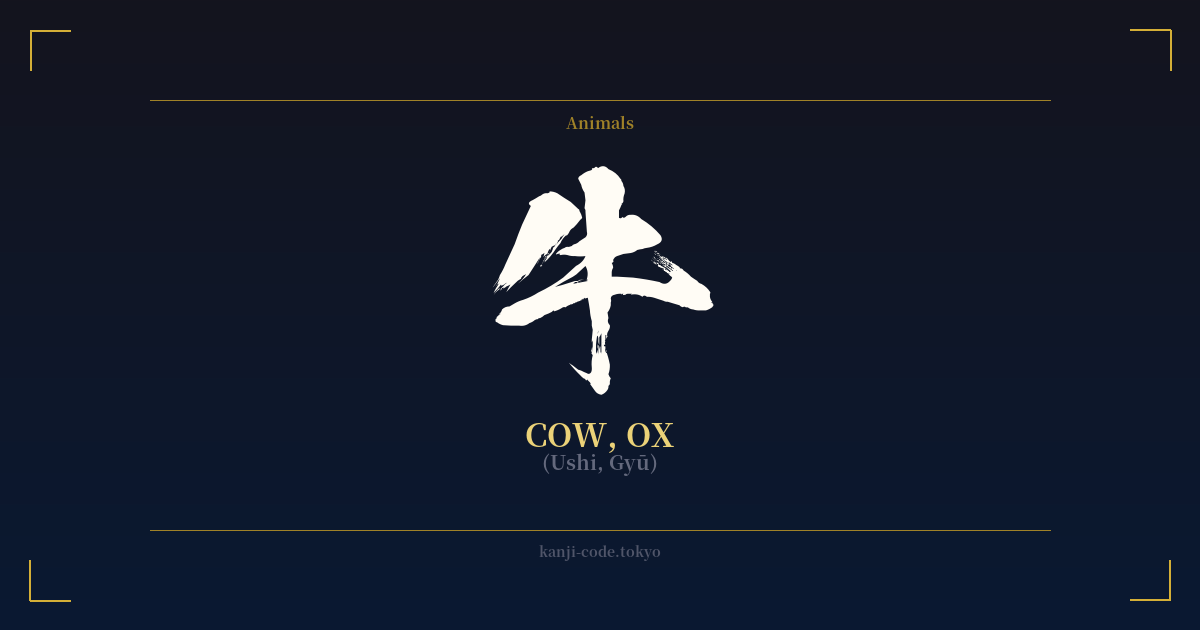
✍️ 牛 (Ushi, Gyū) — Cultural Context
The kanji 牛 (ushi) is a powerful symbol in Japanese culture, representing far more than just the bovine animal. Its origins are pictographic, with the character evolving from a simple sketch of an ox's head, complete with horns. This direct visual link to the animal grounds the character in the physical world, a world where the ox was an indispensable partner to humanity.
For centuries in Japan, oxen were not primarily raised for meat but were revered as beasts of burden. They were the engines of agriculture, pulling plows through muddy rice paddies with immense strength and unwavering patience. This history has deeply embedded the concepts of diligence, perseverance, and steady, reliable power into the character's meaning. To move at a 'cow's pace' (牛の歩み, ushi no ayumi) isn't an insult; it means to progress slowly but surely, with unstoppable momentum.
Perhaps the most famous cultural role of the ox is as the second animal in the East Asian zodiac (十二支, Jūnishi). Legend tells of a great race where the diligent ox was set to finish first, only for the cunning rat to ride on its back and leap ahead at the last moment. This story reinforces the ox's dependable and good-natured character, even if it can be taken advantage of. People born in the Year of the Ox are often considered to be hardworking, patient, and methodical.
The ox also holds a sacred place in Shinto and Buddhist traditions. Tenmangū shrines, dedicated to the deified scholar Sugawara no Michizane, feature statues of a reclining ox, his divine messenger. It is believed that rubbing the statue of the nade-ushi (stroking cow) can bring healing and academic success. This practice highlights the animal's role as a benevolent and protective figure.
In the modern era, the kanji has also taken on a strong culinary association, especially with the global fame of Japanese beef like Wagyū (和牛) and Kobe beef. The 'gyū' reading is almost exclusively used in this context (e.g., gyūdon, a beef bowl). This creates a duality: 牛 is at once a symbol of sacred strength and a label for a world-famous delicacy. This tension between the traditional symbol and the modern commodity adds a fascinating layer to its meaning.
🖌️ Font Styles for 牛
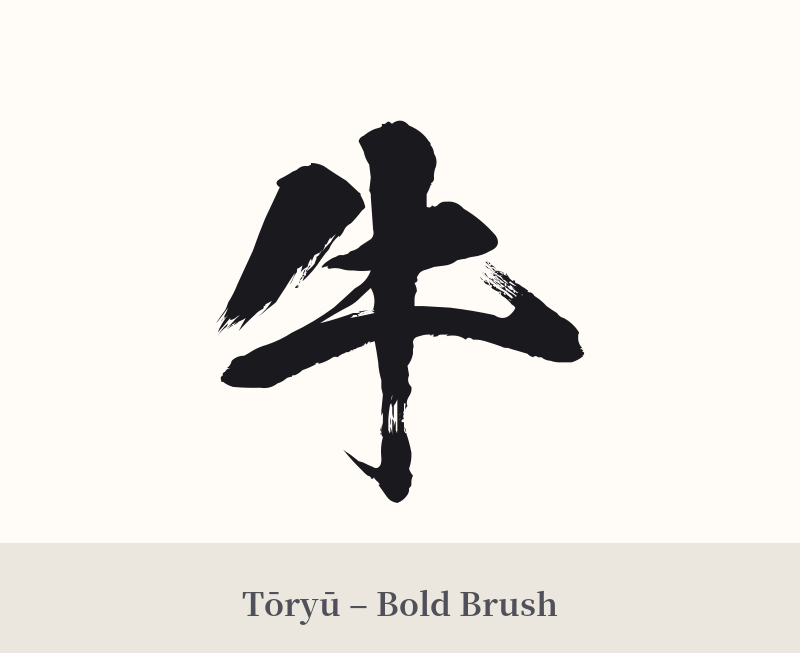
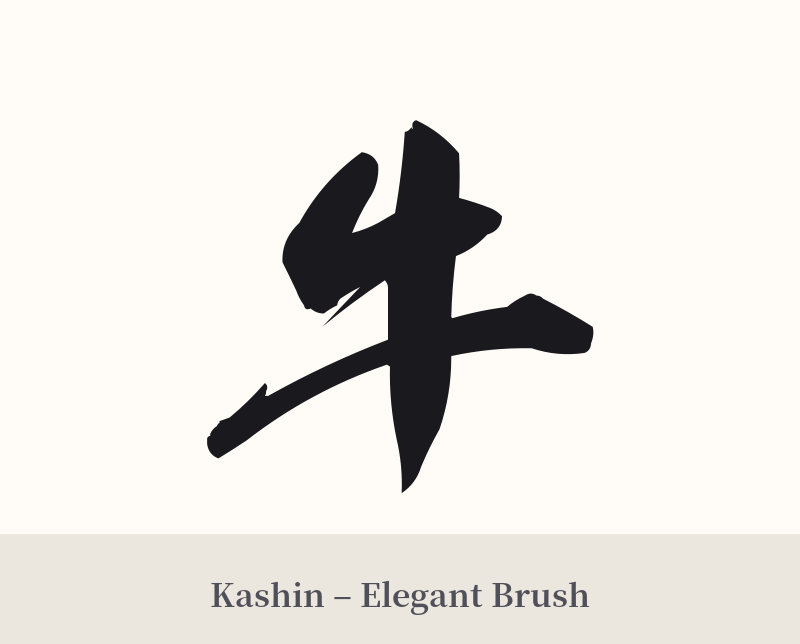
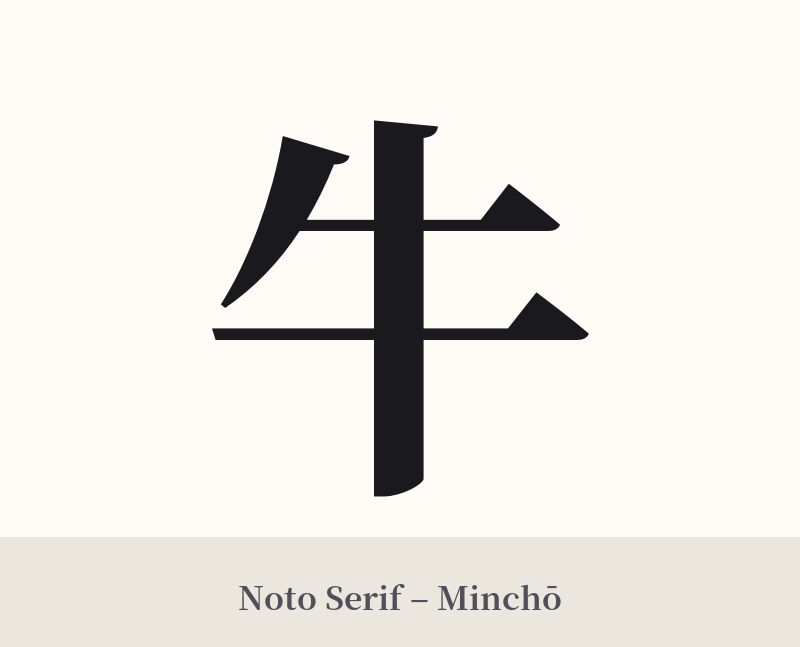
The same kanji can look dramatically different depending on the calligraphy style. Choose a font that matches the mood you want for your tattoo or design.
🎨 Tattoo Suitability
📐 Tattoo Design Guide
Due to its simple structure, the artistic execution of the 牛 kanji is critical for a successful tattoo. A poorly drawn version can look childish or weak, undermining its inherent symbolism of strength.
– Placement: Consider areas of the body that convey power and stability. The calf, shoulder blade, or forearm are excellent choices, providing a solid canvas for the character.
– Font Style: A bold, angular Kaisho (block) script will emphasize the kanji's meaning of strength and sturdiness. For a more natural or rustic feel, a flowing Gyōsho (semi-cursive) or Sōsho (cursive) script can evoke the pastoral, hardworking nature of the animal.
– Visual Tips: Because of its simplicity, consider incorporating it into a larger piece. It pairs beautifully with other elements like a stylized enso (Zen circle) to represent a complete and steady spirit, or with floral elements to soften its powerful feel. For those born in the Year of the Ox, it can be the centerpiece of a zodiac-themed design.

Comments