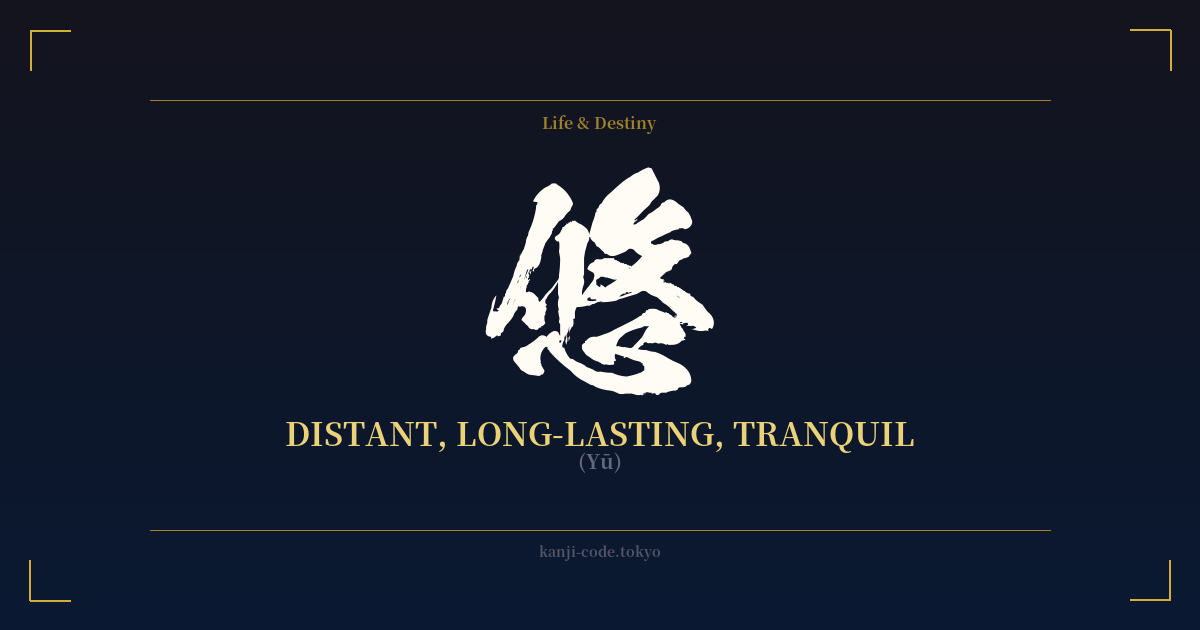
✍️ 悠 (Yū) — Cultural Context
The kanji 悠 (Yū) is a character that whispers rather than shouts. It doesn't just mean 'distant' in a physical sense, but distant in time, stretching back into the past and forward into the endless future. It embodies a profound sense of tranquility, vastness, and permanence, capturing a feeling that is central to many aspects of Japanese philosophy and aesthetics.
Its origin lies in the combination of characters representing a person on a long journey and the heart or mind (心). This paints a picture not of a frantic race, but of a slow, deliberate, and contemplative path. It's the feeling of walking a long road with a calm heart, able to appreciate the vastness of the scenery and the passage of time without anxiety. This is the essence of Yū: a state of being that is unhurried, expansive, and deeply peaceful.
This concept is deeply interwoven with Zen Buddhist thought, which emphasizes mindfulness, stillness, and finding profundity in simplicity. Yū is the quiet mind observing the world, the feeling of time slowing down during meditation, and the acceptance of the natural flow of existence. It’s the antithesis of the modern world's obsession with speed and constant stimulation.
In the Japanese language, Yū is a key component of several beautiful and evocative words. The term 悠久 (yūkyū) means 'eternity' or 'permanence,' often used to describe ancient mountains or the endless flow of a river. Another common phrase, 悠々自適 (yūyū jiteki), describes a desirable lifestyle: living in quiet leisure, free from worldly cares and pressures. To be 悠然 (yūzen) is to be calm, composed, and unruffled in the face of chaos.
The character is also a popular and cherished choice for personal names in Japan, for both boys and girls. Names like Yūta (悠太), Yūsuke (悠介), and Haruka (遥, which shares a similar meaning though a different kanji) carry with them the parents' wish for their child to live a calm, stable, and expansive life. Choosing 悠 is to choose a symbol of quiet strength, inner peace, and a connection to something timeless and enduring.
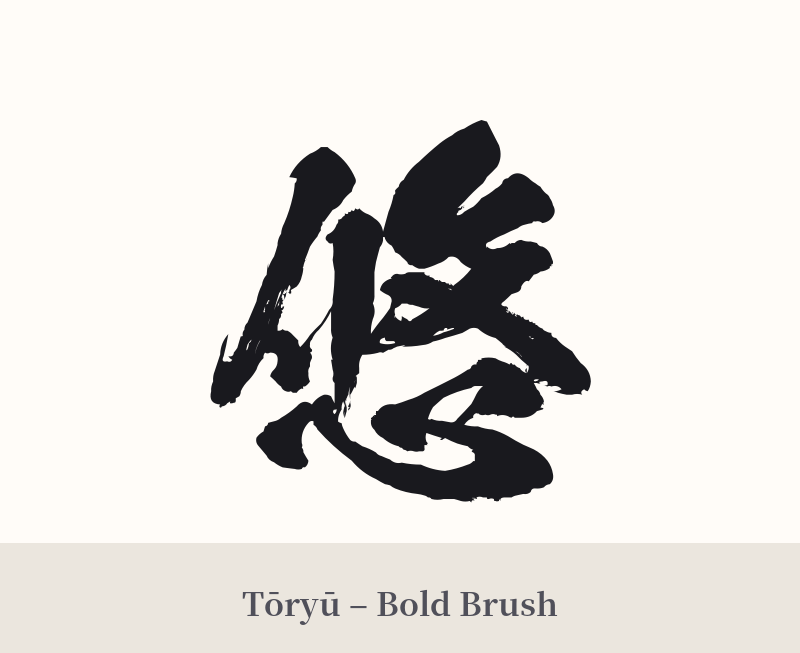
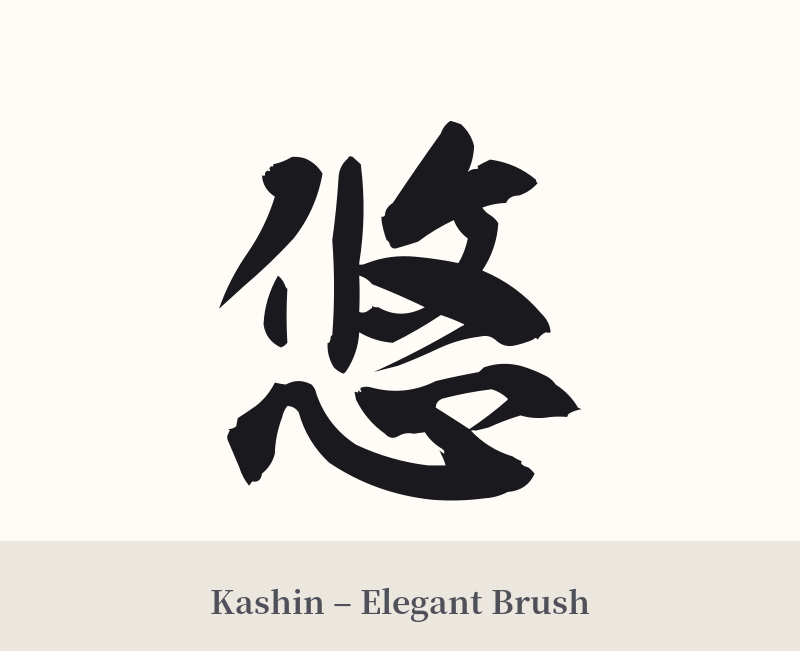
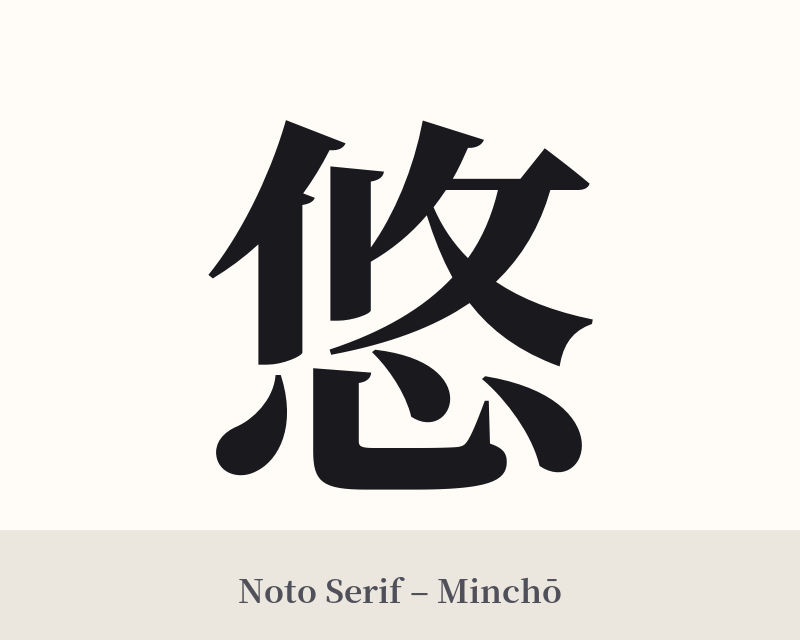
🖌️ Font Styles for 悠
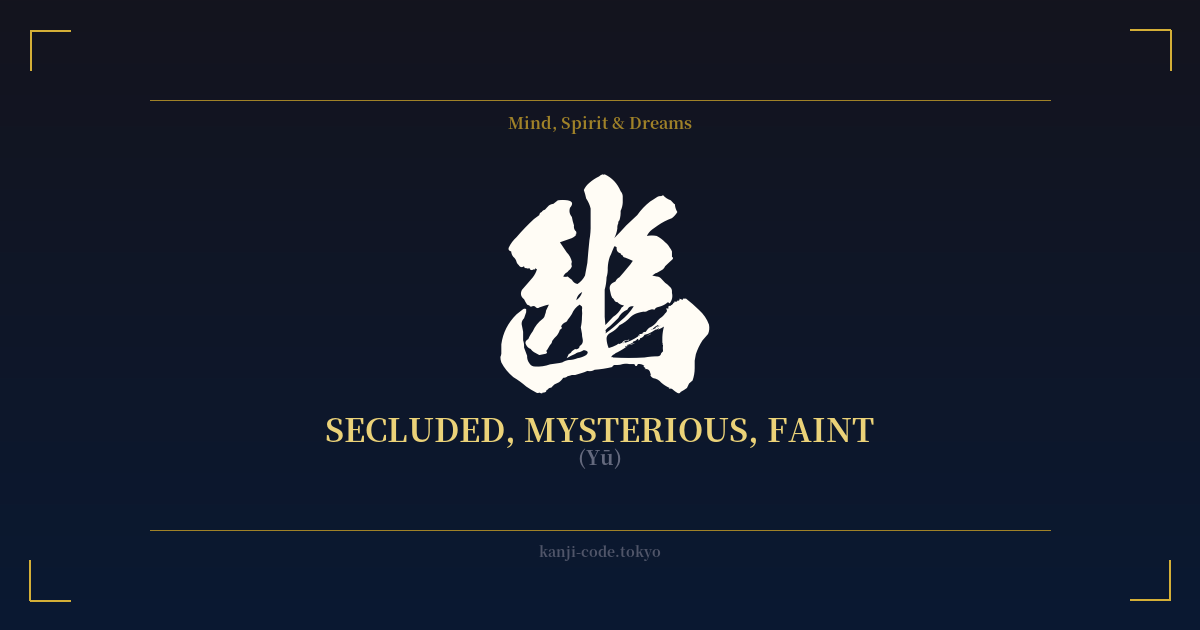
The same kanji can look dramatically different depending on the calligraphy style. Choose a font that matches the mood you want for your tattoo or design.
🎨 Tattoo Suitability
📐 Tattoo Design Guide
The kanji 悠 embodies elegance and flow, and its design should reflect this. A tattoo of this character is about capturing a feeling of serene timelessness.
– Placement: Consider areas that feel personal and contemplative. The inner forearm allows for quiet reflection, the back of the neck offers a subtle and elegant statement, or the space over the heart can connect the design directly to its etymological roots (the 'heart' radical, 心).
– Font Style: Flowing, graceful script styles are ideal. A semi-cursive Gyōsho style would beautifully capture the sense of movement and fluidity. For a more classic and dignified look, a clean Mincho (serif) font emphasizes its traditional roots. Avoid overly aggressive or blocky fonts that would clash with its tranquil nature.
– Visual Tips: While 悠 is powerful on its own, it can be paired with subtle imagery to enhance its meaning. Consider integrating it with a light ink wash background, a few falling cherry blossom petals to represent the beauty of the moment within eternity, or placing it within an Ensō (Zen circle) to symbolize enlightenment and the universe.
Comments