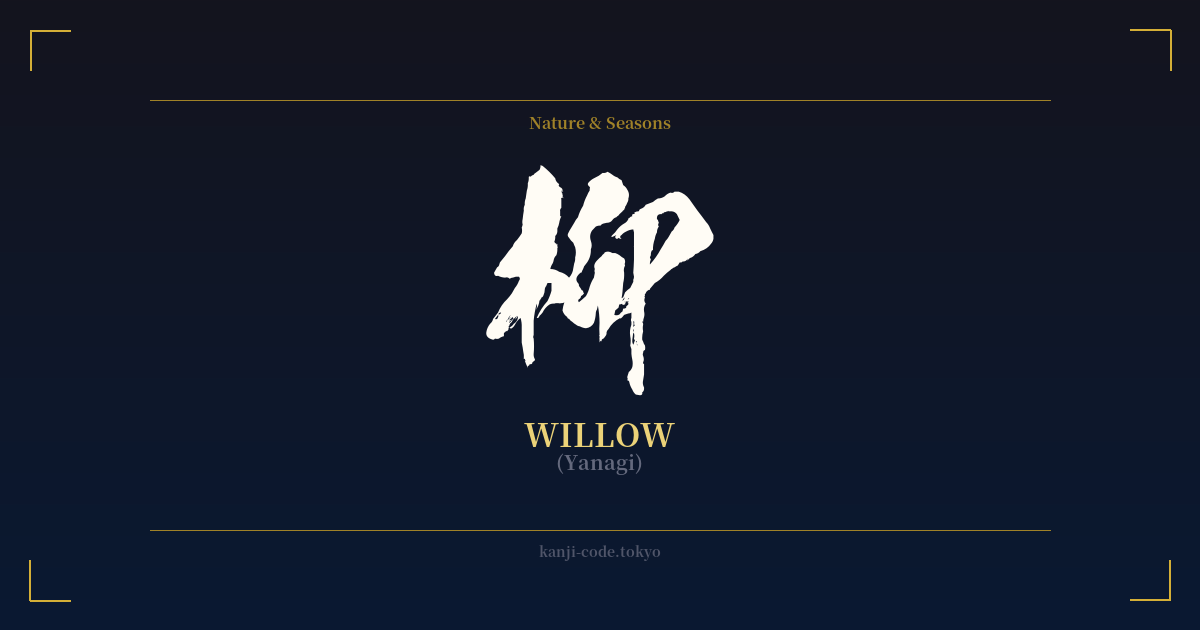
✍️ 柳 (Yanagi) — Cultural Context
The kanji 柳 (Yanagi) carries a weight of meaning far beyond simply naming the willow tree. It is a character deeply woven into the fabric of Japanese culture, art, and folklore, embodying a powerful duality of grace and eeriness.
On one hand, the willow tree is a potent symbol of flexibility and resilience. Its long, slender branches bend gracefully in the wind without breaking. This quality gave rise to the popular proverb, 「柳に風」 (Yanagi ni kaze), which literally means "willow in the wind." It describes an attitude of yielding and adaptability, of overcoming adversity not with rigid force but with gentle pliancy. This makes the willow a symbol of survival and quiet strength.
Willows are often found growing along rivers, canals, and ponds, their branches trailing in the water. This association imbues the kanji with a sense of coolness, tranquility, and the fluid passage of time. In poetry and art, the image of a willow by the water often evokes a feeling of gentle melancholy or serene contemplation, particularly in the summer heat.
However, 柳 has a much darker, more mysterious side. In Japanese folklore, the willow tree is a powerful conduit to the spirit world. Its drooping, hair-like branches and the rustling sound they make in the wind are strongly associated with ghosts, or yūrei. It was believed that spirits lingered among the willows, and the trees themselves could possess a haunting, otherworldly energy.
This supernatural connection is a recurring motif in traditional Japanese art forms. In ukiyo-e woodblock prints and Kabuki theater, a willow tree is often used as a backdrop to signal a ghostly encounter or a scene set in the realm of the supernatural. The image of a pale female ghost with long, dark hair standing beneath a weeping willow is a classic trope in Japanese horror.
This duality is what makes 柳 so compelling. It is at once a symbol of feminine grace, life, and adaptability, and a portal to the eerie and unknown. It represents the beauty that can be found in yielding, while also reminding us of the thin veil that separates the world of the living from the world of spirits. To understand 柳 is to appreciate this beautiful and haunting balance.
🖌️ Font Styles for 柳
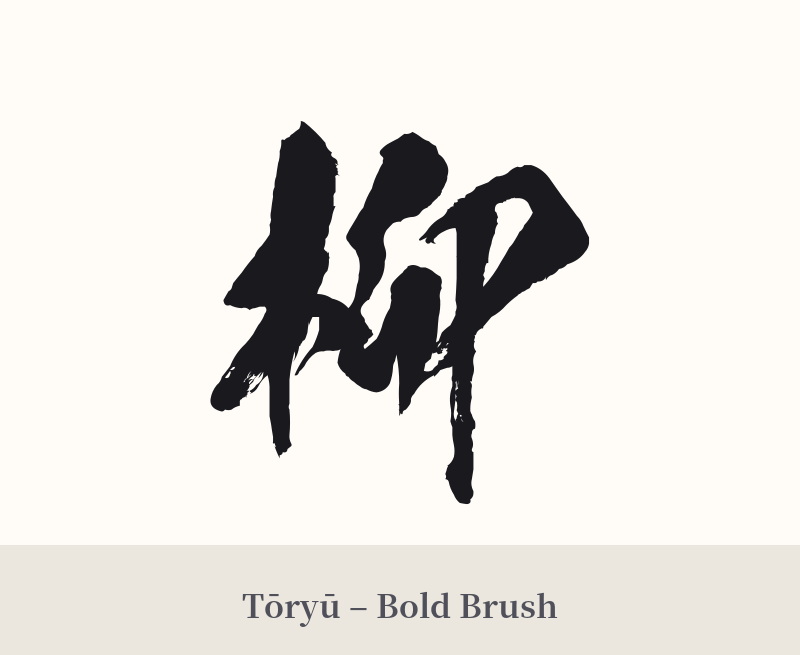
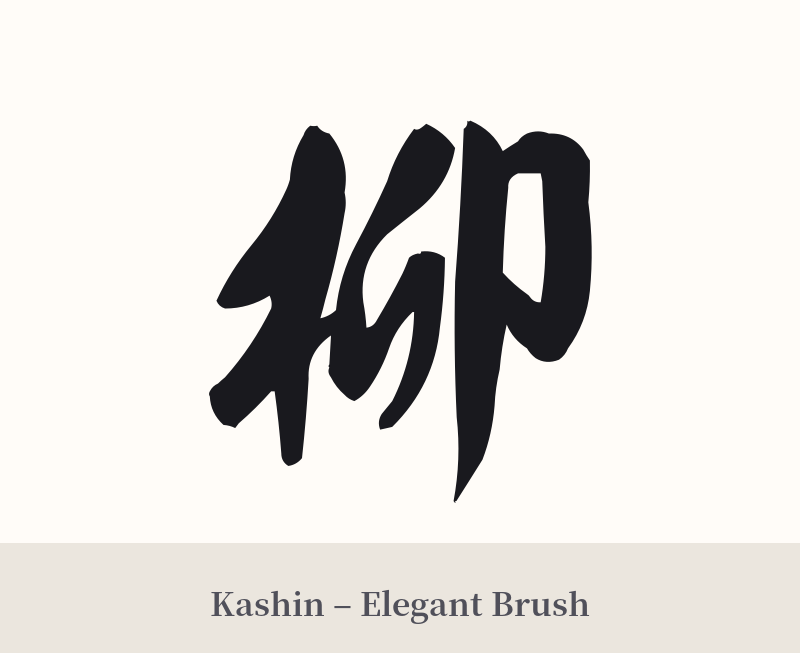
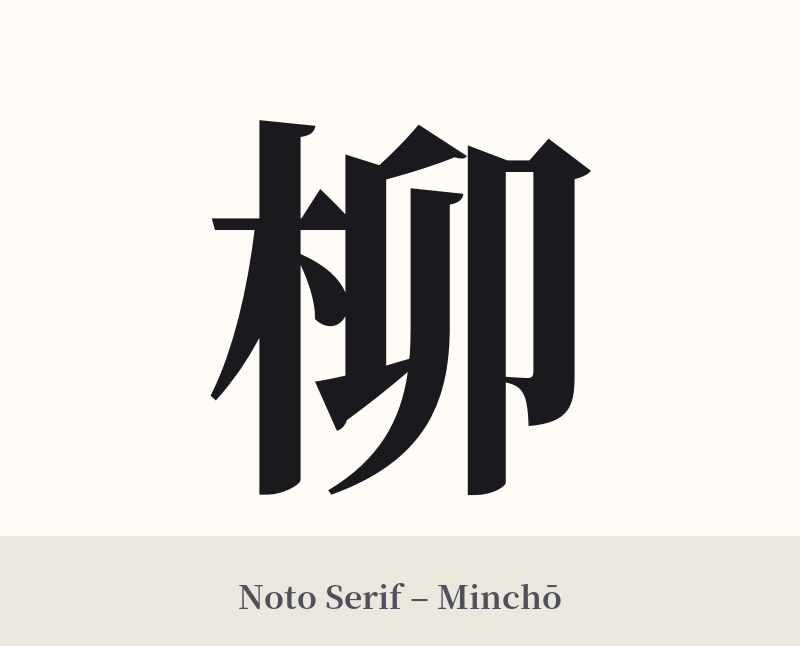
The same kanji can look dramatically different depending on the calligraphy style. Choose a font that matches the mood you want for your tattoo or design.
🎨 Tattoo Suitability
📐 Tattoo Design Guide
The kanji 柳 (Yanagi) offers wonderful opportunities for an elegant and meaningful tattoo. Its inherent connection to flowing movement and verticality makes it very versatile.
– Placement: Consider vertical placements that mimic the shape of a tree, such as the forearm, the calf, or running down the spine. It also works well on the ribs or shoulder blade, where it can curve with the body.
– Style: A cursive or semi-cursive calligraphy style (gyōsho or sōsho) is highly recommended. The fluid, connected strokes can beautifully capture the feeling of swaying branches and graceful resilience. A classic, print-like Mincho style can provide a more stoic and traditional look.
– Visuals: While the character is strong on its own, it can be paired with complementary imagery. Consider adding flowing water or ripples at its base, a few falling leaves, or a crescent moon to enhance its serene quality. For those drawn to its supernatural side, incorporating wisps of fog or a subtle spectral silhouette can create a hauntingly beautiful design.
Comments