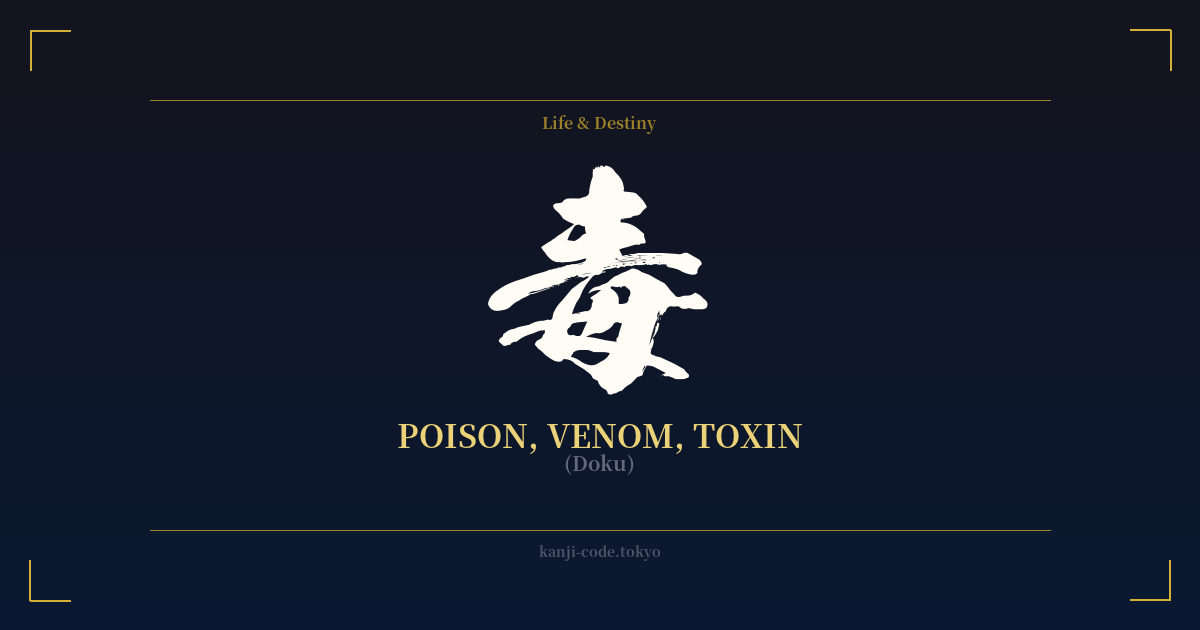
✍️ 毒 (Doku) — Cultural Context
The kanji 毒 (doku) is a character steeped in concepts of danger, corruption, and potent, hidden threats. Its visual construction tells a fascinating, albeit dark, story. The character is a combination of 生 (sei), meaning 'life' or 'growth,' and a lower component originally derived from 母 (haha), meaning 'mother.' While interpretations vary, one compelling narrative suggests a perversion of life-giving forces—something that corrupts or negates life itself, turning nurturing potential into a source of harm. This powerful imagery sets the stage for its complex role in Japanese culture.
Literally, 毒 refers to any poison, venom, or toxin. This is most famously embodied in the context of the fugu, or pufferfish. The fugu's liver and ovaries contain a deadly neurotoxin, tetrodotoxin, making its preparation a high-stakes culinary art reserved for specially licensed chefs. This single example illustrates Japan's long-standing, intimate relationship with the concept of doku: something that can be both a deadly threat and, when handled with extreme care, part of a unique cultural practice.
Beyond its literal meaning, 毒 permeates the Japanese language as a powerful metaphor for non-physical harm. The expression 毒舌 (dokuzetsu), or 'poison tongue,' describes someone with a sharp, sarcastic, and cutting wit. 目の毒 (me no doku), 'poison for the eyes,' refers to a temptation so strong it's painful to behold, like an unaffordable luxury item or an unattainable crush. These phrases show how the concept extends to social and emotional pain.
A fascinating and somewhat counter-intuitive use is the phrase 気の毒 (ki no doku). While it literally translates to 'poison of the spirit,' it means 'pity,' 'regrettable,' or 'it's a shame.' Here, the 'poison' is a feeling of unease or discomfort in one's spirit when witnessing another's misfortune. It’s a uniquely empathetic use of such a harsh character.
In modern pop culture, from anime and manga to video games, 毒 is a common element. Villains wield poisoned blades, ninjas use toxic darts, and characters may possess a 'poisonous' personality. This keeps the kanji relevant and recognizable, associating it with themes of stealth, danger, and subversion. Ultimately, 毒 is a character of profound negativity, representing a force that sickens, corrupts, and destroys, whether it be the body, the spirit, or relationships.
🖌️ Font Styles for 毒
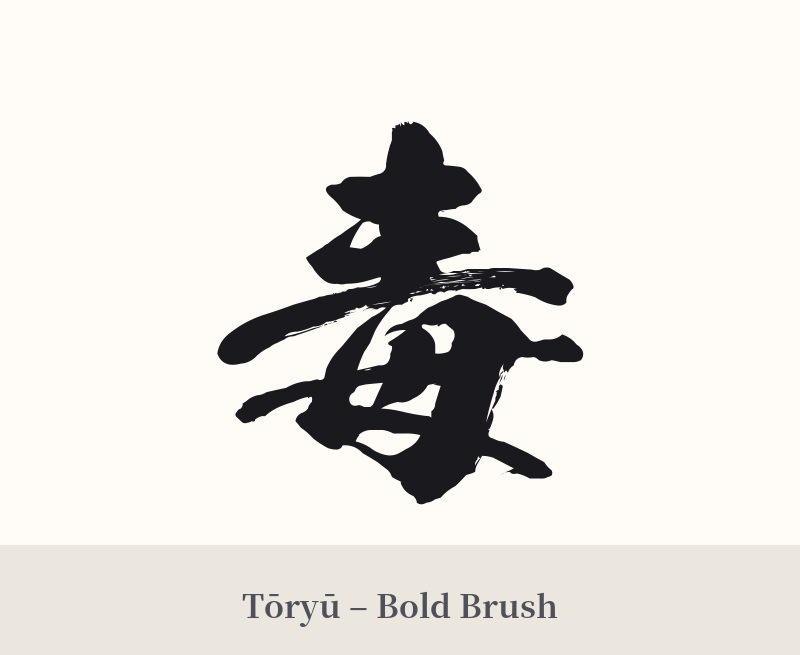
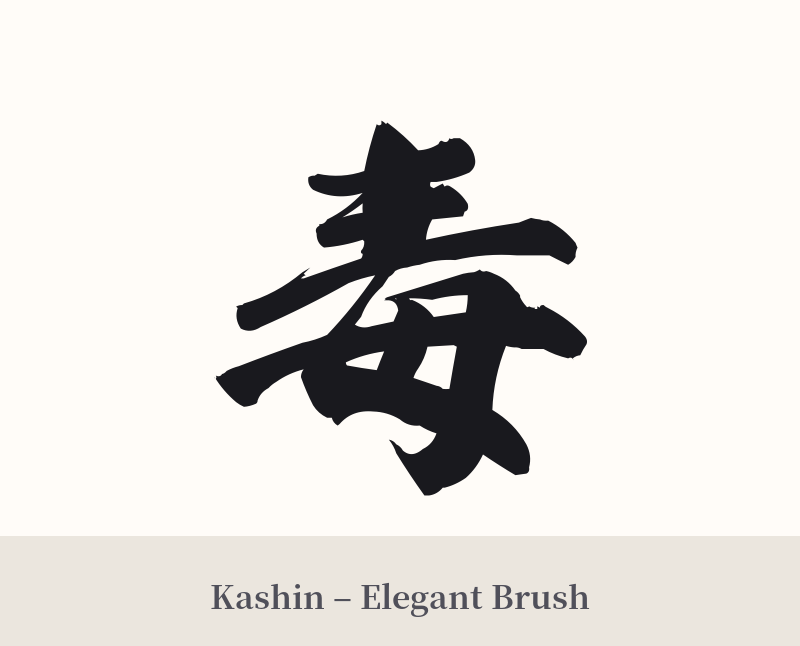
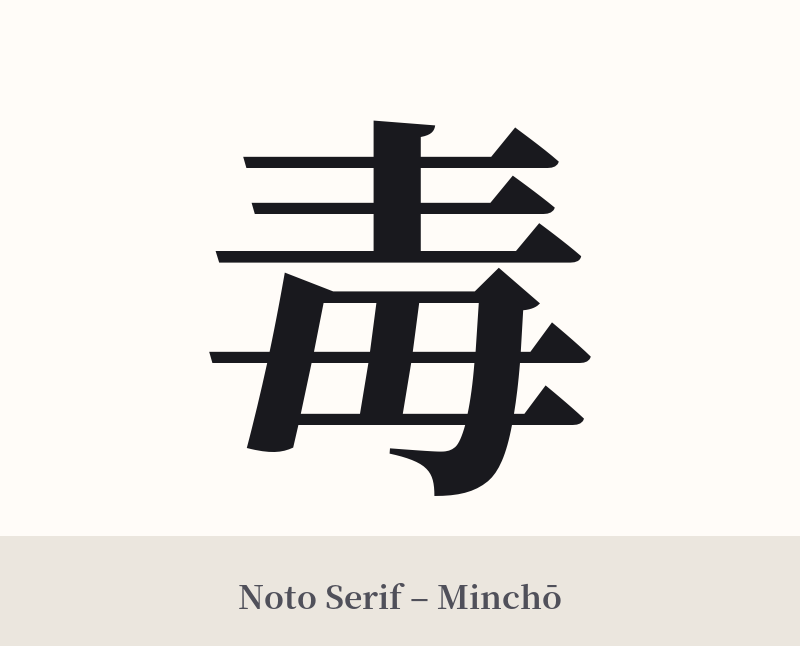
The same kanji can look dramatically different depending on the calligraphy style. Choose a font that matches the mood you want for your tattoo or design.
🎨 Tattoo Suitability
📐 Tattoo Design Guide
The kanji 毒 (doku) offers a bold and edgy choice for a tattoo, carrying a strong and immediate message. Its design can be adapted to reflect different facets of its meaning.
For placement, consider areas that align with the concept. The forearm or bicep provides a clear canvas for a statement piece. The back of the neck or along the spine can create a more subtle, sinister feel, as if hinting at a hidden danger. The calf is another excellent spot for a vertical design.
– Font Styles: A scratchy, aggressive calligraphy (shodō) style can emphasize the raw, chaotic nature of poison. For a more modern, clinical 'toxin' aesthetic, a sharp, clean Mincho or even a digital-style font works well. This can evoke the feeling of a biohazard warning.
– Visual Elements: Integrating 毒 with other imagery can deepen its narrative. Consider pairing it with a snake, a spider, or a scorpion to represent venom. A fugu fish makes for a uniquely Japanese cultural reference. Alternatively, combining it with a wilting flower or a cracked object can symbolize corruption and decay.
Comments