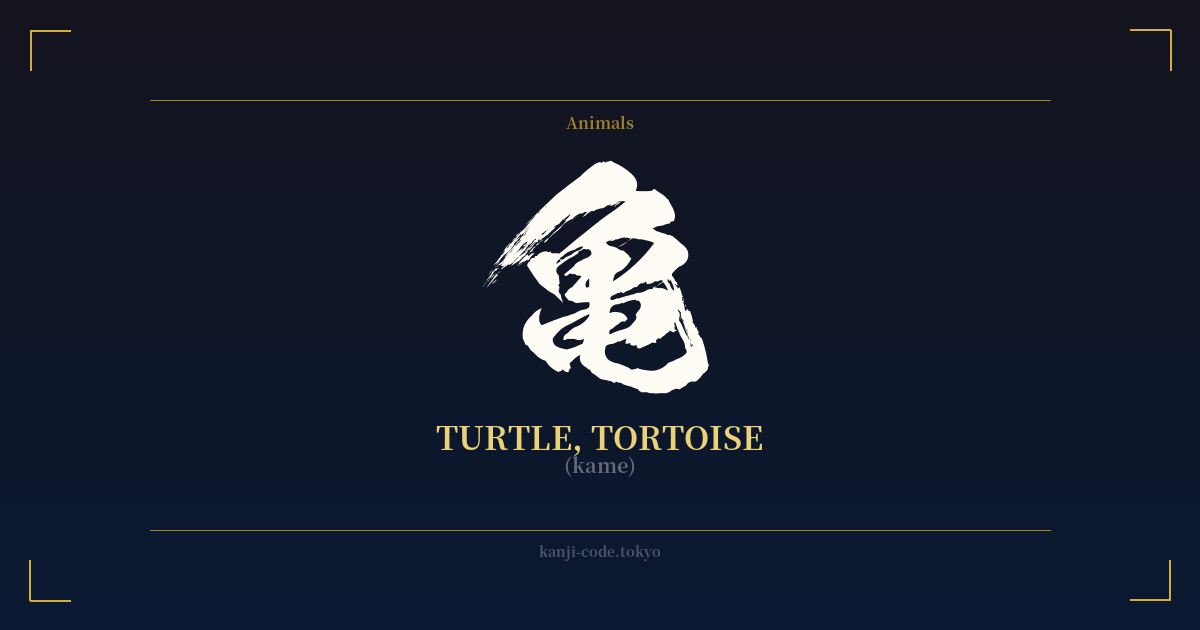
✍️ 亀 (kame) — Cultural Context
In Japan, the turtle, or 亀 (kame), is far more than just a reptile; it is a powerful and revered symbol deeply woven into the nation's cultural and spiritual fabric. Its most prominent association is with longevity, encapsulated in the famous proverb, "Tsuru wa sennen, kame wa mannen" (鶴は千年、亀は万年), meaning "A crane lives a thousand years, a turtle ten thousand years." This makes the turtle a symbol of enduring life, wisdom that comes with age, and good fortune.
The character 亀 itself is a fascinating example of a pictograph, a direct visual representation of its meaning. The ancient forms of the character clearly depict a turtle viewed from the side, with a head, legs, and a prominent shell. This visual heritage makes the kanji not just a symbol but a piece of art in itself, carrying thousands of years of history in its strokes.
Mythologically, the turtle holds a place of honor. It is one of the Four Guardian Spirits of Japan (Shishin), known as Genbu (玄武), the Black Tortoise of the North. Genbu represents the element of water, the season of winter, and the virtue of steadfastness. As a celestial guardian, it provides protection, stability, and a connection to cosmic order.
Folklore further enriches the turtle's symbolism. The tale of Urashima Tarō (浦島太郎) is one of Japan's most beloved legends. In the story, a kind fisherman saves a turtle from being tormented by children. As a reward, the turtle, a messenger from the undersea Dragon Palace (Ryūgū-jō), carries him to a magical kingdom. This story imbues the turtle with qualities of gratitude, magic, and its role as a divine messenger or guide between worlds.
Another significant image is the Minogame (蓑亀), or "straw-raincoat turtle." This mythical turtle is said to have lived for so long that a tail of seaweed and algae has grown from its shell, resembling a traditional farmer's raincoat. The Minogame is a potent symbol of extreme longevity and is often depicted in art alongside the Seven Lucky Gods or with other auspicious symbols, reinforcing its connection to lasting happiness and prosperity.
🖌️ Font Styles for 亀
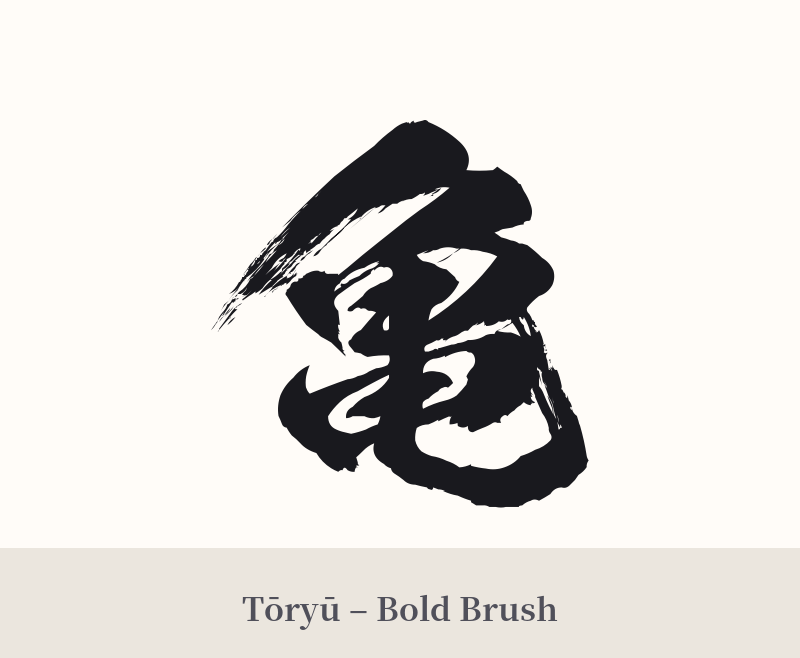
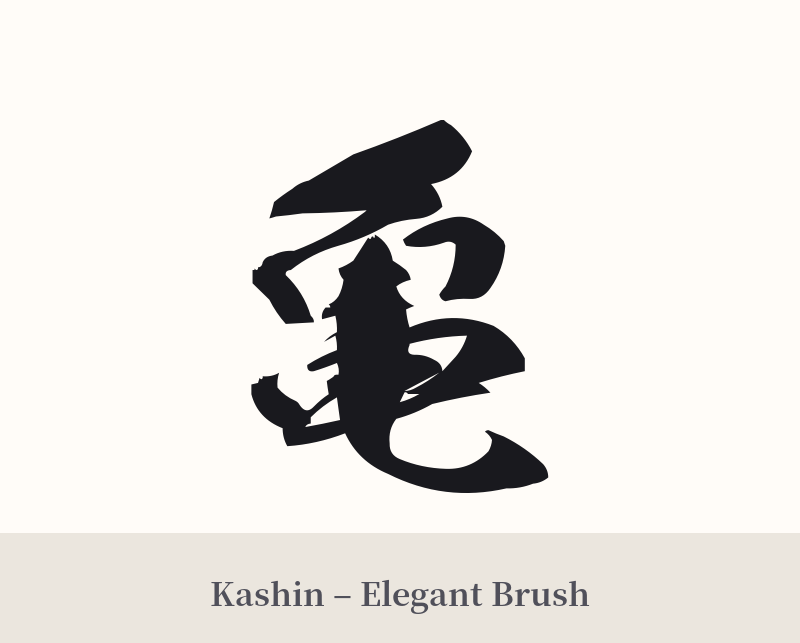
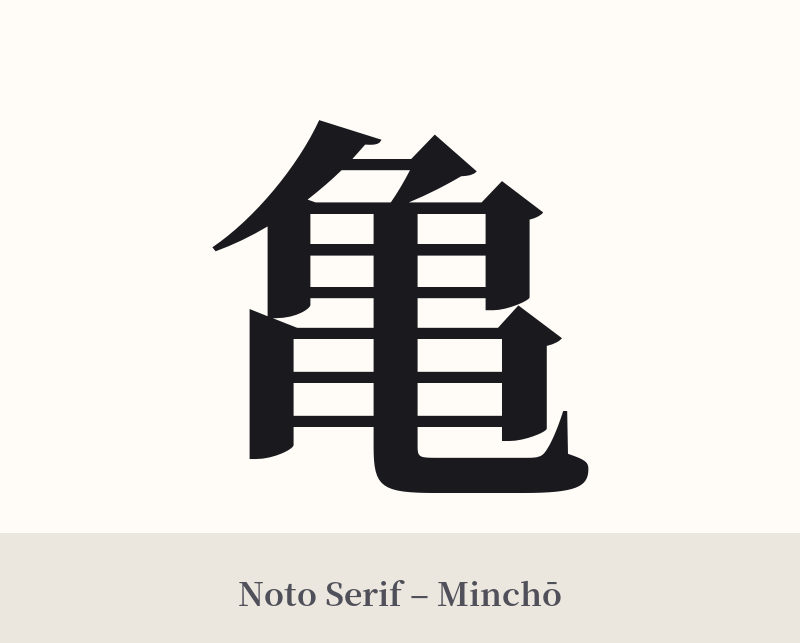
The same kanji can look dramatically different depending on the calligraphy style. Choose a font that matches the mood you want for your tattoo or design.
🎨 Tattoo Suitability
📐 Tattoo Design Guide
The kanji 亀 (kame) offers wonderful opportunities for a tattoo that is both visually striking and deeply meaningful.
– Placement: Consider areas that allow the character's unique shape to be appreciated. The calf, forearm, shoulder blade, or the back of the shoulder are excellent choices. For a larger, more detailed piece, the back provides a great canvas.
– Style: A traditional Japanese shodō (calligraphy) style with bold, expressive brushstrokes can emphasize its artistic and ancient origins. For a more modern take, a clean, minimalist style can highlight its pictographic form. It is also a perfect centerpiece for a larger Irezumi (traditional Japanese tattoo) piece.
– Visual Complements: Enhance the meaning of 亀 by incorporating related imagery. Pairing it with waves or water honors its connection to the sea and Genbu. Combining it with a crane (鶴, tsuru) creates the classic "tsuru-kame" motif for ultimate longevity. Adding elements like pine trees or bamboo, also symbols of endurance, can create a powerful and cohesive design. Depicting it as a Minogame, with a tail of algae, adds a layer of mythical depth.
Comments